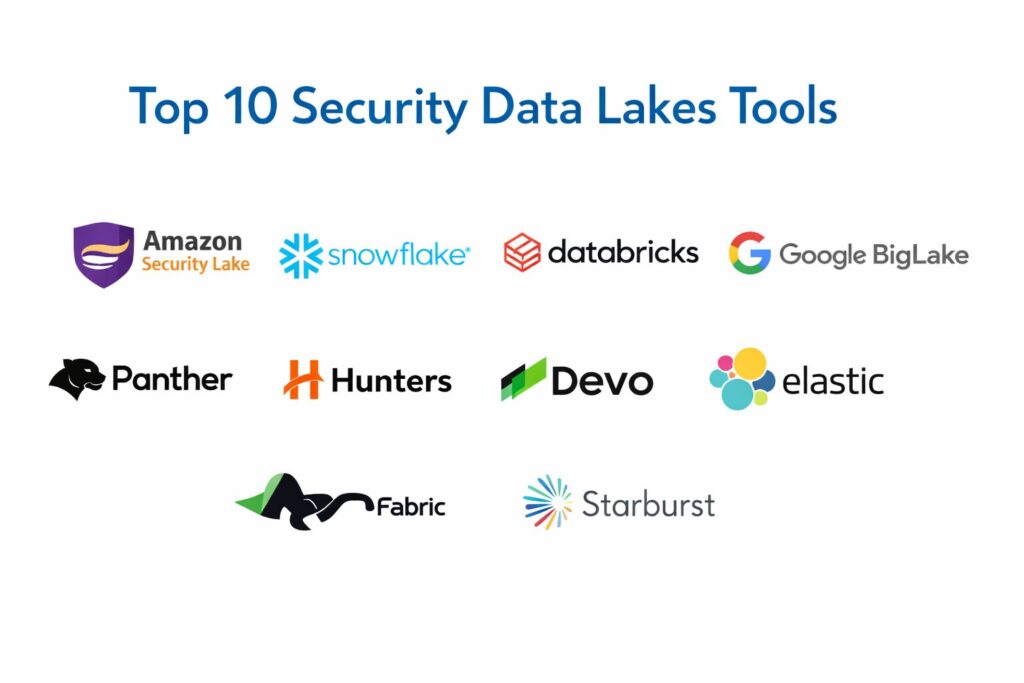
Introduction
The modern threat landscape generates a volume of telemetry that traditional SIEM (Security Information and Event Management) architectures struggle to ingest and retain. A Security Data Lake (SDL) addresses this by decoupling storage from compute, utilizing low-cost cloud object storage to house petabytes of security logs, network traffic, and endpoint telemetry. Unlike a general-purpose data lake, an SDL is purpose-built for the security practitioner, emphasizing the normalization of data into standardized schemas like the Open Cybersecurity Schema Framework (OCSF). This allows for long-term retention—often spanning years rather than months—enabling retroactive threat hunting and comprehensive compliance auditing that would be cost-prohibitive in legacy systems.
The strategic shift toward security data lakes is driven by the need for “security at the speed of data.” By centralizing logs from multi-cloud environments, SaaS applications, and on-premises infrastructure into a single source of truth, organizations can apply advanced analytics and machine learning without the latency of data silos. An effective SDL provides the foundation for “detection as code,” where security teams manage detection logic through version-controlled repositories and deploy them across the lake. This architecture doesn’t just store data; it transforms raw logs into high-fidelity signals that fuel incident response and proactive risk forecasting, ultimately bridging the gap between security operations and big data engineering.
Best for: Security Operations Centers (SOCs), threat hunting teams, and compliance officers who require massive scale, long-term log retention, and the ability to run complex analytical queries across diverse telemetry sources.
Not ideal for: Small organizations with minimal log volumes or those without dedicated security engineering resources to manage the underlying data pipelines and query development.
Key Trends in Security Data Lakes
A dominant trend in 2026 is the widespread adoption of the Open Cybersecurity Schema Framework (OCSF), which eliminates the “parser fatigue” that has long plagued security teams. By standardizing logs at the point of ingestion, platforms allow different security tools to query the same data without custom translation layers. Furthermore, “Zero-ETL” (Extract, Transform, Load) integrations are becoming the standard, where cloud providers allow security data to flow directly into the lake without the need for complex, fragile pipelines.
Artificial Intelligence has also moved from a buzzword to a core functional layer within the lakehouse architecture. Generative AI is now used to translate natural language queries into complex SQL or specialized search syntax, democratizing the ability to hunt for threats among billions of records. Additionally, we are seeing a shift toward “Active Data Lakes,” where the system doesn’t just store logs but uses autonomous agents to proactively scan for anomalies and trigger containment workflows in real-time, effectively blurring the line between a storage repository and an orchestration platform.
How We Selected These Tools
The tools selected for this analysis represent the pinnacle of security data management, chosen based on their ability to handle the “three Vs” of security data: volume, velocity, and variety. We prioritized platforms that support open standards (OCSF/Iceberg) to prevent vendor lock-in and those that offer a “lakehouse” architecture—combining the cost-effectiveness of a lake with the performance and ACID transactions of a data warehouse. Market maturity and the robustness of the integration ecosystem were also heavily weighted.
Technical performance was measured by query latency across petabyte-scale datasets and the efficiency of the ingestion engine. We looked specifically for platforms that provide fine-grained access controls, as security data often contains sensitive PII (Personally Identifiable Information) that must be masked or restricted. Finally, we evaluated the “developer ergonomics” of each platform, favoring those that allow security engineers to treat detections as code and integrate seamlessly into existing CI/CD and DataOps workflows.
1. Amazon Security Lake
Amazon Security Lake is a fully managed service that automatically centralizes security data from AWS environments, SaaS providers, and on-premises sources into a purpose-built data lake. It is the first major service to natively adopt the OCSF standard, ensuring that all ingested data is normalized and ready for immediate analysis by various security tools.
Key Features
The platform automates the entire lifecycle of security data management, from collection and normalization to retention. It utilizes Amazon S3 for storage and integrates deeply with AWS Lake Formation for granular permission management. It features a “subscriber” model, allowing third-party tools like Splunk or SentinelOne to consume data directly from the lake without moving it. The service also includes automated partitioning and conversion to Parquet format to optimize query performance and cost.
Pros
Eliminates the manual effort of building and maintaining security data pipelines within the AWS ecosystem. Native OCSF support ensures interoperability with a broad range of security vendors.
Cons
Primarily optimized for AWS-centric environments; integrating non-AWS logs requires more manual configuration compared to native sources.
Platforms and Deployment
Cloud-native (AWS) managed service.
Security and Compliance
Deep integration with AWS IAM and Lake Formation for row-level and column-level security; compliant with SOC, ISO, and HIPAA.
Integrations and Ecosystem
Extensive ecosystem of “sources” and “subscribers,” including major SIEM, XDR, and analytics vendors.
Support and Community
Backed by AWS Enterprise Support and a massive community of cloud security architects.
2. Snowflake (Security Data Lakehouse)
Snowflake has evolved into a premier security data lakehouse by offering a platform that combines the scale of a data lake with the performance of a data warehouse. Its “Connected Application” model allows security teams to keep their data in their own Snowflake instance while third-party security apps run queries on top of it.
Key Features
Snowflake provides “Snowpark,” a developer framework that allows security engineers to write detection logic in Python, Java, or Scala directly against the data. It features a unique multi-cluster shared data architecture that separates compute from storage, enabling high-concurrency querying without performance degradation. The platform includes “Horizon” for built-in data governance, including automatic sensitive data discovery and masking. It also supports “External Tables,” allowing users to query data residing in S3, Azure Blob, or GCS without ingesting it.
Pros
Unmatched query performance and ease of use for SQL-literate security teams. The ability to share data securely across different Snowflake accounts without duplication is a major advantage.
Cons
The credit-based pricing model can become expensive for high-frequency, small-batch compute workloads if not carefully managed.
Platforms and Deployment
Multi-cloud (AWS, Azure, GCP) SaaS platform.
Security and Compliance
FedRAMP High, SOC 2 Type II, and PCI DSS compliant; features end-to-end encryption and robust audit logging.
Integrations and Ecosystem
A vast marketplace of security “Connected Apps” and native connectors for major log sources.
Support and Community
Excellent 24/7 support and a very active professional community through the Snowflake “Data Heroes” program.
3. Databricks (Security Lakehouse)
Databricks pioneered the “Lakehouse” concept, utilizing Delta Lake to bring reliability and performance to open data lakes. For security, it provides a high-performance environment for machine learning-based threat detection and large-scale log analysis using Apache Spark.
Key Features
The platform centers around Delta Lake, which provides ACID transactions and scalable metadata handling for security logs. It includes “Unity Catalog,” a unified governance layer for all data and AI assets across the lake. The “Databricks SQL” service offers a serverless data warehouse experience with industry-leading price/performance. Security teams can leverage integrated MLflow for managing the lifecycle of machine learning models used in anomaly detection. It also supports real-time streaming ingestion, allowing for near-instant analysis of incoming telemetry.
Pros
The most powerful platform for advanced data science and machine learning on security data. Open-source foundations (Delta Lake, MLflow) reduce the risk of vendor lock-in.
Cons
Higher technical complexity; requires strong data engineering skills to fully utilize the Spark-based architecture.
Platforms and Deployment
Managed service on AWS, Azure, and GCP.
Security and Compliance
Robust security framework including VPC peering, customer-managed keys, and compliance with major global standards.
Integrations and Ecosystem
Strong focus on open-source integrations and a growing list of security-specific partners.
Support and Community
Enterprise-grade support and a massive community rooted in the Apache Spark ecosystem.
4. Google BigLake (and BigQuery)
Google BigLake extends BigQuery’s storage engine to data lakes, allowing security teams to query data in open formats (like Parquet or Iceberg) across Google Cloud, AWS, and Azure. It provides a unified governance layer that makes “multi-cloud” security analysis a reality.
Key Features
BigLake provides a unified interface for BigQuery and cloud storage, allowing for fine-grained access control across all data types. It features “BigQuery ML,” which enables security analysts to create and execute machine learning models using standard SQL. The platform includes automated data discovery and metadata management through Dataplex. It also offers “Search Optimization,” a feature that significantly speeds up needle-in-a-haystack searches common in security investigations. Its serverless architecture means there are no clusters to manage or scale manually.
Pros
The serverless model is highly cost-effective and scales effortlessly to handle massive traffic spikes during security incidents. Unmatched cross-cloud query capabilities via BigQuery Omni.
Cons
While cross-cloud exists, the platform is most powerful and easiest to manage when the primary data resides in Google Cloud.
Platforms and Deployment
Serverless cloud platform on GCP (with cross-cloud query capabilities).
Security and Compliance
Built on Google’s secure infrastructure with comprehensive IAM and encryption; compliant with global regulations.
Integrations and Ecosystem
Deep integration with the entire Google Cloud security suite (Chronicle, Mandiant) and major third-party vendors.
Support and Community
Strong professional support and a rapidly growing ecosystem of security-focused data engineers.
5. Microsoft Fabric (Security Analytics)
Microsoft Fabric is an all-in-one analytics solution for enterprises that unifies data engineering, data science, and real-time analytics. For security, it provides a “OneLake” environment that allows security telemetry to be seamlessly analyzed alongside business data.
Key Features
The core of Fabric is “OneLake,” a multi-cloud data lake that acts as a single source of truth. It features “Real-Time Intelligence” for low-latency log processing and alerting. The platform is deeply integrated with Microsoft Sentinel, allowing for long-term data retention and complex hunting across the lake. It uses “shortcuts” to virtualization data from AWS and GCS without moving it, reducing egress costs and data duplication. Built-in AI assistants (Copilots) help security teams write queries and generate reports using natural language.
Pros
The “OneLake” concept simplifies data architecture significantly for Azure-heavy organizations. Seamless integration with the Microsoft 365 and Azure security ecosystems.
Cons
As a relatively newer platform, some advanced security-specific features are still maturing compared to more established players.
Platforms and Deployment
SaaS platform on Azure.
Security and Compliance
Unified security and governance through Microsoft Purview; inherits Azure’s extensive compliance certifications.
Integrations and Ecosystem
Native integration with all Microsoft security products and a growing library of third-party connectors.
Support and Community
Extensive documentation and support through the global Microsoft partner network.
6. Panther
Panther is a cloud-native security data lake purpose-built for high-scale security operations. It allows teams to manage their detection logic as Python code, providing the flexibility needed for sophisticated, context-aware threat detection.
Key Features
Panther utilizes a “Detection-as-Code” workflow, where rules are written in Python and managed via Git. It leverages a high-performance Snowflake-backed data lake for long-term storage and sub-second querying. The platform includes a massive library of built-in detections for cloud, SaaS, and endpoint logs. It features a “Data Explorer” for interactive threat hunting and “Indicator Search” for rapid IOC (Indicator of Compromise) matching. It also provides automated data normalization and enrichment at the point of ingestion.
Pros
Extremely flexible and scalable; the use of Python for detections allows for much more complex logic than standard SQL or regex-based rules.
Cons
Requires a higher level of coding proficiency from the security team to fully realize its potential.
Platforms and Deployment
SaaS or self-hosted on AWS.
Security and Compliance
SOC 2 Type II compliant; provides granular RBAC and detailed audit logs of all platform activity.
Integrations and Ecosystem
Strong focus on cloud-native sources and deep integrations with modern tools like Slack, Jira, and PagerDuty.
Support and Community
Excellent customer success teams and a dedicated community of “detection engineers.”
7. Hunters
Hunters is a security data platform that focuses on automated SOC workflows. It ingests data from across the enterprise, normalizes it, and uses a proprietary “knowledge graph” to correlate signals into actionable stories, effectively acting as an intelligent layer over the lake.
Key Features
The platform features an “Autonomous SOC” engine that automatically correlates disparate alerts into high-fidelity incidents. It provides a built-in security data lake for cost-effective retention but can also work as a layer over existing lakes like Snowflake. It includes automated “threat detectors” that stay updated with the latest threat intelligence. The system uses a graph-based correlation engine to map the relationships between users, entities, and events. It also offers a unified investigation interface that simplifies the triage process for analysts.
Pros
Significantly reduces alert fatigue by automating the correlation and prioritization of security events. Fast time-to-value with automated ingestion and pre-built detectors.
Cons
The “black box” nature of some automated correlations may be less appealing to teams that want full manual control over every detection logic.
Platforms and Deployment
SaaS platform.
Security and Compliance
Strong focus on data privacy with SOC 2 compliance and encrypted data handling throughout the pipeline.
Integrations and Ecosystem
Extensive library of native connectors for cloud, identity, network, and endpoint security tools.
Support and Community
Proactive customer support and a focused community of security operations professionals.
8. Devo
Devo is a high-performance security data platform that specializes in high-velocity log ingestion and real-time analytics. It is designed for large enterprises that need to monitor massive environments with minimal latency.
Key Features
Devo features a proprietary “linear scaling” architecture that allows it to ingest hundreds of terabytes per day without bottlenecks. It provides a unified platform for SIEM, SOAR, and behavior analytics. The platform includes “Devo Exchange,” a community marketplace for pre-built content, integrations, and detections. It offers “Activeboards” for real-time visualization of security metrics and “Service Monitoring” for tracking the health of the security infrastructure. Its “Content Stream” provides continuous updates on emerging threats and detection techniques.
Pros
Extremely fast ingestion and query performance, even at massive scales. The platform’s ability to handle “unstructured” data effectively is a significant plus.
Cons
The proprietary nature of its underlying technology can make it feel like more of a “walled garden” compared to open-format lakehouses.
Platforms and Deployment
Cloud-native SaaS or on-premises deployment.
Security and Compliance
PCI DSS, HIPAA, and SOC 2 compliant; features robust multi-tenant security architecture.
Integrations and Ecosystem
Broad support for enterprise IT and security stacks through the Devo Exchange.
Support and Community
Dedicated global support and an active user community through Devo’s annual conferences and forums.
9. Elastic (Security on Elasticsearch)
Elastic Security builds on the widely popular Elasticsearch engine, providing a flexible and powerful data lake for security operations. Its “Schema on Write” (via ECS) and “Search on Scale” capabilities make it a favorite for many threat hunting teams.
Key Features
The platform uses the Elastic Common Schema (ECS) to ensure data consistency across all sources. It features a built-in “Security app” within Kibana for visualizing threats, managing cases, and running detections. It includes advanced machine learning for anomaly detection and “Prebuilt rules” for common attack patterns. The platform’s “frozen tier” storage allows for searching years of data stored in low-cost object storage (S3/GCS) with surprisingly good performance. It also integrates EDR (Endpoint Detection and Response) directly into the platform through the Elastic Agent.
Pros
The search performance is industry-leading, making it ideal for interactive threat hunting. The flexibility of the underlying ELK stack allows for extensive customization.
Cons
Managing the underlying clusters (if self-hosted) can be operationally intensive. The “Schema on Write” model requires more upfront effort for data normalization.
Platforms and Deployment
SaaS (Elastic Cloud), self-hosted, or hybrid.
Security and Compliance
Comprehensive security features including RBAC, encryption at rest, and compliance with major industry standards.
Integrations and Ecosystem
One of the largest ecosystems in the industry, with thousands of community-contributed integrations and “Beats.”
Support and Community
Massive global community and multiple tiers of professional support from Elastic.
10. Starburst (Trino-based Security Data Lakehouse)
Starburst is based on Trino (formerly PrestoSQL) and acts as a high-performance distributed SQL query engine. For security, it allows teams to query data across multiple lakes, databases, and clouds as if they were a single, unified security data lake.
Key Features
The platform features a “federated query” engine that allows security analysts to join data from a data lake with data in a production database without moving it. It includes “Starburst Galaxy,” a fully managed SaaS offering that simplifies the deployment of Trino. It provides granular access control and data masking through integrations with tools like Immuta or Privacera. The platform is highly optimized for “warp speed” querying of petabyte-scale datasets. It also features “Data Products,” allowing security teams to curate and publish specific datasets for other departments (like compliance or IT) to consume securely.
Pros
The ultimate tool for avoiding “data silos”; it can query data wherever it lives. Highly attractive for teams that want to maintain a “decentralized” security data architecture.
Cons
It is primarily a query engine; teams must still manage the underlying storage and the “detectors” or “alerts” through other tools.
Platforms and Deployment
Managed SaaS (Galaxy), self-hosted, or hybrid.
Security and Compliance
Integrates with enterprise identity providers and features robust encryption and audit capabilities.
Integrations and Ecosystem
Connects to virtually any data source, including all major cloud storage, relational databases, and NoSQL stores.
Support and Community
Strong enterprise support and a large community centered around the Trino open-source project.
Comparison Table
| Tool Name | Best For | Platform(s) Supported | Deployment | Standout Feature | Public Rating |
| 1. Amazon Security Lake | AWS-Centric Orgs | AWS | Cloud | Native OCSF Support | 4.7/5 |
| 2. Snowflake | Enterprise Analytics | Multi-Cloud | SaaS | Connected App Model | 4.8/5 |
| 3. Databricks | Advanced ML/AI | Multi-Cloud | Cloud | Delta Lake Performance | 4.6/5 |
| 4. Google BigLake | Cross-Cloud Query | GCP | Serverless | Serverless Cross-Cloud | 4.5/5 |
| 5. Microsoft Fabric | Microsoft Ecosystem | Azure | SaaS | OneLake Architecture | 4.4/5 |
| 6. Panther | Detection as Code | AWS, SaaS | SaaS/Hybrid | Python-based Rules | 4.7/5 |
| 7. Hunters | SOC Automation | Multi-Cloud | SaaS | Knowledge Graph Correlation | 4.3/5 |
| 8. Devo | High-Velocity Ingestion | Multi-Cloud | SaaS/Hybrid | Linear Scaling Ingest | 4.5/5 |
| 9. Elastic | Threat Hunting | Multi-Cloud | Hybrid | Frozen Tier Searching | 4.6/5 |
| 10. Starburst | Federated Querying | Multi-Cloud | Hybrid | Distributed SQL Engine | 4.4/5 |
Evaluation & Scoring of Security Data Lake Platforms
The scoring below is a comparative model intended to help shortlisting. Each criterion is scored from 1–10, then a weighted total from 0–10 is calculated using the weights listed. These are analyst estimates based on typical fit and common workflow requirements, not public ratings.
Weights:
- Core features – 25%
- Ease of use – 15%
- Integrations & ecosystem – 15%
- Security & compliance – 10%
- Performance & reliability – 10%
- Support & community – 10%
- Price / value – 15%
| Tool Name | Core (25%) | Ease (15%) | Integrations (15%) | Security (10%) | Performance (10%) | Support (10%) | Value (15%) | Weighted Total |
| 1. Amazon Security Lake | 9 | 10 | 10 | 9 | 8 | 9 | 9 | 9.15 |
| 2. Snowflake | 10 | 9 | 10 | 9 | 10 | 10 | 7 | 9.05 |
| 3. Databricks | 9 | 7 | 9 | 9 | 10 | 9 | 8 | 8.65 |
| 4. Google BigLake | 9 | 8 | 9 | 9 | 9 | 9 | 9 | 8.85 |
| 5. Microsoft Fabric | 8 | 9 | 9 | 9 | 8 | 9 | 8 | 8.50 |
| 6. Panther | 9 | 7 | 8 | 9 | 9 | 10 | 8 | 8.55 |
| 7. Hunters | 8 | 9 | 9 | 8 | 8 | 8 | 8 | 8.25 |
| 8. Devo | 9 | 8 | 8 | 9 | 10 | 9 | 7 | 8.55 |
| 9. Elastic | 9 | 7 | 10 | 9 | 9 | 9 | 9 | 8.80 |
| 10. Starburst | 8 | 6 | 10 | 9 | 10 | 8 | 8 | 8.20 |
How to interpret the scores:
- Use the weighted total to shortlist candidates, then validate with a pilot.
- A lower score can mean specialization, not weakness.
- Security and compliance scores reflect controllability and governance fit, because certifications are often not publicly stated.
- Actual outcomes vary with assembly size, team skills, templates, and process maturity.
Which Security Data Lake Tool Is Right for You?
Solo / Freelancer
Small teams should look toward Amazon Security Lake or Google BigLake. Their serverless nature and deep cloud integration mean you spend less time on infrastructure and more time on analysis. The “pay-as-you-go” model also ensures that costs stay aligned with your actual data footprint.
SMB
Medium-sized businesses with a mix of cloud and SaaS tools will find the best balance in Snowflake or Panther. These platforms offer a high level of automation and a lower “management tax,” allowing a small security engineering team to punch above its weight in terms of detection and response capabilities.
Mid-Market
For organizations with a growing data science focus, Databricks or Elastic are excellent choices. They provide the depth needed for custom machine learning models and high-resolution threat hunting while offering robust enterprise support as the environment scales.
Enterprise
Large enterprises with legacy debt and fragmented data should prioritize Starburst or Devo. Starburst allows you to query data in place, avoiding the nightmare of migrating decades of logs, while Devo provides the high-octane ingestion needed for global, multi-petabyte environments.
Budget vs Premium
If cost is the primary driver, open-format lakes using Amazon S3 and Athena (or Google BigLake) are the most economical. If performance and “analyst happiness” are the priority, the premium costs of Snowflake or Panther are justified by the significant reduction in investigation time.
Feature Depth vs Ease of Use
Hunters and Amazon Security Lake lead the way in ease of use through heavy automation. In contrast, Panther and Databricks offer the greatest feature depth for those who want to “code” their security posture and maintain total control over every aspect of the logic.
Integrations & Scalability
Elastic and Snowflake boast the most mature ecosystems. If your security stack includes dozens of third-party vendors, these platforms offer the “path of least resistance” for getting all your data normalized and searchable in a single pane of glass.
Security & Compliance Needs
All listed tools meet high security standards, but Microsoft Fabric and Amazon Security Lake offer the most seamless integration with the broader cloud-native identity and governance frameworks (like Microsoft Purview or AWS Lake Formation), which is critical for highly regulated sectors.
Frequently Asked Questions (FAQs)
1. What is the difference between a SIEM and a Security Data Lake?
A SIEM is designed for real-time alerting and incident management with high storage costs. A Security Data Lake focuses on long-term, low-cost retention and complex analytics across massive datasets. Modern SOCs often use a “Lakehouse” approach to get the best of both worlds.
2. Why is OCSF important for a security data lake?
OCSF (Open Cybersecurity Schema Framework) is a standardized format for security logs. Without it, you must build custom parsers for every tool. With it, all data “speaks the same language,” allowing for instant correlation and analysis across different vendors.
3. Does moving to a data lake increase egress costs?
It can if you move data across regions or cloud providers. However, modern platforms like Google BigLake or Starburst use “federated querying” or “shortcuts” to query data where it lives, minimizing or eliminating the need for expensive data movement.
4. Can I use a security data lake for compliance auditing?
Yes, this is one of the primary use cases. Because storage is inexpensive, you can keep logs for years (meeting requirements like PCI or HIPAA) and query them instantly when an auditor asks for proof of historical access or configuration.
5. How much does a security data lake cost?
Costs typically consist of storage (very low) and compute (varies based on usage). A small setup might cost a few hundred dollars a month, while an enterprise lakehouse processing terabytes a day can cost tens of thousands.
6. Do I need to be a developer to use Panther or Databricks?
While you don’t need to be a full-stack developer, having a basic understanding of Python (for Panther) or SQL/Spark (for Databricks) is necessary to unlock the full power of these platforms.
7. Can a security data lake replace my current SIEM?
For some organizations, yes. However, many use a “hybrid” model where the SIEM handles high-fidelity real-time alerts, and the data lake handles the massive volume of raw telemetry for hunting and long-term storage.
8. What is “Detection as Code”?
It is the practice of managing your security detection logic like software code. This includes using Git for version control, automated testing of rules, and deploying updates through CI/CD pipelines to ensure detections are accurate and up-to-date.
9. Is data in a lake secure?
Yes, modern security data lakes use enterprise-grade encryption and fine-grained access controls. In fact, centralizing data in a governed lake often improves security by eliminating “shadow” data copies floating around the organization.
10. How long does it take to set up a security data lake?
Using a managed service like Amazon Security Lake, you can have a basic lake running in hours. For a fully customized enterprise lakehouse with complex integrations, the implementation typically takes 3 to 6 months.
Conclusion
The transition from a siloed security stack to a unified Security Data Lake is no longer an optional upgrade for the forward-leaning organization; it is a fundamental requirement for maintaining visibility in a decentralized, multi-cloud world. The ability to store and query telemetry at petabyte scale has become the baseline for effective threat hunting and incident response. Choosing the right platform requires a deep understanding of your team’s technical maturity and your organization’s primary cloud footprint. The goal is to move beyond simple log collection and toward a model where security data is a strategic asset that fuels automated detection, predictive risk forecasting, and cross-functional business intelligence. As the boundary between data engineering and security operations continues to dissolve, the most resilient organizations will be those that embrace the open-format, code-driven future of the security lakehouse.