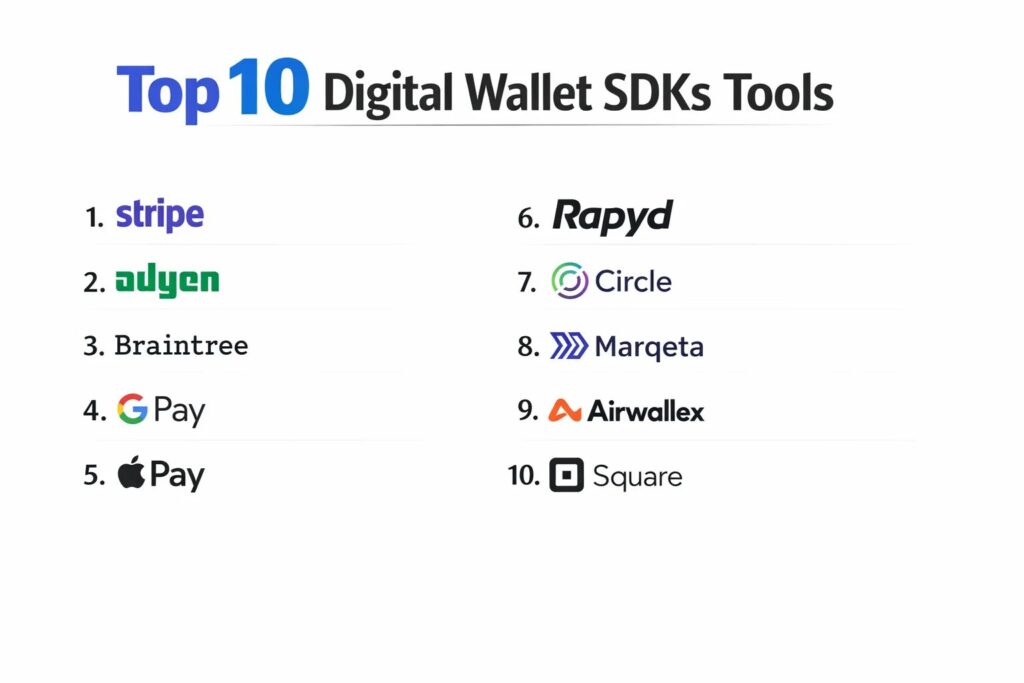
Introduction
Digital Wallet Software Development Kits (SDKs) have become the critical infrastructure for the modern financial technology stack, enabling developers to integrate secure payment, storage, and transaction capabilities into mobile and web applications. In a global economy increasingly moving toward “cashless” ecosystems, these SDKs provide the standardized protocols necessary to communicate with banking networks, card issuers, and decentralized ledgers. Unlike traditional payment gateways, a digital wallet SDK allows for a deeper level of constituent engagement by managing not just currency, but also loyalty cards, tickets, identity documents, and specialized digital assets. For the modern product analyst, these tools represent the primary vehicle for reducing friction in the checkout process and increasing user retention through “one-click” financial experiences.
The transition toward embedded finance has made it essential for businesses to offer a native wallet experience rather than redirecting users to external third-party sites. Modern digital wallet SDKs must handle a complex array of background tasks, including biometric authentication, tokenization of sensitive data, and real-time ledger synchronization. As data privacy regulations tighten globally, the ability to store financial credentials in a secure, encrypted enclave on a user’s device has become a non-negotiable requirement. When evaluating these SDKs, development teams must consider the breadth of supported payment methods, the robustness of the security architecture, the quality of the developer documentation, and the scalability of the backend infrastructure to handle peak transaction volumes without latency.
Best for: Mobile app developers, e-commerce platform founders, fintech startups, and enterprise retailers looking to provide a seamless, integrated payment and asset management experience within their own branded ecosystems.
Not ideal for: Simple static websites with no transactional needs, or small businesses that prefer to use a standard external checkout page without the complexity of managing a custom-branded digital wallet.
Key Trends in Digital Wallet SDKs
The integration of biometric “Passkeys” has moved from an optional feature to a core requirement, with SDKs now providing native hooks into device-level fingerprint and facial recognition systems to replace traditional passwords. We are also seeing a significant move toward “Multi-Chain” support, where a single SDK allows a developer to manage both traditional fiat currencies and various blockchain-based assets within a unified interface. Real-time programmable money is another dominant trend, with SDKs offering “Smart Contract” capabilities that allow funds to be released only when specific conditions, such as the delivery of a physical product, are met and verified.
Mobile-first identity is a rapidly emerging trend, with SDKs now supporting the storage of ISO-compliant digital driver’s licenses and health credentials directly alongside payment cards. There is a heightened focus on “Offline Payments,” as organizations develop protocols that allow users to complete transactions via Near Field Communication (NFC) even when a stable internet connection is not available. Furthermore, the “Modular SDK” shift allows developers to include only the specific modules they need—such as a loyalty module or a peer-to-peer transfer module—keeping the application’s binary size small while maintaining the flexibility to scale as the product’s financial features evolve.
How We Selected These Tools
Our selection process involved a rigorous assessment of technical reliability and global adoption within the software engineering community. We prioritized SDKs that provide high-performance libraries for both iOS and Android, ensuring that the user experience remains consistent across different hardware environments. A key criterion was the “Security Posture,” evaluating how each SDK implements end-to-end encryption, hardware-backed keystores, and compliance with international financial standards such as PCI DSS. We looked for a balance between highly specialized fintech powerhouses and versatile, developer-friendly kits that can be integrated with minimal overhead.
Scalability was also a major factor; we selected SDKs that are backed by global infrastructure capable of processing thousands of transactions per second. Documentation quality was scrutinized to ensure that developers have access to clear code samples, comprehensive API references, and active community forums for troubleshooting. Finally, we assessed the “Interoperability Value,” looking at how easily each SDK integrates with existing banking cores, payment processors, and third-party identity verification services. This ensures that the list provides viable options for various architectural needs, from lightweight mobile apps to complex enterprise financial platforms.
1. Stripe SDK for Mobile
The Stripe SDK is an industry-leading financial infrastructure tool designed for developers who require a sophisticated, yet easy-to-implement payment and wallet system. It offers a comprehensive suite of pre-built UI components and backend logic that handles everything from card collection to complex multi-party payouts.
Key Features
The platform features “Stripe Elements,” which provides customizable UI components that are optimized for conversion and security. It includes a robust “Identity” module for automated KYC (Know Your Customer) verification during the wallet onboarding process. The system offers advanced tokenization that ensures sensitive card data never touches the developer’s servers. It features a “Financial Connections” module that allows users to link their bank accounts directly for ACH transfers. Additionally, its “Terminal” integration allows for a unified wallet experience across both digital and physical retail locations.
Pros
The documentation is widely considered the best in the software industry, making implementation remarkably fast. It offers an unmatched range of local payment methods across more than forty countries.
Cons
The transaction fees can be higher than specialized bank-direct SDKs for high-volume enterprises. The platform is so feature-dense that it can be overkill for very simple applications.
Platforms and Deployment
Web, iOS, Android, and React Native. It is a cloud-native deployment with local device libraries.
Security and Compliance
Full PCI DSS Level 1 compliance, SOC 2 Type II, and GDPR support. It utilizes hardware-level encryption on supported devices.
Integrations and Ecosystem
Integrates with thousands of third-party platforms via an extensive API and supports deep links with various accounting and CRM systems.
Support and Community
Offers 24/7 developer support, a massive library of “Stripe Guides,” and a very active community on technical forums.
2. Adyen Mobile SDK
Adyen is a global enterprise-grade payment platform that provides a highly flexible SDK for businesses that need to manage high-volume transactions across multiple regions and channels. It is designed for large-scale retailers and platforms that require a single integration for all their global financial needs.
Key Features
The platform features “Drop-in,” a pre-configured UI component that handles all payment methods automatically based on the user’s location. It includes “In-person Payments” support, allowing the mobile wallet to act as a point-of-sale terminal via NFC. The system offers a “RevenueProtect” module that uses machine learning to identify and block fraudulent transactions in real-time. It features a “Data Insights” engine that provides deep analytics on transaction success rates and user behavior. It also supports “Network Tokenization” to keep stored cards updated automatically.
Pros
It provides a truly global, single-platform architecture that eliminates the need for multiple regional processors. The performance and reliability are exceptional for enterprise-level transaction volumes.
Cons
The integration process is more complex than simpler SDKs and usually requires a dedicated technical team. It is primarily geared toward businesses with significant monthly transaction volumes.
Platforms and Deployment
iOS, Android, Web, and various cross-platform frameworks. Cloud-based backend with local SDKs.
Security and Compliance
Adheres to the highest global standards including PCI DSS, PSD2, and various local financial regulations in the EU and Asia.
Integrations and Ecosystem
Offers deep integrations with enterprise resource planning systems and major e-commerce engines like Salesforce Commerce Cloud.
Support and Community
Provides dedicated account management for enterprise clients and comprehensive technical documentation for developers.
3. PayPal Braintree SDK
The Braintree SDK is a versatile and developer-centric platform owned by PayPal that allows businesses to accept a wide range of payment methods, including PayPal, Venmo, credit cards, and digital wallets like Apple Pay. It is known for its “vaulting” capabilities and its clean, modular code.
Key Features
The platform features a “Vault” that securely stores customer payment information for easy repeat transactions. It includes a “Drop-in UI” that allows developers to add a full-featured payment form with just a few lines of code. The system offers a “Dispute Management” API to handle chargebacks and customer issues programmatically. It features a “Control Panel” that provides a unified view of all transactions across different payment methods. It also supports “3D Secure” authentication to reduce fraud and comply with regional regulations.
Pros
It offers seamless integration with the massive PayPal and Venmo user base, which can significantly increase conversion rates. The SDK is modular, allowing developers to include only the libraries they need.
Cons
Customer support can sometimes be slower for smaller developers compared to newer, more agile competitors. The pricing structure can be complex when dealing with international transactions.
Platforms and Deployment
Web, iOS, and Android. It is a cloud-native service.
Security and Compliance
Maintains rigorous security including PCI DSS compliance and utilizes advanced tokenization for all stored credentials.
Integrations and Ecosystem
Part of the broader PayPal ecosystem, integrating naturally with other PayPal services and various e-commerce platforms.
Support and Community
Provides a detailed developer portal with interactive code samples and a large history of community-driven solutions.
4. Google Pay API & SDK
The Google Pay SDK is an essential tool for Android-focused developers and web platforms that want to leverage the hundreds of millions of cards already stored in Google accounts. It focuses on providing a fast, secure, and friction-free checkout experience.
Key Features
The platform features “Fast Checkout,” which allows users to complete a purchase using the payment methods stored in their Google Account. It includes a “Passes API” for managing loyalty cards, boarding passes, and gift cards within the Google Wallet app. The system offers “Tokenized Payments” that provide a unique virtual account number for each transaction, protecting the real card details. It features a “Button Generator” that ensures the Google Pay branding is always consistent and compliant. It also supports “Push Provisioning” to add new cards to the wallet directly from a banking app.
Pros
It provides immediate access to a massive pre-existing user base, reducing the need for users to manually enter card details. The integration is free of charge from Google’s perspective (though standard processor fees apply).
Cons
It is primarily a “frontend” wallet bridge, meaning you still need a payment processor like Stripe or Adyen to handle the actual movement of money. It is more deeply integrated into the Android ecosystem than iOS.
Platforms and Deployment
Web, Android, and limited support for iOS via the web. It is a cloud-based API.
Security and Compliance
Utilizes industry-standard tokenization and is fully compliant with PCI and various mobile security protocols.
Integrations and Ecosystem
Integrates with nearly every major payment processor in the world, acting as a secure “wrapper” for payment data.
Support and Community
Offers extensive documentation through Google Developers and a massive global community of Android and Web developers.
5. Apple Pay (PassKit) SDK
PassKit is the native framework for integrating Apple Pay and Apple Wallet features into iOS and macOS applications. It is the gold standard for security and user experience on Apple devices, utilizing the hardware’s “Secure Element” for credential storage.
Key Features
The platform features “Secure Element” integration, ensuring that payment data is stored in a dedicated hardware chip that is isolated from the rest of the system. It includes the “PassKit” framework for creating and managing digital passes, tickets, and ID cards. The system offers biometric authentication via FaceID and TouchID for every transaction. It features “Automatic Updates” for passes, allowing a boarding pass to update its gate number in real-time. It also supports “Apple Pay Later” and other native financial services directly in the checkout flow.
Pros
It offers the highest level of security and privacy of any digital wallet SDK on the market. The user experience is perfectly integrated into the iOS operating system, resulting in extremely high trust and conversion.
Cons
It is restricted entirely to the Apple ecosystem, meaning you need a separate solution for Android or non-Safari web browsers. Apple’s strict design guidelines can limit UI customization.
Platforms and Deployment
iOS, macOS, watchOS, and Safari. It is a native device framework.
Security and Compliance
Utilizes a device-specific Account Number (DAN) and dynamic security codes for every transaction, exceeding standard PCI requirements.
Integrations and Ecosystem
Integrates with all major global payment processors and is a core component of the Apple Services ecosystem.
Support and Community
Supported by Apple’s extensive developer documentation and the massive global community of Swift and Objective-C developers.
6. Rapyd SDK
Rapyd is a “Fintech-as-a-Service” platform that provides a highly flexible SDK for businesses looking to build custom digital wallets with a focus on emerging markets and local payment methods like e-wallets and cash.
Key Features
The platform features “Wallet-as-a-Service,” allowing businesses to create white-label digital wallets for their users. It includes a “Global Payments Network” that supports over 900 local payment methods, including bank transfers and local e-wallets. The system offers “Identity Verification” tools that are tailored for global compliance across different jurisdictions. It features “Disbursements” capabilities, allowing businesses to pay out funds to users’ wallets or bank accounts globally. It also provides a “Virtual Accounts” module for managing multi-currency balances.
Pros
It is the best choice for businesses targeting emerging markets where traditional credit cards are not the dominant payment method. The “all-in-one” fintech stack reduces the need for multiple vendors.
Cons
The platform is very broad, which can make the initial architectural decisions more difficult. The user interface for management tools is less polished than Stripe or Adyen.
Platforms and Deployment
Web, iOS, and Android. Cloud-based SaaS.
Security and Compliance
Maintains global licenses for money transmission and is fully compliant with AML (Anti-Money Laundering) and KYC regulations.
Integrations and Ecosystem
Provides a robust API and several low-code options for integrating into various business platforms.
Support and Community
Offers a dedicated “Rapyd Community” forum and extensive API documentation for global developers.
7. Circle SDK (Programmable Wallets)
Circle provides a specialized SDK for “Programmable Wallets,” designed for developers who want to integrate digital dollar (USDC) and blockchain-based transactions into their apps without the complexity of managing private keys.
Key Features
The platform features “User-Controlled Wallets,” where the user maintains ownership of their assets while the SDK handles the technical execution. It includes “Gas Abstraction,” allowing developers to pay for blockchain transaction fees on behalf of their users. The system offers a “Smart Contract” engine for building automated financial workflows. It features “Fiat-to-Crypto” on-ramps and off-ramps for moving money between traditional banks and digital wallets. It also provides a secure “PIN and Biometric” recovery system for wallet access.
Pros
It removes the “crypto complexity” for both developers and users, making digital dollar transactions feel like a standard app experience. It is highly scalable and built for high-speed financial applications.
Cons
It is primarily focused on USDC and digital assets, making it less suitable for businesses that only want to handle traditional credit card processing. It requires an understanding of digital asset regulations.
Platforms and Deployment
iOS, Android, and Web. Cloud-native infrastructure with client-side SDKs.
Security and Compliance
Utilizes MPC (Multi-Party Computation) for key management and is backed by Circle’s regulated financial status.
Integrations and Ecosystem
Integrates with major blockchain networks and provides deep hooks for “Web3” applications.
Support and Community
Offers a professional developer portal and is a leading voice in the regulated digital asset community.
8. Marqeta SDK
Marqeta is a modern card-issuing platform that provides a sophisticated SDK for businesses that want to issue their own physical or virtual cards and manage them within a digital wallet. It is the engine behind many famous fintech apps.
Key Features
The platform features “Just-in-Time (JIT) Funding,” which allows a business to approve or decline a transaction in real-time based on custom logic. It includes “Virtual Card Issuance,” allowing users to generate a new card for their digital wallet instantly. The system offers “Dynamic Spend Controls” that can restrict card usage to specific merchants or geographic areas. It features “Digital Wallet Tokenization” for seamless integration with Apple Pay and Google Pay. It also provides deep analytics on cardholder spending patterns.
Pros
It offers unparalleled control over the transaction lifecycle, making it ideal for gig-economy or corporate expense platforms. The API is modern, RESTful, and very well-documented.
Cons
It is a highly specialized tool for card issuance, not a general-purpose checkout SDK. The implementation requires a deep understanding of card network rules.
Platforms and Deployment
Web, iOS, and Android. Cloud-based platform.
Security and Compliance
PCI DSS compliant and maintains bank-grade security for its card-issuing and processing infrastructure.
Integrations and Ecosystem
Integrates with major banking cores and payment networks like Visa and Mastercard.
Support and Community
Provides high-level technical support for enterprise partners and a detailed “Marqeta Docs” site.
9. Airwallex SDK
Airwallex is a global financial platform that provides an SDK for businesses looking to manage cross-border payments, multi-currency wallets, and international card issuance within a single environment.
Key Features
The platform features “Multi-Currency Accounts,” allowing users to hold and spend over 30 different currencies. It includes a “Global Card Issuance” module for creating virtual cards that work globally. The system offers “Market-Leading FX Rates” for converting money within the wallet. It features “Batch Payouts” for sending money to thousands of vendors or employees in their local currencies. It also provides a “Payment Link” tool for simple, low-code transaction collection.
Pros
It is exceptionally powerful for international businesses that want to avoid high currency conversion fees. The SDK is clean and focuses on reducing the friction of global finance.
Cons
The availability of some features can vary significantly by country due to local banking licenses. It is more focused on business-to-business and platform needs than simple retail apps.
Platforms and Deployment
Web, iOS, and Android. Cloud-native.
Security and Compliance
Holds various financial licenses globally and maintains high standards for AML, KYC, and data privacy.
Integrations and Ecosystem
Integrates with Xero, QuickBooks, and Shopify to streamline international business operations.
Support and Community
Offers a dedicated support team and a comprehensive developer center with a focus on cross-border use cases.
10. Square In-App Payments SDK
The Square SDK is a robust and easy-to-use tool for businesses that want to accept payments and manage customer data within the broader Square ecosystem. It is particularly strong for businesses that have a physical presence.
Key Features
The platform features “Secure Entry,” a pre-built UI that handles the secure collection of payment details. It includes a “Customer API” for linking wallet transactions to a unified customer profile. The system offers “Reader Integration,” allowing the app to connect to Square’s physical hardware for in-person payments. It features “Instant Payouts,” giving businesses access to their funds immediately after a transaction. It also supports “Gift Cards” and “Loyalty” programs natively.
Pros
It is the best choice for businesses that already use Square for their physical point-of-sale. The setup is extremely fast and the hardware-software integration is seamless.
Cons
The customization options for the UI components are more limited than Stripe. It is a closed ecosystem, meaning you must use Square as your processor.
Platforms and Deployment
Web, iOS, Android, Flutter, and React Native. Cloud-native.
Security and Compliance
Square handles all PCI compliance and data security, reducing the burden on the developer.
Integrations and Ecosystem
Part of the massive Square and Cash App ecosystem, providing a unified view of all business finances.
Support and Community
Offers a vibrant developer community, frequent blog updates, and a dedicated support team.
Comparison Table
| Tool Name | Best For | Platform(s) Supported | Deployment | Standout Feature | Public Rating |
| 1. Stripe | Global E-commerce | Web, iOS, Android | Cloud-Native | Financial Connections | 4.8/5 |
| 2. Adyen | Enterprise Global | iOS, Android, Web | Cloud SaaS | RevenueProtect ML | 4.7/5 |
| 3. Braintree | PayPal/Venmo Users | Web, iOS, Android | Cloud SaaS | Modular Vaulting | 4.6/5 |
| 4. Google Pay | Android / Web Bridge | Web, Android | Cloud API | Android Native Hook | 4.7/5 |
| 5. Apple Pay | iOS / Native Security | iOS, macOS, Safari | Native Device | Secure Element | 4.9/5 |
| 6. Rapyd | Emerging Markets | Web, iOS, Android | Cloud SaaS | 900+ Local Methods | 4.5/5 |
| 7. Circle | Programmable Assets | iOS, Android, Web | Cloud SaaS | Gas Abstraction | 4.6/5 |
| 8. Marqeta | Card Issuance | Web, iOS, Android | Cloud SaaS | JIT Funding Logic | 4.7/5 |
| 9. Airwallex | Cross-Border FX | Web, iOS, Android | Cloud SaaS | Multi-Currency Wallets | 4.6/5 |
| 10. Square | Omni-channel SMB | Web, iOS, Android | Cloud SaaS | POS Hardware Sync | 4.7/5 |
Evaluation & Scoring of Digital Wallet SDKs
The scoring below is a comparative model intended to help shortlisting. Each criterion is scored from 1–10, then a weighted total from 0–10 is calculated using the weights listed. These are analyst estimates based on typical fit and common workflow requirements, not public ratings.
Weights:
- Core features – 25%
- Ease of use – 15%
- Integrations & ecosystem – 15%
- Security & compliance – 10%
- Performance & reliability – 10%
- Support & community – 10%
- Price / value – 15%
| Tool Name | Core (25%) | Ease (15%) | Integrations (15%) | Security (10%) | Performance (10%) | Support (10%) | Value (15%) | Weighted Total |
| 1. Stripe | 10 | 9 | 10 | 9 | 10 | 9 | 8 | 9.35 |
| 2. Adyen | 10 | 6 | 9 | 10 | 10 | 8 | 7 | 8.55 |
| 3. Braintree | 9 | 8 | 9 | 9 | 9 | 7 | 8 | 8.45 |
| 4. Google Pay | 7 | 9 | 9 | 9 | 10 | 8 | 10 | 8.50 |
| 5. Apple Pay | 8 | 8 | 8 | 10 | 10 | 9 | 9 | 8.65 |
| 6. Rapyd | 9 | 7 | 8 | 9 | 8 | 7 | 8 | 8.10 |
| 7. Circle | 8 | 8 | 7 | 9 | 9 | 8 | 8 | 8.00 |
| 8. Marqeta | 9 | 6 | 8 | 10 | 9 | 8 | 7 | 8.20 |
| 9. Airwallex | 9 | 7 | 8 | 9 | 9 | 8 | 8 | 8.35 |
| 10. Square | 8 | 9 | 8 | 9 | 9 | 9 | 8 | 8.55 |
How to interpret the scores:
- Use the weighted total to shortlist candidates, then validate with a pilot.
- A lower score can mean specialization, not weakness.
- Security and compliance scores reflect controllability and governance fit, because certifications are often not publicly stated.
- Actual outcomes vary with assembly size, team skills, templates, and process maturity.
Which Digital Wallet SDK Tool Is Right for You?
Solo / Freelancer
For independent developers or small startup founders, speed to market is the primary driver. You should choose an SDK that offers “Drop-in” UI components and handles all the security compliance for you. A tool with extensive documentation and a low-code approach will allow you to focus on your core product rather than becoming a fintech expert.
SMB
Organizations with a mission-driven focus should look for SDKs that offer low transaction fees and simple integration with donation platforms. A wallet that supports popular mobile payment methods like Apple Pay and Google Pay is essential for reducing friction during a high-energy fundraising event or an urgent appeal.
Mid-Market
Growing businesses need to balance ease of use with the ability to scale. You should look for a modular SDK that allows you to start with simple payments and then add features like recurring billing, multi-currency support, or loyalty programs as your customer base expands and becomes more diverse.
Enterprise
Large organizations with global operations require an SDK that acts as a true financial operating system. Security, global compliance, and the ability to manage high-volume payouts and complex tax scenarios are the top priorities. You should prioritize vendors that offer dedicated support and have a proven track record with other Fortune 500 companies.
Budget vs Premium
If budget is the primary concern, look for an SDK that offers a “pay-as-you-go” model with no monthly fees. However, premium platforms often provide more advanced fraud protection and better currency conversion rates, which can actually save you more money in the long run as your transaction volume increases.
Feature Depth vs Ease of Use
Highly specialized SDKs offer incredible control over the transaction lifecycle but require a dedicated engineering team to manage. Often, a slightly more simplified SDK that handles the background complexity for you is a more valuable investment, allowing your team to remain agile and focused on the user experience.
Integrations & Scalability
Your digital wallet SDK must be able to communicate with your existing CRM, accounting, and inventory systems. As you grow, the ability to switch between payment methods or add new regional wallets without a total system rewrite is a critical factor for long-term technical sustainability.
Security & Compliance Needs
Financial data is the most sensitive information you will handle. Ensure the SDK provider has a “security-first” culture and offers hardware-backed encryption. In many regions, the choice of an SDK is also a compliance decision, as the vendor must meet specific local regulations for data residency and money transmission.
Frequently Asked Questions (FAQs)
1. What is an SDK in the context of a digital wallet?
An SDK, or Software Development Kit, is a collection of code libraries, documentation, and tools that allow developers to build digital wallet features into their own apps. It acts as the bridge between the app’s user interface and the complex backend banking networks.
2. How does tokenization improve security in a digital wallet?
Tokenization replaces a user’s sensitive card details with a unique, randomly generated “token.” This token is used to process the transaction, meaning the actual card number is never stored on the merchant’s servers or the user’s mobile device in a readable format.
3. Do digital wallet SDKs handle KYC and AML compliance?
Many modern digital wallet SDKs include identity verification modules that help automate Know Your Customer (KYC) and Anti-Money Laundering (AML) checks. This is essential for apps that allow users to hold balances or move money between accounts.
4. Can I use a digital wallet SDK to manage crypto and fiat?
Yes, specialized SDKs like Circle or Rapyd offer multi-asset support, allowing developers to manage traditional fiat currencies alongside digital assets like USDC or other stablecoins within a single wallet environment.
5. What is the difference between a white-label wallet and a bridge?
A white-label wallet SDK allows you to build a fully custom-branded wallet that lives entirely within your app. A “bridge” SDK, like Google Pay, simply connects your app to an existing external wallet where the user’s cards are already stored.
6. Do digital wallet SDKs work offline?
Some advanced SDKs support offline transaction protocols using NFC or QR codes, allowing for data to be captured and then synchronized with the network once a connection is re-established. This is vital for transit or remote retail scenarios.
7. How do I choose between Stripe and Braintree?
Both are excellent, but Stripe is often preferred for its superior documentation and vast array of local payment methods. Braintree is often the choice for businesses that want a native, deeply integrated PayPal and Venmo experience.
8. Are digital wallet SDKs compliant with PCI DSS?
Yes, professional-grade SDKs are designed to handle payment data in a way that minimizes or eliminates the PCI compliance burden for the developer by ensuring sensitive data is tokenized before it reaches the app’s server.
9. Can I issue my own virtual cards with these SDKs?
Specialized “issuing” SDKs like Marqeta or Airwallex allow businesses to instantly generate virtual credit or debit cards for their users, which can then be added to an Apple or Google wallet.
10. What are the typical costs of using a digital wallet SDK?
Most providers do not charge for the SDK itself but take a small percentage (typically 1.5% to 3.5%) of each transaction processed. Some enterprise-grade platforms may also charge a monthly service or platform fee for advanced features.
Conclusion
In a digital-first economy, the integration of a robust digital wallet SDK is the primary driver of financial convenience and user trust. These tools have matured from simple payment bridges into comprehensive financial operating systems capable of managing identity, loyalty, and diverse assets. Whether you are building a small-scale e-commerce app or a global enterprise platform, selecting an SDK that balances technical depth with ease of integration is the key to sustainable growth. By prioritizing security, scalability, and a seamless user experience, you empower your organization to participate fully in the rapidly evolving future of embedded finance.