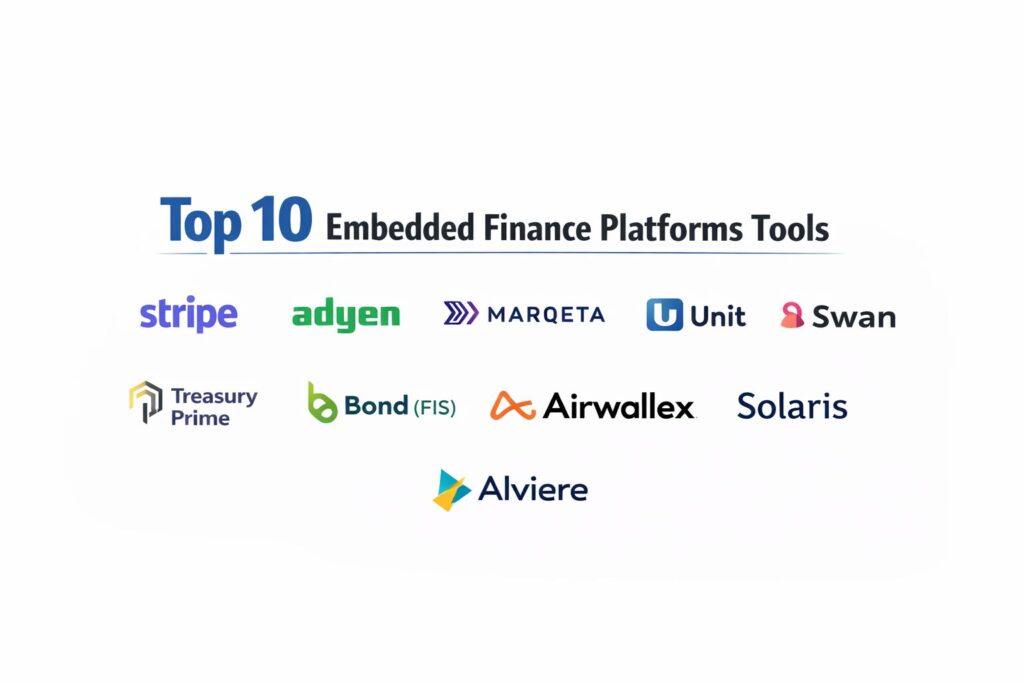
Introduction
Embedded finance platforms represent the structural integration of financial services—such as payment processing, lending, insurance, and banking—directly into non-financial software applications. This technology allows a consumer to access a loan at a digital point of sale, purchase insurance during a flight booking, or manage a branded debit card within a gig-economy app. By abstracting the complex regulatory and technical hurdles of traditional banking into a set of APIs, these platforms enable software companies to become financial service providers without obtaining their own banking licenses. This shift is fundamentally reconfiguring the relationship between consumers and financial institutions, moving the “transactional moment” closer to the point of intent.
The rapid adoption of embedded finance is driven by the demand for “frictionless” commerce and the increasing sophistication of the API economy. For businesses, embedding financial services is not just a convenience for the user; it is a powerful driver of increased lifetime value, improved retention, and new high-margin revenue streams. As we move further into a distributed digital economy, the ability to offer credit or instant payouts at the precise moment a user needs them is becoming a baseline requirement for competitive SaaS and marketplace platforms. When evaluating an embedded finance partner, organizations must look beyond simple connectivity and scrutinize the depth of the platform’s regulatory compliance, the scalability of its ledger system, and the robustness of its risk management frameworks.
Best for: SaaS companies, digital marketplaces, e-commerce platforms, and gig-economy applications looking to integrate banking, lending, or insurance products directly into their user experience.
Not ideal for: Simple informational websites with no transactional needs, or small businesses looking for traditional brick-and-mortar banking services without digital integration capabilities.
Key Trends in Embedded Finance Platforms
The maturation of “Banking-as-a-Service” (BaaS) has led to a major shift toward verticalized financial products, where platforms offer specialized ledger structures for specific industries like healthcare, real estate, or transportation. We are seeing a significant move toward “Autonomous Finance,” where AI-driven engines automatically trigger financial actions—such as moving funds to a high-yield account or offering a working capital loan—based on real-time data flows within the host application. This proactive approach turns financial services from a reactive tool into a predictive feature of the software.
Compliance-as-code is another dominant trend, with platforms now building Know Your Customer (KYC) and Anti-Money Laundering (AML) checks directly into the API calls, allowing for near-instant user onboarding while maintaining strict adherence to global regulations. There is also a notable rise in “Embedded Wealth,” where non-financial apps allow users to invest in fractional stocks or digital assets as part of a loyalty or rewards program. Furthermore, the convergence of embedded finance and the “Internet of Things” (IoT) is enabling machines to handle their own financial transactions, such as an electric vehicle automatically paying for its own charging or a smart warehouse ordering and paying for its own inventory replenishment.
How We Selected These Tools
Our selection process involved a comprehensive assessment of technical reliability and the strength of the underlying banking partnerships. We prioritized platforms that provide a “full-stack” solution, encompassing not only the API layer but also the necessary regulatory umbrella and ledger management systems required for enterprise-scale operations. A key criterion was the “geographic elasticity” of the platform, evaluating how easily a company can expand its financial offerings into multiple international markets through a single integration.
Scalability was a major factor; we selected tools that can support a startup’s first ten cards while having the infrastructure to manage the billions of dollars in volume processed by global marketplaces. We scrutinized the depth of the developer experience, favoring platforms that provide robust sandboxes, clear documentation, and pre-built UI components that reduce the time to market. Security certifications were a non-negotiable requirement, with a focus on PCI DSS compliance, SOC 2 Type II audits, and advanced encryption standards. Finally, we assessed the transparency of the business model, looking for partners that offer sustainable unit economics for both the platform provider and the end software company.
1. Stripe Treasury
Stripe Treasury is an enterprise-grade banking-as-a-service platform that allows software companies to embed financial accounts directly into their products. It leverages Stripe’s massive global infrastructure to provide a seamless way for users to hold funds, pay bills, and manage cash flow without leaving the host application.
Key Features
The platform features a modular API that allows for the instant creation of FDIC-insured accounts through its network of bank partners. It includes integrated tools for issuing physical and virtual debit cards with customizable spend controls. The system offers a “Universal Ledger” that tracks every transaction across the platform in real-time, ensuring high data integrity. It features automated KYC and KYB (Know Your Business) onboarding flows that are built directly into the user experience. Additionally, it provides deep integration with Stripe’s broader payment and billing ecosystem for a unified financial stack.
Pros
It offers the most refined developer experience in the industry, allowing for very rapid prototyping and deployment. The global reach of Stripe makes it the best choice for platforms with international ambitions.
Cons
The platform can be more expensive than working directly with a smaller BaaS provider due to the premium for its infrastructure. Some high-risk industries may find the onboarding requirements more stringent.
Platforms and Deployment
Cloud-native API accessible via any web or mobile environment.
Security and Compliance
Industry-leading security including PCI Level 1, SOC 2, and specialized compliance frameworks for global banking.
Integrations and Ecosystem
Seamlessly connects with the entire Stripe product suite and thousands of third-party accounting and ERP tools.
Support and Community
Provides world-class documentation, a robust developer sandbox, and 24/7 technical support for enterprise partners.
2. Adyen
Adyen is a global financial technology platform that provides a single, unified solution for payments, data, and financial products. It is particularly strong for large-scale marketplaces and international retailers that need to embed financial services across multiple continents.
Key Features
The platform features “Adyen for Platforms,” a specialized toolset for managing multi-party payments and sub-merchant onboarding. It includes “Embedded Financial Products” such as business financing and bank accounts that can be branded by the host company. The system offers a “Single Platform” architecture that processes all transactions in a single data stream, regardless of the channel. It features advanced fraud protection driven by machine learning and global data sets. It also provides a robust card-issuing module that supports both digital wallets and physical cards.
Pros
The “one platform” approach eliminates the need for multiple local banking relationships in different countries. It offers exceptional performance and high authorization rates for global transactions.
Cons
The platform is primarily geared toward enterprise-level companies, which may make it less accessible for early-stage startups. The integration process is highly detailed and requires significant engineering resources.
Platforms and Deployment
Cloud-based SaaS.
Security and Compliance
Maintains the highest global standards for data security and is fully compliant with PSD2 and other international financial regulations.
Integrations and Ecosystem
Integrates natively with major enterprise software like Salesforce, Adobe Commerce, and Microsoft Dynamics.
Support and Community
Offers dedicated account management and technical support teams across various global regions.
3. Marqeta
Marqeta is a modern card-issuing platform that pioneered the use of “Just-in-Time” (JIT) funding. It is designed for companies that need highly customizable card programs with granular control over how and where funds are spent.
Key Features
The platform features a “JIT Funding” engine that allows the host application to approve or decline a transaction at the point of sale based on its own internal data. It includes a robust API for issuing virtual, physical, and tokenized cards for digital wallets. The system offers “Spend Controls” that allow for limits based on merchant category, location, or time of day. It features a modern, developer-first dashboard for managing card programs and viewing real-time transaction data. It also provides specialized tools for building “Buy Now, Pay Later” (BNPL) experiences.
Pros
The level of control over the transaction flow is unmatched, making it ideal for gig-economy and delivery apps. It is highly scalable and currently powers some of the world’s largest digital platforms.
Cons
It focuses primarily on card issuing and may need to be paired with other platforms for full banking or lending capabilities. The setup process for a new card program can be complex.
Platforms and Deployment
Cloud-based API.
Security and Compliance
PCI DSS compliant and SOC 2 certified, with advanced tools for managing cardholder data security.
Integrations and Ecosystem
Strong connections to major payment networks like Visa and Mastercard and integrations with various ledger and accounting systems.
Support and Community
Provides detailed API documentation and a collaborative environment for developers to build and test new card products.
4. Unit
Unit is a banking-as-a-service platform that focuses on helping tech companies launch accounts, cards, and lending products in a matter of weeks. It is known for its streamlined onboarding and modern developer interface.
Key Features
The platform features a “Full-Stack” API that manages everything from accounts and payments to compliance and ledgering. It includes a built-in “Compliance Dashboard” that allows companies to monitor user activity and manage risk in real-time. The system offers white-labeled debit and credit cards that can be issued instantly to users. It features automated funds routing and settlement between different accounts. It also provides specialized tools for offering small business loans and revolving lines of credit.
Pros
The speed to market is one of the best in the BaaS category, with many programs launching in under a month. The documentation is exceptionally clear and designed for modern engineering teams.
Cons
As a newer player, the depth of its international capabilities is still growing compared to global giants. Pricing may scale quickly as transaction volume increases.
Platforms and Deployment
Web-based API.
Security and Compliance
Maintains rigorous security protocols and provides a comprehensive compliance layer that covers KYC and AML requirements.
Integrations and Ecosystem
Offers native integrations with tools like Plaid and various accounting software packages.
Support and Community
Known for highly responsive technical support and a “Success Team” that assists with the bank partnership process.
5. Swan
Swan is a European-focused embedded finance platform that allows companies to integrate banking features into their products via a simple API. It is particularly effective for SaaS companies looking to provide financial services across the European Union.
Key Features
The platform features a “Quick Onboarding” process that allows companies to go from a sandbox environment to live production in days. It includes the ability to issue French, German, Spanish, and Italian IBANs to provide a localized banking experience. The system offers “Swan Banking” features like SEPA transfers, card issuing, and account management. It features a “White-Label” UI component library that reduces the need for custom frontend development. It also provides automated tax and regulatory reporting for European jurisdictions.
Pros
It is one of the most compliant and localized options for companies operating specifically within the European market. The integration is remarkably simple, even for teams without deep financial expertise.
Cons
Its primary focus is Europe, so it is not a suitable one-stop shop for companies requiring deep US or Asian market integration. The feature set is focused on core banking and is less extensive in complex lending.
Platforms and Deployment
Cloud-based SaaS.
Security and Compliance
Fully regulated as an E-Money Institution (EMI) in Europe, adhering to strict GDPR and PSD2 standards.
Integrations and Ecosystem
Integrates well with European accounting standards and popular business tools via Zapier and a robust API.
Support and Community
Provides localized support in multiple languages and a detailed developer portal.
6. Treasury Prime
Treasury Prime is a leading BaaS platform that connects software companies directly to its network of banking partners. It is designed for those who want a direct relationship with a bank while using a modern technology layer to manage the integration.
Key Features
The platform features a “Multi-Bank Network” that provides redundancy and flexibility for financial programs. It includes a robust “Ledger” system that serves as the single source of truth for all account balances and transactions. The system offers automated “Compliance Monitoring” that flags suspicious activity based on bank-defined rules. It features a “Card Issuing” module that supports both virtual and physical cards. It also provides a direct “Bank Console” where partners can view their accounts and manage the relationship with the underlying bank.
Pros
The direct bank relationship provides more stability and lower long-term costs for high-volume programs. The platform is highly stable and used by many established fintech companies.
Cons
The integration process may take longer than “all-in-one” providers because it involves a direct bank approval process. The UI is more functional than aesthetic.
Platforms and Deployment
Web-based API.
Security and Compliance
Adheres to strict bank-level security standards and provides a comprehensive suite of tools for managing regulatory requirements.
Integrations and Ecosystem
Strong connections to payment rails like ACH, Fedwire, and various real-time payment systems.
Support and Community
Offers professional services and dedicated technical support to guide companies through the bank partnership lifecycle.
7. Bond (by FIS)
Bond, now part of FIS, is an enterprise-grade embedded finance platform that focuses on personalized financial products. It is designed for large brands that want to offer sophisticated credit and debit products to their customer base.
Key Features
The platform features a “Product Composer” that allows companies to build unique financial products by combining different modules. It includes an “AI-Driven Risk Engine” that helps companies manage credit risk and fraud in real-time. The system offers “Tokenized Card Issuing” for seamless integration with Apple Pay and Google Pay. It features a “Unified Ledger” that handles complex fund flows across multiple accounts. It also provides a “Compliance-as-a-Service” layer that covers all necessary regulatory checks.
Pros
Being part of FIS provides unmatched scale and a deep bench of financial expertise. The platform is built to handle the most complex and highly regulated financial products.
Cons
The enterprise focus may make it too complex and slow for small startups. The pricing and contract structures are typically geared toward large-scale implementations.
Platforms and Deployment
Cloud-based API.
Security and Compliance
Maintains the highest level of security certifications required by the world’s largest banks and financial institutions.
Integrations and Ecosystem
Integrates with the vast FIS network of financial services and major enterprise software systems.
Support and Community
Provides high-touch enterprise support and a comprehensive developer portal for large-scale projects.
8. Airwallex
Airwallex is a global financial platform that specializes in cross-border embedded finance. It is the ideal choice for international marketplaces and platforms that need to move money across borders quickly and at low cost.
Key Features
The platform features “Global Accounts” that allow users to hold and manage funds in over 30 currencies. It includes an “FX Engine” that provides real-time, interbank exchange rates for cross-border transfers. The system offers “Global Card Issuing” with the ability to spend directly from multi-currency balances. It features “Scale” APIs that automate the onboarding of thousands of sub-merchants. It also provides a “Bill Pay” module for managing international vendor payments.
Pros
It is the gold standard for companies with a high volume of international transactions. The platform offers some of the lowest FX rates in the embedded finance industry.
Cons
It is highly specialized in cross-border movement, so it may have more features than necessary for a purely domestic US or European company. The compliance process for global accounts can be intensive.
Platforms and Deployment
Cloud-based SaaS and API.
Security and Compliance
Fully regulated across major global markets including the US, EU, UK, and Australia, with top-tier security protocols.
Integrations and Ecosystem
Integrates natively with Shopify, Xero, and QuickBooks for automated international financial management.
Support and Community
Offers 24/7 global support and a detailed “Resource Center” for international business growth.
9. Solaris
Solaris is the leading European platform for embedded finance, operating as a fully licensed bank. It provides the technological and regulatory infrastructure for companies to offer everything from simple accounts to complex lending.
Key Features
The platform features a “Full Banking License” which eliminates the need for third-party bank partners within Europe. It includes “Digital Assets” support, allowing companies to embed crypto trading and custody into their apps. The system offers “Lending as a Service” for consumer and business loans with integrated credit scoring. It features a “Modular API” that allows companies to pick and choose specific banking features. It also provides “Ident Solutions” for fully digital KYC processes.
Pros
The direct banking license provides the highest level of stability and control for European programs. It is one of the few platforms that successfully bridges traditional banking and digital assets.
Cons
It is strictly focused on the European market. The technical integration can be more complex due to the “full bank” nature of the services provided.
Platforms and Deployment
Cloud-based API.
Security and Compliance
Regulated by BaFin and other European authorities, adhering to the strictest banking and data privacy standards in the world.
Integrations and Ecosystem
Strong connections to the European fintech ecosystem and major regional business platforms.
Support and Community
Provides high-level professional services and a comprehensive developer center for European fintech innovation.
10. Alviere
Alviere is an enterprise-level embedded finance platform that focuses on providing a “Financial operating system” for major brands. It is designed for non-financial companies that want to offer a complete suite of banking services to their users.
Key Features
The platform features “The Hive,” a centralized dashboard for managing all embedded finance programs and viewing user data. It includes “Multi-Currency Accounts” that support global spending and transfers. The system offers “Loyalty and Rewards” integration where financial actions can trigger brand-specific rewards. It features “Direct Deposit” capabilities for gig-economy payroll. It also provides a specialized “Remittance” module for low-cost international money transfers.
Pros
The platform is designed for large brands and provides a very high level of white-labeling and customization. It offers a broad range of features beyond just core banking.
Cons
The platform is not intended for small startups or developers looking for a “self-service” sandbox. The implementation timeline is typically longer due to the enterprise scale.
Platforms and Deployment
Cloud-based SaaS and API.
Security and Compliance
Maintains rigorous global security standards and provides a full-service compliance and legal layer for its partners.
Integrations and Ecosystem
Designed to integrate into complex enterprise stacks and retail loyalty systems.
Support and Community
Offers dedicated account management and a full suite of professional services for program launch and growth.
Comparison Table
| Tool Name | Best For | Platform(s) Supported | Deployment | Standout Feature | Public Rating |
| 1. Stripe Treasury | Global SaaS / Startups | Web, iOS, Android | Cloud-Native | Unified Payment Stack | 4.8/5 |
| 2. Adyen | Enterprise Marketplaces | Web-Based | Cloud SaaS | Global Unified Commerce | 4.7/5 |
| 3. Marqeta | Gig-Economy / JIT | Web-Based | Cloud API | Just-in-Time Funding | 4.6/5 |
| 4. Unit | Fast-Growth Fintech | Web-Based | Cloud SaaS | Rapid Onboarding | 4.8/5 |
| 5. Swan | European SaaS | Web-Based | Cloud SaaS | Localized EU IBANs | 4.7/5 |
| 6. Treasury Prime | Direct Bank Partner | Web-Based | Cloud API | Multi-Bank Network | 4.5/5 |
| 7. Bond (FIS) | Enterprise Credit | Web-Based | Cloud API | Product Composer | 4.4/5 |
| 8. Airwallex | Cross-Border Finance | Web, iOS, Android | Cloud SaaS | Interbank FX Rates | 4.8/5 |
| 9. Solaris | European Full Bank | Web-Based | Cloud API | Integrated Crypto Support | 4.3/5 |
| 10. Alviere | Major Consumer Brands | Web-Based | Cloud SaaS | Loyalty Integration | 4.5/5 |
Evaluation & Scoring of Embedded Finance Platforms
The scoring below is a comparative model intended to help shortlisting. Each criterion is scored from 1–10, then a weighted total from 0–10 is calculated using the weights listed. These are analyst estimates based on typical fit and common workflow requirements, not public ratings.
Weights:
- Core features – 25%
- Ease of use – 15%
- Integrations & ecosystem – 15%
- Security & compliance – 10%
- Performance & reliability – 10%
- Support & community – 10%
- Price / value – 15%
| Tool Name | Core (25%) | Ease (15%) | Integrations (15%) | Security (10%) | Performance (10%) | Support (10%) | Value (15%) | Weighted Total |
| 1. Stripe | 10 | 9 | 10 | 10 | 10 | 9 | 8 | 9.50 |
| 2. Adyen | 10 | 6 | 9 | 10 | 10 | 9 | 7 | 8.80 |
| 3. Marqeta | 9 | 7 | 8 | 10 | 10 | 8 | 8 | 8.65 |
| 4. Unit | 9 | 10 | 8 | 9 | 9 | 10 | 8 | 9.05 |
| 5. Swan | 8 | 10 | 8 | 9 | 9 | 9 | 9 | 8.65 |
| 6. Treasury Prime | 9 | 7 | 9 | 9 | 8 | 8 | 8 | 8.20 |
| 7. Bond (FIS) | 9 | 5 | 9 | 10 | 9 | 8 | 6 | 7.90 |
| 8. Airwallex | 9 | 8 | 9 | 9 | 10 | 9 | 10 | 9.15 |
| 9. Solaris | 10 | 4 | 7 | 9 | 9 | 8 | 7 | 7.85 |
| 10. Alviere | 8 | 6 | 8 | 10 | 9 | 9 | 7 | 8.10 |
How to interpret the scores:
- Use the weighted total to shortlist candidates, then validate with a pilot.
- A lower score can mean specialization, not weakness.
- Security and compliance scores reflect controllability and governance fit, because certifications are often not publicly stated.
- Actual outcomes vary with assembly size, team skills, templates, and process maturity.
Which Embedded Finance Platform Tool Is Right for You?
Solo / Freelancer
For early-stage founders, the primary goal is validation without heavy technical overhead. You should look for a platform that offers a “self-service” signup, excellent documentation, and pre-built UI components. A tool that provides a robust sandbox environment allows you to build and test your financial features before committing to a bank partnership.
SMB
Organizations with a social impact focus should prioritize low-cost money movement and simple donation management. If you are a nonprofit looking to issue cards for volunteer expenses or manage international grants, a platform that specializes in transparent cross-border transfers and low-cost account management is the most effective choice.
Mid-Market
Mid-sized companies should look for a partner that provides a balance of speed and control. You need a platform that can handle growing transaction volumes while providing the compliance tools necessary to manage increased regulatory scrutiny. At this stage, the ability to automate ledgering and reconciliation becomes a major driver of operational efficiency.
Enterprise
For large corporations, stability and customizability are the top priorities. You require a system that can be deeply integrated into your existing technology stack and provides a direct line of sight into the underlying bank relationship. Security, high-performance APIs, and dedicated account management are non-negotiable for enterprise-scale financial operations.
Budget vs Premium
If budget is the main concern, look for platforms that offer competitive transaction-based pricing rather than heavy monthly retainers. However, keep in mind that “premium” platforms often provide a full compliance and legal layer that can save an organization hundreds of thousands of dollars in hidden operational and regulatory costs.
Feature Depth vs Ease of Use
If you have a sophisticated engineering team, a platform with a deep, customizable API like Marqeta provides the most flexibility. For teams that want a “plug-and-play” experience, an all-in-one provider like Unit or Swan allows you to launch financial features with much less development effort.
Integrations & Scalability
Your financial platform must be able to scale as your transaction volume grows from thousands to millions. Ensure the tool you choose has a proven track record of handling high-performance loads and that its API can integrate seamlessly with your accounting, ERP, and customer data systems.
Security & Compliance Needs
Financial services are built on trust and regulation. If your organization operates in a highly regulated sector or across multiple international borders, your choice of platform is primarily a compliance decision. Always verify that the partner maintains the specific certifications required for your operational region.
Frequently Asked Questions (FAQs)
1. What is the difference between BaaS and embedded finance?
Banking-as-a-Service (BaaS) is the back-end infrastructure that provides the connection to a bank’s ledger and license. Embedded finance is the front-end application of that technology, where those banking services are integrated directly into a non-financial user experience.
2. Do I need a banking license to offer embedded finance?
No, the primary value of an embedded finance platform is that it provides the necessary regulatory umbrella and bank partnerships for you. The platform or its partner bank holds the license, while you act as a technology provider.
3. How long does it take to launch an embedded finance program?
While simple card-issuing programs can sometimes launch in 4-6 weeks, more complex programs involving banking accounts or lending can take 3-6 months due to the intensive bank approval and compliance review process.
4. Can I issue both physical and virtual cards?
Yes, almost all modern platforms support both. Virtual cards can be issued instantly for online use or digital wallets, while physical cards can be mailed to users for in-person transactions, often with custom brand designs.
5. How do embedded finance platforms handle KYC and AML?
Most platforms provide a “Compliance-as-a-Service” layer that automatically performs identity verification and background checks during the user onboarding process, ensuring that your program adheres to anti-money laundering regulations.
6. What is the business model for embedded finance?
Companies typically earn revenue through “interchange sharing” (a portion of the fee charged to merchants during card transactions), interest on deposits, or fees for specialized services like lending or international transfers.
7. Is my users’ money safe in an embedded finance account?
Yes, as long as the platform works with FDIC-insured (in the US) or equivalently protected bank partners. The funds are held at the partner bank, not by the software company or the technology platform.
8. Can I offer embedded finance to international users?
It depends on the platform. Some providers are strictly domestic, while others like Airwallex or Adyen are built specifically for international operations, managing multiple currencies and local regulatory requirements.
9. What is “Just-in-Time” funding?
JIT funding is a technology that allows a platform to fund a transaction in real-time at the exact moment a card is swiped. This allows a company to keep its funds centralized rather than pre-loading every individual card with a balance.
10. Do I need an engineering team to integrate these platforms?
Yes, since these are API-driven platforms, you will need a development team to build the integration into your app. However, some platforms offer “low-code” UI components to reduce the amount of front-end work required.
Conclusion
Embedded finance has moved from a niche fintech experiment to a fundamental requirement for modern software platforms. By integrating financial services directly into the user journey, organizations can move away from being mere vendors and toward becoming central pillars of their customers’ daily lives. Whether you are a startup looking to provide instant payouts or an enterprise building a global branded banking experience, the key to success lies in choosing a partner that balances technical agility with rigorous regulatory stability. The ideal platform is one that simplifies the complexities of finance so your team can focus on building a mission-driven experience for your users.