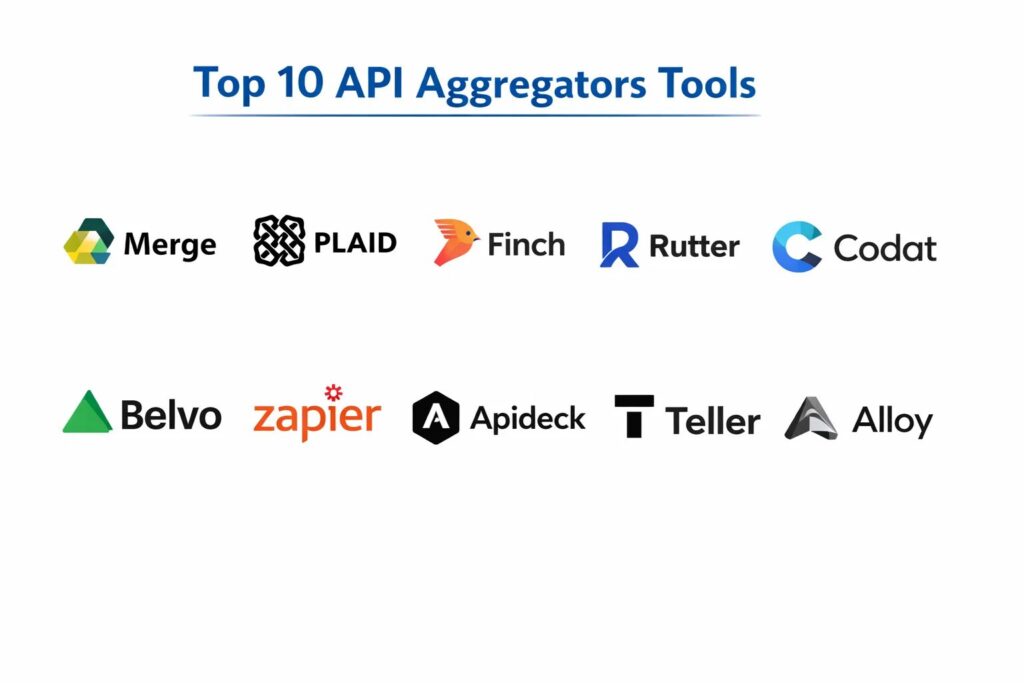
Introduction
API aggregators serve as a unified abstraction layer that connects multiple service providers within a specific category into a single, standardized interface. Instead of a development team writing individual integrations for ten different accounting platforms or twenty different human resource information systems (HRIS), they integrate with one aggregator. This middleware handles the heavy lifting of data normalization, authentication mapping, and protocol translation. From a strategic architectural standpoint, API aggregation transforms the “N+1” integration problem into a consistent “1:1” relationship, drastically reducing the engineering overhead and technical debt associated with maintaining a fragmented ecosystem of external dependencies.
In the current landscape of rapid software delivery, the role of the API aggregator is critical for scaling product interoperability. By using these platforms, organizations can offer their users a vast array of native integrations in a fraction of the traditional development time. This allows engineering teams to focus on core product innovation rather than the constant upkeep of third-party API changes. When evaluating an aggregator, it is vital to assess the breadth of its “unified schemas,” the reliability of its webhooks, and the security of its token management systems. A robust aggregator does more than pass data; it provides a resilient infrastructure that ensures data consistency across disparate systems while maintaining high standards for security and compliance.
Best for: SaaS companies, fintech startups, and enterprise product teams that need to launch multiple third-party integrations quickly and maintain them with minimal resource allocation.
Not ideal for: Simple applications that only require a single, stable integration with one specific provider, or use cases requiring highly non-standard, proprietary data fields that are not covered by a unified schema.
Key Trends in API Aggregators
The industry is currently seeing a massive shift toward “Unified API” models, where specific verticals like payroll, accounting, and CRM are standardized into a single data format. Real-time data synchronization via advanced webhook architectures has replaced traditional polling, ensuring that changes in a source system are reflected in the destination within milliseconds. There is also a significant trend toward “self-serve” integration portals, where end-users can authenticate their own accounts without the developer needing to build custom UI components for every service provider.
Security features are becoming more sophisticated, with many aggregators now offering “vaulting” services that secure sensitive credentials outside of the merchant’s own database. We are also seeing the emergence of AI-driven mapping, where machine learning models automatically align fields from new, obscure APIs into the aggregator’s standardized schema. Furthermore, there is a push for better regional compliance, with aggregators providing localized data residency options to help companies meet the strict requirements of data sovereignty laws across the globe.
How We Selected These Tools
The selection of these top ten API aggregators was based on an analysis of their vertical specialization and technical robustness. We prioritized platforms that have demonstrated high uptime and have a proven track record of handling high-volume data traffic without latency. Market adoption was a key indicator, as tools with more active users tend to have more refined schemas and faster response times for edge-case bug fixes. We also looked for platforms that provide comprehensive developer tools, such as robust sandboxes and detailed request logs.
Technical flexibility was another major criterion, specifically focusing on how easily the aggregator allows developers to access “passthrough” data that might fall outside the standard schema. Security posture was scrutinized to ensure that each platform utilizes enterprise-grade encryption and follows industry-best practices for OAuth management. Finally, we evaluated the breadth of the integration library for each tool, ensuring that they cover the most relevant and widely-used service providers in their respective categories.
1. Merge
Merge is a leading unified API platform that specializes in multiple high-growth categories including HRIS, Payroll, ATS, and CRM. It is designed to provide a single, clean API that allows companies to offer hundreds of integrations to their customers through one technical implementation.
Key Features
The platform features a “Unified Schema” for each of its supported categories, ensuring that data from various providers is returned in a consistent format. It provides a “Linking Flow” UI component that developers can drop into their app to handle user authentication easily. The system includes robust monitoring tools and automated issue detection to alert teams when an integration breaks. It also offers a “Passthrough Request” feature, allowing developers to hit the original source API for any data not covered by the unified model. Additionally, it provides a comprehensive sandbox environment for testing integrations without live data.
Pros
The speed of implementation is significantly high, often reducing months of work into days. Their specialized focus on HR and Payroll makes them experts in handling complex employee data structures.
Cons
The pricing can be a significant investment for smaller startups once they scale past the initial free tier. Some developers may find the abstraction layer limiting for highly specific, non-standard features.
Platforms and Deployment
Cloud-based API service.
Security and Compliance
SOC 2 Type II compliant, GDPR ready, and utilizes end-to-end encryption for sensitive data.
Integrations and Ecosystem
Supports over 150 integrations across HRIS, ATS, Payroll, CRM, and Help Desk categories.
Support and Community
Offers dedicated technical support, detailed documentation, and a proactive developer community.
2. Plaid
Plaid is the gold standard for financial data aggregation, connecting thousands of banks and financial institutions into a single interface. It is the underlying infrastructure for many of the world’s most popular fintech and investment applications.
Key Features
The platform excels at “Auth,” which allows for instant bank account verification for ACH payments. Its “Transactions” API provides high-fidelity, categorized data of a user’s spending habits. It includes “Identity” verification tools that help prevent fraud by cross-referencing bank data with user-provided information. The system also supports “Investments” and “Liabilities” APIs for a full view of a user’s financial health. A specialized “Link” module provides a secure, white-labeled UI for users to connect their bank accounts safely.
Pros
It has the widest coverage of financial institutions in the North American market. Its reputation for security makes it highly trusted by end-users when connecting sensitive accounts.
Cons
Integration can be complex due to the varying security requirements of different banks. In some regions outside the US and UK, institution coverage can be less comprehensive.
Platforms and Deployment
Cloud-based API with SDKs for web, iOS, and Android.
Security and Compliance
Bank-level security, SOC 2 Type II, and PCI DSS compliant.
Integrations and Ecosystem
Connects with over 12,000 financial institutions and integrates with major payment processors.
Support and Community
Extensive developer documentation, active community forums, and professional enterprise support.
3. Finch
Finch provides a unified API specifically for payroll, HRIS, and benefits systems. It is unique in its ability to handle both “read” and “write” operations, allowing applications to not only pull data but also push changes back into the employer’s system.
Key Features
The platform focuses on the “Employment” and “Payment” schemas, providing standardized access to employee records and historical pay data. It enables “Deductions” management, allowing benefits providers to automate payroll adjustments. The “Connect” flow provides a secure way for employers to authorize access using their existing credentials. It includes a dashboard for managing connections across thousands of small-business and enterprise payroll providers. The API is designed to handle the nuances of different state and federal payroll regulations automatically.
Pros
The write-back capability is a major differentiator for benefits and insurance platforms. Their focus on the “long tail” of small-business payroll providers offers excellent coverage.
Cons
The pricing is geared toward professional and enterprise use cases. Because payroll systems are inherently slow, some data syncs can take longer than other types of APIs.
Platforms and Deployment
Cloud-based API infrastructure.
Security and Compliance
SOC 2 Type II compliant and follows strict data privacy standards for handling sensitive PII.
Integrations and Ecosystem
Supports over 200 payroll and HRIS providers, from legacy systems to modern SaaS platforms.
Support and Community
Professional support teams and a specialized technical blog for fintech and HR-tech developers.
4. Rutter
Rutter is a unified API for e-commerce and accounting data. It allows companies to integrate with every major e-commerce platform and accounting software through a single schema, making it essential for fintechs building lending or analytics tools.
Key Features
The platform provides access to “Orders,” “Products,” and “Customers” across various e-marketplaces. Its accounting schema standardizes “Invoices,” “Balance Sheets,” and “Profit and Loss” statements. It features a “Universal Link” that allows merchants to authenticate their stores in a few clicks. The system includes real-time webhooks that trigger whenever a new sale or accounting entry is made. It also provides a robust data-mapping engine that handles the differences between how platforms like Shopify and Amazon store their data.
Pros
It is one of the few aggregators that effectively bridges the gap between commerce data and back-office accounting data. The speed of data retrieval is highly optimized for real-time dashboards.
Cons
Vertical focus is narrower than generalist aggregators. Smaller accounting platforms may have less frequent data refreshes compared to major providers.
Platforms and Deployment
Cloud-native API service.
Security and Compliance
SOC 2 Type II compliant and utilizes advanced token rotation and encryption.
Integrations and Ecosystem
Supports over 40 platforms, including Shopify, Amazon, QuickBooks, Xero, and NetSuite.
Support and Community
Provides dedicated Slack channels for enterprise customers and high-quality technical documentation.
5. Codat
Codat specializes in connecting small business data, specifically in the areas of accounting, banking, and commerce. They are widely used by banks and lenders to automate the financial monitoring of their business customers.
Key Features
The platform focuses on “Financial Data Modernization,” turning messy accounting records into clean, actionable data. It provides a standardized API for pulling full financial statements and granular transaction histories. Its “Sync for Commerce” feature allows point-of-sale systems to automatically post daily sales data into accounting software. It includes a user-friendly “Link” journey for businesses to share their financial data securely. The platform also offers an “Assess” product that helps lenders analyze the creditworthiness of a business based on real-time data.
Pros
They have deep expertise in the nuances of small-business accounting and financial reporting. Their presence in both the UK and US makes them a strong choice for international lenders.
Cons
The platform is highly specialized, so it may not be suitable for companies needing general HR or CRM data. The onboarding process for their enterprise products can be extensive.
Platforms and Deployment
Cloud-based financial data platform.
Security and Compliance
ISO 27001 and SOC 2 Type II certified; GDPR and CCPA compliant.
Integrations and Ecosystem
Connects to over 30 accounting and commerce platforms, including Sage, QuickBooks, and Microsoft Dynamics.
Support and Community
Offers professional services for custom implementations and a detailed knowledge base for financial engineers.
6. Belvo
Belvo is the leading Open Finance API platform in Latin America. It provides unified access to banking, fiscal, and gig-economy data specifically tailored for the Spanish and Portuguese-speaking markets.
Key Features
The platform offers a unified banking API for major financial institutions across Mexico, Brazil, and Colombia. It includes a unique “Fiscal” API that connects directly to local tax authorities for automated income verification. Its “Gig Economy” API allows platforms to verify the earnings of workers on apps like Uber or Rappi. It features a localized “Widget” that provides a familiar and secure login experience for Latin American users. The system is designed to handle the specific regulatory and data format challenges of the LATAM financial landscape.
Pros
Unrivaled coverage in the Latin American market, where global aggregators often struggle. Their ability to pull official tax data is a significant advantage for local lenders.
Cons
Outside of Latin America and Spain, the platform has no coverage. The documentation is excellent but primarily focuses on the specific needs of the LATAM market.
Platforms and Deployment
Cloud-based API with SDKs for web and mobile.
Security and Compliance
Fully compliant with local data protection laws (like LGPD in Brazil) and holds high-level international security certifications.
Integrations and Ecosystem
Connects to over 60 financial institutions and tax authorities in the LATAM region.
Support and Community
Offers localized support in Spanish, Portuguese, and English, with a strong presence in the regional fintech community.
7. Zapier (Tables & Interfaces)
While Zapier is primarily known as an automation tool, its newer “Tables” and “Interfaces” products allow it to act as an API aggregator for low-code and no-code environments, consolidating data from over 6,000 apps.
Key Features
The platform uses “Zaps” to move and transform data between disparate applications automatically. Its “Tables” feature acts as a centralized database where data from multiple APIs can be aggregated and normalized. “Interfaces” allows users to build custom frontends on top of this aggregated data without writing code. It features a massive library of “Transfer” tools for bulk-moving data between systems. The system’s visual builder allows non-technical users to map fields between thousands of different software providers.
Pros
It has the largest integration library in the world, covering almost every SaaS tool imaginable. It is the most accessible aggregator for teams without deep engineering resources.
Cons
For high-volume, real-time data needs, it can be more expensive and slower than dedicated developer APIs. It lacks the deep, unified schemas found in specialized aggregators.
Platforms and Deployment
Web-based platform.
Security and Compliance
SOC 2 and SOC 3 compliant; offers enterprise-grade admin controls and data retention policies.
Integrations and Ecosystem
Connects to over 6,000 applications across every conceivable software category.
Support and Community
Vast library of tutorials, a massive user community, and a large network of certified “Zapier Experts.”
8. Apideck
Apideck is a unified API provider that covers a broad range of categories, including CRM, HRIS, Accounting, and File Storage. They focus heavily on providing a white-labeled “Integration Ecosystem” for SaaS companies.
Key Features
The platform offers “Unified APIs” across 10+ different software categories. Its “Ecosystem” product allows companies to launch their own branded integration marketplace in minutes. It features “Vault,” a secure way to store and manage third-party credentials without them ever touching your server. The system provides a “Proxy” service for direct API access when the unified schema isn’t enough. It includes a robust webhook system that normalizes events from different providers into a single format.
Pros
The “Ecosystem” product is a major time-saver for product teams wanting to show off their integrations to customers. Their broad category coverage makes them a good generalist choice.
Cons
The depth of coverage in a specific category (like Payroll) might not be as deep as a specialized provider. Their pricing model is based on active connections, which can scale quickly.
Platforms and Deployment
Cloud-native API and marketplace builder.
Security and Compliance
SOC 2 Type II compliant and follows strict data isolation practices for multi-tenant security.
Integrations and Ecosystem
Supports over 100 integrations across CRM, HR, Accounting, and Productivity tools.
Support and Community
Detailed API documentation and a dedicated Slack community for developers.
9. Teller
Teller is a high-performance banking API aggregator that distinguishes itself by not using “screen scraping.” Instead, it connects directly to bank internal APIs, offering higher reliability and speed than traditional methods.
Key Features
The platform focuses on “Real-Time” data access, with transactions appearing as soon as they happen. It provides “Instant Auth” for account verification without the wait times associated with micro-deposits. Its “Payments” API allows for direct, account-to-account money transfers. It features a mobile-native “Link” UI that is highly optimized for banking apps. The system is built from the ground up to avoid the fragility of web-scraping, leading to significantly fewer broken connections.
Pros
The speed and reliability are significantly higher than older aggregators. It provides the most “direct” connection possible to major US banks.
Cons
Coverage is currently limited to the United States. They support fewer institutions than Plaid, focusing on the quality of the connection over the quantity.
Platforms and Deployment
Cloud-based API with a focus on mobile-first implementation.
Security and Compliance
Does not store user credentials; uses hardware-backed security and is SOC 2 compliant.
Integrations and Ecosystem
Connects to major US banks including Chase, Wells Fargo, and Bank of America.
Support and Community
Offers high-touch technical support and a minimalist, developer-focused API design.
10. Alloy
Alloy is an “Integration Platform as a Service” (IPaaS) that functions as an aggregator for e-commerce brands and SaaS tools. It allows for complex data orchestration and aggregation across marketing, shipping, and commerce APIs.
Key Features
The platform features a “Unified API” for e-commerce that standardizes data from platforms like Shopify, BigCommerce, and Magento. Its “Workflow” engine allows for complex logic to be applied to aggregated data before it is sent to a destination. It includes “Embedded,” which allows SaaS companies to provide a native integration experience to their users. The system features a vast library of pre-built “Recipes” for common integration use cases. It also provides a robust logging and debugging suite to track data as it moves between systems.
Pros
It is exceptionally strong for e-commerce-specific workflows. The ability to embed the entire integration experience into your own app is a major advantage for product teams.
Cons
The platform is very powerful, which can lead to a slightly steeper learning curve than simpler aggregators. It is primarily focused on commerce and marketing, lacking HR or banking coverage.
Platforms and Deployment
Web-based platform and embedded SDK.
Security and Compliance
SOC 2 Type II compliant and follows enterprise data protection standards.
Integrations and Ecosystem
Supports over 200 integrations focusing on the e-commerce, marketing, and ERP stack.
Support and Community
Dedicated customer success managers for enterprise clients and an active community of e-commerce developers.
Comparison Table
| Tool Name | Best For | Platform(s) Supported | Deployment | Standout Feature | Public Rating |
| 1. Merge | HRIS & Payroll | Web | Cloud | Unified HR/Payroll Schema | 4.8/5 |
| 2. Plaid | Fintech Banking | Web, iOS, Android | Cloud | 12,000+ Bank Coverage | 4.9/5 |
| 3. Finch | Payroll Write-back | Web | Cloud | Read/Write Payroll Access | 4.7/5 |
| 4. Rutter | E-commerce/Accounting | Web | Cloud | Commerce-to-Accounting Link | 4.6/5 |
| 5. Codat | SMB Financials | Web | Cloud | Small Biz Credit Analysis | 4.7/5 |
| 6. Belvo | LATAM Open Finance | Web, Mobile | Cloud | LATAM Fiscal/Tax Access | 4.8/5 |
| 7. Zapier | Low-code Automation | Web | Cloud | 6,000+ App Library | 4.5/5 |
| 8. Apideck | SaaS Marketplaces | Web | Cloud | White-labeled Marketplace | 4.6/5 |
| 9. Teller | High-perf Banking | Web, Mobile | Cloud | Scraping-free Connectivity | 4.9/5 |
| 10. Alloy | E-commerce Workflows | Web | Cloud | Embedded Commerce SDK | 4.7/5 |
Evaluation & Scoring of API Aggregators
The scoring below is a comparative model intended to help shortlisting. Each criterion is scored from 1–10, then a weighted total from 0–10 is calculated using the weights listed. These are analyst estimates based on typical fit and common workflow requirements, not public ratings.
Weights:
- Core features – 25%
- Ease of use – 15%
- Integrations & ecosystem – 15%
- Security & compliance – 10%
- Performance & reliability – 10%
- Support & community – 10%
- Price / value – 15%
| Tool Name | Core (25%) | Ease (15%) | Integrations (15%) | Security (10%) | Performance (10%) | Support (10%) | Value (15%) | Weighted Total |
| 1. Merge | 10 | 9 | 9 | 9 | 9 | 9 | 7 | 8.95 |
| 2. Plaid | 10 | 8 | 10 | 10 | 9 | 9 | 8 | 9.25 |
| 3. Finch | 9 | 8 | 9 | 9 | 8 | 9 | 8 | 8.65 |
| 4. Rutter | 9 | 8 | 8 | 9 | 9 | 8 | 8 | 8.45 |
| 5. Codat | 9 | 7 | 8 | 9 | 9 | 9 | 8 | 8.40 |
| 6. Belvo | 9 | 8 | 8 | 9 | 9 | 9 | 9 | 8.80 |
| 7. Zapier | 6 | 10 | 10 | 8 | 6 | 9 | 8 | 7.70 |
| 8. Apideck | 8 | 8 | 9 | 9 | 8 | 8 | 9 | 8.40 |
| 9. Teller | 9 | 9 | 7 | 10 | 10 | 8 | 9 | 8.85 |
| 10. Alloy | 9 | 8 | 9 | 9 | 9 | 9 | 7 | 8.65 |
How to interpret the scores:
- Use the weighted total to shortlist candidates, then validate with a pilot.
- A lower score can mean specialization, not weakness.
- Security and compliance scores reflect controllability and governance fit, because certifications are often not publicly stated.
- Actual outcomes vary with assembly size, team skills, templates, and process maturity.
Which API Aggregator Tool Is Right for You?
Solo / Freelancer
For individuals building small projects or simple prototypes, Zapier is the most effective choice. It allows you to aggregate data from thousands of apps without writing any code, which is perfect for testing a business concept quickly and at a low cost.
SMB
Small businesses that need to offer professional-grade integrations to their customers should look at Apideck or Rutter. These platforms provide a professional user experience and standardized data schemas without the enterprise-level overhead and cost of some larger competitors.
Mid-Market
For high-growth SaaS companies, Merge or Alloy are standout choices. They offer the scalability and depth of features needed to manage a rapidly expanding list of customer integrations, while their robust developer tools help keep the engineering team’s focus on the core product.
Enterprise
Large organizations with massive data requirements and strict security needs will gravitate toward Plaid, Codat, or Teller. These platforms provide the highest levels of reliability, security certifications, and direct institutional connectivity required for enterprise-scale operations.
Budget vs Premium
If budget is the primary concern, Zapier and the entry-level tiers of Merge or Apideck offer the most accessible paths. For those willing to pay a premium for performance and reliability, Teller and Plaid provide unmatched speed and connectivity.
Feature Depth vs Ease of Use
Zapier is the leader for ease of use but lacks the deep technical control of an API. For developers who need total control over data mapping and passthrough requests, Merge and Finch offer the best balance of technical depth and developer experience.
Integrations & Scalability
If your goal is to have the widest possible number of integrations, Plaid (for banking) and Merge (for HR/Payroll) provide the most comprehensive libraries. Zapier is the global leader for sheer volume across all categories.
Security & Compliance Needs
All tools listed here take security seriously, but Plaid, Teller, and Codat have the most extensive histories in the highly regulated financial sector, making them the safest bets for companies handling sensitive financial information or PII.
Frequently Asked Questions (FAQs)
1. What is the difference between an API Aggregator and an IPaaS?
An aggregator focuses on standardizing multiple APIs into a single schema for a specific vertical, while an IPaaS is a more general-purpose tool for moving and transforming data between any two systems using logic and workflows.
2. Is using an aggregator more secure than direct integration?
It can be, as aggregators are experts in managing sensitive tokens and following the latest security protocols. However, it does introduce a third party into your data chain, so vetting their security certifications is essential.
3. Does using an aggregator slow down my application?
While an extra hop does add a small amount of latency, modern aggregators are highly optimized. In most cases, the difference is negligible compared to the time saved in development and maintenance.
4. What is a “Passthrough Request”?
A passthrough request is a feature that allows a developer to bypass the aggregator’s unified schema and hit the source API directly. This is useful for accessing niche data points that the aggregator hasn’t standardized yet.
5. How do aggregators handle breaking changes in source APIs?
The aggregator’s engineering team monitors all their supported platforms. When an API changes, they update their mapping in the background, so your code doesn’t break, and the data remains consistent.
6. Can I build my own API aggregator?
Technically yes, but it is extremely resource-intensive. You would need to write and maintain dozens of individual integrations, manage different authentication methods, and constantly update your code as third-party APIs change.
7. How do aggregators handle data normalization?
They map various fields from different providers (e.g., “first_name” vs “given_name”) into a single, consistent field in their schema. This allows you to write your code once to handle that field regardless of the source.
8. Do aggregators work in real-time?
Most modern aggregators use webhooks to push data to you as soon as a change is detected in the source system. This is much faster and more efficient than older methods that relied on periodic polling.
9. What is a “Unified API”?
A Unified API is the interface provided by an aggregator that represents a whole category of software (like CRM). It allows you to use one set of endpoints to talk to Salesforce, HubSpot, and Pipedrive simultaneously.
10. What happens if an aggregator goes down?
Like any cloud service, if the aggregator is down, your integrations will be offline. This is why it is critical to choose providers with high uptime guarantees and robust redundancy measures.
Conclusion
The adoption of an API aggregator is a pivotal decision that fundamentally shifts the focus of an engineering team from “integration maintenance” to “product innovation.” By abstracting away the complexity of third-party connectivity, these platforms allow businesses to remain agile and responsive in an increasingly interconnected software world. As we look toward an ecosystem defined by Open Finance and decentralized data, the ability to rapidly and securely bridge disparate systems will remain a competitive necessity. The key is to select a partner whose specialized schema, security posture, and integration breadth align with your long-term product roadmap. Success in the modern digital economy requires being “integrated by default,” and these aggregators provide the infrastructure to make that a reality.