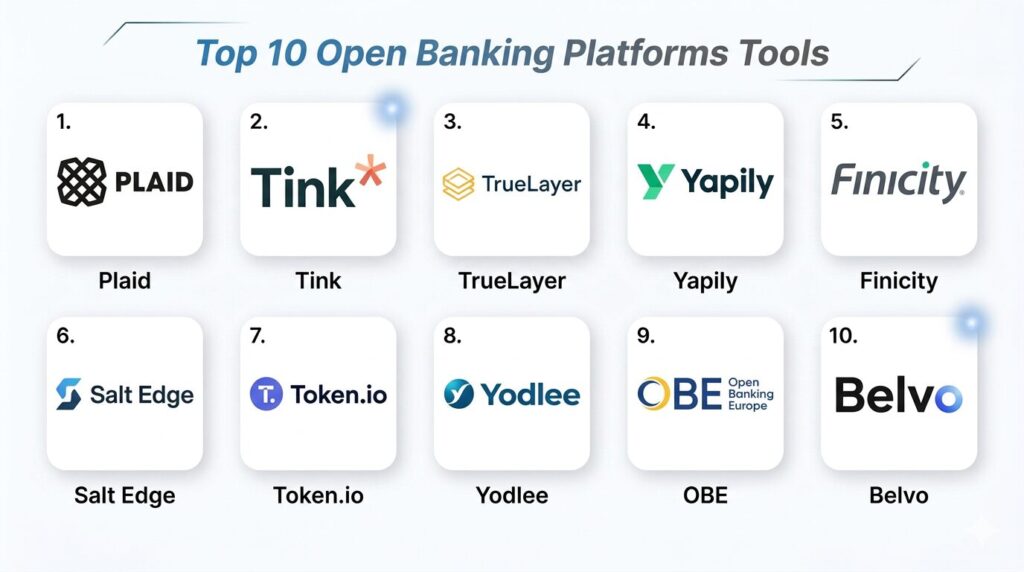
Introduction
Open Banking platforms represent a paradigm shift in the global financial services industry, moving the sector from closed, siloed systems to an interoperable API-driven ecosystem. By enabling the secure sharing of financial data between traditional banks and third-party providers, these platforms empower consumers and businesses to gain unprecedented control over their financial lives. This technology serves as the underlying infrastructure for a wide array of modern financial services, including real-time account aggregation, automated credit scoring, instant payment initiation, and personalized wealth management. For financial institutions and fintech developers, these platforms act as the standardized gateway to thousands of disparate banking systems.
In the current global financial landscape, Open Banking is the primary driver of competition and innovation, forcing a move toward “embedded finance” where banking services are integrated directly into non-financial applications. The shift is supported by various regulatory frameworks such as PSD2 in Europe and similar market-driven initiatives globally, which mandate that banks provide secure access to customer data upon consent. A robust Open Banking platform handles the heavy lifting of API normalization, consent management, and high-security data transmission, allowing developers to focus on building user-centric products. When selecting a platform, organizations must evaluate the breadth of bank coverage, the latency of data retrieval, the success rates of payment initiations, and the rigor of their regulatory compliance posture.
Best for: Fintech startups, traditional banks looking to expand their digital offerings, e-commerce merchants seeking lower-cost payment methods, and lending institutions requiring real-time income verification.
Not ideal for: Organizations purely looking for internal accounting software without external data needs, or small businesses with no requirement for automated financial data synchronization or digital payment initiation.
Key Trends in Open Banking Platforms
The evolution of Open Banking is rapidly moving toward “Open Finance,” which expands data sharing beyond checking accounts to include investments, pensions, and insurance. This provides a truly holistic view of a user’s financial health and enables more sophisticated automated financial advice. We are also seeing a significant rise in “Variable Recurring Payments” (VRPs), which offer a more flexible and secure alternative to traditional direct debits and card-on-file transactions. This allows for automated sweeping of funds between accounts and smarter subscription management with real-time control for the end-user.
Artificial Intelligence is being deeply integrated into these platforms to provide advanced transaction categorization and “financial health” scoring. By analyzing thousands of data points in real-time, platforms can now predict cash flow issues or identify suspicious activity with much higher accuracy than traditional methods. There is also a heightened focus on “Biometric Consent” and passwordless authentication, making the user journey for data sharing and payments much smoother. Furthermore, as the technology matures, we are seeing a move toward global API standards, which will eventually allow for seamless cross-border financial services that operate as easily as local transactions.
How We Selected These Tools
Our selection process involved a comprehensive assessment of API reliability and the geographical breadth of bank connectivity. We prioritized platforms that maintain direct, high-quality connections to major financial institutions to ensure the highest data accuracy and the lowest latency. A critical factor was the “Regulatory Footprint,” evaluating each platform’s licensing status and its ability to operate across multiple jurisdictions while maintaining strict compliance with local data protection laws. We looked for platforms that offer a developer-first experience, featuring robust documentation, sandboxes, and easy-to-integrate SDKs.
Scalability was a major consideration; we selected platforms that can support high-volume transaction environments and provide consistent performance under heavy load. We scrutinized the depth of the data enrichment layers, favoring platforms that go beyond raw data to provide meaningful insights like merchant identification and recurring spend detection. Security protocols were audited to ensure they meet the highest global standards, including end-to-end encryption and robust identity verification. Finally, we assessed the performance of the payment initiation services, focusing on conversion rates and the speed of fund settlement, which are vital for merchants and fintech providers.
1. Plaid
Plaid is a global leader in Open Banking, acting as the data layer for thousands of the world’s most popular fintech applications. It is renowned for its extensive network of connections to financial institutions and its highly refined user authentication flow, known as Plaid Link.
Key Features
The platform features “Assets,” which provides a consolidated view of a user’s financial history for lending and credit decisions. It includes “Signal,” an AI-driven tool that predicts the likelihood of a transaction returning or failing. The system offers “Income” for real-time verification of employment and earnings directly from the source. It features “Identity,” which validates user information against bank records to reduce fraud during onboarding. Additionally, its “Transfer” module enables seamless ACH payments and fund movements within the same integrated environment.
Pros
It offers the most recognized and trusted user interface for bank linking, resulting in high conversion rates. Its developer documentation and SDKs are considered the industry benchmark for ease of use.
Cons
The pricing can be higher than some regional competitors, particularly for high-volume users. Some smaller or regional banks may still experience intermittent connection stability.
Platforms and Deployment
Web-based API with SDKs for iOS, Android, and various web frameworks.
Security and Compliance
Adheres to rigorous security standards including SOC 2 Type II and utilizes advanced encryption for all data in transit and at rest.
Integrations and Ecosystem
Integrates with thousands of financial apps and services, including deep links with major accounting and payroll systems.
Support and Community
Offers a massive developer community, detailed documentation, and a dedicated support portal for enterprise clients.
2. Tink (A Visa Solution)
Tink, now part of Visa, is a dominant Open Banking platform in Europe, providing a comprehensive suite of data and payment services. It focuses on helping banks and fintechs build personalized financial management tools and streamlined payment journeys.
Key Features
The platform features a robust “Account Aggregation” engine that connects to over 3,400 banks across Europe. It includes “Payment Initiation” services that allow for instant, bank-to-bank transfers with high success rates. The system offers “Money Manager” components that provide ready-to-use financial insights and budgeting tools. It features “Data Enrichment” which turns raw transaction data into labeled categories and merchant names. It also provides “Credit Assessment” tools that use real-time data to provide a more accurate view of a borrower’s risk.
Pros
Being a Visa solution provides an extra layer of institutional trust and global reach. Its coverage of the European banking market is exceptionally deep and reliable.
Cons
The platform is primarily focused on the European market, which may limit its utility for global organizations. The integration process for some legacy bank connections can be complex.
Platforms and Deployment
Cloud-based API platform.
Security and Compliance
Fully licensed as a Third-Party Provider (TPP) under PSD2 and maintains top-tier security certifications.
Integrations and Ecosystem
Deeply integrated into the Visa network and compatible with major banking and financial technology stacks.
Support and Community
Provides professional implementation support and extensive technical documentation for developers.
3. TrueLayer
TrueLayer is a leading provider of Open Banking payments and data, specifically focused on the UK and European markets. It is known for its high-performance payment infrastructure that offers a faster and more secure alternative to traditional cards.
Key Features
The platform features “Payments,” which allows for instant, authenticated bank transfers that eliminate the risk of chargebacks. It includes “Payouts,” enabling businesses to send funds back to customers’ bank accounts in seconds. The system offers “Data” for real-time account verification and balance checks. It features a “Variable Recurring Payments” (VRP) module for flexible, automated payments. It also provides a “Sign-up” tool that combines identity verification with account linking for a faster onboarding experience.
Pros
Its payment initiation service is among the fastest and most reliable in the industry. The platform is built with a “developer-first” mentality, making it very easy to integrate and test.
Cons
The geographical focus is currently more limited compared to global players like Plaid. Some features, like VRP, are still maturing and subject to regional bank adoption.
Platforms and Deployment
Web-based API with mobile-responsive interfaces.
Security and Compliance
Regulated by the FCA in the UK and equivalent bodies in Europe, ensuring full compliance with PSD2 and GDPR.
Integrations and Ecosystem
Integrates with major e-commerce platforms and fintech service providers through a flexible API.
Support and Community
Provides an active developer forum, comprehensive guides, and dedicated success managers for larger accounts.
4. Yapily
Yapily is a unique Open Banking platform that focuses on providing a purely “infrastructure-led” approach. It does not provide a consumer-facing interface, allowing businesses to have total control over the user experience and branding.
Key Features
The platform features “Yapily Connect,” providing a single API to access thousands of banks across the UK and Europe. It includes “Yapily Payments” for direct bank-to-bank transactions without intermediaries. The system offers “Yapily Data” for deep financial insights and real-time account information. It features a “Bulk Payments” module for processing large volumes of transactions simultaneously. It also provides “Yapily VRP” for the next generation of automated, recurring bank transfers.
Pros
The “white-label” nature of the platform allows for a completely seamless brand experience. Its API is highly performant and designed for high-scale enterprise environments.
Cons
Because it doesn’t provide a UI, businesses must build their own consent and authentication screens. This requires more front-end development resources during initial setup.
Platforms and Deployment
Cloud-native API infrastructure.
Security and Compliance
Maintains full regulatory compliance as a TPP and follows strict data privacy and encryption protocols.
Integrations and Ecosystem
Designed to be an invisible layer that plugs into existing business systems and financial workflows.
Support and Community
Offers deep technical support and a specialized knowledge base for developers building custom interfaces.
5. Finicity (A Mastercard Company)
Finicity, a Mastercard company, is a powerhouse in the North American Open Banking market. It specializes in providing high-quality data for the lending, wealth management, and digital banking sectors, with a strong focus on data accuracy and consumer permissioning.
Key Features
The platform features “Digital Verification of Income and Employment” (VOIE) for rapid loan processing. It includes “Mortgage Verification” services that automate the collection of financial data for home buyers. The system offers “Data Enhancement” tools that clean and categorize transaction data for better financial insights. It features “Account Owner Verification” to prevent fraud and ensure the right person is linking the account. It also provides a robust “Consent Management” platform that gives users clear control over their data.
Pros
Its deep integration with the Mastercard network provides massive scale and reliability. It is a leader in “Direct Access” connections, which are more stable than traditional screen scraping.
Cons
The platform is very focused on North America, with less presence in other global regions. The feature set is heavily weighted toward the lending and credit sectors.
Platforms and Deployment
Cloud-based API platform.
Security and Compliance
Adheres to the highest financial security standards and is fully compliant with US data privacy regulations.
Integrations and Ecosystem
Seamlessly integrates with Mastercard’s broader suite of financial services and major mortgage industry platforms.
Support and Community
Provides enterprise-level support and professional services for large-scale implementations.
6. Salt Edge
Salt Edge is a global Open Banking provider that offers a wide range of services including data aggregation, payment initiation, and compliance solutions for banks. It is one of the most geographically diverse platforms in the market.
Key Features
The platform features “Account Information API” with connections to over 5,000 financial institutions in 50+ countries. It includes “Payment Initiation API” for secure, low-cost digital payments. The system offers “Spectre,” a data enrichment engine that categorizes transactions and identifies merchants. It features a “Compliance Solution” for banks, helping them meet Open Banking regulatory requirements quickly. It also provides a “White Label” mobile app for personal finance management.
Pros
Offers one of the widest geographical footprints, making it ideal for international organizations. Its “Compliance-as-a-Service” model is a major benefit for smaller banks.
Cons
The vast number of connections can lead to varying levels of data quality depending on the specific region. The interface is more functional than aesthetic.
Platforms and Deployment
Web-based API and hosted solutions.
Security and Compliance
Fully licensed and compliant with global standards including PSD2, GDPR, and ISO 27001.
Integrations and Ecosystem
Integrates with a vast array of ERP and accounting systems across multiple global markets.
Support and Community
Offers a detailed technical portal and responsive customer support for both fintechs and banks.
7. Token.io
Token.io is a specialized Open Banking platform that focuses intensely on account-to-account (A2A) payments. It is designed to help banks, merchants, and gateways offer a seamless and lower-cost alternative to traditional card payments.
Key Features
The platform features “Token Pay,” which provides instant, authenticated A2A payments across Europe. It includes “Token Data” for real-time account information and balance checks. The system offers a “White Label” payment portal that can be fully customized by the merchant. It features “Virtual Accounts” for real-time reconciliation and settlement of payments. It also provides a “Variable Recurring Payments” (VRP) engine for modern subscription billing.
Pros
Its focus on A2A payments makes it one of the most optimized platforms for high-conversion checkout experiences. It provides deep coverage of the European banking infrastructure.
Cons
It is less focused on broader data aggregation or lending-specific features than some of its peers. Its utility is primarily for payment-centric business models.
Platforms and Deployment
Cloud-based API platform.
Security and Compliance
Regulated as a TPP and follows strict security protocols to protect transaction and identity data.
Integrations and Ecosystem
Integrates with major payment service providers and e-commerce gateways to extend A2A payment reach.
Support and Community
Provides dedicated account management and a comprehensive developer portal for rapid integration.
8. Envestnet | Yodlee
Envestnet | Yodlee is one of the longest-standing players in the financial data aggregation space. It provides a massive global data platform that serves the largest financial institutions and fintechs in the world.
Key Features
The platform features “Financial Data Aggregation” with access to over 17,000 data sources globally. It includes “Data Enrichment” that uses machine learning to clean and categorize transaction data at scale. The system offers “Wealth Management” tools that provide a 360-degree view of a user’s investments and liabilities. It features “Identity Verification” for secure user onboarding and fraud prevention. It also provides “Credit Accelerator” tools that use alternative data to help lenders make better decisions.
Pros
Its scale and longevity mean it has connections to almost any financial institution imaginable. It offers some of the most sophisticated wealth and investment data in the industry.
Cons
The platform’s legacy architecture can sometimes feel less “agile” than newer, API-first competitors. The integration process can be more time-consuming due to the sheer size of the system.
Platforms and Deployment
Global cloud platform with flexible deployment options.
Security and Compliance
Adheres to the highest global banking security standards and is regularly audited by major financial regulators.
Integrations and Ecosystem
Integrates with a vast network of professional financial planning and investment management software.
Support and Community
Provides professional implementation services and a massive library of technical and industry resources.
9. Open Banking Exchange (OBE)
Open Banking Exchange is a unique entity that focuses on providing the operational and collaborative framework for Open Banking ecosystems. It is less of a direct API provider and more of a “functional layer” that ensures interoperability and security across the industry.
Key Features
The platform features a “Directory of TPPs and Banks,” ensuring that only authorized entities can share data. It includes “Interoperability Testing” tools to ensure that different Open Banking implementations can work together. The system offers “Common Standards” and best practice guidelines for data sharing and payments. It features “Regulatory Monitoring” to help members stay ahead of changing global rules. It also provides a “Dispute Management” framework for resolving issues between banks and third-party providers.
Pros
It is the “gold standard” for ensuring trust and security within an Open Banking ecosystem. It is an essential partner for banks looking to build compliant and interoperable APIs.
Cons
It does not provide the direct consumer data or payment initiation features that developers might expect from a “platform.” Its value is primarily at the institutional and regulatory level.
Platforms and Deployment
Institutional portal and standardized directory services.
Security and Compliance
Focuses entirely on the enforcement and maintenance of global Open Banking security and regulatory standards.
Integrations and Ecosystem
Acts as the central node connecting banks, TPPs, and regulators within a specific geographic or functional market.
Support and Community
Provides a collaborative environment for industry leaders and regulators to shape the future of Open Banking.
10. Belvo
Belvo is the leading Open Banking platform for Latin America, providing the infrastructure for the next generation of financial services in a rapidly digitizing market. It focuses on connecting fintechs with banking and fiscal data across Mexico, Brazil, and Colombia.
Key Features
The platform features “Banking Data” access to the major financial institutions in the LATAM region. It includes “Fiscal Data” integration, allowing for the retrieval of tax information for better credit scoring. The system offers “Payment Initiation” specifically designed for the unique payment landscapes of Latin America. It features “Categorization and Insights” for turning raw transaction data into actionable financial profiles. It also provides “Retail and Gig Economy” data connections to capture a wider view of user income.
Pros
It is the undisputed leader in the LATAM region, providing connections that global players often lack. Its inclusion of fiscal data provides a major advantage for local lending products.
Cons
The platform is strictly limited to Latin American markets, making it irrelevant for other global regions. The regulatory environment in some of these markets is still maturing.
Platforms and Deployment
Cloud-based API platform.
Security and Compliance
Adheres to local data protection laws and maintains international security standards for financial data.
Integrations and Ecosystem
Deeply integrated with the leading fintech startups and digital banks across Latin America.
Support and Community
Provides localized support and documentation specifically tailored for developers in the LATAM market.
Comparison Table
| Tool Name | Best For | Platform(s) Supported | Deployment | Standout Feature | Public Rating |
| 1. Plaid | Global / North America | iOS, Android, Web | Cloud API | Plaid Link UI | 4.8/5 |
| 2. Tink | European Market | Web-Based | Cloud SaaS | Visa Network Scale | 4.7/5 |
| 3. TrueLayer | Instant A2A Payments | Web, Mobile | Cloud API | VRP Implementation | 4.7/5 |
| 4. Yapily | White-Label Infra | Web-Based | Cloud-Native | Infrastructure-Only | 4.6/5 |
| 5. Finicity | Lending / Credit | Web-Based | Cloud SaaS | VOIE Income Verify | 4.5/5 |
| 6. Salt Edge | Global / Compliance | Web, Mobile | Hybrid | Compliance-as-a-Service | 4.4/5 |
| 7. Token.io | Payment Gateways | Web-Based | Cloud API | Token Pay A2A | 4.6/5 |
| 8. Yodlee | Wealth / Enterprise | Global Cloud | Enterprise Cloud | Investment Data Scale | 4.3/5 |
| 9. OBE | Standards / Trust | Web Portal | Institutional | Trust Framework | 4.2/5 |
| 10. Belvo | Latin America Market | Web-Based | Cloud API | Fiscal Data Connect | 4.7/5 |
Evaluation & Scoring of Open Banking Platforms
The scoring below is a comparative model intended to help shortlisting. Each criterion is scored from 1–10, then a weighted total from 0–10 is calculated using the weights listed. These are analyst estimates based on typical fit and common workflow requirements, not public ratings.
Weights:
- Core features – 25%
- Ease of use – 15%
- Integrations & ecosystem – 15%
- Security & compliance – 10%
- Performance & reliability – 10%
- Support & community – 10%
- Price / value – 15%
| Tool Name | Core (25%) | Ease (15%) | Integrations (15%) | Security (10%) | Performance (10%) | Support (10%) | Value (15%) | Weighted Total |
| 1. Plaid | 10 | 10 | 9 | 9 | 9 | 9 | 8 | 9.35 |
| 2. Tink | 9 | 8 | 9 | 10 | 9 | 8 | 7 | 8.55 |
| 3. TrueLayer | 9 | 9 | 8 | 9 | 10 | 9 | 8 | 8.90 |
| 4. Yapily | 8 | 6 | 9 | 9 | 9 | 8 | 8 | 7.95 |
| 5. Finicity | 9 | 7 | 8 | 10 | 8 | 8 | 7 | 8.05 |
| 6. Salt Edge | 8 | 7 | 8 | 9 | 8 | 8 | 9 | 8.00 |
| 7. Token.io | 8 | 8 | 8 | 9 | 9 | 8 | 8 | 8.10 |
| 8. Yodlee | 10 | 5 | 9 | 10 | 8 | 7 | 6 | 7.95 |
| 9. OBE | 6 | 5 | 7 | 10 | 8 | 9 | 6 | 6.80 |
| 10. Belvo | 8 | 8 | 7 | 8 | 8 | 8 | 9 | 7.95 |
How to interpret the scores:
- Use the weighted total to shortlist candidates, then validate with a pilot.
- A lower score can mean specialization, not weakness.
- Security and compliance scores reflect controllability and governance fit, because certifications are often not publicly stated.
- Actual outcomes vary with assembly size, team skills, templates, and process maturity.
Which Open Banking Platform Tool Is Right for You?
Solo / Freelancer
For early-stage fintech founders, the most important factor is speed-to-market and a high-quality user experience. You need a platform that provides a “plug-and-play” linking interface so you don’t have to build complex front-end components. A tool with a robust developer sandbox and transparent documentation will allow you to build a prototype and validate your concept with minimal overhead.
SMB
Small startups should look for platforms that offer a wide breadth of connections but also provide high-quality “enriched” data. This allows a small team to build sophisticated features like automated budgeting or credit analysis without needing an in-house data science department. A platform with a flexible pricing model that scales as you grow will help manage burn rates in the early stages.
Mid-Market
Mid-sized financial institutions or merchants should focus on conversion rates and payment reliability. At this scale, the difference between a 90% and a 95% payment success rate can have a significant impact on revenue. You should look for platforms that offer advanced features like VRP and payouts to build a truly modern and efficient financial experience for your customers.
Enterprise
Large corporations and global banks require a system that offers the highest levels of security, redundancy, and regulatory compliance. You need a partner that can handle multi-regional data needs and provide deep institutional knowledge. The ability to manage your own branding while leveraging a powerful underlying infrastructure is often a key requirement at this level.
Budget vs Premium
If budget is the primary concern, some platforms offer lower costs for basic data aggregation or “open-source” standards. However, “premium” platforms often justify their cost through higher connection stability and better data enrichment. For businesses where data accuracy is critical—such as lending or wealth management—investing in a premium provider often yields a higher long-term ROI.
Feature Depth vs Ease of Use
Some platforms provide a very deep “infrastructure-only” service that gives you total control but requires more engineering effort. Others offer a more “packaged” service that is easier to deploy but may limit your ability to customize the user journey. Your choice should depend on the size and expertise of your engineering team and your specific branding requirements.
Integrations & Scalability
Your Open Banking platform must be able to scale as your transaction volume grows. It is vital to choose a partner that not only connects to banks but also integrates seamlessly with your broader technical ecosystem, including your CRM, accounting software, and risk management tools. A flexible API that can be extended to new markets or features is a key consideration for long-term growth.
Security & Compliance Needs
In the financial sector, security is non-negotiable. You must ensure that your chosen platform is fully licensed and compliant with the regulations in every region where you operate. Look for a partner that takes a proactive approach to security and provides clear documentation and tools to help you maintain your own compliance posture.
Frequently Asked Questions (FAQs)
1. What is the difference between Open Banking and screen scraping?
Open Banking uses standardized, secure APIs authorized by banks to share data, whereas screen scraping involves an application using a user’s login credentials to “read” data from a webpage. Open Banking is significantly more secure, faster, and more reliable than traditional screen scraping methods.
2. Is Open Banking data sharing safe for consumers?
Yes, Open Banking is designed with security as a primary focus. Data is only shared with the user’s explicit consent, and only with authorized and regulated providers. Encryption and robust authentication ensure that sensitive financial information remains protected throughout the process.
3. What happens if a user wants to stop sharing their data?
Open Banking platforms must provide a clear and easy way for users to manage and revoke their consent at any time. Once consent is revoked, the third-party provider can no longer access the user’s financial data, ensuring the consumer remains in total control.
4. How does Open Banking help in the lending process?
By providing real-time access to a borrower’s income and spending habits, Open Banking allows lenders to make more accurate and faster credit decisions. This often results in better loan terms for the consumer and lower risk for the financial institution.
5. Can Open Banking be used for international payments?
While many Open Banking platforms are currently focused on specific regions like the UK or Europe, the industry is moving toward global interoperability. Some providers already offer cross-border data and payment services, though success rates can vary by market.
6. Do I need a special license to use an Open Banking platform?
If you are using a platform to access data or initiate payments, you often don’t need your own license as the platform acts as the regulated “agent.” However, requirements vary by jurisdiction, so it is important to check with your chosen provider.
7. What are Variable Recurring Payments (VRP)?
VRP is a modern Open Banking feature that allows for automated, recurring payments between accounts with more control and flexibility than traditional direct debits. It is ideal for sweeping funds into savings or managing subscription-based billing.
8. Why do some banks have better Open Banking APIs than others?
The quality of a bank’s API often depends on their legacy technical infrastructure and their strategic commitment to Open Banking. Newer “digital-first” banks typically have more robust APIs than older institutions undergoing digital transformation.
9. How does data enrichment work in Open Banking?
Data enrichment uses machine learning to clean raw transaction data and add meaningful labels, such as the merchant’s name and the category of spend. This turns a cryptic line of code into an insight that is easy for a human or an algorithm to understand.
10. Is Open Banking only for personal accounts?
No, Open Banking also applies to business accounts. This allows companies to automate their accounting, manage their cash flow more effectively, and access better financial products tailored for small and medium-sized enterprises.
Conclusion
Open Banking platforms have fundamentally transformed the financial landscape by replacing monolithic, closed systems with a vibrant ecosystem of interconnected services. For any organization looking to thrive in the modern financial economy, selecting the right Open Banking partner is a critical strategic decision that determines the quality of the user experience and the efficiency of operational workflows. Whether you are building a niche fintech product or a global enterprise payment system, the right platform provides the secure, scalable, and compliant infrastructure needed to turn financial data into meaningful consumer value. As the industry moves toward Open Finance, these platforms will remain the essential gateway to a truly integrated digital future.