Introduction
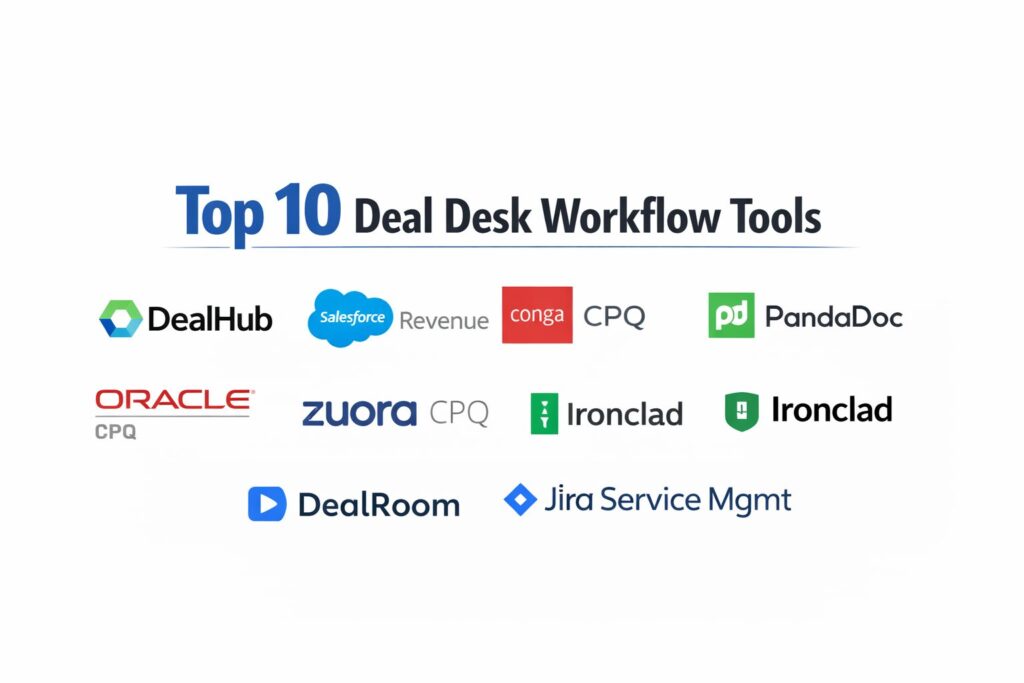
A Deal Desk acts as the strategic nerve center of a high-growth sales organization, where finance, legal, and sales operations converge to finalize complex transactions. In modern revenue ecosystems, the “Deal Desk” is no longer just a physical meeting but a digital workflow powered by specialized software designed to eliminate friction in the quote-to-cash lifecycle. These tools are engineered to handle multi-dimensional pricing models, intricate approval hierarchies, and the rigorous compliance requirements of enterprise-level contracts. By centralizing deal governance, organizations can ensure that every quote issued is both profitable and contractually sound, effectively bridging the gap between aggressive sales targets and disciplined financial oversight.
The technical complexity of a Deal Desk platform extends beyond simple document storage; it involves sophisticated rules engines that manage discount guardrails and product interdependencies. These platforms provide a “single source of truth” for deal data, preventing the fragmentation that occurs when approvals are buried in email threads or disparate spreadsheets. For a revenue operations leader, the primary objective is to decrease the “Deal Cycle Time” while increasing “Net Revenue Retention” through structured renewal and expansion workflows. A robust Deal Desk tool is not merely an administrative layer; it is a performance-enhancing engine that empowers sales teams to move with speed and precision in a hyper-competitive global market.
Best for: Revenue Operations (RevOps) teams, Sales Operations, Finance departments, and Enterprise Sales leaders who manage high-volume or complex B2B contracts requiring cross-functional sign-off.
Not ideal for: Simple B2C businesses or small retail operations with fixed pricing and no-negotiation policies, where the overhead of a Deal Desk workflow would outweigh the transactional benefits.
Key Trends in Deal Desk Workflow Tools
The most significant shift in the Deal Desk landscape is the integration of “Agentic AI,” where autonomous AI agents assist in reviewing contract redlines and flagging non-standard pricing terms before a human ever sees the deal. This move toward automated deal governance allows Deal Desk managers to focus only on high-value exceptions, significantly accelerating the approval process. Furthermore, there is a growing trend toward “Digital Sales Rooms,” where the Deal Desk workflow extends into a collaborative buyer-facing portal, providing a transparent workspace for both the selling and buying committees to finalize terms.
Another major trend is the rise of “Consumption-Based Pricing” support. As more SaaS companies move away from static subscriptions toward usage-based models, Deal Desk tools are evolving to handle dynamic forecasting and complex billing reconciliations. Real-time margin visibility is also becoming standard; sales reps can now see the immediate impact of a discount on their commission and the company’s bottom line while they are still in the configuration phase. This “commission-aware” quoting encourages better discounting behavior and aligns individual incentives with corporate profitability.
How We Selected These Tools
The selection process for these tools focused on their ability to orchestrate multi-departmental workflows within complex enterprise architectures. We prioritized platforms that offer native “CRM-to-ERP” continuity, ensuring that data flows seamlessly from a sales opportunity into financial systems without manual reentry. Market presence and integration depth were critical factors, as a Deal Desk tool is only as effective as the data it can pull from the existing tech stack. We specifically sought out tools that provide robust audit trails and version control to satisfy legal and compliance standards.
Technical evaluation criteria included the flexibility of the “Logic Engine”—the ability to build “if-then” approval routes based on deal size, region, or margin. We also assessed the user experience for both the sales rep and the approver, looking for intuitive dashboards that surface “bottlenecks” in the deal cycle. Security was a top priority, with a focus on SOC2 compliance, role-based access control (RBAC), and secure e-signature integration. Finally, we considered the vendor’s roadmap for AI implementation, favoring platforms that are actively using machine learning to provide predictive deal insights and risk scoring.
1. DealHub
DealHub is a unified revenue platform that centralizes CPQ (Configure, Price, Quote), CLM (Contract Lifecycle Management), and subscription billing into a single fluid workflow. It is specifically designed to eliminate “siloed” deal processes by providing a collaborative DealRoom where buyers and sellers can finalize contracts. The platform’s guided selling approach ensures that even the most complex product configurations remain within company-approved guardrails.
Key Features
The platform features a “no-code” configuration engine that allows RevOps teams to update pricing and logic without developer intervention. It includes a built-in “DealRoom” that serves as a centralized digital space for all deal-related documents and communications. Automated approval workflows route deals based on custom triggers like discount percentage or contract length. The tool also provides real-time visibility into deal status, allowing managers to spot and resolve bottlenecks instantly. Additionally, it offers deep subscription management features to handle renewals and expansions seamlessly.
Pros
The “all-in-one” nature of the platform reduces the need for multiple disparate tools for quoting and contracts. Its user interface is highly intuitive, leading to fast adoption across global sales teams.
Cons
The highly structured nature of the workflows may feel restrictive for teams that prefer a completely “ad-hoc” selling style. Pricing is typically geared toward mid-market and enterprise budgets.
Platforms and Deployment
Cloud-native web platform with native integrations for major CRM environments.
Security and Compliance
SOC2 Type II compliant with enterprise-grade encryption and granular role-based access controls.
Integrations and Ecosystem
Offers native, bi-directional integrations with Salesforce, HubSpot, Microsoft Dynamics 365, and Freshsales.
Support and Community
Provides dedicated success managers for enterprise accounts and a comprehensive knowledge base for self-service.
2. Salesforce Revenue Cloud
Salesforce Revenue Cloud combines the power of Salesforce CPQ and Billing to provide an end-to-end deal management solution within the world’s most popular CRM. It is the gold standard for enterprises that require deep customization and a unified view of the customer from lead to ledger.
Key Features
The platform utilizes the “Einstein AI” engine to provide predictive pricing recommendations and identify deal risks. It features a robust multi-layered approval process that can handle complex organizational hierarchies. The “Guided Selling” feature walks reps through a series of questions to generate accurate, compatible product bundles. It also supports complex billing scenarios, including usage-based and evergreen subscriptions. The platform’s reporting capabilities are exhaustive, allowing for granular analysis of deal velocity and margin leakage.
Pros
Being native to Salesforce means no data syncing issues and a consistent user experience for reps already in the CRM. The ecosystem of third-party add-ons is the largest in the industry.
Cons
The implementation process is notoriously complex and often requires expensive third-party consultants. The platform can experience performance lag when handling extremely large quotes with thousands of line items.
Platforms and Deployment
Native to the Salesforce Lightning platform; accessible via web and Salesforce mobile app.
Security and Compliance
Benefit from Salesforce’s top-tier global security infrastructure, including advanced threat detection and international data residency options.
Integrations and Ecosystem
Seamlessly connects with all Salesforce clouds and thousands of AppExchange integrations.
Support and Community
Extensive “Trailhead” learning paths and a massive global community of certified administrators and developers.
3. Conga CPQ
Conga CPQ (formerly part of Apttus) is an enterprise-grade solution focused on streamlining complex “Quote-to-Cash” processes. It is particularly strong in environments where document automation and contract lifecycle management are as critical as the pricing itself.
Key Features
The platform offers a high-performance configuration engine designed to handle massive product catalogs and complex pricing rules. It features advanced document generation capabilities that can produce pixel-perfect proposals and contracts in multiple formats. The “Conga Sign” integration provides a native e-signature experience within the workflow. It also includes an AI-driven “Contract Intelligence” tool that can extract and analyze data from third-party paper. The system provides a centralized dashboard for tracking the entire “Agreement Lifecycle” from initial draft to final signature.
Pros
Excellent handling of document-heavy deal desks and complex legal requirements. The platform is highly scalable for global organizations with multi-entity needs.
Cons
The administrative interface can be technical and may require a dedicated specialist to manage. Some users report that the legacy portions of the UI feel dated compared to newer competitors.
Platforms and Deployment
Available as a Salesforce-native application or as a standalone cloud solution.
Security and Compliance
Meets rigorous global standards including GDPR, HIPAA, and SOC2 compliance.
Integrations and Ecosystem
Strong ties to the Salesforce ecosystem, with increasing support for Microsoft Dynamics and other enterprise CRMs.
Support and Community
Offers a structured “Conga University” for training and a tiered support model for global enterprises.
4. PandaDoc
PandaDoc is a document automation platform that has become a favorite for SMB and mid-market deal desks due to its focus on ease of use and visual proposal design. It simplifies the transition from a “quote” to a “signed contract” through a streamlined, digital-first workflow.
Key Features
The platform features a drag-and-drop document editor with a library of pre-approved templates and content blocks. It includes an “Interactive Pricing Table” that allows buyers to select options and see price changes in real-time. Automated “Approval Workflows” ensure that reps cannot send a document until it has been vetted by the necessary managers. It provides detailed “Engagement Analytics,” showing when a buyer opened a document and how much time they spent on each section. The tool also supports native e-signatures and payment collection directly from the contract.
Pros
Extremely fast to set up and very user-friendly for both sales reps and customers. The visual quality of the proposals helps brands stand out during the negotiation phase.
Cons
The CPQ capabilities are less advanced than enterprise-focused tools like Salesforce or Oracle. It may struggle with highly complex product interdependencies and configuration rules.
Platforms and Deployment
Cloud-based web application with a companion mobile app for tracking and signing on the go.
Security and Compliance
SOC2 Type II certified and compliant with eIDAS and UETA for electronic signatures.
Integrations and Ecosystem
Integrates with over 30 CRMs, including HubSpot, Pipedrive, and Zoho, as well as several payment gateways like Stripe.
Support and Community
Offers excellent 24/7 chat support and an extensive library of templates for various industries.
5. RevOps.io
RevOps.io is a modern Deal Desk and CPQ platform that emphasizes collaboration between Sales, Finance, and Legal. It is designed to act as a “collaborative editor” for deals, making it easy to negotiate terms while maintaining strict pricing and legal governance.
Key Features
The platform features a “Universal Deal Sheet” that acts as a living document throughout the negotiation process. It includes a robust “Permissions Engine” that controls which fields can be edited by specific roles. Automated “Syncing” ensures that deal data is always updated in the CRM and billing systems. It provides a “Clause Library” where legal teams can store pre-approved language for reps to drop into contracts. The tool also features a “Comparison View” that highlights exactly what has changed between different versions of a deal.
Pros
Outstanding for teams that require high levels of collaboration and frequent “redlining” during the sales process. The platform is built with a “RevOps-first” mindset, prioritizing data integrity.
Cons
As a newer player, its ecosystem of third-party integrations is not as vast as some of the legacy providers. Some advanced configuration features are still in active development.
Platforms and Deployment
Cloud-native web application designed for seamless CRM embedding.
Security and Compliance
Strong focus on security with SOC2 compliance and detailed audit logs for every deal modification.
Integrations and Ecosystem
Deep integrations with HubSpot and Salesforce, focusing on being a “connected” layer in the revenue stack.
Support and Community
Provides highly responsive support and a growing community of RevOps professionals.
6. Oracle CPQ
Oracle CPQ (part of the Oracle Advertising and Customer Experience suite) is a powerhouse tool designed for the world’s largest and most complex sales organizations. It excels at managing massive data sets and providing enterprise-grade governance over global sales operations.
Key Features
The platform features a highly sophisticated “Configuration Engine” that can manage millions of SKU combinations. It includes an “Optimization Engine” that uses data science to suggest the most profitable price points for any given deal. The “Deal Management” dashboard provides a bird’s-eye view of all active quotes across the global organization. It integrates deeply with Oracle’s ERP systems, ensuring that once a deal is closed, the order is fulfilled and billed accurately. It also supports complex partner and channel sales workflows with dedicated portals.
Pros
Unmatched scalability and depth for global enterprises with multi-currency, multi-language, and multi-entity requirements. The logic engine is incredibly powerful and flexible.
Cons
The user interface can be overwhelming for smaller teams and often requires significant training. Implementation cycles are typically long and require dedicated IT resources.
Platforms and Deployment
Cloud-based enterprise platform with extensive API capabilities for custom environments.
Security and Compliance
Built on Oracle’s highly secure cloud infrastructure, meeting the most stringent global regulatory requirements.
Integrations and Ecosystem
Native integration with Oracle CX and ERP, as well as strong support for Salesforce and other major CRMs.
Support and Community
Comprehensive global support network and a large ecosystem of system integrator partners.
7. Zuora CPQ
Zuora CPQ is specifically engineered for the “Subscription Economy.” Unlike traditional tools that focus on one-time sales, Zuora is optimized for recurring revenue models, handling the complexities of renewals, upgrades, and mid-term amendments with ease.
Key Features
The platform features a “Subscription-First” configuration engine that understands the time-based nature of recurring deals. It allows reps to easily model “Ramp Deals” where pricing changes over the life of the contract. It includes a “Metrics Dashboard” that shows the impact of a deal on Annual Recurring Revenue (ARR) and Net Retention. The tool automates the “Co-terming” process, ensuring that new add-ons align with existing contract end dates. It also features a native integration with Zuora Billing for a seamless “Quote-to-Revenue” process.
Pros
The best choice for businesses whose primary focus is managing complex subscription lifecycles. It removes the manual “math” associated with prorating and co-terming additions to a contract.
Cons
Its focus on subscriptions makes it less ideal for businesses that primarily sell hardware or one-time services. The pricing structure can be complex for smaller organizations.
Platforms and Deployment
Cloud-based platform that typically sits between a CRM and the Zuora Billing engine.
Security and Compliance
Fully compliant with financial standards like ASC 606 and provides detailed audit trails for revenue recognition.
Integrations and Ecosystem
Strongest when used within the broader Zuora ecosystem, with excellent Salesforce connectivity.
Support and Community
Offers a dedicated “Zuora University” and a very active community of subscription business experts.
8. Ironclad
Ironclad is primarily a Contract Lifecycle Management (CLM) platform, but it has become an essential Deal Desk tool due to its “Digital Contracting” capabilities. It is the preferred choice for legal-heavy deal desks that need to automate the negotiation and signing process.
Key Features
The platform features a “Workflow Designer” that allows legal teams to build automated approval paths without writing code. It includes a “Collaborative Editor” that works similarly to Google Docs, allowing for real-time redlining within the platform. The “Ironclad Repository” uses AI to index every contract, making it easy to search for specific terms or expiration dates. It provides a “Public Workflow” feature that allows for self-service contracting for standard NDAs or MSAs. The system also features a deep integration with e-signature providers for a frictionless final step.
Pros
The best-in-class user experience for legal and sales collaboration. It significantly reduces the “Legal Bottleneck” by empowering sales to handle standard deals within pre-approved parameters.
Cons
It does not have a native “Price Quote” (CPQ) engine, so it must be paired with another tool for complex pricing calculations. The focus is strictly on the contract, not the product configuration.
Platforms and Deployment
Cloud-based web platform with a focus on modern, intuitive design.
Security and Compliance
Enterprise-grade security with SOC2 compliance and advanced encryption for sensitive legal documents.
Integrations and Ecosystem
Excellent integrations with Salesforce, Slack, and all major e-signature platforms.
Support and Community
Provides a strong community of “Legal Ops” professionals and highly responsive customer success teams.
9. DealRoom (by M&A Science)
While often associated with M&A, DealRoom provides a highly secure, project-management-style environment for the most complex, high-stakes enterprise deals. It is ideal for “Strategic Deal Desks” that manage bespoke transactions rather than high-volume standard sales.
Key Features
The platform features a “Request Tracker” that acts as a centralized list of all due-diligence or legal requests needed to close a deal. It includes a “Secure VDR” (Virtual Data Room) for sharing sensitive financial or intellectual property documents. The “Analytics Dashboard” shows how much time stakeholders are spending on specific documents, indicating potential hurdles. It allows for “Task Assignment,” ensuring that every part of a complex deal has a clear owner. The tool also provides a “Deal Pipeline” view tailored for long-term, multi-stage negotiations.
Pros
Unmatched security and project management capabilities for “bespoke” deals that don’t fit into a standard CPQ flow. It keeps all stakeholders—internal and external—aligned on a single timeline.
Cons
It lacks the automated “Pricing Engine” found in traditional CPQ tools. It is overkill for standard, high-velocity SaaS or product sales.
Platforms and Deployment
Cloud-based secure web environment.
Security and Compliance
The highest levels of security, including FINRA compliance and military-grade encryption, suitable for financial services.
Integrations and Ecosystem
Focuses on “Document and Communication” integrations like Slack and Microsoft 365 rather than CRM-native quoting.
Support and Community
Offers white-glove support and training for teams handling high-stakes strategic transactions.
10. Jira Service Management (JSM)
For technical organizations already using the Atlassian stack, Jira Service Management can be configured as a highly effective “Front Door” for Deal Desk requests. It is the ideal tool for teams that want a ticket-based approach to deal approvals.
Key Features
The platform features a “Service Portal” where sales reps can submit deal requests using custom forms. It includes a “Workflow Engine” that can route tickets to finance, legal, or product teams based on the request type. “SLA Tracking” ensures that the Deal Desk team meets their internal commitments for response times. It provides “Automation Rules” that can update CRM records or send Slack notifications based on ticket status. The system also integrates with “Confluence” to provide a searchable knowledge base of deal policies and pricing guides.
Pros
Extremely cost-effective for teams already paying for the Atlassian ecosystem. It provides a very clear “Audit Trail” of every communication and approval decision made on a deal.
Cons
It requires significant manual configuration to act like a CPQ tool. It does not natively generate “Proposals” or “Contracts” without third-party marketplace add-ons.
Platforms and Deployment
Available as a Cloud, Data Center, or On-Premise solution.
Security and Compliance
Benefit from Atlassian’s enterprise security framework, including global data residency and ISO certifications.
Integrations and Ecosystem
The “Atlassian Marketplace” offers thousands of apps to extend JSM into a full-fledged Deal Desk solution.
Support and Community
One of the largest user communities in the world with extensive documentation and third-party consultants.
Comparison Table
| Tool Name | Best For | Platform(s) Supported | Deployment | Standout Feature | Public Rating |
|---|---|---|---|---|---|
| 1. DealHub | Integrated Revenue Ops | Web, API | Cloud | Collaborative DealRoom | 4.8/5 |
| 2. Salesforce Revenue | Salesforce-Centric Enterprise | Web, iOS, Android | Native | Einstein AI Insights | 4.7/5 |
| 3. Conga CPQ | Document-Heavy Deals | Web, Salesforce | Hybrid | Advanced Doc Gen | 4.5/5 |
| 4. PandaDoc | SMB Proposal Speed | Web, Mobile | Cloud | Interactive Pricing | 4.6/5 |
| 5. RevOps.io | Collaborative Redlining | Web, API | Cloud | Universal Deal Sheet | 4.4/5 |
| 6. Oracle CPQ | Global Scale / ERP Sync | Web, API | Cloud | High-Performance Engine | 4.3/5 |
| 7. Zuora CPQ | Subscription Lifecycle | Web, Salesforce | Cloud | Auto Co-terming/Ramps | 4.5/5 |
| 8. Ironclad | Legal/Contract Governance | Web, API | Cloud | Workflow Designer | 4.7/5 |
| 9. DealRoom | Strategic Bespoke Deals | Web | Cloud | Secure Project VDR | 4.2/5 |
| 10. Jira Service Mgmt | Ticket-Based Approvals | Web, Mobile | Cloud / On-Prem | SLA & Request Tracking | 4.4/5 |
Evaluation & Scoring of Deal Desk Workflow Tools
The scoring below is a comparative model intended to help shortlisting. Each criterion is scored from 1–10, then a weighted total from 0–10 is calculated using the weights listed. These are analyst estimates based on typical fit and common workflow requirements, not public ratings.
Weights:
- Core features – 25%
- Ease of use – 15%
- Integrations & ecosystem – 15%
- Security & compliance – 10%
- Performance & reliability – 10%
- Support & community – 10%
- Price / value – 15%
| Tool Name | Core (25%) | Ease (15%) | Integrations (15%) | Security (10%) | Performance (10%) | Support (10%) | Value (15%) | Weighted Total |
|---|---|---|---|---|---|---|---|---|
| 1. DealHub | 10 | 9 | 9 | 9 | 10 | 9 | 9 | 9.35 |
| 2. Salesforce Revenue | 10 | 6 | 10 | 10 | 8 | 9 | 7 | 8.65 |
| 3. Conga CPQ | 9 | 7 | 9 | 9 | 9 | 8 | 8 | 8.50 |
| 4. PandaDoc | 7 | 10 | 8 | 8 | 9 | 9 | 10 | 8.55 |
| 5. RevOps.io | 8 | 9 | 8 | 9 | 9 | 8 | 8 | 8.35 |
| 6. Oracle CPQ | 10 | 5 | 9 | 10 | 10 | 8 | 7 | 8.45 |
| 7. Zuora CPQ | 9 | 7 | 8 | 9 | 9 | 8 | 8 | 8.35 |
| 8. Ironclad | 8 | 9 | 9 | 9 | 10 | 9 | 8 | 8.75 |
| 9. DealRoom | 6 | 8 | 6 | 10 | 9 | 8 | 7 | 7.45 |
| 10. Jira Service Mgmt | 7 | 8 | 9 | 9 | 9 | 9 | 10 | 8.45 |
How to interpret the scores:
- Use the weighted total to shortlist candidates, then validate with a pilot.
- A lower score can mean specialization, not weakness.
- Security and compliance scores reflect controllability and governance fit, because certifications are often not publicly stated.
- Actual outcomes vary with assembly size, team skills, templates, and process maturity.
Which Deal Desk Workflow Tool Is Right for You?
Solo / Freelancer
For individuals managing high-value consulting contracts, PandaDoc is the superior choice. It provides a professional, “branded” look for proposals and handles the e-signature process without the complexity or cost of a full enterprise CPQ suite.
SMB
Small to medium businesses that need to scale their sales operations without hiring a massive Deal Desk team should look at DealHub or RevOps.io. These tools provide enough “guardrails” to prevent bad deals while remaining flexible enough for a fast-paced environment.
Mid-Market
Mid-market companies with a growing volume of subscription deals will find the most value in Zuora CPQ or a well-configured Salesforce Revenue Cloud. These platforms handle the “revenue math” of renewals and expansions, which is where most mid-market growth originates.
Enterprise
For global organizations with complex manufacturing, hardware, and service bundles, Oracle CPQ or Salesforce Revenue Cloud are the only tools with the necessary “muscle.” They can manage global price books and multi-entity tax requirements that smaller tools simply cannot handle.
Budget vs Premium
If budget is the primary constraint and you already use the Atlassian stack, Jira Service Management is the “Value” winner. For those willing to pay a premium for a “all-in-one” seamless experience that significantly reduces sales cycle time, DealHub is the standout investment.
Feature Depth vs Ease of Use
Ironclad offers the deepest feature set for legal collaboration but does not handle pricing. PandaDoc is the easiest to use for simple quoting but lacks the depth for complex bundles. The “Sweet Spot” for most modern tech companies is DealHub, which balances power with usability.
Integrations & Scalability
Salesforce Revenue Cloud wins on integrations due to its native position in the CRM. For organizations looking for a “best-of-breed” stack, Ironclad and DealHub offer the best APIs to connect with modern billing and communication tools like Stripe and Slack.
Security & Compliance Needs
Financial services and defense-related companies should prioritize DealRoom or Oracle CPQ for their extreme focus on data residency and document security. For general enterprise security, all listed tools meet the SOC2 baseline required for modern SaaS.
Frequently Asked Questions (FAQs)
1. What exactly is a Deal Desk workflow tool?
It is a software platform that automates the steps required to finalize a sales deal, including price configuration, discount approvals, legal redlining, and contract signing. It ensures that all stakeholders (Sales, Finance, Legal) have visibility into a deal before it is closed.
2. Can these tools help reduce deal cycle time?
Yes, by replacing manual email chains with automated approval routes and providing digital workspaces for negotiation, these tools can reduce the time from “initial quote” to “signed contract” by 30% to 50%.
3. Do I need a CPQ tool if I have a Deal Desk tool?
Often, a modern Deal Desk tool includes CPQ functionality. However, some companies use a specialized CPQ for pricing and a separate CLM tool (like Ironclad) for the contract portion of the workflow.
4. Are these tools suitable for subscription-based businesses?
Many are, particularly Zuora CPQ and DealHub. These tools are designed to handle “Recurring Revenue” metrics like ARR and can manage the complexities of prorated mid-term upgrades and renewals.
5. How do these tools integrate with my CRM?
Most leading tools have native “Connectors” for Salesforce, HubSpot, or Microsoft Dynamics. They bi-directionally sync data, meaning a change in the Deal Desk tool is automatically reflected in the CRM “Opportunity” record.
6. Is security a concern when putting deal data in the cloud?
Modern platforms use enterprise-grade encryption and comply with global standards like GDPR and SOC2. For highly sensitive industries, some tools offer advanced data residency options.
7. Can the Deal Desk tool prevent “Rogue Discounting”?
Yes. You can set “Discount Guardrails” so that any discount above a certain percentage automatically triggers a request for approval from a Finance manager, preventing reps from closing unprofitable deals.
8. Do these tools support e-signatures?
Most have built-in e-signature capabilities or integrate natively with providers like DocuSign and HelloSign, allowing the customer to sign the final contract directly within the digital workflow.
9. Who typically owns the Deal Desk tool internally?
Ownership usually falls under Revenue Operations (RevOps) or Sales Operations, with heavy input from Finance for pricing rules and Legal for contract templates.
10. Can I use these tools for channel and partner sales?
Yes, several enterprise platforms like Oracle and Salesforce offer “Partner Portals” where third-party sellers can use your Deal Desk workflows to generate approved quotes and contracts.
Conclusion
The implementation of a formal Deal Desk workflow is a transformative step for any organization moving from “ad-hoc” selling to a disciplined, scalable revenue operation. The ability to maintain pricing integrity while accelerating time-to-market has become a primary competitive advantage. The tools highlighted here represent the pinnacle of current technology, offering a range of solutions from ticket-based approvals for technical teams to AI-driven “revenue clouds” for global enterprises. Selecting the right partner requires a deep understanding of your specific “Quote-to-Cash” friction points—whether they lie in complex pricing, legal bottlenecks, or subscription management. Ultimately, the goal is to build a “frictionless” experience for your customers while ensuring every deal contributes to the long-term health and profitability of your organization.