Introduction
Partner Relationship Management (PRM) has evolved from simple portal hosting into a sophisticated category of enterprise software designed to optimize the indirect sales channel. In an era where ecosystem-led growth is becoming a primary revenue driver, PRM platforms serve as the command center for managing the complex lifecycle of resellers, affiliates, and strategic alliances. These systems automate the critical workflows that traditionally burdened channel managers—ranging from automated onboarding and deal registration to market development fund (MDF) allocation and lead distribution. By providing a unified system of record, PRM tools eliminate the “black hole” effect of indirect sales, offering vendors real-time visibility into partner pipelines and performance metrics.
The strategic deployment of a PRM platform is no longer optional for organizations looking to scale through third parties. As digital transformation continues to reshape the B2B landscape, these tools leverage artificial intelligence to provide predictive insights, helping vendors identify high-potential partners and proactively address channel conflict. Modern PRM architecture focuses on seamless integration with existing Customer Relationship Management (CRM) systems, ensuring that data flows bi-directionally between direct and indirect sales teams. Ultimately, a robust PRM solution empowers partners with the self-service tools and co-branded collateral they need to represent a brand effectively, thereby shortening sales cycles and maximizing the lifetime value of every partnership within the ecosystem.
Best for: Channel managers, revenue operations (RevOps) leads, and e-commerce directors who manage complex networks of resellers, referral partners, and distributors across various geographical regions.
Not ideal for: Early-stage startups with fewer than five partners or businesses that rely exclusively on a direct-to-consumer sales model where a standard CRM is sufficient for managing simple customer interactions.
Key Trends in Partner Relationship Management Platforms
The most significant trend in the PRM space is the shift toward “CRM-native” and “CRM-first” collaboration. Rather than forcing partners into isolated external portals, modern platforms are increasingly embedding themselves directly into the workflows of the vendor’s CRM (like Salesforce or HubSpot). This ensures that deal registration and lead sharing happen in real-time without manual data entry. Additionally, there is a massive surge in the use of Artificial Intelligence (AI) for partner enablement. AI-powered “co-pilots” are now being used to recommend specific training modules to partners based on their historical performance and to automatically suggest the best co-branded assets for a specific deal stage.
Another prominent trend is the rise of the “marketplace” model within PRM ecosystems. Leading platforms now offer built-in partner networks, allowing vendors to discover and recruit new affiliates or resellers directly within the software. Sustainability and compliance tracking have also become core features, especially for global enterprises that must ensure their partners adhere to strict environmental, social, and governance (ESG) standards. Finally, “off-portal” engagement is gaining traction, where collaboration happens via Slack, Microsoft Teams, or email threads that are automatically synced back to the partner record, recognizing that partners are more productive when they don’t have to log into yet another standalone dashboard.
How We Selected These Tools
The selection process for these top 10 platforms involved a comprehensive audit of their technical depth, integration flexibility, and market reputation. We prioritized “Enterprise-ready” solutions that demonstrate high uptime and rigorous security standards, such as ISO certification and GDPR compliance. A major criterion was the robustness of the deal registration engine, as preventing channel conflict is the primary reason many organizations invest in PRM. We also looked for platforms that offer a high degree of “white-label” customization, allowing vendors to provide a portal experience that feels like a natural extension of their own brand.
Performance and scalability were evaluated by looking at the platform’s ability to handle multi-tier distribution models where partners may have their own sub-partners. We also considered the ease of implementation; while enterprise tools often require months of setup, we included “next-generation” tools that offer rapid, no-code deployment for mid-market teams. Finally, the quality of automated financial management—specifically commission tracking and MDF approvals—was a deciding factor, as these administrative tasks are often the largest bottlenecks in manual partner management.
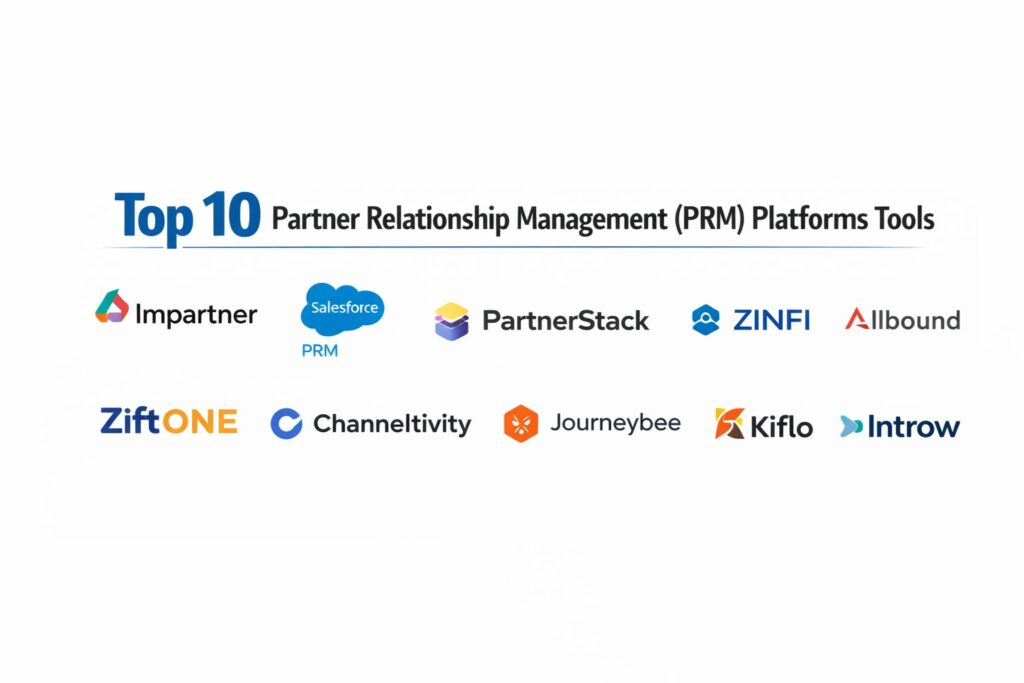
1. Impartner
Impartner is widely recognized as a powerhouse in the PRM sector, specifically tailored for large enterprises with complex, multi-tier ecosystems. It provides a highly governed environment that covers the entire partner lifecycle from recruitment through performance optimization. Its reputation is built on its ability to handle extremely high volumes of data and partners without sacrificing performance or security.
Key Features
The platform offers a sophisticated “Portal Studio” that allows for deep white-labeling and drag-and-drop customization. Its deal registration workflows are some of the most advanced in the market, featuring automated conflict detection and tiered approval processes. It includes a robust through-channel marketing automation (TCMA) module that enables partners to run co-branded campaigns directly from the portal. The system also features a dedicated Learning Management System (LMS) for partner certification and training. Furthermore, its AI-powered analytics engine provides predictive insights into which partners are likely to churn or over-perform in the coming quarter.
Pros
Offers the most comprehensive feature set for global organizations needing strict governance. The integration with Salesforce is exceptionally deep and reliable for enterprise workflows.
Cons
The platform has a steep learning curve and often requires professional services for initial setup. It lacks transparent public pricing, typically falling into the premium enterprise bracket.
Platforms and Deployment
Cloud-based SaaS with support for all major modern web browsers and mobile access.
Security and Compliance
SOC 2 Type II compliant, GDPR ready, and offers high-level encryption for sensitive channel data.
Integrations and Ecosystem
Seamlessly integrates with Salesforce, Microsoft Dynamics 365, and HubSpot, plus a wide range of marketing tools.
Support and Community
Provides dedicated account managers for enterprise clients and an extensive online knowledge base.
2. Salesforce PRM
Salesforce PRM (built on Experience Cloud) is the logical choice for organizations that already center their revenue operations around the Salesforce ecosystem. Because it is native to the Salesforce platform, it eliminates the need for complex API middleware, allowing partner data to reside in the same database as direct sales data.
Key Features
The tool leverages “Einstein AI” to provide partners with “next-best-action” recommendations and performance predictions. It features a drag-and-drop “Experience Builder” that allows non-technical users to create high-quality partner portals. Automated lead routing ensures that opportunities are distributed based on specific partner certifications or geographical territories. It includes robust “Market Development Fund” (MDF) management tools that track budget requests and ROI in real-time. The platform also supports complex opportunity management where internal sales reps and external partners can collaborate on the same deal record.
Pros
Zero integration friction for existing Salesforce users and a completely unified data model. The scalability is world-class, capable of supporting millions of portal users.
Cons
Can become very expensive as you add more users and modules. The interface can feel overwhelming due to the sheer number of configuration options available.
Platforms and Deployment
Native cloud deployment within the Salesforce Experience Cloud environment.
Security and Compliance
Inherits the enterprise-grade security of the Salesforce platform, including advanced multi-factor authentication.
Integrations and Ecosystem
Tightly integrated with the entire Salesforce AppExchange ecosystem, including Slack and Tableau.
Support and Community
Access to the massive “Trailblazer” community and multiple tiers of professional Salesforce support.
3. PartnerStack
PartnerStack has carved out a dominant position in the B2B SaaS market by focusing heavily on the “financial automation” side of partnerships. It is specifically designed to handle the recurring commission models and automated payouts that are essential for software companies managing affiliate and referral programs.
Key Features
The platform features an automated payout engine that handles diverse tax forms and global currency conversions. It includes a built-in “Partner Marketplace” where vendors can list their programs to attract new affiliates from a pool of over 80,000 active partners. The onboarding system is highly automated, allowing partners to sign contracts and complete training without manual intervention. It provides granular referral tracking that attributes revenue correctly across the entire customer journey. Additionally, it offers dedicated modules for managing resellers, providing them with the necessary sales assets and lead registration forms.
Pros
Excellent at automating the complex “payout” aspect of SaaS partnerships. The built-in marketplace provides a unique recruitment advantage over “empty” PRM portals.
Cons
The customization options for the partner portal are more limited than those of enterprise incumbents. It is primarily focused on SaaS and may not fit traditional physical manufacturing models.
Platforms and Deployment
Pure SaaS platform with a modern, mobile-responsive web interface.
Security and Compliance
Compliant with major financial regulations for payouts and SOC 2 security standards.
Integrations and Ecosystem
Strong native links to HubSpot, Salesforce, Stripe, and various billing platforms like Chargebee.
Support and Community
Offers a robust support center and proactive success management for growing programs.
4. ZINFI
ZINFI is known for its “Unified Partner Management” philosophy, offering a modular platform that allows companies to scale their partner operations at their own pace. It is a highly analytical tool that appeals to data-driven channel leaders who need to track every stage of the partner journey.
Key Features
The platform is built on a modular architecture, including modules for partner recruitment, marketing enablement, and incentive management. It provides a unique “Partner Business Planning” tool that helps vendors and partners set mutual goals and track progress. The through-channel marketing automation is particularly strong, offering social media syndication and email marketing for partners. It also includes an automated rewards system for managing rebates and loyalty points. The dashboard is highly customizable, allowing for different views based on partner tier or region.
Pros
The modular approach allows businesses to only pay for the features they currently need. It offers very deep reporting and business intelligence capabilities.
Cons
The user interface can feel more technical and less “consumer-grade” than some newer competitors. Initial configuration of the modules can be complex.
Platforms and Deployment
Cloud-based deployment with a focus on global accessibility and multi-language support.
Security and Compliance
Meets international standards for data protection and secure lifecycle management.
Integrations and Ecosystem
Connects with major CRM systems including Salesforce, Microsoft Dynamics, and Oracle.
Support and Community
Offers global 24/7 support and a specialized channel marketing consultancy service.
5. Allbound
Allbound is designed with a “partner-first” mindset, focusing on ease of use and mobile accessibility to drive high adoption rates. It addresses the common industry problem where partners ignore portals because they are too difficult to navigate.
Key Features
The platform features a “Content Library” that organizes sales assets by buyer persona and deal stage. It uses gamification elements, such as leaderboards and badges, to incentivize partners to complete training or register deals. The deal registration system is streamlined for quick entry on mobile devices, ensuring reps can log opportunities from the field. It provides a “Prospect Pages” feature where partners can create personalized micro-sites for their customers. The system also includes a lead distribution engine that automatically assigns prospects to the most qualified partners.
Pros
Extremely intuitive user interface that leads to higher partner engagement and adoption. Fast deployment times compared to traditional enterprise PRM suites.
Cons
It lacks some of the deeper “back-office” financial modules found in tools like PartnerStack. Third-party integrations are slightly more limited than the market leaders.
Platforms and Deployment
Cloud-hosted web platform with a mobile-optimized design for all devices.
Security and Compliance
Maintains standard enterprise security protocols and data encryption for all portal interactions.
Integrations and Ecosystem
Direct integrations with Salesforce, HubSpot, and Slack to keep teams aligned.
Support and Community
Provides a dedicated customer success team and a well-structured onboarding process.
6. ZiftONE
ZiftONE (by Zift Solutions) provides an all-in-one channel management solution that bridges the gap between marketing and sales. It is particularly strong for companies that want to empower their partners to become self-sufficient marketing engines.
Key Features
The platform integrates channel marketing, sales enablement, and PRM into a single environment. It features “automated co-marketing” where the vendor can push ready-to-use campaigns to their partners’ social and email channels. It provides a centralized “Partner System of Record” that tracks all interactions and performance data in one place. The onboarding module is designed for speed, using automated workflows to get partners through the legal and training hurdles. It also offers advanced “Market Development Fund” tracking with automated claims and reimbursements.
Pros
The “all-in-one” nature eliminates the need for separate marketing and PRM tools. Strong focus on driving actual revenue through proactive partner enablement.
Cons
The broad feature set can make the initial implementation feel overwhelming. It requires a 12-month contract commitment which might not suit smaller teams.
Platforms and Deployment
Web-based SaaS with global deployment capabilities.
Security and Compliance
Robust data protection focus with features tailored for highly regulated industries.
Integrations and Ecosystem
Supports deep syncing with Salesforce, Microsoft Dynamics, and SAP.
Support and Community
Offers extensive training via “Zift University” and 24/7 technical support.
7. Channeltivity
Channeltivity is often cited as the “easiest to use” full-suite PRM, making it a favorite for mid-market companies that need enterprise-grade power without the enterprise complexity. It is known for its transparent pricing and straightforward setup.
Key Features
The platform includes a clean, branded partner portal with modules for deal registration and lead management. It features a “Distributor Management” module that allows vendors to manage their relationships with large wholesalers who sell to smaller resellers. The MDF management tool is highly visual, allowing for easy budget tracking. It also provides a co-branded collateral engine that allows partners to customize PDFs and presentations within the portal. The reporting dashboard is built for clarity, focusing on the core KPIs that channel managers need to see daily.
Pros
Transparent pricing and a very fast implementation timeline. Highly customizable dashboards that don’t require technical expertise to maintain.
Cons
Workflow automation is more basic compared to the high-end enterprise tools. Integration with non-major CRMs may require more manual work.
Platforms and Deployment
Cloud-hosted with a “mobile-ready” web interface.
Security and Compliance
Standard encryption and data hosting in secure, compliant environments.
Integrations and Ecosystem
Excellent “plug-and-play” connectors for Salesforce and HubSpot.
Support and Community
Renowned for a responsive and helpful customer support team.
8. Journeybee
Journeybee is a next-generation PRM that prioritizes partner collaboration and modern user experience. It is built for SaaS and tech companies that want to move away from legacy, portal-heavy systems toward a more interactive co-selling environment.
Key Features
The platform features an “AI Partner Co-pilot” that helps partners navigate the portal and find the right sales resources. It offers “Digital Sales Rooms” where partners and vendors can collaborate on specific opportunities in a shared workspace. Its no-code automation engine allows channel managers to build custom workflows for different partner types without developer help. It also includes built-in LMS and certification tracking. The interface is consumer-grade, designed to look and feel like modern apps like Notion or Slack, which drives high engagement levels.
Pros
Very modern and sleek UI that significantly lowers the barrier for partner participation. Offers “off-portal” engagement via Slack and Teams integrations.
Cons
Being a newer entrant, it may lack some of the obscure, niche features found in decades-old legacy PRMs. The reporting suite is still evolving.
Platforms and Deployment
Cloud-native web application with high performance.
Security and Compliance
ISO certified and built with modern data privacy standards from the ground up.
Integrations and Ecosystem
Deep sync with Salesforce, HubSpot, Attio, and Pipedrive.
Support and Community
Fast-growing community with high-touch support for early adopters.
9. Kiflo
Kiflo is specifically engineered for SMBs and mid-market companies that are launching or scaling their first partner programs. It focuses on providing “essential” PRM features without the high costs or complexity of the enterprise suites.
Key Features
The tool provides unlimited users and partners on all plans, which is a significant differentiator for growing companies. It features a streamlined partner portal with lead and deal registration forms that sync directly with the vendor’s CRM. It includes an automated commission tracking system that calculates payouts based on pre-defined rules. The onboarding workflow is simple and linear, ensuring partners get through the process quickly. It also offers a basic asset management system for sharing marketing materials and brand guidelines.
Pros
Extremely cost-effective with a high feature-to-price ratio. Very fast setup—often ready to use in just a few days.
Cons
Lacks advanced enterprise features like complex multi-tier MDF management or deep social syndication. The analytics are sufficient for SMBs but lack deep predictive modeling.
Platforms and Deployment
Cloud-based web platform with a simple, clean design.
Security and Compliance
Basic enterprise-grade security and GDPR compliance for partner data.
Integrations and Ecosystem
Strong two-way sync with HubSpot and Salesforce; also connects with Zapier for other tools.
Support and Community
Provides excellent self-serve documentation and personal onboarding for paid plans.
10. Introw
Introw is a “CRM-native” collaboration platform that challenges the traditional PRM model. Instead of a separate portal, it anchors the partner relationship directly inside the vendor’s CRM, focusing on co-selling and shared execution.
Key Features
The platform uses “Shared Digital Partnership Rooms” that allow partners to collaborate with the vendor without having to log into a separate portal. It provides real-time pipeline visibility where both parties can see the status of shared deals. Its “governed visibility” ensures that partners only see the data they are authorized to see, preventing channel conflict. It includes automated activity tracking for emails and Slack threads, syncing them back to the CRM records. The system is designed for “off-portal” engagement, allowing work to happen in the tools that sales reps already use.
Pros
Eliminates the “portal fatigue” that often leads to low partner engagement. Keeps all data centralized in the CRM for a single version of the truth.
Cons
Not ideal for vendors who need a high-volume “self-service” portal for thousands of low-touch affiliates. It requires the vendor to have a robust existing CRM setup.
Platforms and Deployment
Embedded CRM application and cloud-based collaboration workspace.
Security and Compliance
Highly secure with field-level visibility controls and full audit logs.
Integrations and Ecosystem
Purpose-built for Salesforce and HubSpot; integrates with Slack, Loom, and Google Drive.
Support and Community
Focuses on high-touch demo and implementation support for revenue teams.
Comparison Table
| Tool Name | Best For | Platform(s) Supported | Deployment | Standout Feature | Public Rating |
| 1. Impartner | Large Enterprises | Web, Mobile | Cloud | Advanced Deal Reg | 4.7/5 |
| 2. Salesforce PRM | Salesforce Users | Web, Native Mobile | Native CRM | Einstein AI Insights | 4.6/5 |
| 3. PartnerStack | B2B SaaS Programs | Web, API | Cloud | Automated Payouts | 4.8/5 |
| 4. ZINFI | Modular Scaling | Web, API | Cloud | Unified Lifecycles | 4.5/5 |
| 5. Allbound | Partner Engagement | Web, Mobile-Ready | Cloud | Gamified Portals | 4.4/5 |
| 6. ZiftONE | Combined Mktg/Sales | Web | Cloud | Co-Marketing Automation | 4.3/5 |
| 7. Channeltivity | Mid-Market SMB | Web | Cloud | Transparent Pricing | 4.6/5 |
| 8. Journeybee | Modern Collaboration | Web, Mobile | Cloud | AI Partner Co-pilot | 4.7/5 |
| 9. Kiflo | Scaling SMBs | Web | Cloud | Unlimited Partner Plans | 4.5/5 |
| 10. Introw | CRM-Native Co-selling | Web, CRM-Native | Hybrid | Shared Digital Rooms | 4.8/5 |
Evaluation & Scoring of PRM Platforms
The scoring below is a comparative model intended to help shortlisting. Each criterion is scored from 1–10, then a weighted total from 0–10 is calculated using the weights listed. These are analyst estimates based on typical fit and common workflow requirements, not public ratings.
Weights:
- Core features – 25%
- Ease of use – 15%
- Integrations & ecosystem – 15%
- Security & compliance – 10%
- Performance & reliability – 10%
- Support & community – 10%
- Price / value – 15%
| Tool Name | Core (25%) | Ease (15%) | Integrations (15%) | Security (10%) | Performance (10%) | Support (10%) | Value (15%) | Weighted Total |
| 1. Impartner | 10 | 6 | 10 | 10 | 10 | 9 | 7 | 8.95 |
| 2. Salesforce PRM | 9 | 6 | 10 | 10 | 10 | 9 | 7 | 8.70 |
| 3. PartnerStack | 9 | 9 | 8 | 9 | 9 | 9 | 9 | 8.85 |
| 4. ZINFI | 9 | 7 | 9 | 9 | 9 | 8 | 8 | 8.45 |
| 5. Allbound | 8 | 10 | 7 | 8 | 8 | 8 | 8 | 8.25 |
| 6. ZiftONE | 9 | 7 | 8 | 9 | 8 | 8 | 7 | 8.10 |
| 7. Channeltivity | 8 | 9 | 8 | 8 | 8 | 9 | 10 | 8.55 |
| 8. Journeybee | 8 | 10 | 8 | 9 | 9 | 9 | 9 | 8.85 |
| 9. Kiflo | 7 | 10 | 7 | 8 | 8 | 9 | 10 | 8.35 |
| 10. Introw | 8 | 9 | 10 | 9 | 9 | 9 | 8 | 8.75 |
How to interpret the scores:
- Use the weighted total to shortlist candidates, then validate with a pilot.
- A lower score can mean specialization, not weakness.
- Security and compliance scores reflect controllability and governance fit, because certifications are often not publicly stated.
- Actual outcomes vary with assembly size, team skills, templates, and process maturity.
Which Partner Relationship Management Platform Is Right for You?
Solo / Freelancer
While freelancers rarely need a full PRM, consultants acting as referral partners will find PartnerStack or Kiflo the easiest to work with. These platforms offer a “self-service” feel where you can track your referrals and get paid without needing constant contact with the vendor.
SMB
For small businesses launching their first partner program, Kiflo is the clear winner. Its transparent, flat-fee pricing for unlimited partners removes the financial risk of scaling, and the setup is simple enough for a single manager to handle.
Mid-Market
Mid-market companies that need a balance of power and simplicity should look at Channeltivity or Journeybee. These tools offer more advanced features like MDF management and AI assistance but retain a user-friendly interface that ensures partners will actually use the portal.
Enterprise
For global enterprises with thousands of partners, Impartner and Salesforce PRM are the standard. They provide the necessary governance, audit logs, and complex multi-tier management capabilities that large legal and operations departments require.
Budget vs Premium
If budget is the primary concern, Kiflo and PartnerPortal.io (within the Kiflo/SMB category) offer the best value. For those where budget is secondary to deep functionality and brand control, Impartner is the premium choice.
Feature Depth vs Ease of Use
ZINFI offers incredible feature depth but is more difficult to master. Conversely, Allbound and Introw prioritize the user experience, betting that a simpler tool that is used consistently is more valuable than a complex tool that partners ignore.
Integrations & Scalability
If your organization “lives” in your CRM, Introw or Salesforce PRM are the most scalable options as they keep your data unified. If you are a SaaS company with a high volume of affiliates, PartnerStack’s integration with financial tools makes it the most scalable choice.
Security & Compliance Needs
Enterprises in highly regulated industries (like Finance or Healthcare) should opt for Impartner or ZiftONE, as these platforms have been through the most rigorous security audits and offer the most granular permission controls.
Frequently Asked Questions (FAQs)
1. What is the difference between a PRM and a CRM?
A CRM is for managing direct relationships with customers, while a PRM is for managing relationships with partners who sell to those customers. While they share some features, PRMs include specialized tools like deal registration, MDF management, and partner training.
2. Why do partners hate using portals?
Partners often have to log into dozens of different vendor portals. If a portal is difficult to navigate, requires frequent password resets, or doesn’t offer valuable sales assets, partners will simply stop using it. This is why modern PRMs focus on “off-portal” or “CRM-native” engagement.
3. How does deal registration prevent channel conflict?
When a partner registers a deal, the PRM checks the vendor’s CRM to see if an internal rep or another partner is already working on it. If it’s a new opportunity, it is “locked” to that partner for a set period, protecting their commission.
4. What are Market Development Funds (MDF)?
MDF are funds given by a vendor to a partner to help them market the vendor’s products. PRMs automate the process of requesting these funds, approving them, and tracking the results of the marketing campaigns.
5. Can a PRM handle automated payouts?
Yes, platforms like PartnerStack and Kiflo specialize in automated commission payouts, handling the tax documentation and bank transfers automatically once a deal is closed and paid for.
6. Is PRM software only for SaaS companies?
No. While it is very popular in SaaS, PRM is widely used in manufacturing, telecommunications, insurance, and any industry that relies on a network of agents, brokers, or resellers to reach the market.
7. How long does it take to implement a PRM?
Implementation can range from a few days for lightweight tools like Kiflo to several months for enterprise suites like Impartner. The timeline usually depends on the complexity of your integration with your existing CRM.
8. Do PRMs include training and certification?
Most mid-tier and enterprise PRMs either have a built-in Learning Management System (LMS) or integrate with popular ones like Docebo to ensure partners are properly trained before they start selling.
9. Can I use a PRM to recruit new partners?
Yes, some platforms like PartnerStack have built-in marketplaces where you can list your program. Others provide recruitment modules that automate the outreach and vetting process for new potential partners.
10. What is through-channel marketing automation (TCMA)?
TCMA allows vendors to create marketing campaigns (emails, social posts) that partners can then “personalize” and send to their own customers. This ensures brand consistency while giving partners easy-to-use marketing tools.
Conclusion
Selecting a Partner Relationship Management platform is a pivotal decision that will dictate the efficiency and growth of your indirect sales strategy for years to come. The market has matured to offer a diverse range of solutions—from CRM-native collaboration tools that live where you work, to massive enterprise suites that govern every facet of a global ecosystem. The most successful organizations are those that prioritize partner experience as much as internal visibility. By choosing a platform that reduces friction for your partners while providing your channel managers with AI-driven insights, you transform your partner program from a chaotic overhead into a streamlined, high-performance revenue engine. As the business world trends toward deeper inter-connectivity, your PRM becomes the essential bridge that turns external vendors into loyal brand advocates.