Introduction
The B2B e-commerce landscape is undergoing a massive transformation as business buyers increasingly demand the same fluid, intuitive experiences they encounter in their personal consumer lives. Unlike retail e-commerce, B2B platforms must manage high-stakes complexities such as tiered contract pricing, multi-layered organizational hierarchies, and sophisticated approval workflows. These systems serve as the digital nervous system for manufacturers, wholesalers, and distributors, enabling them to move away from manual, error-prone ordering processes toward automated, self-service models. A robust B2B platform does not just facilitate a transaction; it integrates deeply with Enterprise Resource Planning (ERP) and Customer Relationship Management (CRM) systems to provide real-time visibility into inventory, credit limits, and custom logistics.
Strategically, the shift toward digital B2B commerce is no longer a luxury—it is a survival requirement for global scalability. Modern platforms allow enterprises to unify their B2B and B2C operations under a single architectural roof, reducing the total cost of ownership while maintaining clean data flows across the organization. As supply chains become more fragmented and global, the ability to offer localized storefronts with multi-currency support and regional tax compliance becomes a critical competitive advantage. Choosing the right platform requires a nuanced understanding of your technical debt, your integration requirements, and the specific buying behaviors of your professional clientele.
Best for: Manufacturers, large-scale distributors, wholesalers, and enterprises looking to digitize complex procurement cycles and provide 24/7 self-service portals for professional buyers.
Not ideal for: Micro-businesses with extremely simple product catalogs or retailers who only sell direct-to-consumer without the need for account-based pricing or volume-based contract terms.
Key Trends in B2B E-commerce Platforms
A dominant trend is the move toward “Consumerization,” where the frontend of a B2B portal mimics a high-end B2C site, offering personalized recommendations and lightning-fast search while maintaining backend wholesale logic. We are also seeing the rise of Composable Commerce, where businesses move away from rigid, monolithic systems in favor of modular, API-first architectures. This allows teams to “plug and play” specific functionalities like advanced quoting or localized tax engines without overhauling their entire digital infrastructure.
Artificial Intelligence is now being deployed to handle high-velocity B2B tasks such as automated Request for Quote (RFQ) processing and predictive replenishment. By analyzing historical purchase data, AI-driven platforms can anticipate when a distributor is running low on stock and trigger a reorder prompt or an automated discount. Furthermore, B2B “Buy Now, Pay Later” (BNPL) and digital trade credit are becoming standard features, allowing for seamless embedded financing directly within the checkout flow, which significantly improves cash flow for both the buyer and the seller.
How We Selected These Tools
Our selection process focused on platforms that demonstrate a high degree of “B2B Maturity,” meaning they offer essential wholesale features natively rather than through third-party plugins. We prioritized systems that provide robust “Company Account” management, allowing for multiple users under a single corporate umbrella with varying permission levels. Integration capability was a primary factor; a B2B platform is only as strong as its connection to the ERP, so we looked for tools with mature APIs and pre-built connectors for major systems like SAP, Oracle, and NetSuite.
We also evaluated the platforms based on their ability to handle massive data loads, such as catalogs with hundreds of thousands of SKUs and millions of unique price points. Security and compliance were non-negotiable, with a focus on SOC 2, GDPR, and PCI DSS standards to ensure that sensitive corporate data and high-value transactions are protected. Finally, we considered the total cost of ownership, weighing the initial implementation time against the long-term scalability and maintenance costs associated with each solution.
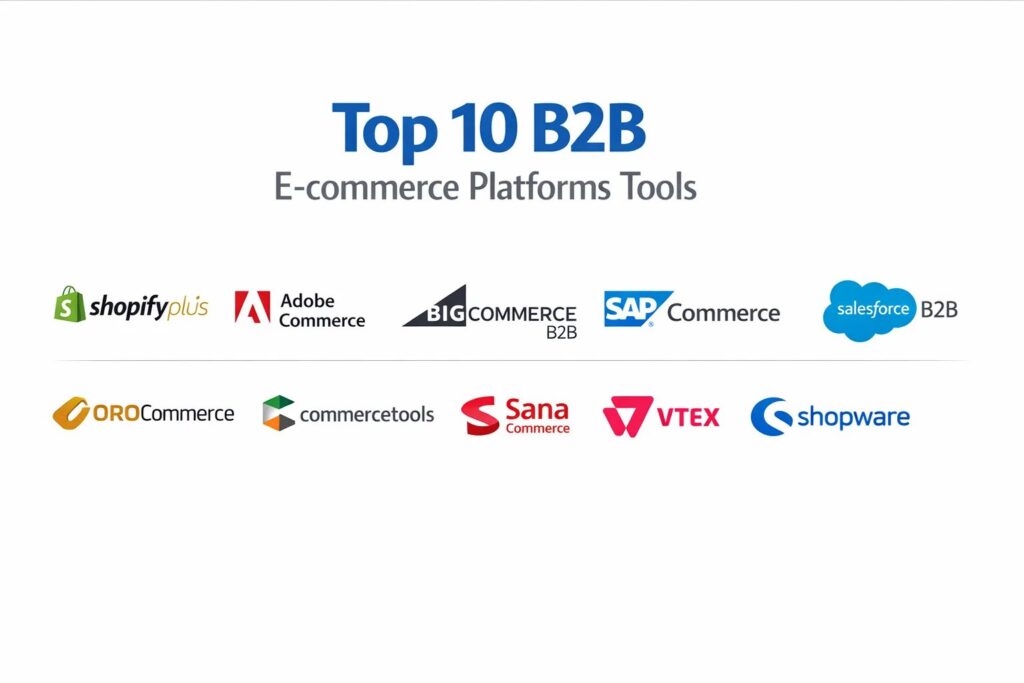
1. Shopify Plus
Shopify Plus has rapidly evolved from a B2C powerhouse into a formidable B2B contender. It offers a unified commerce experience that allows brands to manage wholesale and retail channels from a single dashboard. Its strength lies in its speed to market and its intuitive interface, which reduces the training burden for internal teams.
Key Features
The platform includes native B2B features such as customer-specific price lists and catalogs. It supports “Company Profiles,” allowing multiple buyer identities to be linked to a single business entity with specific payment terms. The “Shopify Flow” automation engine allows for complex backend workflows, such as automatically tagging high-value accounts or triggering reorder reminders. It features a high-performance global CDN and a robust GraphQL API for headless deployments. Additionally, it offers a “B2B-only” checkout that can be customized to support trade-specific requirements like purchase orders and draft orders.
Pros
Extremely fast deployment compared to traditional enterprise software. The unified backend for B2B and B2C significantly reduces operational complexity and data siloes.
Cons
Heavy customization of the checkout experience can be restricted compared to open-source alternatives. Some advanced B2B logic may still require third-party apps from their ecosystem.
Platforms and Deployment
Fully managed SaaS (Software as a Service) with global cloud hosting.
Security and Compliance
Certified Level 1 PCI DSS compliant, SOC 2 Type II, and ISO 27001, providing enterprise-grade security out of the box.
Integrations and Ecosystem
Massive app store with native connectors for NetSuite, Acumatica, Sage, and various global ERP systems.
Support and Community
Offers 24/7 priority support and access to a dedicated Merchant Success Manager for enterprise-tier accounts.
2. Adobe Commerce (Magento)
Adobe Commerce, formerly known as Magento, is the gold standard for organizations requiring deep customization and total control over their commerce stack. It is an extremely powerful platform designed for complex global enterprises with highly specialized business logic.
Key Features
It offers an unmatched B2B feature set, including advanced quoting engines, credit limit management, and the ability to handle millions of SKUs. The platform features “Adobe Sensei,” an AI engine that provides intelligent product recommendations and search results tailored to the buyer’s history. It supports multi-site, multi-language, and multi-currency configurations from a single installation. The Page Builder tool allows non-technical users to create sophisticated B2B content experiences. It also includes a robust set of B2B APIs that facilitate seamless integration with legacy on-premise ERP systems.
Pros
Offers the highest level of flexibility and extensibility in the market. Ideal for businesses with unique, non-standard workflows that cannot be accommodated by typical SaaS models.
Cons
Implementation is complex and usually requires a dedicated team of specialized developers. The total cost of ownership can be very high due to hosting and maintenance requirements.
Platforms and Deployment
Available as a managed cloud service or as self-hosted on-premise software.
Security and Compliance
Highly secure with regular patches; however, the merchant is responsible for ensuring compliance if self-hosting.
Integrations and Ecosystem
Deeply integrated with the Adobe Experience Cloud and has one of the largest extension marketplaces in the world.
Support and Community
Strong enterprise support for cloud customers and a massive global community of developers and partners.
3. BigCommerce B2B Edition
BigCommerce B2B Edition provides an “Open SaaS” approach, combining the ease of a managed platform with the flexibility of open APIs. It is a popular choice for mid-market and enterprise manufacturers who want to scale quickly without managing infrastructure.
Key Features
The B2B Edition includes a pre-packaged suite of wholesale features like “Buyer Portals” for self-service account management. It supports sophisticated pricing rules, including volume discounts and pre-negotiated contract rates. The platform is highly optimized for “Headless Commerce,” allowing for custom frontend experiences built with modern frameworks like React or Vue. It features a powerful “Multi-Storefront” capability, enabling brands to manage different B2B and B2C sites from one account. It also includes native tools for managing sales representative quotes and masquerading as customers to assist with orders.
Pros
Does not charge transaction fees, making it highly attractive for high-volume wholesale operations. Offers a strong balance between “out-of-the-box” functionality and API extensibility.
Cons
The B2B features are provided through a specific “B2B Edition” layer which can sometimes lead to slightly different management interfaces compared to the core platform.
Platforms and Deployment
Cloud-based SaaS with an emphasis on high availability and performance.
Security and Compliance
ISO/IEC 27001:2013 certified and PCI DSS Level 1 compliant, managing all backend security patches automatically.
Integrations and Ecosystem
Strong partnerships with leading ERPs and a well-documented API for custom middleware connections.
Support and Community
Provides 24/7 technical support and has a growing network of specialized B2B agency partners.
4. SAP Commerce Cloud
SAP Commerce Cloud is designed for the world’s largest organizations that are already deeply embedded in the SAP ecosystem. It is an enterprise-grade solution that excels at managing massive complexity across global regions and diverse business units.
Key Features
The platform features native integration with SAP S/4HANA and other SAP backend systems, ensuring real-time data synchronization. It offers “Omnichannel Storefronts” that provide a consistent experience across web, mobile, and call centers. The system includes a powerful Product Information Management (PIM) module to handle complex industrial product attributes. It supports advanced B2B workflows like hierarchical organizational approvals and cost-center management. It also features a “Composable” architecture that allows for modular updates to specific commerce services without affecting the core system.
Pros
Unrivaled scalability and depth for global conglomerates. The tightest possible integration for companies already using SAP for their core business operations.
Cons
Very high licensing and implementation costs. The system is notoriously complex and requires specialized, expensive consulting resources to manage.
Platforms and Deployment
Cloud-native deployment, primarily on Microsoft Azure infrastructure.
Security and Compliance
Meets the highest global enterprise standards for data residency, privacy, and transaction security.
Integrations and Ecosystem
Naturally integrates with the entire SAP suite (ERP, CRM, Marketing, and Analytics).
Support and Community
Enterprise-level global support with rigorous Service Level Agreements (SLAs).
5. Salesforce B2B Commerce
Salesforce B2B Commerce is built directly on the Salesforce Lightning platform, making it the premier choice for organizations that want to unify their sales, service, and commerce data. It enables a “Customer 360” view that is essential for relationship-driven B2B selling.
Key Features
The platform leverages “Einstein AI” to deliver hyper-personalized product recommendations based on CRM data. It allows sales reps to see exactly what their customers are browsing in the e-commerce portal, enabling more informed sales calls. It features “Experience Builder,” a low-code tool for creating beautiful, branded buyer portals quickly. The system supports complex B2B logic like “split shipments” and account-based price books. Because it lives on the CRM, it allows for seamless transitions between self-service ordering and high-touch sales assistance.
Pros
Unmatched visibility into the customer lifecycle by combining CRM and commerce data. The low-code environment allows for faster updates compared to traditional enterprise platforms.
Cons
Can be very expensive when adding multiple Salesforce modules. The B2B version historically had a different architecture than the B2C version (Demandware), though they are converging.
Platforms and Deployment
Multi-tenant cloud platform managed entirely by Salesforce.
Security and Compliance
Benefits from the robust “Trust” infrastructure of Salesforce, including world-class data encryption and compliance certifications.
Integrations and Ecosystem
Native integration with Salesforce Sales Cloud and Service Cloud, plus a vast “AppExchange” marketplace.
Support and Community
Extensive training through “Trailhead” and a massive global ecosystem of certified consultants.
6. OroCommerce
OroCommerce is a unique platform built from the ground up specifically for B2B needs. Unlike other tools that started in B2C and added B2B features later, OroCommerce’s entire architecture is centered around the complexities of wholesale and industrial commerce.
Key Features
It includes a built-in B2B CRM, allowing for a unified view of all sales activities and customer interactions. The platform offers a powerful “Workflow Engine” that can be customized to mirror any business’s internal procurement and approval processes. It supports multi-organization structures, making it ideal for large companies with multiple subsidiaries or franchises. It features advanced quoting and RFQ management natively. The system is designed to handle extremely complex pricing models, including those based on contracts, volume, or specific customer groups.
Pros
Provides more B2B functionality “out-of-the-box” than almost any other platform. It is open-source, providing a high degree of transparency and customization potential.
Cons
Smaller developer community compared to giants like Magento or Shopify. The brand recognition is lower, which may make finding specialized talent more challenging in some regions.
Platforms and Deployment
Available as a managed cloud service or as an on-premise open-source installation.
Security and Compliance
Standard enterprise security features with a focus on role-based access control and secure data handling.
Integrations and Ecosystem
Strong APIs and a focus on integrating with ERPs, though the third-party extension marketplace is more curated and smaller.
Support and Community
Offers professional support for enterprise customers and an active open-source community for the community edition.
7. commercetools
commercetools is the pioneer of the “MACH” (Microservices, API-first, Cloud-native, Headless) architecture. It is designed for technologically advanced organizations that want to build a completely custom, modular commerce ecosystem without being tied to a single vendor’s frontend.
Key Features
The platform is purely “headless,” meaning it has no default frontend; developers use APIs to connect the commerce engine to any touchpoint (web, app, IoT, etc.). It uses a microservices approach, allowing teams to scale or update individual parts of the system independently. It offers a “Merchant Center” for business users to manage catalogs and orders without needing to touch the code. The system provides powerful B2B features like hierarchical accounts and specific business-unit pricing. It is built to be “versionless,” meaning updates are rolled out continuously without the need for disruptive upgrades.
Pros
Total creative and technical freedom to build a unique buyer experience. Eliminates the risk of “platform lock-in” by using a modular, API-driven stack.
Cons
Requires a very high level of technical expertise and a dedicated development team to build and maintain the frontend. Not suitable for businesses looking for a “ready-to-use” solution.
Platforms and Deployment
Cloud-native, multi-tenant SaaS that runs on AWS, Azure, or Google Cloud.
Security and Compliance
Enterprise-grade security with a focus on API security and SOC 2 compliance.
Integrations and Ecosystem
As an API-first platform, it is designed to integrate with anything, making it the center of a “best-of-breed” technology stack.
Support and Community
Provides high-level enterprise support and is a leader in the global “MACH Alliance” community.
8. Sana Commerce
Sana Commerce is a specialized solution that focuses on “ERP-integrated” e-commerce. It is designed to sit directly on top of SAP or Microsoft Dynamics, using the ERP as the “single source of truth” for all product, pricing, and customer data.
Key Features
The platform features a real-time link to the ERP, meaning that when a price is updated in the ERP, it is instantly reflected on the e-store without any manual syncing. It allows customers to see their specific credit limits and outstanding invoices directly in the portal. It supports complex B2B features like “order on behalf of” for sales reps and detailed shipping calculations based on ERP logic. The setup process is significantly faster than other enterprise tools because it leverages existing ERP data. It also includes a visual designer for creating mobile-responsive storefronts.
Pros
Eliminates data synchronization errors by reading directly from the ERP. Reduces the complexity of managing two separate systems for business logic and commerce.
Cons
Strictly limited to businesses using specific versions of SAP or Microsoft Dynamics. The frontend customization options are not as extensive as “headless” competitors.
Platforms and Deployment
Managed cloud hosting that integrates directly with the customer’s ERP environment.
Security and Compliance
Leverages the security of the underlying ERP system while maintaining its own PCI and data privacy standards.
Integrations and Ecosystem
Deep, native integration with SAP Business One, S/4HANA, and Microsoft Dynamics 365.
Support and Community
Offers specialized support that understands both e-commerce and ERP technicalities.
9. VTEX
VTEX is a cloud-native platform that is unique for combining B2B, B2C, and “Marketplace” capabilities in a single solution. It is a dominant force in the Latin American market and has expanded globally as a leader in “unified commerce.”
Key Features
The platform features a built-in “Order Management System” (OMS) that can handle complex fulfillment from multiple warehouses or physical stores. It includes native marketplace functionality, allowing B2B companies to host third-party sellers on their own site. It offers a “SmartCheckout” feature that allows for secure, password-less repeat purchases. The system is built on a low-code “VTEX IO” development platform, which speeds up the creation of custom apps and storefronts. It also provides robust B2B tools for managing price tables, trade policies, and customer clusters.
Pros
Excellent for businesses that want to operate a marketplace model alongside their own inventory. The low-code environment offers a good balance between speed and customization.
Cons
The platform’s architecture can have a learning curve for developers used to more traditional systems. Some features may be more focused on the B2C/Marketplace side than pure B2B logic.
Platforms and Deployment
Multi-tenant cloud SaaS with a focus on global scalability.
Security and Compliance
PCI DSS Level 1 compliant with strong data protection and uptime guarantees.
Integrations and Ecosystem
Strong presence in the global e-commerce ecosystem with a wide variety of pre-built integrations for payments and logistics.
Support and Community
Provides 24/7 global support and has a very strong presence and community in emerging markets.
10. Shopware
Shopware is a leading European e-commerce platform that has gained global traction for its “open commerce” philosophy. It is highly regarded for its flexibility, its modern tech stack (Symfony and Vue.js), and its focus on “Storytelling” in commerce.
Key Features
The “B2B Suite” offers a comprehensive set of features for complex organizations, including rights and roles management and budget limits for buyers. It features “Digital Sales Rooms,” which allow sales reps to interact with buyers in real-time within the browser to guide them through complex orders. The “Flow Builder” allows for the automation of business processes without writing code. It supports “Rule Builder,” a powerful tool for defining custom pricing, shipping, and payment rules based on any customer attribute. The platform is also highly capable of “Headless” deployments and has a strong focus on developer experience.
Pros
Offers an excellent balance of B2C-style “experience” tools and heavy B2B logic. Native GDPR compliance makes it the preferred choice for companies operating in the European market.
Cons
While it has a strong European following, the support and partner ecosystem in North America is still developing compared to competitors like Shopify or BigCommerce.
Platforms and Deployment
Available as a managed cloud SaaS, a self-hosted “PaaS” (Platform as a Service), or an open-source community edition.
Security and Compliance
Strong focus on European privacy standards and regular security audits of the core code.
Integrations and Ecosystem
Extensive marketplace of extensions, particularly strong in European payment and logistics providers.
Support and Community
Very active developer community and professional support tiers for enterprise customers.
Comparison Table
| Tool Name | Best For | Platform(s) Supported | Deployment | Standout Feature | Public Rating |
| 1. Shopify Plus | Rapid Scaling / Hybrid | Web, API | SaaS | Ease of Use / Speed | 4.7/5 |
| 2. Adobe Commerce | Deep Customization | Web, On-premise | Hybrid | Unlimited Flexibility | 4.5/5 |
| 3. BigCommerce B2B | Open SaaS / Mid-Market | Web, API | SaaS | Multi-Storefront | 4.6/5 |
| 4. SAP Commerce | Global Enterprise | Web, API | Cloud | ERP Synchronization | 4.3/5 |
| 5. Salesforce B2B | Relationship Selling | Web, Salesforce | SaaS | CRM Data Unification | 4.4/5 |
| 6. OroCommerce | Pure B2B / Industrial | Web, API | Hybrid | Built-in B2B CRM | 4.5/5 |
| 7. commercetools | Headless / Custom | API-only | Cloud | MACH Architecture | 4.4/5 |
| 8. Sana Commerce | ERP-First Strategy | Web, ERP-integrated | Cloud | Real-time ERP Logic | 4.2/5 |
| 9. VTEX | Marketplace Models | Web, API | SaaS | Integrated OMS | 4.6/5 |
| 10. Shopware | European Markets | Web, API | Hybrid | Digital Sales Rooms | 4.4/5 |
Evaluation & Scoring of B2B E-commerce Platforms
The scoring below is a comparative model intended to help shortlisting. Each criterion is scored from 1–10, then a weighted total from 0–10 is calculated using the weights listed. These are analyst estimates based on typical fit and common workflow requirements, not public ratings.
Weights:
- Core features – 25%
- Ease of use – 15%
- Integrations & ecosystem – 15%
- Security & compliance – 10%
- Performance & reliability – 10%
- Support & community – 10%
- Price / value – 15%
| Tool Name | Core (25%) | Ease (15%) | Integrations (15%) | Security (10%) | Performance (10%) | Support (10%) | Value (15%) | Weighted Total |
| 1. Shopify Plus | 9 | 10 | 10 | 9 | 10 | 10 | 8 | 9.30 |
| 2. Adobe Commerce | 10 | 6 | 10 | 8 | 8 | 9 | 7 | 8.45 |
| 3. BigCommerce B2B | 9 | 9 | 9 | 9 | 9 | 9 | 9 | 9.00 |
| 4. SAP Commerce | 10 | 5 | 10 | 10 | 9 | 9 | 6 | 8.30 |
| 5. Salesforce B2B | 9 | 8 | 10 | 10 | 9 | 9 | 7 | 8.75 |
| 6. OroCommerce | 10 | 7 | 8 | 9 | 9 | 8 | 9 | 8.65 |
| 7. commercetools | 8 | 5 | 10 | 9 | 10 | 8 | 7 | 7.95 |
| 8. Sana Commerce | 8 | 7 | 10 | 9 | 8 | 8 | 8 | 8.15 |
| 9. VTEX | 9 | 8 | 9 | 9 | 9 | 8 | 8 | 8.60 |
| 10. Shopware | 9 | 8 | 9 | 9 | 9 | 8 | 8 | 8.55 |
How to interpret the scores:
- Use the weighted total to shortlist candidates, then validate with a pilot.
- A lower score can mean specialization, not weakness.
- Security and compliance scores reflect controllability and governance fit, because certifications are often not publicly stated.
- Actual outcomes vary with assembly size, team skills, templates, and process maturity.
Which B2B E-commerce Platform Is Right for You?
Solo / SMB
For small businesses, tools like Shopify Plus or BigCommerce are the most accessible. They offer a “low-code” approach that allows a small team to launch a professional B2B portal in weeks rather than months, with minimal ongoing technical overhead.
Mid-Market
Mid-sized manufacturers and distributors should look at OroCommerce or BigCommerce B2B Edition. These platforms provide the depth of wholesale features required for complex pricing and quoting while remaining affordable and manageable without a massive IT department.
Enterprise
For global enterprises with complex regulatory and architectural needs, SAP Commerce Cloud or Adobe Commerce are the standard choices. These systems can handle the extreme scale and unique business logic that defined global trade in 2026.
Budget vs Premium
Organizations with strong internal technical talent but limited licensing budgets should consider the open-source community editions of OroCommerce or Shopware. These provide a high-quality foundation without the recurring monthly “success taxes” of SaaS vendors.
Feature Depth vs Ease of Use
If your sales model is driven by high-touch relationships and proactive sales calls, Salesforce B2B Commerce is the winner. If your business relies on precise, real-time inventory and financial data from your backend, Sana Commerce’s ERP-first approach is more appropriate.
Integrations & Scalability
Technically mature companies that want to deliver a unique, multi-channel experience should choose commercetools. Companies that want a reliable, “out-of-the-box” storefront that just works should stick with the all-in-one offerings of Shopify Plus or BigCommerce.
Global vs. Local
Companies focused on European growth should prioritize Shopware for its native compliance and localized features. For global multi-region deployments with complex tax and customs requirements, SAP and VTEX offer the most robust international frameworks.
Security & Compliance Needs
Shopify Plus and BigCommerce are the most aggressive innovators in the space, constantly rolling out new AI and social commerce features. For businesses that want to stay on the cutting edge of buyer experience, these SaaS leaders provide the most frequent updates.
Frequently Asked Questions (FAQs)
1. What is the main difference between B2B and B2C e-commerce?
B2B involves higher transaction values, longer sales cycles, and multiple decision-makers. It requires specialized features like account-based pricing, volume discounts, and purchase order processing that are not typically found in B2C.
2. Can I use a B2C platform for B2B sales?
While you can use plugins to add B2B features to B2C platforms, it is usually better to use a dedicated B2B solution for enterprise needs. Dedicated platforms handle complex pricing and organizational hierarchies natively and more securely.
3. Do B2B platforms integrate with existing ERP systems?
Yes, integration is a core feature of enterprise B2B platforms. Most use APIs or pre-built connectors to sync data with ERPs like SAP, Oracle, and Microsoft Dynamics to ensure accurate inventory and pricing.
4. How long does a B2B e-commerce implementation take?
SaaS solutions like Shopify Plus can launch in 2-4 months, while complex enterprise implementations like SAP or Adobe Commerce can take 6-12 months or longer depending on the level of customization required.
5. What is Headless Commerce in B2B?
Headless commerce decouples the frontend buyer experience from the backend commerce logic. This allows businesses to build custom storefronts for web, mobile, or even IoT devices while using a central API to manage orders and data.
6. Is B2B e-commerce secure for high-value transactions?
Modern platforms use enterprise-grade security including PCI DSS compliance, SSO (Single Sign-On), and role-based access controls to ensure that only authorized buyers can place orders and access sensitive contract terms.
7. Can B2B platforms support multi-vendor marketplaces?
Yes, platforms like VTEX and OroCommerce have native features that allow you to invite third-party vendors to sell on your site, effectively turning your B2B store into a niche wholesale marketplace.
8. Do these platforms support “Request for Quote” (RFQ) workflows?
Most B2B-specific platforms like OroCommerce and Adobe Commerce have native RFQ tools. SaaS platforms like BigCommerce and Shopify Plus offer this through their enterprise editions or specialized app integrations.
9. How does e-commerce help B2B sales reps?
E-commerce automates routine reorders, allowing sales reps to focus on strategic account management and high-value consulting rather than manual data entry and order tracking.
10. What are the costs involved in a B2B platform?
Costs typically include a monthly or annual licensing fee, implementation/development costs, hosting (for non-SaaS), and potentially transaction fees or costs for third-party integrations and apps.
Conclusion
The transition to a digital-first B2B sales model is a fundamental shift that requires more than just a new website; it requires a platform that can bridge the gap between complex legacy operations and modern buyer expectations. The distinction between a “software vendor” and a “strategic partner” has never been more vital. The ideal platform is one that not only solves today’s friction points—such as manual quoting or inventory inaccuracies—but also provides the architectural flexibility to adopt tomorrow’s innovations, from AI-driven predictive ordering to decentralized global marketplaces. By carefully evaluating your organization’s integration needs, technical capabilities, and long-term scalability goals, you can select a B2B commerce engine that drives efficiency, builds buyer loyalty, and secures your position in an increasingly competitive digital economy.