Introduction
Customs brokerage software has evolved from simple data entry forms into sophisticated Global Trade Management (GTM) engines that power the modern supply chain. In an era of shifting geopolitical landscapes and hyper-regulated borders, these platforms serve as the critical technical interface between commercial entities and national customs authorities. By automating the submission of import and export declarations, calculating complex duties, and ensuring adherence to trade agreements, this software minimizes the “border friction” that can lead to costly demurrage and legal penalties. For the logistics professional, these tools provide a centralized “single source of truth” for compliance data, transforming a historically manual, paper-heavy process into a streamlined digital workflow.
The strategic deployment of customs technology allows organizations to transition from a reactive to a proactive compliance posture. Modern brokerage software integrates directly with government systems—such as the U.S. ACE (Automated Commercial Environment) or the UK’s CDS (Customs Declaration Service)—to provide real-time status updates and automated risk alerts. Beyond mere filing, these platforms offer deep analytical capabilities, allowing businesses to optimize their landed costs through Tariff Engineering and Free Trade Agreement (FTA) utilization. As global trade volumes continue to rise, the ability to process high-volume entries with surgical precision is no longer a luxury but a fundamental requirement for maintaining a competitive, resilient supply chain.
Best for: International freight forwarders, Licensed Customs Brokers (LCBs), high-volume importers/exporters, and enterprise compliance teams requiring automated filing and regulatory oversight.
Not ideal for: Small domestic-only retailers or businesses with very infrequent international shipments who would find the licensing costs and technical setup of dedicated brokerage software disproportionate to their needs.
Key Trends in Customs Brokerage Software
The most significant trend is the infusion of Artificial Intelligence into product classification. Platforms are now utilizing machine learning algorithms to scan commercial invoices and technical specifications, automatically suggesting the most accurate Harmonized System (HS) codes. This reduces the risk of human error in HTS classification—one of the primary causes of customs audits and fines. Additionally, there is a push toward “Unified Global Trade,” where a single software instance can handle filings across multiple countries, breaking down the traditional silos of regional customs systems.
Sustainability and “Green Customs” are also gaining traction, with software now featuring modules to track carbon border adjustments and environmental compliance documentation. We are also seeing a rapid shift toward cloud-native, API-first architectures. This allows customs data to flow seamlessly between ERPs like SAP or Oracle and the customs brokerage module, ensuring that a change in a sales order is reflected in the customs declaration in real-time. Finally, the move toward “self-filing” is accelerating, as many large importers bring the brokerage function in-house to gain better control over their data and reduce third-party fees.
How We Selected These Tools
The selection of these top 10 tools was based on a rigorous evaluation of their regulatory certification and technical reliability. We prioritized platforms that are officially certified by major customs authorities (like CBP in the US or HMRC in the UK) to ensure direct, secure communication channels. Market longevity and the “depth of trade content” were also critical factors; we looked for providers that maintain dedicated teams of trade researchers who update tariff schedules and regulatory rules daily within the software.
We also assessed the modularity of each solution. Since customs needs vary—from simple entry filing to complex Foreign Trade Zone (FTZ) management—we favored software that allows companies to scale by adding specific modules as their trade footprint expands. User experience was evaluated based on the efficiency of the data entry interface and the robustness of the reporting dashboards. Finally, we looked at integration capabilities, ensuring these tools could connect with the broader logistics ecosystem, including Warehouse Management Systems (WMS) and Transportation Management Systems (TMS).
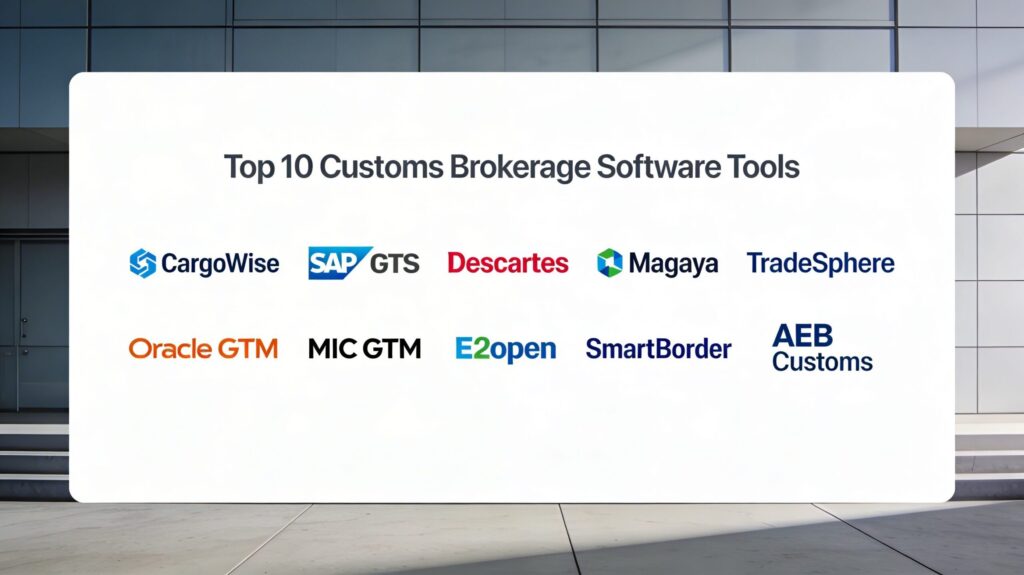
1. CargoWise (WiseTech Global)
CargoWise is arguably the most comprehensive global logistics platform, designed to manage the entire lifecycle of a shipment within a single database. Its customs module is deeply integrated with its forwarding and accounting features, making it the “industry standard” for large-scale global 3PLs and international brokers.
Key Features
The platform provides direct electronic connections to customs authorities in dozens of countries, enabling automated import and export declarations. It features a robust “BorderWise” module that offers a comprehensive library of trade legislation and reference materials. The system supports bonded warehouse management and Denied Party Screening (DPS) directly within the workflow. Its automation engine can be configured to “self-file” based on pre-defined business rules, significantly reducing manual intervention. Additionally, it offers enterprise-wide visibility through a centralized dashboard that tracks entry statuses across all global branches.
Pros
Eliminates data silos by using a single platform for both forwarding and customs, ensuring data integrity. Its global reach allows companies to use one software instance for operations in multiple countries.
Cons
The software is notoriously complex with a steep learning curve for new users. The pricing model can be unpredictable due to its transaction-based structure and frequent updates.
Platforms and Deployment
Cloud-based SaaS with options for on-premises deployment in specific enterprise scenarios.
Security and Compliance
Maintains ISO 27001 certification and adheres to global data sovereignty and privacy regulations.
Integrations and Ecosystem
Extensive native integrations within the WiseTech ecosystem and a powerful API for external ERP connectivity.
Support and Community
Offers a massive “CargoWise Learning” portal and a global network of certified service partners for implementation.
2. SAP Global Trade Services (GTS)
SAP GTS is the preferred choice for large multinational corporations that already utilize the SAP ERP ecosystem. It provides an enterprise-grade compliance framework that automates trade processes and mitigates the risks associated with global expansion.
Key Features
The software excels in automated Sanctioned Party List (SPL) screening, checking all business partners against global watchlists in real-time. It features a sophisticated “Legal Control” module that manages export licenses and ensures compliance with dual-use goods regulations. The “Customs Management” module supports electronic filing for a wide range of global regimes, including the EU’s Union Customs Code (UCC). It also includes a “Preference Management” tool that automates the calculation of origin for Free Trade Agreements. The platform provides detailed audit trails and reporting for every transaction.
Pros
Native integration with SAP S/4HANA ensures that customs compliance is embedded directly into the sales and procurement process. It is highly scalable for the largest global enterprises.
Cons
Implementation is a massive undertaking that typically requires specialized consultants and a significant budget. It may feel “over-engineered” for companies not already on the SAP stack.
Platforms and Deployment
Cloud-SaaS, Private Cloud, or On-Premises deployment options.
Security and Compliance
Enterprise-level security including SOC 1/2 compliance and deep alignment with AEO and C-TPAT standards.
Integrations and Ecosystem
Seamlessly integrated with SAP’s supply chain and finance modules, with robust EDI/API capabilities for customs authorities.
Support and Community
Supported by the global SAP partner network and a vast community of enterprise trade professionals.
3. Descartes Customs & Compliance
Descartes offers a modular, cloud-based suite of solutions focused on trade connectivity and compliance. It is a top choice for organizations that need a high degree of flexibility and direct connectivity to a vast network of customs authorities and carriers.
Key Features
The platform includes the “CustomsInfo” manager, a powerful HTS classification tool that uses AI to suggest codes and manage item masters. It provides direct filing capabilities for ACE (US), ACI (Canada), and various European customs systems. The suite includes a dedicated “Foreign Trade Zone” (FTZ) module that automates the complex reporting required for zone operations. It offers real-time Denied Party Screening and a “Landed Cost” calculator to estimate duties and taxes accurately. The software also features a collaborative portal where brokers and importers can share documents securely.
Pros
The modular design allows companies to buy only the specific customs modules they need. It offers one of the best HTS classification databases in the industry.
Cons
The user interface can feel disjointed as different modules are sometimes integrated from acquired companies. Enterprise support can be slow during peak regulatory change periods.
Platforms and Deployment
Multi-tenant cloud architecture (SaaS).
Security and Compliance
Fully compliant with GDPR and certified for high-security government data exchanges in multiple regions.
Integrations and Ecosystem
Strong integrations with major ERPs and a massive “Global Logistics Network” for carrier messaging.
Support and Community
Provides extensive online documentation, regular regulatory webinars, and 24/7 technical support.
4. Magaya Customs Compliance
Magaya (formerly ACELYNK) is a favorite among small-to-mid-sized U.S. freight forwarders and customs brokers. It is known for its modern, user-friendly interface and its deep integration with the Magaya Supply Chain platform.
Key Features
The software is an ACE-certified ABI (Automated Broker Interface) solution that supports Entry Summary, Cargo Release, and ISF filings. It features “Parts Automation,” which allows users to store complex product data for recurring shipments to speed up filing. The platform provides a single-window view of all CBP response messages, including “May Proceed” and “Release” status. It supports a wide range of PGA (Partner Government Agency) filings, such as FDA and EPA. The system also includes built-in accounting and billing modules specifically designed for brokerage fees and duty disbursements.
Pros
The “pay-as-you-go” pricing model makes it very accessible for growing brokerage firms. The interface is modern and much more intuitive than older legacy brokerage systems.
Cons
Primarily focused on the U.S. and North American markets; not as robust for complex European or Asian filings. High-volume users may find the per-entry cost adds up.
Platforms and Deployment
Hosted on Microsoft Azure Cloud for reliable, anytime access.
Security and Compliance
ISO 27001 certified and fully compliant with U.S. Customs and Border Protection security standards.
Integrations and Ecosystem
Native out-of-the-box integration with Magaya Supply Chain; also offers a robust API for external systems.
Support and Community
Known for responsive customer support and a helpful community of domestic brokerage professionals.
5. Livingston TradeSphere
Livingston International is a unique hybrid: a world-class customs brokerage firm that also provides its proprietary software, TradeSphere, to its clients. This software is built on decades of “boots on the ground” brokerage experience.
Key Features
TradeSphere is a modular GTM solution that manages the end-to-end import and export process. It features a “Global Trade Content” engine that is updated daily by Livingston’s team of 1,000+ compliance experts. The platform includes specialized modules for Mexican IMMEX and Fiscal Depot regimes, which are notoriously difficult to manage. It provides a “Broker Management” portal that allows importers to oversee multiple third-party brokers in a single dashboard. The system also includes robust “Post-Entry Audit” tools to identify and correct errors before they lead to government fines.
Pros
The software is backed by Livingston’s actual brokerage expertise, ensuring the workflows are designed for real-world compliance. It is particularly strong for North American trade (US/Canada/Mexico).
Cons
The licensing and implementation costs are aimed at the enterprise level. It can feel like a “locked-in” ecosystem if you use Livingston both as a broker and a software provider.
Platforms and Deployment
Cloud-based web application.
Security and Compliance
Maintains high standards for data integrity and is a certified partner in C-TPAT and PIP programs.
Integrations and Ecosystem
Connects with major ERP systems and provides specialized reporting for trade finance and procurement.
Support and Community
Offers premium “concierge” support where software users can consult with Livingston’s licensed brokers for regulatory advice.
6. Oracle Global Trade Management (GTM)
Oracle GTM is a cloud-native platform designed for organizations with highly complex, global supply chains that require a high degree of automation and cross-functional integration.
Key Features
The platform centralizes all global trade data, providing a single source of truth for classifications, licenses, and trade agreements. It features a “Trade Compliance” engine that automatically screens transactions against a variety of regulatory controls in real-time. The “Customs Management” module supports multi-country filing and helps automate the generation of required shipping documents. It includes “Global Trade Intelligence” (GTI) for advanced visualization and analysis of trade flows and risks. The system also supports specialized regimes like “Duty Drawback” to help companies recover paid duties.
Pros
The level of automation is unparalleled for large-scale operations. It integrates perfectly with Oracle Transportation Management (OTM) for a seamless “move and clear” workflow.
Cons
Like SAP, it requires a significant investment in time and money for proper configuration. The user interface can be overwhelming due to the sheer volume of data and options.
Platforms and Deployment
Oracle Cloud Infrastructure (SaaS).
Security and Compliance
Top-tier security certifications including FedRAMP, SOC 2, and ISO 27001; highly trusted by government contractors.
Integrations and Ecosystem
Deep integration with the broader Oracle Cloud ERP and SCM suites; supports REST APIs for third-party connectivity.
Support and Community
Access to Oracle’s vast global support network and specialized user groups for trade and compliance.
7. MIC Global Trade Management
MIC is a leading European-based GTM provider that specializes in providing “single-country” depth combined with “multi-country” breadth. It is particularly strong in the automotive and manufacturing sectors.
Key Features
The software offers a modular suite that includes “MIC-CUST” for customs filing and “MIC-CCS” for centralized classification. It provides certified direct connectivity to customs authorities in over 55 countries. A standout feature is its “AI-Assisted Classification,” which uses historical data and NLP to automate the mapping of parts to HTS codes. It supports complex special procedures like “Inward Processing” and “Customs Warehousing” with automated stock balancing. The system also includes a “Preference Management” module to manage supplier declarations and FTA origin calculations.
Pros
Offers some of the deepest localized functionality for European and Asian customs regimes. The AI classification tools are among the most advanced on the market.
Cons
The software is tailored for high-volume, complex manufacturing environments and may be too robust for simple freight forwarding. The implementation process is technically rigorous.
Platforms and Deployment
Web-based suite with flexible cloud or on-premises deployment.
Security and Compliance
Adheres to ITIL standards and provides 24/7 support with a high focus on data sovereignty (GDPR).
Integrations and Ecosystem
Certified SAP interfaces and robust APIs for seamless data exchange with varied ERP and WMS systems.
Support and Community
Highly specialized support team with deep expertise in localized customs laws and ITIL standards.
8. E2open Global Trade
E2open provides a massive, cloud-based network that connects all stakeholders in a supply chain. Its Global Trade suite is designed to reduce the complexity of cross-border operations through heavy automation.
Key Features
The platform features one of the world’s largest databases of trade content, covering regulatory controls for over 180 countries. It automates the entire customs filing process, from the creation of commercial invoices to the final submission of declarations. The “Duty Management” module helps companies identify opportunities for duty deferral or reduction through FTAs. It includes automated “Restricted Party Screening” that checks against hundreds of global lists. The suite also provides a “Landed Cost” engine that incorporates current duties, taxes, and shipping fees for accurate pricing.
Pros
The breadth of its trade content database is a massive advantage for companies operating in emerging markets. It is highly scalable and can manage millions of transactions per year.
Cons
The platform can be expensive for mid-market users. Because it is part of a much larger supply chain suite, the “customs-only” buyer may find the ecosystem a bit cumbersome.
Platforms and Deployment
Cloud-native platform (SaaS).
Security and Compliance
Enterprise-grade security with a focus on audit-ready record keeping and multi-tier visibility.
Integrations and Ecosystem
Connects more than 400,000 partners; integrates with almost any ERP or TMS via its “Harmony” integration layer.
Support and Community
Provides extensive customer success management and specialized training for global trade teams.
9. SmartBorder
SmartBorder is a specialized SaaS provider that focuses primarily on North American customs compliance. It is widely recognized for its speed, reliability, and ease of use for U.S. and Canadian brokers and importers.
Key Features
The platform is an ACE-certified suite of modules designed by licensed customs brokers. it includes specialized tools for “Trucking/ACE eManifest,” “Ocean/ISF,” and “Entry Summary.” It features a “Pay-per-use” billing model that is highly attractive for companies with fluctuating trade volumes. The software includes an integrated data verification function that checks for errors before submission to CBP. Its tariff database is updated daily to ensure the most current HTS codes are always available. The system is built on an MQ Series fiber optic connection for the fastest possible transmission to government servers.
Pros
Extremely fast processing speed and guaranteed uptime. The pay-per-use model offers excellent flexibility with no long-term contractual lock-in.
Cons
Limited to the U.S. and Canadian markets; it is not a solution for global (EU/Asia) customs filing. The user interface is functional but lacks the modern aesthetic of newer SaaS tools.
Platforms and Deployment
Web-based SaaS accessed via a standard PC and internet connection.
Security and Compliance
Highly secure transmission directly into CBP systems with robust data encryption and user access controls.
Integrations and Ecosystem
Designed for easy integration with existing logistics and accounting infrastructures via standard API protocols.
Support and Community
Staffed by licensed brokers who provide world-class technical and regulatory training.
10. AEB Customs Management
AEB is a German-based software provider that excels in automating cross-border clearance for e-commerce and high-volume retail. It is known for its “intelligent assistants” that guide users through the filing process.
Key Features
The software provides a single platform for managing both import and export declarations across multiple countries. It features an “EMCS Filing” module for the movement of excise goods like alcohol and tobacco. The “Customs Broker Integration” feature allows companies to manage their external brokers via a secure API. It includes an automated “Product Classification” assistant that accesses tariffs from over 150 countries. The system is particularly strong in “e-commerce customs,” automating low-value consignment filings to speed up delivery times for online retailers.
Pros
The “intelligent assistant” and wizard-driven interfaces make it much easier for non-experts to handle filings. It offers excellent localized support for the European “ATLAS” and “e-dec” systems.
Cons
The North American functionality is not as deep as specialized competitors like SmartBorder or Magaya. The variable billing model requires careful monitoring to control costs.
Platforms and Deployment
Cloud service hosted in German data centers, ensuring high data privacy standards.
Security and Compliance
GDPR compliant with automated updates that reflect the latest changes in customs law.
Integrations and Ecosystem
Offers ready-made add-ons for SAP ERP and S/4HANA, plus a robust API for Microsoft Dynamics and other ERPs.
Support and Community
Provides localized support in multiple languages and a strong focus on European trade compliance.
Comparison Table
| Tool Name | Best For | Platform(s) Supported | Deployment | Standout Feature | Public Rating |
| 1. CargoWise | Global 3PLs | Web, Cloud | Hybrid | BorderWise Library | 4.6/5 |
| 2. SAP GTS | SAP Enterprises | Web, SAP GUI | Cloud/On-Prem | Preference Management | 4.4/5 |
| 3. Descartes | Modular Flexibility | Web, API | Cloud | CustomsInfo Manager | 4.5/5 |
| 4. Magaya | SMB U.S. Brokers | Web, Azure | Cloud | ACE/ABI Certification | 4.7/5 |
| 5. TradeSphere | Compliance Depth | Web | Cloud | IMMEX/Mexico Support | 4.3/5 |
| 6. Oracle GTM | Supply Chain Sync | Web, Cloud | Cloud | Trade Intelligence | 4.2/5 |
| 7. MIC GTM | Global Mfg | Web, API | Hybrid | AI Classification | 4.6/5 |
| 8. E2open | Global Network | Web | Cloud | 180+ Country Content | 4.1/5 |
| 9. SmartBorder | Speed (U.S./CA) | Web | Cloud | Pay-per-use Model | 4.8/5 |
| 10. AEB Customs | EU E-commerce | Web, SAP Add-on | Cloud | Intelligent Assistants | 4.5/5 |
Evaluation & Scoring of Customs Brokerage Software
The scoring below is a comparative model intended to help shortlisting. Each criterion is scored from 1–10, then a weighted total from 0–10 is calculated using the weights listed. These are analyst estimates based on typical fit and common workflow requirements, not public ratings.
Weights:
- Core features – 25%
- Ease of use – 15%
- Integrations & ecosystem – 15%
- Security & compliance – 10%
- Performance & reliability – 10%
- Support & community – 10%
- Price / value – 15%
| Tool Name | Core (25%) | Ease (15%) | Integrations (15%) | Security (10%) | Performance (10%) | Support (10%) | Value (15%) | Weighted Total |
| 1. CargoWise | 10 | 6 | 10 | 9 | 9 | 7 | 8 | 8.60 |
| 2. SAP GTS | 10 | 5 | 10 | 10 | 9 | 8 | 6 | 8.15 |
| 3. Descartes | 9 | 8 | 9 | 9 | 9 | 8 | 8 | 8.65 |
| 4. Magaya | 8 | 9 | 8 | 9 | 9 | 10 | 9 | 8.75 |
| 5. TradeSphere | 9 | 7 | 8 | 9 | 8 | 9 | 7 | 8.15 |
| 6. Oracle GTM | 9 | 6 | 10 | 10 | 9 | 8 | 6 | 8.05 |
| 7. MIC GTM | 10 | 7 | 9 | 9 | 10 | 8 | 7 | 8.65 |
| 8. E2open | 9 | 7 | 9 | 9 | 8 | 8 | 7 | 8.15 |
| 9. SmartBorder | 8 | 9 | 7 | 9 | 10 | 9 | 10 | 8.70 |
| 10. AEB Customs | 9 | 8 | 9 | 9 | 9 | 8 | 8 | 8.65 |
How to interpret the scores:
- Use the weighted total to shortlist candidates, then validate with a pilot.
- A lower score can mean specialization, not weakness.
- Security and compliance scores reflect controllability and governance fit, because certifications are often not publicly stated.
- Actual outcomes vary with assembly size, team skills, templates, and process maturity.
Which Customs Brokerage Software Tool Is Right for You?
SMB
For a newly licensed broker or a growing regional firm, Magaya Customs Compliance or SmartBorder are the standout choices. They offer low barriers to entry, intuitive interfaces, and pricing models that scale with your transaction volume. SmartBorder is particularly effective for those who focus exclusively on the high-speed cross-border trucking market between the U.S. and Canada.
Global 3PLs and Forwarders
If your organization operates across multiple continents and handles varied modes of transport, CargoWise is the definitive choice. Its ability to unify forwarding, customs, and finance into a single global database provides a level of operational efficiency that smaller “point solutions” cannot match, despite its higher complexity.
Enterprise Manufacturers
Multinational manufacturers with high volumes of parts—such as those in the automotive or electronics sectors—should look toward MIC or SAP GTS. These platforms excel in complex areas like “Inward Processing,” “Foreign Trade Zones,” and automated HTS classification for hundreds of thousands of SKUs.
E-commerce and High-Volume Retail
For brands focused on the rapid movement of low-value goods, particularly in Europe, AEB Customs Management offers the best mix of “intelligent” automation and specialized e-commerce filing modules. It helps maintain the speed necessary for modern consumer delivery expectations.
North American Specialist
If your trade is strictly focused on the “NAFTA/USMCA” region (US, Canada, Mexico), Livingston TradeSphere provides unrivaled depth. Their specialized modules for Mexican IMMEX and Canadian customs are built on decades of localized expertise that broader global platforms often lack.
API-First and Tech-Forward Teams
For companies that want to build their own custom dashboards or integrate customs clearance deeply into a proprietary platform, Descartes offers a highly flexible, API-driven architecture. This allows your developers to use their robust trade content while maintaining a custom user experience.
Frequently Asked Questions (FAQs)
1. What is the difference between a TMS and Customs Brokerage software?
A Transportation Management System (TMS) focuses on the physical movement and cost of freight (routes, carriers, tracking). Customs Brokerage software focuses on the legal compliance and documentation required to cross a border (duties, taxes, HTS codes, and filing with government agencies).
2. Is ACE certification important for US brokers?
Yes, it is mandatory. ACE (Automated Commercial Environment) is the primary system through which the trade community reports imports and exports to U.S. Customs and Border Protection. Any software used for U.S. brokerage must be ACE-certified.
3. Can I use these tools if I am not a licensed broker?
Yes. Many large importers use this software to “self-file” their own entries. However, you must still have the necessary permits and knowledge to ensure your filings are accurate, as the importer of record is ultimately liable for any errors.
4. How does AI help in customs software?
AI is primarily used for automated HTS classification. It can read a product description like “stainless steel bolt for aircraft wing” and automatically determine the correct 10-digit tariff code, which historically required a human expert to look up in a massive manual.
5. What is “Landed Cost” and why does the software calculate it?
Landed cost is the total price of a product once it has arrived at the buyer’s door, including the original price, shipping, insurance, duties, and taxes. Software calculates this to help businesses price their products accurately and choose the most cost-effective sourcing regions.
6. Do these platforms handle export licenses?
Most enterprise-level tools (like SAP GTS, Oracle GTM, and MIC) have dedicated modules for export control. They check if a product requires a license based on its technical specs and the destination country, and can even manage the license application process.
7. Can I integrate my ERP with these tools?
Yes, most modern customs platforms offer APIs or EDI connections to pull data directly from ERPs like NetSuite, SAP, or Microsoft Dynamics. This eliminates the need for manual re-entry of invoice data into the customs filing system.
8. What happens if the tariff rates change overnight?
Top-tier providers like Descartes and Livingston have “Trade Content” teams that update the software’s tariff database daily. When you log in, the system will automatically use the new rates for any new filings.
9. How do these tools help with audits?
They maintain a “digital paper trail” for every entry, including original commercial invoices, shipping docs, and the government’s “May Proceed” messages. In the event of an audit, you can pull a complete, time-stamped history of any transaction in seconds.
10. What are PGA filings?
PGAs are “Partner Government Agencies” like the FDA (food/drugs), EPA (chemicals), or Lacey Act (wood). Many products require additional data for these agencies before they can clear customs, and these software tools provide the specific forms to handle those requirements.
Conclusion
The selection of a customs brokerage software platform is a foundational decision that impacts both the financial health and the legal standing of an international business. In the current global trade environment, where regulatory updates occur with increasing frequency, relying on manual processes is a significant operational risk. The ideal software partner does more than just transmit data; it provides a robust compliance framework that integrates with your existing logistics ecosystem and scales alongside your business. By moving toward automated classification, real-time screening, and unified global filing, organizations can significantly reduce border delays and optimize their duty spend. Ultimately, the right technology allows your trade compliance team to stop being “form fillers” and start being strategic advisors who protect and grow the brand’s international presence.
I find that this deep dive into Customs Brokerage Software offers a critical roadmap for any Logistics Operations Director looking to eliminate “border friction” in their global supply chain. I learned from this blog that the industry is rapidly moving toward AI-driven HS classification and unified global filing systems, where platforms like CargoWise and Descartes act as the essential digital link between commercial data and national customs authorities.
In my professional experience, transitioning to an automated brokerage platform is the only way to effectively manage high-volume entries with the surgical precision required to avoid costly demurrage and government audits. By using real-time risk alerts and automated tariff engineering, I can significantly optimize our landed costs and ensure we are fully leveraging Free Trade Agreements. For others in the field, this technology will transform customs from a reactive, paper-heavy bottleneck into a proactive, data-driven strategy that provides a true “single source of truth” for international trade compliance.