Introduction
Renewable asset management software represents a specialized category of industrial technology designed to optimize the performance, financial health, and operational lifecycle of clean energy portfolios. As the global energy transition accelerates, the management of wind, solar, and storage assets has moved beyond simple monitoring into the realm of advanced predictive analytics and automated grid integration. These platforms act as a centralized nervous system for energy producers, aggregating vast streams of IoT sensor data to provide a unified view of technical availability and commercial productivity. For modern independent power producers and utility companies, this technology is the primary driver of portfolio-wide efficiency and long-term return on investment.
The necessity of sophisticated asset management tools is driven by the increasing complexity of decentralized energy grids and the downward pressure on subsidies. Manual reporting and fragmented data systems create operational blind spots that lead to excessive downtime and lost revenue. A robust management platform enables automated failure detection, precise maintenance scheduling, and complex financial modeling that satisfies the rigorous reporting demands of institutional investors. When selecting a system, organizations must evaluate the depth of the data ingestion layer, the accuracy of the performance loss categorization, and the scalability of the architecture to support thousands of globally distributed megawatts.
Best for: Independent Power Producers (IPPs), utility companies, renewable energy investment funds, and specialized O&M (Operations and Maintenance) providers who need to maximize the technical and financial output of green energy assets.
Not ideal for: Residential-only solar installers with no portfolio tracking needs, small-scale energy hobbyists, or organizations looking for general property management software without industrial IoT integration.
Key Trends in Renewable Asset Management Software
The integration of Artificial Intelligence and Machine Learning has transformed these platforms into predictive powerhouses capable of identifying component failures weeks before they occur. We are seeing a significant shift toward “Digital Twin” technology, where a virtual replica of a wind turbine or solar inverter is used to simulate various operational scenarios and optimize yaw control or pitch angles in real-time. This level of simulation allows for proactive maintenance that significantly extends the lifespan of expensive hardware components.
Another dominant trend is the rise of hybrid asset management, where software must simultaneously handle solar, wind, and battery energy storage systems (BESS) within a single dashboard. Real-time market integration is also becoming a core requirement, allowing asset managers to adjust discharge schedules for batteries based on fluctuating spot market prices. Furthermore, there is a heightened focus on cybersecurity and data sovereignty, as renewable energy infrastructure is increasingly classified as a critical national asset, requiring platforms to adopt military-grade encryption and rigorous access controls.
How We Selected These Tools
Our selection process involved a rigorous assessment of technical reliability and market share within the global renewable energy sector. We prioritized platforms that have demonstrated the ability to manage multi-gigawatt portfolios across diverse geographic regions and multiple asset classes. A key criterion was the “interoperability value,” evaluating how effectively each software connects with various SCADA systems, original equipment manufacturer (OEM) data streams, and external financial accounting tools. We looked for a balance between industrial-strength data processing and user-friendly executive dashboards.
Scalability was also a major factor; we selected tools that can support an organization’s growth from a single pilot project to a massive international portfolio. Security certifications were scrutinized to ensure alignment with critical infrastructure standards like NERC-CIP and SOC 2, which are essential for protecting the grid from digital threats. Finally, we assessed the quality of the automated reporting engines to ensure they provide the transparency required by lenders and equity partners in the highly regulated energy finance market.
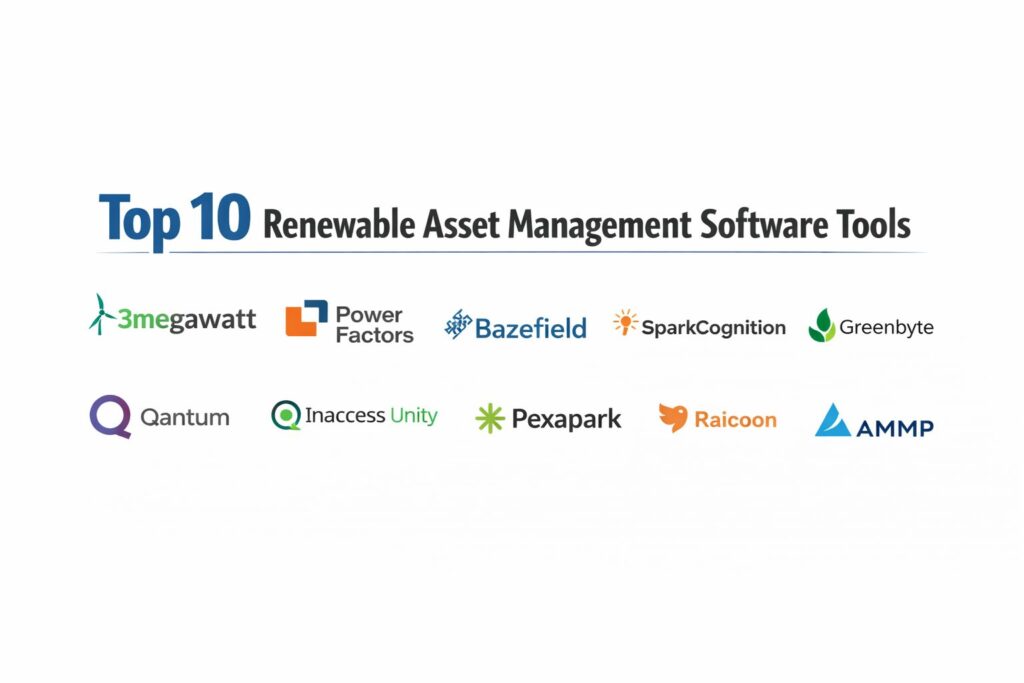
1. 3megawatt BluePrint
3megawatt BluePrint is an enterprise-grade platform specifically designed to handle the commercial and financial aspects of renewable energy management. It offers a comprehensive environment for managing contracts, compliance, and financial reporting across large global portfolios. Its modular nature makes it a standard for investment funds that require precise control over revenue and expenditure.
Key Features
The platform features a robust contract management module that tracks power purchase agreements and lease obligations. It includes a comprehensive compliance calendar to ensure all regulatory filings and safety inspections are met. The system offers automated invoicing and settlement tools that link directly to energy production data. Advanced financial modeling allows for deep-dive reporting on internal rate of return and cash flow at the project level. It also supports complex document management, ensuring that all technical manuals and warranties are easily accessible.
Pros
The level of focus on commercial and financial data is unmatched in the industry. It provides an excellent “source of truth” for non-technical stakeholders and investors.
Cons
It is not a real-time SCADA monitoring tool and relies on integrations for technical sensor data. The implementation process for large portfolios can be time-consuming.
Platforms and Deployment
Web-based SaaS with mobile access for field teams. It is a cloud-native deployment.
Security and Compliance
Maintains high standards including SOC 2 Type II and GDPR compliance for sensitive financial data.
Integrations and Ecosystem
Integrates with major technical monitoring platforms and financial systems like SAP and Microsoft Dynamics.
Support and Community
Offers a dedicated customer success model and a library of professional training resources for asset managers.
2. Power Factors Drive
Power Factors Drive is an industry-leading technical asset management platform that focuses on maximizing the performance of wind, solar, and storage assets. It is designed for large-scale operators who require high-resolution data to identify and solve technical underperformance issues.
Key Features
The platform features a powerful event management engine that categorizes and prioritizes equipment alarms across the portfolio. It includes advanced performance loss analytics that distinguish between weather-related issues and equipment degradation. The system offers a “Digital Control Room” for real-time monitoring of power plant status. It features automated reporting for both technical O&M teams and executive management. The software also provides specialized tools for managing high-voltage balance of plant equipment.
Pros
The platform handles massive amounts of high-frequency data with exceptional speed and reliability. It provides very deep technical insights that directly lead to increased energy production.
Cons
The interface can be complex due to the density of technical data and analytics. It represents a significant investment that is best suited for larger portfolios.
Platforms and Deployment
Web-based SaaS and mobile companion apps for iOS and Android.
Security and Compliance
Adheres to NERC-CIP requirements and maintains SOC 2 certification for industrial data security.
Integrations and Ecosystem
Offers a wide range of native connectors for various OEM data streams and third-party financial tools.
Support and Community
Known for having a highly technical support team and a robust user community of energy professionals.
3. Bazefield
Bazefield is a versatile, vendor-independent asset management system that serves as a unified operations center for multi-technology renewable energy portfolios. It is known for its ability to integrate with nearly any SCADA system or turbine manufacturer.
Key Features
The software includes a comprehensive operations management module that handles work orders and site access logs. It features a powerful “Power Curve” analysis tool to detect when wind turbines are performing below their theoretical potential. Users can create custom dashboards that combine technical, financial, and safety data. It offers automated downtime categorization based on industry standards. The reporting engine is highly flexible, allowing for the creation of site-specific or portfolio-wide summaries.
Pros
The “all-in-one” nature reduces the need for multiple disparate software subscriptions for different technologies. It offers excellent tools for day-to-day operations and maintenance tracking.
Cons
The initial configuration can be intensive for portfolios with many different hardware manufacturers. Some users find the interface less modern compared to newer entrants.
Platforms and Deployment
Web-based SaaS with on-premise deployment options for high-security environments.
Security and Compliance
Meets international standards for critical infrastructure security and provides granular access controls.
Integrations and Ecosystem
Offers an extensive library of drivers for connecting to hundreds of different wind and solar hardware models.
Support and Community
Provides a range of support tiers, including a dedicated help desk and a global network of specialized partners.
4. SparkCognition Renewable Suite
SparkCognition is an intelligence-driven platform that uses advanced AI and machine learning to predict component failures and optimize energy production. It provides a balanced suite of tools for both technical monitoring and predictive maintenance.
Key Features
The platform features “Cognitive Analytics” that identify subtle patterns in sensor data indicating future mechanical issues. It includes a robust performance optimization module that suggests real-time adjustments to turbine settings. The system offers a “Predictive Maintenance” dashboard that prioritizes repairs based on the estimated risk of failure. It features integrated tools for analyzing the health of gearboxes, bearings, and inverters. The software also provides automated root-cause analysis for complex equipment trips.
Pros
The AI capabilities are some of the most advanced in the sector, allowing for significant reductions in unplanned downtime. The user interface is modern and highly intuitive.
Cons
The focus on predictive “black-box” models may require a shift in internal culture for teams used to traditional maintenance. It is a premium product with a corresponding price tag.
Platforms and Deployment
Cloud-based SaaS.
Security and Compliance
Full data encryption and SOC 2 compliance, ensuring that industrial data is handled with enterprise-grade care.
Integrations and Ecosystem
Strong API for custom connections and a wide array of native integrations with major energy data hubs.
Support and Community
Offers a dedicated customer success model and a library of resources on the “AI-Driven O&M” methodology.
5. Greenbyte (by Envision Digital)
Greenbyte is a highly respected performance management platform designed to help renewable energy owners get the most out of their wind and solar farms. It provides a robust set of monitoring and analysis tools at a scale that suits both mid-market and enterprise operators.
Key Features
The platform features a “Unified Data Hub” that consolidates giving data from diverse SCADA systems into a single format. It includes a simple but powerful tool for creating custom KPIs and performance metrics. Users can manage work orders and maintenance logs with integrated tracking for site personnel. The software offers customizable alerts that can be sent via email or SMS for critical site events. It also provides a task management system to help O&M teams stay organized across multiple sites.
Pros
It is one of the most user-friendly professional platforms on the market. The software is remarkably stable and does exactly what it promises without unnecessary complexity.
Cons
It lacks some of the high-end financial modeling and contract management found in more specialized commercial tools. The interface is functional but lacks the deep AI-driven predictions of newer tools.
Platforms and Deployment
Web-based SaaS.
Security and Compliance
Maintains secure, encrypted servers and follows industry-standard privacy and security practices for the energy sector.
Integrations and Ecosystem
Integrates well with a large number of OEM data sources and several popular financial reporting tools.
Support and Community
Known for having a very helpful and responsive support team and a detailed knowledge base for users.
6. QOS Energy Qantum
Qantum is a powerful, data-agnostic platform designed for mid-market and enterprise renewable energy players who want to consolidate their entire data stack. It is particularly strong in multi-technology environments and complex performance analysis.
Key Features
The system features a massive library of communication protocols to connect with any plant equipment. It includes advanced tools for managing “Performance Ratio” and “Availability” across solar, wind, and storage. The “Analytics Engine” allows organizations to run custom calculations on raw data to detect subtle energy losses. It offers sophisticated workflow automation for maintenance dispatch. The platform also includes a full-featured module for managing site health and safety documentation.
Pros
Being data-agnostic means you are never locked into a specific hardware manufacturer. The feature set is exceptionally deep for the price point.
Cons
The setup process is intensive and requires a significant time commitment from the technical team. The interface can be complex due to the density of available tools.
Platforms and Deployment
Web-based SaaS.
Security and Compliance
ISO 27001 certified and adheres to standard data protection regulations for critical infrastructure.
Integrations and Ecosystem
Designed to be an open platform with a powerful API for essential third-party and custom connections.
Support and Community
Offers professional training programs and access to a large network of experienced energy data analysts.
7. Inaccess Unity
Inaccess Unity is a comprehensive management and control platform that focuses on the integration of renewable energy assets into the power grid. It is particularly favored by large-scale solar and battery storage operators.
Key Features
The platform features an integrated “Power Plant Controller” for managing grid compliance and active/reactive power. It includes deep modules for managing energy storage systems and hybrid power plants. The software provides real-time monitoring with sub-second data resolution. It allows for highly complex control logic to optimize battery charging and discharging. It also features a robust maintenance management system for tracking field interventions.
Pros
The focus on grid control and battery integration makes it ideal for the modern energy landscape. You have a single system for both asset management and grid interaction.
Cons
It requires significant technical expertise to configure the control logic correctly. The interface is more technical and less focused on “executive” financial views.
Platforms and Deployment
Hybrid deployment including on-site hardware and cloud-based management.
Security and Compliance
Complies with stringent grid security standards and provides enterprise-level data protection.
Integrations and Ecosystem
Has a massive ecosystem of hardware drivers and integrates natively with major grid operator interfaces.
Support and Community
Supported by a global team of engineers with extensive experience in grid stability and power electronics.
8. Pexapark
Pexapark is a specialized platform designed for the “New World” of renewable energy, focusing on the management of power purchase agreements (PPAs) and market risks. It is an essential tool for portfolios operating without government subsidies.
Key Features
The platform features a “PPA Evaluation” tool that provides real-time pricing for renewable energy contracts. It includes built-in risk management tools for tracking market exposure and price fluctuations. The CRM-like interface allows for the management of relationships with off-takers and energy traders. It offers automated revenue tracking based on actual production and market prices. The system also includes a “Portfolio Management” module for optimizing the mix of contracted and merchant energy.
Pros
The focus on market risk and PPA management is unique and highly valuable for modern IPPs. The platform is among the most innovative in the financial energy space.
Cons
It is not a technical monitoring tool; it is primarily a financial and market risk platform. It is a specialized tool that needs to be paired with a technical monitor.
Platforms and Deployment
Web-based SaaS.
Security and Compliance
Uses industry-standard encryption and secure data handling for proprietary financial and contract data.
Integrations and Ecosystem
Strong native integration with market data providers and technical asset management platforms.
Support and Community
Known for being extremely user-friendly with a vibrant community and fast expert support for PPA questions.
9. Raicoon
Raicoon is an “autonomous” operations center for solar energy systems that uses AI to eliminate manual data analysis. It is designed for small to mid-sized portfolios that want to achieve “zero-touch” asset management.
Key Features
The “Autonomous Detection” tool uses AI to verify every error and ignore false alarms automatically. It features a built-in project management system that generates work orders only when a real issue is detected. Users can receive automated reports that highlight only the most critical performance metrics. The platform includes integrated weather data to adjust performance expectations in real-time. It also offers a “Digital Twin” for every component in the solar plant.
Pros
The combination of AI and automation helps keep overhead costs low for small teams. The AI insights provide professional-level performance analysis to smaller organizations.
Cons
The software is primarily focused on solar and may lack depth for large wind portfolios. Some integrations with older SCADA systems are still being developed.
Platforms and Deployment
Web-based SaaS.
Security and Compliance
Strong data privacy protocols and secure industrial data handling, adhering to standard energy regulations.
Integrations and Ecosystem
Integrates with major inverter manufacturers and various third-party O&M platforms.
Support and Community
Offers a high-quality “Help Center” and a dedicated success team for onboarding new portfolios.
10. AMMP Technologies
AMMP Technologies is a modern, cloud-based platform designed for the management of decentralized energy systems, particularly in emerging markets. It provides a balanced suite of tools for monitoring, control, and commercial management.
Key Features
The platform features a “Vendor Agnostic” data collector that can communicate with low-bandwidth connections. It includes a built-in billing system that links energy consumption to payment records. The system offers specialized tools for managing microgrids and off-grid hybrid systems. It features a simplified “Fleet Management” view for tracking hundreds of small-scale assets. The software also provides automated performance reports designed for local stakeholders.
Pros
It is one of the best tools for managing decentralized and off-grid energy assets. The platform is remarkably flexible and handles poor connectivity environments very well.
Cons
It lacks some of the high-end industrial features found in utility-scale platforms like Power Factors. The interface is more focused on “system health” than deep financial modeling.
Platforms and Deployment
Web-based SaaS.
Security and Compliance
Maintains secure, encrypted data streams and follows industry-standard privacy practices for decentralized energy.
Integrations and Ecosystem
Integrates well with a wide range of smaller-scale inverter and battery brands used in the mini-grid sector.
Support and Community
Known for being very responsive and providing excellent support for projects in challenging geographic locations.
Comparison Table
| Tool Name | Best For | Platform(s) Supported | Deployment | Standout Feature | Public Rating |
| 1. 3megawatt | Financial / Compliance | Web, Mobile | Cloud SaaS | Asset Blueprinting | 4.7/5 |
| 2. Power Factors | Utility-Scale Technical | Web, iOS, Android | Cloud SaaS | Drive Analytics Engine | 4.8/5 |
| 3. Bazefield | Multi-Tech Operations | Web-Based | Hybrid | Vendor Independence | 4.6/5 |
| 4. SparkCognition | Predictive AI O&M | Web-Based | Cloud SaaS | Cognitive Predictions | 4.5/5 |
| 5. Greenbyte | Performance / SMB | Web-Based | Cloud SaaS | Ease of Use | 4.6/5 |
| 6. QOS Qantum | Data-Agnostic Scale | Web-Based | Cloud SaaS | Massive Protocol Library | 4.4/5 |
| 7. Inaccess Unity | Grid Control / BESS | Web-Based | Hybrid | Integrated PPC Control | 4.5/5 |
| 8. Pexapark | PPA / Market Risk | Web-Based | Cloud SaaS | PPA Revenue Cockpit | 4.8/5 |
| 9. Raicoon | Autonomous Solar | Web-Based | Cloud SaaS | 100% Alarm Verification | 4.7/5 |
| 10. AMMP | Decentralized / Off-grid | Web-Based | Cloud SaaS | Low-Bandwidth Data | 4.6/5 |
Evaluation & Scoring of Renewable Asset Management Software
The scoring below is a comparative model intended to help shortlisting. Each criterion is scored from 1–10, then a weighted total from 0–10 is calculated using the weights listed. These are analyst estimates based on typical fit and common workflow requirements, not public ratings.
Weights:
- Core features – 25%
- Ease of use – 15%
- Integrations & ecosystem – 15%
- Security & compliance – 10%
- Performance & reliability – 10%
- Support & community – 10%
- Price / value – 15%
| Tool Name | Core (25%) | Ease (15%) | Integrations (15%) | Security (10%) | Performance (10%) | Support (10%) | Value (15%) | Weighted Total |
| 1. 3megawatt | 9 | 8 | 8 | 9 | 8 | 9 | 8 | 8.45 |
| 2. Power Factors | 10 | 6 | 9 | 10 | 10 | 9 | 7 | 8.80 |
| 3. Bazefield | 9 | 7 | 10 | 9 | 9 | 8 | 8 | 8.55 |
| 4. SparkCognition | 8 | 7 | 8 | 9 | 10 | 8 | 7 | 7.95 |
| 5. Greenbyte | 8 | 10 | 8 | 8 | 8 | 9 | 9 | 8.40 |
| 6. Qantum | 9 | 6 | 9 | 9 | 9 | 8 | 8 | 8.15 |
| 7. Inaccess Unity | 9 | 5 | 9 | 10 | 9 | 8 | 8 | 8.15 |
| 8. Pexapark | 7 | 8 | 7 | 9 | 8 | 9 | 9 | 7.95 |
| 9. Raicoon | 8 | 9 | 7 | 8 | 9 | 8 | 9 | 8.20 |
| 10. AMMP | 7 | 8 | 8 | 8 | 8 | 9 | 10 | 8.10 |
How to interpret the scores:
- Use the weighted total to shortlist candidates, then validate with a pilot.
- A lower score can mean specialization, not weakness.
- Security and compliance scores reflect controllability and governance fit, because certifications are often not publicly stated.
- Actual outcomes vary with assembly size, team skills, templates, and process maturity.
Which Renewable Asset Management Software Tool Is Right for You?
Solo / Founder-Led
For developers starting with their first handful of projects, a tool that is easy to set up and provides a clear view of basic performance is essential. You need something that doesn’t require a technical team to manage, allowing you to focus on securing your next project while keeping an eye on your existing revenue streams without software hurdles.
SMB
Organizations with a small staff should prioritize automation and “autonomous” features. Your goal is to reduce the administrative burden so your team can spend more time on strategic growth rather than manually checking for hardware errors. A platform with built-in alarm verification and simple reporting is the most efficient choice here.
Mid-Market
Mid-sized portfolios need to start thinking about vendor independence and contract management. You should look for a CRM-like environment that tracks PPAs alongside technical performance. A platform that offers engagement with both the technical O&M and the commercial side of the business will help your team work smarter.
Enterprise
Large, utility-scale organizations require a system that acts as an industrial command center. Security, sub-second data resolution, and the ability to integrate with high-end grid control software are the top priorities to ensure global compliance and data integrity across thousands of megawatts.
Budget vs Premium
If budget is the primary concern, focusing on vendor-provided software or “lite” SaaS versions can provide basic monitoring for a low cost. Premium platforms, however, offer specialized features like AI-driven predictive maintenance and wealth-screening for market risk that can provide a much higher return on investment for established teams.
Feature Depth vs Ease of Use
Highly complex, data-heavy tools offer infinite possibilities but can stall a team if they are too hard to use. Often, a slightly less powerful tool that everyone on the operations staff actually uses is more valuable than a “perfect” system that is too difficult for the average field technician or asset manager.
Integrations & Scalability
Your management software must be able to talk to your accounting and market trading platforms. As you grow, the ability to add new technologies like battery storage or green hydrogen without a total system migration is a vital consideration for long-term technical health.
Security & Compliance Needs
If you manage critical grid infrastructure or international investment data, your software choice is a legal decision as much as a technical one. Ensure the provider has the specific certifications required for your operational region, particularly regarding data residency and industrial cybersecurity standards.
Frequently Asked Questions (FAQs)
1. What is the difference between SCADA and asset management software?
SCADA systems are used for the real-time control and local monitoring of hardware. Asset management software sits above the SCADA layer, aggregating data from multiple sites to provide long-term performance analysis, financial reporting, and commercial management.
2. Can these platforms handle multiple types of renewable energy?
Yes, most modern professional platforms are “multi-technology,” meaning they can manage solar, wind, battery storage, and even hydroelectric assets within a single unified dashboard, providing a holistic view of the energy portfolio.
3. Why is data resolution important for renewable assets?
High-resolution data (seconds or minutes) allows the software to detect subtle electrical issues that are hidden in hourly averages. This is essential for diagnosing intermittent inverter failures or wind turbine pitch issues that can lead to significant energy loss.
4. How does AI help in renewable asset management?
AI is used to identify “normal” behavior for every piece of equipment. When the actual data deviates from this baseline—even slightly—the AI can flag a potential failure long before a traditional alarm would be triggered by a complete shutdown.
5. Is it difficult to switch from one asset management tool to another?
The main challenge is the historical data migration. Most platforms have import tools, but ensuring that years of sensor data from different SCADA systems are correctly mapped to the new platform’s database requires careful technical planning.
6. Do these tools integrate with energy markets?
Many premium platforms now offer direct links to spot market price feeds. This allows asset managers to make informed decisions about when to perform maintenance or when to discharge energy from battery storage systems to maximize revenue.
7. What is “Performance Ratio” (PR) in solar management?
Performance Ratio is a key metric that compares the actual energy output of a solar plant to the energy it should have theoretically produced based on the sunlight available. It is the primary indicator of a plant’s technical health.
8. Is cybersecurity a major concern for asset management?
Absolutely. As renewable plants are critical infrastructure, these platforms are potential targets for cyberattacks. Choosing a software with SOC 2 or NERC-CIP compliance ensures that your plant controls and data are protected by modern security protocols.
9. Can I manage field technicians through these platforms?
Many renewable asset management tools include “CMMS” (Computerized Maintenance Management System) features, allowing you to create work orders, track technician locations, and document repairs directly within the same platform that monitors the equipment.
10. Do these platforms provide automated investor reports?
Yes, one of the main benefits of enterprise asset management software is the ability to generate “investor-grade” reports at the click of a button, ensuring that all financial and technical KPIs are presented clearly for lenders and stakeholders.
Conclusion
In the modern energy sector, specialized asset management software has transitioned from an optional operational tool to a critical requirement for financial and technical success. As clean energy portfolios grow in scale and complexity, the ability to centralize data, predict mechanical failures, and manage market risk becomes the primary differentiator between a high-performing investment and a stagnant one. By choosing a system that balances industrial-strength data processing with intuitive commercial management, organizations can ensure they are not just monitoring assets, but actively driving their performance toward maximum efficiency. The right platform serves as a scalable foundation for navigating the intricacies of the global renewable energy transition.
I find that this breakdown of Renewable Asset Management Software provides the essential roadmap I need as a Portfolio Investment Analyst to bridge the gap between technical performance and financial returns. I learned from this blog that the shift toward AI-driven Digital Twins and prescriptive maintenance is no longer just a luxury but a fundamental requirement for protecting long-term ROI in a landscape of declining subsidies. In the real world, this knowledge allows me to move beyond simple monitoring and start identifying “hidden” energy losses, like yaw misalignment or inverter clipping, before they impact the bottom line. For others in the sector, these platforms represent a transition to a single, secure source of truth that satisfies both O&M teams and institutional investors. My advice for mastering this content is to prioritize data interoperability; the real power of these tools lies in their ability to ingest high-resolution data from any OEM, allowing you to future-proof your portfolio against hardware lock-in.