Introduction
Creator monetization platforms have evolved into the essential infrastructure for the modern digital entrepreneur, providing the mechanisms to convert audience engagement into sustainable financial capital. These platforms function as a multi-layered interface where content delivery, community management, and financial transactions converge. For professionals building a brand, these tools offer more than just a payment gateway; they provide sophisticated analytics, automated marketing funnels, and secure content hosting that protects intellectual property while maximizing revenue per follower. In a landscape where traditional advertising models are increasingly volatile, direct-to-fan monetization has become the standard for long-term career stability.
The necessity of these platforms is driven by the shift toward “audience ownership,” where creators seek to mitigate the risks associated with algorithm changes on major social networks. By utilizing dedicated monetization tools, creators can establish a direct line of communication with their most loyal supporters, often through email lists or private community hubs. When evaluating these platforms, it is critical to consider the transaction fee structures, the degree of branding customization allowed, and the robustness of the data portability features. A well-chosen platform acts as a scalable business partner, allowing a creator to focus on high-value output while the software manages the complexities of global taxation, subscription renewals, and secure digital delivery.
Best for: Professional influencers, niche educators, independent journalists, and digital artists who require a reliable, professional-grade environment to manage recurring revenue and digital product sales.
Not ideal for: Casual users who only post occasionally without a business intent, or individuals who are not yet prepared to manage the administrative aspects of a digital storefront.
Key Trends in Creator Monetization Platforms
The primary trend in this sector is the rise of the “unified creator stack,” where platforms are expanding their feature sets to include everything from email marketing to high-end video hosting. This reduces the need for multiple subscriptions and creates a more seamless experience for the end-user. Artificial intelligence is also playing a significant role, with many platforms now offering automated tools for captioning, content repurposing, and even predictive analytics that suggest the best pricing tiers for specific audience segments based on historical data.
There is also a significant move toward transparency and compliance, with platforms integrating more robust tools for disclosure and tax reporting. As regulations around digital earnings become more stringent globally, the ability of a platform to handle these legal complexities automatically has become a major selling point. Furthermore, we are seeing a shift toward “micro-memberships,” where fans can support creators through very small, recurring payments or one-time “tips” that are integrated directly into the content consumption flow, lowering the friction for casual supporters to become paying customers.
How We Selected These Tools
The selection of these top monetization platforms was based on a rigorous assessment of their financial reliability, feature depth, and market reputation. We prioritized platforms that offer a clear path to “audience ownership,” meaning they allow creators to export their data and maintain a direct relationship with their fans regardless of the platform’s future. The fee structures were a major consideration, as we sought a balance between those with low entry costs and those that offer more value for high-volume earners through flat-rate subscriptions.
We also evaluated the technical performance of each tool, specifically looking at the stability of their payment processing and the quality of their content delivery networks. Integration capabilities were also weighed heavily; the best platforms are those that can easily connect with existing social media presences and third-party marketing tools. Finally, we looked at the level of professional support and the educational resources provided by each platform, ensuring that they offer the necessary guidance for creators to scale their digital businesses effectively.
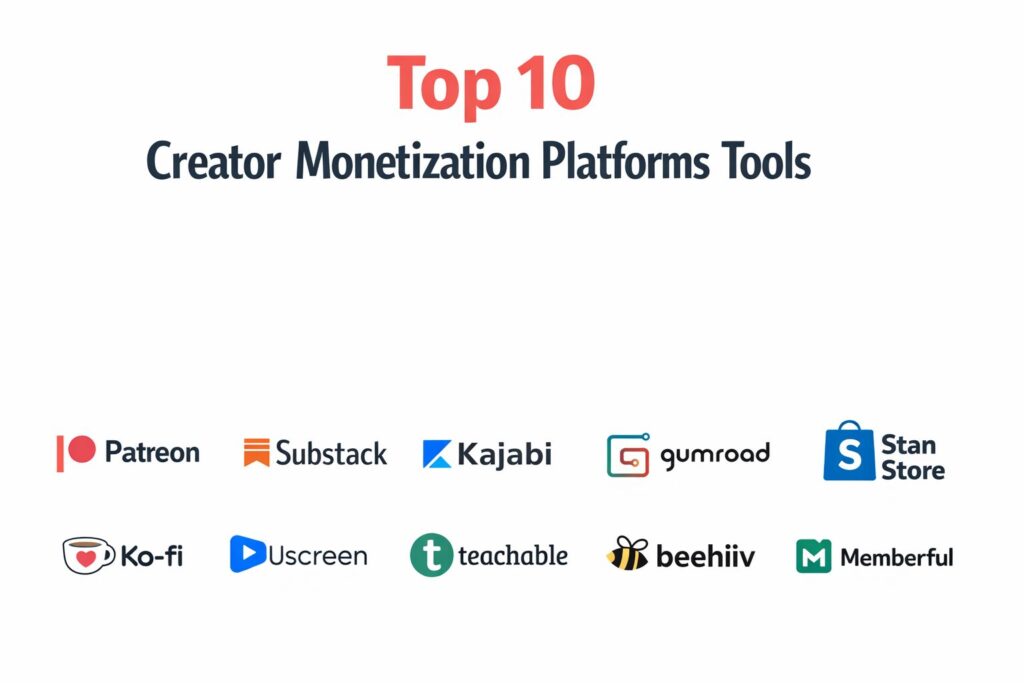
1. Patreon
Patreon remains the most recognized name in the subscription-based creator economy, specializing in tiered membership models that allow fans to support their favorite artists monthly. It provides a centralized hub where creators can post exclusive content, host private community areas, and manage various levels of fan access based on their contribution level.
Key Features
The platform features a highly flexible tier system that allows creators to offer different rewards, from early access to videos to physical merchandise. It includes a robust communication system for messaging patrons directly and integrates with various third-party apps for community hosting. The analytics dashboard provides deep insights into patron growth and churn rates, while the “per-creation” billing option offers flexibility for artists who do not follow a strict monthly schedule. It also includes built-in tools for managing physical benefit fulfillment, such as shipping addresses and sizes.
Pros
It has the highest brand recognition in the industry, which builds immediate trust with potential supporters. The integration ecosystem is massive, allowing for easy connection to tools like Discord and Vimeo.
Cons
The platform takes a significant percentage of revenue as a fee, which can be a drawback for high-earning creators. Its discovery features are limited, meaning creators must drive all their own traffic.
Platforms and Deployment
Web-based platform with dedicated mobile applications for both creators and patrons on iOS and Android.
Security and Compliance
Utilizes industry-standard encryption for all transactions and is fully compliant with global VAT and sales tax regulations, handling these automatically for the creator.
Integrations and Ecosystem
Offers deep integrations with Discord for community management, WordPress for gated websites, and various podcast hosting services for private RSS feeds.
Support and Community
Provides an extensive library of educational content and a dedicated help center, along with a large community of professional creators who share best practices.
2. Substack
Substack has revolutionized the way writers and journalists monetize their work by combining a simple email newsletter service with a robust paid subscription model. It allows creators to build a direct, portable relationship with their audience, ensuring that they own their email list entirely.
Key Features
The platform offers a clean, distraction-free writing interface and a simplified system for managing free and paid subscription tiers. It includes built-in podcast hosting, allowing writers to expand into audio content seamlessly. The “Notes” feature provides a social discovery layer that helps writers find new readers within the ecosystem. It also handles all aspects of payment processing and subscriber management, including automated renewal reminders. Detailed analytics show open rates, click-through rates, and the source of new subscribers.
Pros
It is incredibly easy to set up and requires zero technical knowledge to start a professional-grade paid newsletter. The ownership of the email list provides a high level of security for the creator’s business.
Cons
The 10% platform fee, in addition to credit card processing fees, can be expensive compared to self-hosted solutions. Customization of the website design is relatively limited.
Platforms and Deployment
Web-based writing and management interface with a dedicated reader app for iOS and Android.
Security and Compliance
Maintains high standards for data privacy and is compliant with GDPR and other major international data regulations.
Integrations and Ecosystem
While designed as an all-in-one solution, it allows for the embedding of various media types and supports custom domains for a more professional brand presence.
Support and Community
Offers a “Grow” series of resources and a community of thousands of successful writers who frequently collaborate through recommendations.
3. Kajabi
Kajabi is an enterprise-grade platform designed for creators who monetize their expertise through online courses, coaching programs, and membership sites. It is a comprehensive “all-in-one” solution that replaces the need for separate email, website, and funnel-building tools.
Key Features
The platform includes a powerful course builder that supports video, text, and interactive assessments. Its marketing automation tools allow creators to build complex sales funnels and automated email sequences based on user behavior. It features a robust website builder with professional templates and a built-in CRM to manage customer relationships. It also offers tools for hosting live webinars and managing high-ticket coaching programs. The mobile app allows students to consume content on the go, increasing engagement and retention.
Pros
It eliminates the “tech headache” by providing every tool needed to run a digital knowledge business in one place. The absence of transaction fees on most plans is a major benefit for high-volume sellers.
Cons
The monthly subscription cost is significantly higher than other platforms, making it more suitable for established creators. The sheer number of features can lead to a steeper learning curve for beginners.
Platforms and Deployment
Fully cloud-based platform with a specialized mobile app for end-user content consumption.
Security and Compliance
Provides enterprise-level security, including SSL certificates for all sites and secure hosting for all video and digital assets.
Integrations and Ecosystem
While it aims to be a standalone solution, it offers integrations with major payment processors and various third-party marketing and analytics tools.
Support and Community
Offers 24/7 technical support and a prestigious “Kajabi University” that provides in-depth training on both the software and the business of digital products.
4. Gumroad
Gumroad is a streamlined e-commerce platform that excels at helping creators sell digital products, such as e-books, software, and design assets, directly to their audience. It is known for its simplicity and its “buy” buttons that can be embedded anywhere on the web.
Key Features
The platform supports a wide range of product types, from one-time downloads to recurring memberships and physical goods. It includes a simple but effective email marketing tool for communicating with past customers. The “Gumroad Discover” marketplace helps surface products to a wider audience, providing a built-in discovery channel. It also features a flexible “pay what you want” pricing model and a robust affiliate system that allows others to promote your products for a commission.
Pros
It is perhaps the fastest way to start selling a digital product, with a setup process that takes only minutes. The flat-rate fee model is transparent and easy to understand for budgeting.
Cons
The fee percentage has increased in recent years, which may make it less competitive for some creators. The storefront customization is basic compared to dedicated website builders.
Platforms and Deployment
Web-based storefront and management dashboard.
Security and Compliance
Handles all payment security and digital rights management, ensuring that products are delivered securely after purchase.
Integrations and Ecosystem
Easily integrates with any website or social media profile through simple links or embedded widgets.
Support and Community
Provides a helpful help center and a blog focused on the “creator-educator” lifestyle, with a focus on lean business operations.
5. Stan Store
Stan Store is a “link-in-bio” platform specifically designed for social media creators on TikTok and Instagram who want to monetize their traffic instantly. It prioritizes high-conversion mobile interfaces and one-tap checkouts.
Key Features
The platform allows creators to sell digital downloads, book coaching calls, and collect email signups all from a single mobile-optimized page. It features a “one-tap” checkout process that significantly increases conversion rates on mobile devices. It includes a simple course hosting feature and the ability to set up recurring memberships. The dashboard provides clear, real-time analytics on clicks and conversions. It also offers automated email flows to follow up with customers and deliver digital assets securely.
Pros
It is perfectly optimized for the “social-first” creator, providing a professional storefront that looks great on smartphones. The fixed monthly fee means creators keep 100% of their sales (minus processing fees).
Cons
It is less suitable for creators who need a full-featured website or complex blog. The platform is primarily focused on mobile users, which may not fit all business models.
Platforms and Deployment
Mobile-first web platform designed for integration with social media bios.
Security and Compliance
Uses industry-standard secure payment processing and ensures that all customer data is handled according to modern privacy standards.
Integrations and Ecosystem
Designed to be the primary destination for traffic from social platforms, with simple connections to email marketing providers.
Support and Community
Offers responsive customer support and a wealth of social media marketing advice specifically for creators using short-form video.
6. Ko-fi
Ko-fi is a versatile “tip jar” and storefront platform that allows creators to receive support from their fans without the pressure of a formal subscription. It has evolved to include memberships, commissions, and a full digital shop.
Key Features
The core feature is the ability for fans to “buy a coffee” for a creator, representing a low-pressure, one-time donation. It includes a digital storefront for selling files and physical items, as well as a membership system for recurring support. The “Commissions” feature allows creators to offer personalized services with a structured workflow. It also features a “Goals” tracker that shows fans what their contributions are being used for. Crucially, it does not take a cut of one-time donations on its basic plan.
Pros
It is one of the most creator-friendly platforms in terms of fees, especially for those just starting out. The multi-functional nature allows it to grow with the creator from simple tips to a full business.
Cons
The interface can feel a bit more cluttered than some of its more specialized competitors. It lacks the advanced marketing automation found in enterprise platforms.
Platforms and Deployment
Web-based platform with mobile-friendly pages and an optional desktop app for creators.
Security and Compliance
Payments go directly from the fan to the creator via secure processors, and the platform adheres to standard digital security protocols.
Integrations and Ecosystem
Features a WordPress plugin and various stream alerts for creators who use platforms like Twitch and YouTube.
Support and Community
Provides a supportive community and a “Creator Success” blog that offers tips on how to increase fan engagement and support.
7. Uscreen
Uscreen is the leading platform for video-centric creators who want to build their own “Netflix-style” subscription service. It focuses on high-quality video delivery and the ability to launch dedicated apps on various devices.
Key Features
The platform provides a complete video-on-demand (VOD) infrastructure, including secure hosting and global delivery. It allows creators to launch branded apps for iOS, Android, Roku, and Apple TV, providing a professional viewing experience. It features a robust subscription management system with support for rentals and one-time purchases. The built-in community features allow for live chats and comments under videos. It also includes powerful marketing tools like “Try for Free” trials and automated win-back emails for canceled subscribers.
Pros
It offers the most professional way to distribute video content outside of major social platforms. The ability to have your own branded apps significantly increases the perceived value of the content.
Cons
The setup and monthly costs are high, and there is a per-subscriber fee that can add up as the business scales. It is specialized for video and is not a general-purpose e-commerce tool.
Platforms and Deployment
Cloud-based web platform with support for custom mobile and TV applications.
Security and Compliance
Features advanced DRM (Digital Rights Management) to prevent unauthorized downloading and sharing of video content.
Integrations and Ecosystem
Connects with over 1,000 third-party apps through Zapier and offers deep integrations with marketing and analytics tools.
Support and Community
Provides a dedicated account manager for higher-tier plans and an extensive library of resources on how to grow a video subscription business.
8. Teachable
Teachable is a popular and accessible platform for creating and selling online courses. It strikes a balance between ease of use for the creator and a high-quality learning experience for the student.
Key Features
The platform features an intuitive drag-and-drop course builder that supports a variety of media types. It includes a specialized tool for creating and grading quizzes and certificates of completion. The “Basic” and higher plans offer unlimited students and courses, providing great scalability. It handles all aspects of payment processing, including the distribution of taxes and affiliate payouts. It also features a “Memberships” option that allows creators to bundle multiple courses into a recurring subscription.
Pros
It is very beginner-friendly while still offering the depth needed for a professional education business. The platform’s ability to handle global tax compliance is a major administrative relief for creators.
Cons
The transaction fees on the lower-tier plans can be high. The website customization is limited compared to using a dedicated CMS like WordPress.
Platforms and Deployment
Fully cloud-based web platform with a mobile app for students.
Security and Compliance
Ensures all student data is protected and maintains compliance with major international educational and financial standards.
Integrations and Ecosystem
Offers a wide range of integrations with email marketing tools, analytics platforms, and customer support software.
Support and Community
Provides an active community forum and a wealth of training through “TeachableU” to help creators launch successful courses.
9. Beehiiv
Beehiiv is a modern, high-growth newsletter platform built by the team behind some of the world’s most successful digital publications. it is designed for maximum growth and advanced monetization through ads and subscriptions.
Key Features
The platform features a “Recommendation Network” that allows newsletters to grow by cross-promoting each other. It includes a built-in ad network that connects creators with premium brands for sponsored content. The subscription system is highly flexible, allowing for multiple tiers and promotional offers. It offers some of the most advanced analytics in the industry, including detailed 3D maps of where subscribers are located. The writing interface is fast and optimized for high-volume publishing.
Pros
The focus on growth features makes it one of the best platforms for rapidly expanding a newsletter audience. The absence of platform fees on revenue (creators keep 100%) is a major financial advantage.
Cons
It is a newer platform, so some legacy features found in older tools may still be in development. The focus is strictly on newsletters, making it less versatile for other types of digital products.
Platforms and Deployment
Web-based management and publishing platform.
Security and Compliance
Maintains strict standards for email deliverability and data security, ensuring that newsletters reach the inbox safely.
Integrations and Ecosystem
Offers a robust API and integrations with various marketing and automation tools to fit into a larger business stack.
Support and Community
Provides rapid technical support and a highly transparent development roadmap, often shaped by user feedback.
10. Memberful
Memberful is a “behind-the-scenes” membership tool that integrates directly into a creator’s existing website, usually WordPress. It is designed for those who want to maintain total control over their brand and site design.
Key Features
The platform handles the technical complexities of membership, such as sign-ups, renewals, and content gating, while staying invisible to the end-user. It features a “private podcast” tool that allows creators to offer exclusive audio content to members. The “Staff Accounts” feature allows teams to manage the membership backend together. It includes a simple, secure checkout process that can be embedded directly into any page. Detailed reporting shows everything from churn rates to the lifetime value of each member.
Pros
It allows for the highest level of brand consistency since the creator owns the entire website experience. The platform is highly stable and used by some of the largest independent media organizations.
Cons
It requires the creator to manage their own website (e.g., WordPress), which adds technical overhead and hosting costs. It is not an “all-in-one” solution and requires other tools to function fully.
Platforms and Deployment
A service that integrates into existing websites; primarily managed through a web dashboard.
Security and Compliance
Uses Stripe for all payment processing, ensuring the highest level of financial security, and is fully compliant with modern data protection laws.
Integrations and Ecosystem
Deeply integrated with WordPress via a dedicated plugin and connects with hundreds of other apps through various automation platforms.
Support and Community
Offers world-class, personal customer support and a clear set of documentation for developers and creators alike.
Comparison Table
| Tool Name | Best For | Platform(s) Supported | Deployment | Standout Feature | Public Rating |
|---|---|---|---|---|---|
| Patreon | Membership-based creator support | Web, iOS, Android | Cloud | Tiered memberships with strong brand trust | 4.7/5 |
| Substack | Paid newsletters and independent publishing | Web, iOS, Android | Cloud | Email list ownership and paid subscriptions | 4.6/5 |
| Kajabi | Course creators, coaches, and digital business owners | Web, Mobile App | Cloud | All-in-one course, funnel, and website stack | 4.7/5 |
| Gumroad | Digital product sellers and indie creators | Web | Cloud | Fast product selling with simple checkout | 4.5/5 |
| Stan Store | Social-first creators monetizing link-in-bio traffic | Web | Cloud | Mobile-first storefront with one-tap checkout | 4.4/5 |
| Ko-fi | Tips, donations, commissions, and small shops | Web | Cloud | Creator-friendly tipping and flexible storefront | 4.6/5 |
| Uscreen | Video creators building subscription platforms | Web, iOS, Android, TV Apps | Cloud | Branded video subscription apps | 4.7/5 |
| Teachable | Online course creators and educators | Web, Mobile App | Cloud | Easy course creation with student management | 4.5/5 |
| Beehiiv | Growth-focused newsletter publishers | Web | Cloud | Built-in growth network and ad monetization | 4.6/5 |
| Memberful | Membership businesses on existing websites | Web | Cloud | Native website-based membership control | 4.5/5 |
Evaluation & Scoring of Creator Monetization Platforms
The scoring below is a comparative model intended to help shortlisting. Each criterion is scored from 1–10, then a weighted total from 0–10 is calculated using the weights listed. These are analyst estimates based on typical fit and common workflow requirements, not public ratings.
Weights:
- Core features – 25%
- Ease of use – 15%
- Integrations & ecosystem – 15%
- Security & compliance – 10%
- Performance & reliability – 10%
- Support & community – 10%
- Price / value – 15%
| Tool Name | Core (25%) | Ease (15%) | Integrations (15%) | Security (10%) | Performance (10%) | Support (10%) | Value (15%) | Weighted Total |
|---|---|---|---|---|---|---|---|---|
| Patreon | 9 | 8 | 9 | 9 | 8 | 8 | 7 | 8.20 |
| Substack | 8 | 9 | 7 | 9 | 8 | 8 | 8 | 8.10 |
| Kajabi | 10 | 7 | 8 | 9 | 9 | 9 | 7 | 8.55 |
| Gumroad | 8 | 10 | 7 | 8 | 8 | 7 | 8 | 8.10 |
| Stan Store | 8 | 9 | 6 | 8 | 9 | 8 | 8 | 7.95 |
| Ko-fi | 8 | 8 | 7 | 8 | 8 | 8 | 9 | 8.05 |
| Uscreen | 9 | 7 | 8 | 9 | 9 | 9 | 7 | 8.25 |
| Teachable | 9 | 8 | 8 | 9 | 8 | 8 | 8 | 8.30 |
| Beehiiv | 8 | 9 | 8 | 8 | 9 | 8 | 9 | 8.45 |
| Memberful | 8 | 6 | 9 | 9 | 8 | 9 | 8 | 8.00 |
How to interpret the scores:
- Use the weighted total to shortlist candidates, then validate with a pilot.
- A lower score can mean specialization, not weakness.
- Security and compliance scores reflect controllability and governance fit, because certifications are often not publicly stated.
- Actual outcomes vary with assembly size, team skills, templates, and process maturity.
Which Creator Monetization Platform Is Right for You?
Solo / Freelancer
For the independent creator, the priority is often low overhead and high ease of use. A platform that allows you to start for free and only takes a percentage when you make a sale is ideal for testing ideas without financial risk.
SMB
Small businesses and teams should look for platforms that offer some level of automation. As your audience grows, you cannot manually handle every customer interaction, so tools that manage subscriptions, taxes, and asset delivery automatically become essential.
Mid-Market
In the mid-market, customization and branding become critical. At this stage, you want a platform that feels like an extension of your own brand rather than a marketplace where you are just one of many options.
Enterprise
Large-scale creators and media companies require deep technical control and high-level security. Enterprise solutions often include API access for custom integrations and dedicated support to ensure that high-volume traffic never compromises site performance.
Budget vs Premium
Budget tools are great for starting out, but they often “tax” your growth through high transaction percentages. Premium tools have higher monthly costs but can actually be more profitable at scale because they allow you to keep a much larger portion of your revenue.
Feature Depth vs Ease of Use
If you are selling a single e-book, a simple tool is best. However, if you are building a multi-layered business with courses, communities, and coaching, you will eventually need the feature depth that only more complex platforms can provide.
Integrations & Scalability
Your platform must be able to “talk” to your other tools. Whether it’s your email provider or your video host, a platform with a rich integration ecosystem ensures that you won’t outgrow the software as your business model evolves.
Security & Compliance Needs
In a world of tightening digital regulations, having a platform that handles VAT, GDPR, and payment security is no longer optional. Choosing a tool with a strong track record in compliance protects you from legal and financial headaches down the road.
Frequently Asked Questions (FAQs)
1. Do I need a large following to start monetizing?
No, you do not need a massive audience to begin. In fact, many creators find that having a smaller, “hyper-niche” audience of a few hundred loyal fans can be more profitable than having a million casual followers if the monetization model is direct and high-value.
2. Is it better to choose a platform with a monthly fee or a transaction fee?
This depends on your volume. If you are just starting and have inconsistent sales, a transaction fee model is lower risk. Once you are making a consistent income, switching to a flat monthly fee usually allows you to keep more of your money.
3. Can I use multiple platforms at once?
Yes, many professional creators use a “stack” of tools—for example, using one for their newsletter and another for their online courses. However, this increases technical complexity, so many prefer an all-in-one solution if it meets all their needs.
4. Who actually owns the email list when I use these platforms?
In most professional-grade platforms, you own the list and can export your subscribers at any time. This is a critical feature to check, as it protects you from being “locked in” to a single provider.
5. How do these platforms handle international taxes?
Many of the top platforms act as a “merchant of record,” meaning they technically sell the product to the customer and handle all the local sales tax and VAT collection on your behalf, then pay you the net amount.
6. Is it safe to give these platforms my bank information?
The platforms listed here use highly secure, third-party payment processors like Stripe or PayPal. They do not store your full bank details on their own servers, following the same security standards as major global banks.
7. Can I move my content from one platform to another later?
Most platforms allow you to export your data and files, but the formatting of your courses or community posts may not transfer perfectly. It is best to choose a platform you can stay with for at least 1-2 years.
8. Do these platforms provide marketing for me?
While some have “discovery” features that can surface your work to new people, you should generally assume that you are responsible for driving your own traffic through social media, SEO, or paid ads.
9. What is the average fee taken by monetization platforms?
Platform fees typically range from 3% to 10% of your gross revenue. This does not include the standard credit card processing fees (usually around 2.9% + $0.30) charged by companies like Stripe.
10. Can I sell physical products on these digital-first platforms?
Yes, several of these tools have expanded to include physical goods, allowing you to sell merchandise or signed books alongside your digital downloads and subscriptions.
Conclusion
Navigating the landscape of creator monetization is no longer about finding a simple “buy” button; it is about selecting a strategic partner that can scale alongside your professional ambitions. The platforms we have explored represent the absolute top tier of the digital economy, each offering a unique pathway to transforming creative influence into a resilient, high-margin business. Whether you prioritize the simplicity of a mobile-first storefront or the massive technical capabilities of an all-in-one educational ecosystem, the goal remains the same: building a direct, unmediated relationship with your audience. As the digital world moves further away from ad-supported models and toward a relationship-driven economy, your choice of platform will become the most significant lever in your long-term success. Adaptability, audience ownership, and technical reliability must be the three pillars of your selection process.
It only works when I’m Argentina.
I find that this breakdown of creator monetization platforms is a vital strategic guide for anyone looking to build a resilient, multi-channel business from my perspective as a Digital Business Strategist. I learned from this blog that the most successful creators don’t just rely on ad revenue; they build Just-in-Time (JIT) monetization through memberships and direct product sales that offer much higher ROI (Return on Investment). In my professional world, I see the shift toward “audience ownership” as the single most important move for long-term career stability—ensuring that a sudden algorithm change doesn’t wipe out a business overnight. For others, this blog highlights how platforms like Kajabi or Uscreen provide the professional-grade infrastructure needed to scale from a solo creator to a fully operational digital agency. My advice for anyone reading is to prioritize data portability and list ownership when choosing a platform; you want to ensure that if the platform changes its rules, you can take your customers with you.