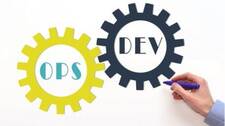
This article is based on a concept originally published by Electric Cloud (now CloudBees). The ideas presented reflect industry thinking from the mid-to-late 2010s and remain relevant to modern platform engineering and DevOps practice.
Implications of Application Interconnectivity
Modern businesses increasingly compete on the strength of their digital experience. That experience rarely comes from a single application. Instead, it is assembled from dozens of interconnected services — APIs, mobile apps, web front-ends, SaaS integrations, data pipelines, and back-end microservices — each owned by different teams, built on different technology stacks, and deployed to different environments.
For the end user, this complexity is invisible. They expect one seamless, always-on experience. For operations teams, however, this interconnectivity creates a significant reliability challenge: every service boundary is a potential point of failure, and a degraded dependency in one system can cascade silently across the entire user journey.
The Operations Responsibility
DevOps emerged to close the gap between development and operations teams, and many of its foundational practices originated on the development side: Agile methodology, code review standards, build automation, and continuous integration. These were developer-led responses to developer-identified problems.
Yet the real business value of software is only realised once code reaches production and is in the hands of end users. That means the greatest return on investment from DevOps practices lies in the operational half of the pipeline — in stability, observability, safe deployments, and reliable rollbacks.
This observation motivates a reframing of the DevOps conversation: instead of starting from development and working toward operations, what if teams started from operational requirements and worked backward into the design and development process?
That reframing has a name: OpsDev.
What OpsDev Actually Means
OpsDev is not a rejection of DevOps. It is a shift in emphasis — specifically, the practice of front-loading operational considerations into the earliest stages of application design and development.
In an OpsDev approach, questions that are traditionally deferred to the end of the delivery cycle are asked at the beginning:
- How will this application be monitored in production?
- How will it scale under peak load?
- What are the security and compliance requirements, and how are they enforced automatically?
- How will it be migrated if the underlying infrastructure changes?
- What are the dependencies between application components, and in what order must they be deployed?
Addressing these questions upfront — rather than retrofitting answers after code has been written — leads to better-designed software and a far smoother path to production.
Equally important is treating the delivery pipeline itself as a first-class product artifact. The toolchain, automated tests, deployment scripts, and environment configurations that move code from commit to production are designed and built in parallel with the application — not bolted on afterward.
First Pants, Then Shoes: Getting the Order Right
A common failure mode in traditional software delivery is that infrastructure and operational concerns are treated as someone else’s problem until it is too late. The result is code that passes QA in a staging environment but fails in production due to configuration drift, unmodeled dependencies, or untested failure scenarios.
OpsDev prescribes a specific order of operations:
- Model dependencies first. Before writing application code, map and document the relationships between all application components. Understand what depends on what, and in what order systems must start, stop, or scale.
- Model the target environments. Define the production infrastructure — including networking, security boundaries, compliance controls, and environment-specific configurations — before development begins. Application components can start as stubs; the environment scaffolding should not.
- Automate the deployment processes. Build the scripts, pipelines, and runbooks that will deploy each component to each environment. Automate as much as possible so that the same process used in development can be promoted through staging and into production without manual intervention.
When these steps are in place before significant development work begins, development and test teams can run their work inside environment models that accurately reflect production. They become aware of production constraints early and write code accordingly. The result is far fewer surprises at release time.
The Release Pipeline as an OpsDev Cornerstone
A well-designed release pipeline is the operational backbone of the OpsDev approach. Unlike a simple CI/CD pipeline that builds and tests a single service, a release pipeline orchestrates the coordinated deployment of multiple application components — produced by different teams — across dev, test, staging, and production environments.
Key characteristics of a mature release pipeline in an OpsDev model include:
- Aggregation of commit pipelines. Individual CI pipelines (one per service or component) feed into a release pipeline that understands how those components relate to each other.
- Dependency-aware deployment sequencing. The pipeline deploys components in the correct order based on their interdependencies, rather than leaving that coordination to humans.
- Approval gates. Both manual and automated gates can be inserted at key promotion points — for example, requiring a change advisory board sign-off before a production deployment, or requiring a security scan to pass before promoting to staging.
- Parallelization. Where components can be deployed independently, the pipeline runs those deployments in parallel, reducing total release time.
- Artifact and configuration fidelity. The same artifact that was tested in staging is deployed to production — no rebuilds, no manual configuration changes — reducing the risk of configuration drift.
ITSM and APM Integration
An OpsDev release pipeline does not operate in isolation. It integrates with the broader operational toolchain that enterprises already rely on.
ITSM (IT Service Management) integration allows the pipeline to:
- Automatically open and close change records as deployments progress through environments.
- Request approval from a change management system before executing a production deployment.
- Record deployment events in an auditable log for compliance purposes.
APM (Application Performance Monitoring) integration allows the pipeline to:
- Automatically trigger performance and load tests immediately after a deployment completes.
- Receive signals from monitoring tools and act on them — for example, triggering an automatic rollback if error rates spike after a deployment, or initiating auto-scaling in response to load metrics.
- Use post-deployment health checks as automated approval gates before promoting a release to the next environment.
This bidirectional integration between the release pipeline and operational tooling is what distinguishes a mature OpsDev implementation from a basic CI/CD setup.
Final Thoughts: The Case for an Ops-First Mindset
The argument for OpsDev is straightforward: in a world where digital services are deeply interconnected and business outcomes depend directly on application uptime and performance, operations cannot be an afterthought. Reliability, security, scalability, and observability must be designed in — not bolted on.
Encouraging developers to think Ops-first does not mean slowing down development. On the contrary, teams that invest in environment modeling, deployment automation, and integrated pipelines early in a project consistently experience fewer production incidents, shorter release cycles, and less time spent firefighting. The upfront investment pays back quickly and compounds over the lifetime of the application.
Whether you call it OpsDev, platform engineering, or simply mature DevOps practice, the core principle is the same: begin with production in mind.