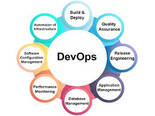
The DevOps platform market has grown steadily as organizations across industries invest in toolchains that automate software delivery, improve collaboration between development and operations teams, and accelerate release cycles. This article examines the key players, market segments, and growth drivers that analysts have highlighted in coverage of this space.
What Is a DevOps Platform?
A DevOps platform is an integrated set of tools and services that supports the entire software delivery lifecycle — from code authoring and version control through continuous integration, testing, deployment, configuration management, monitoring, and feedback. Rather than stitching together dozens of point solutions, many teams now look for platforms that unify these capabilities under a common workflow and data model.
Common capabilities found in DevOps platforms include:
- Source control and collaboration — branching, code review, and merge management.
- CI/CD pipelines — automated build, test, and deployment workflows.
- Configuration management — declarative or imperative management of infrastructure state.
- Container orchestration — packaging and scheduling workloads at scale.
- Monitoring and observability — metrics, logs, and traces that close the feedback loop.
- Security and compliance automation — policy-as-code and audit trails embedded in the pipeline.
Key Players in the DevOps Platform Market
Market research covering the DevOps platform space consistently identifies a broad competitive landscape spanning open-source projects, commercial vendors, and large cloud providers. Vendors frequently cited include:
- Puppet Labs — infrastructure automation and configuration management, with strong enterprise adoption in compliance-heavy industries.
- Chef (now part of Progress Software) — infrastructure-as-code and compliance automation, popular for complex on-premises environments.
- Docker Inc. — containerization tooling that transformed how applications are packaged and shipped.
- Red Hat / Ansible — agentless automation platform acquired by Red Hat and now deeply integrated with the OpenShift Kubernetes platform.
- Atlassian — collaboration and project management tooling (Jira, Confluence, Bitbucket) widely used in software teams.
- SaltStack (acquired by VMware) — event-driven automation and configuration management at scale.
- Broadcom (formerly CA Technologies) — enterprise release automation and value stream management.
- Rackspace — managed cloud services that layer DevOps tooling on top of multi-cloud infrastructure.
- XebiaLabs (now Digital.ai) — release orchestration and value stream management.
- VersionOne (now Digital.ai) — agile planning integrated with delivery pipelines.
- Cisco, IBM, Microsoft, VMware, and HP — large enterprise vendors offering DevOps capabilities as part of broader hybrid-cloud and platform portfolios.
- CollabNet, Spirent Communications, and DBmaestro — specialist vendors covering agile portfolio management, test automation, and database DevOps respectively.
The competitive landscape is not static. Acquisitions (SaltStack → VMware, XebiaLabs + VersionOne → Digital.ai, Chef → Progress) have consolidated several of these players, and hyperscale cloud providers — AWS, Microsoft Azure, and Google Cloud — continue to expand their native DevOps tooling, raising the competitive bar for independent vendors.
Market Segmentation
Analysts typically segment the DevOps platform market along several dimensions:
By Deployment Model
- Cloud / SaaS — subscription-based platforms hosted by the vendor, requiring minimal operational overhead.
- On-premises — self-hosted installations favored by organizations with strict data-residency or compliance requirements.
- Hybrid — combinations of cloud-managed control planes with on-premises agents or runners.
By Organization Size
- Small and medium-sized businesses (SMBs) — typically prioritize low operational overhead and SaaS delivery.
- Large enterprises — often require on-premises options, role-based access control, audit logging, and integration with existing ITSM and ERP systems.
By Industry Vertical
- Financial services and banking
- Healthcare and life sciences
- Retail and e-commerce
- Telecommunications
- Government and public sector
- Technology and software
By Geography
- North America — historically the largest market, driven by early cloud adoption and a large base of technology companies.
- Europe — significant adoption, with GDPR compliance requirements influencing deployment-model choices.
- Asia-Pacific — fastest-growing region, fueled by digital transformation investment in China, India, Japan, Australia, and South Korea.
- South America, Middle East, and Africa — emerging markets with growing demand as internet infrastructure and cloud availability improve.
Key Market Growth Drivers
Several structural forces are pushing organizations toward formal DevOps platform adoption:
- Accelerating software release cadences. Competitive pressure requires organizations to ship features and fixes in days or hours rather than months. Manual processes cannot scale to meet this demand.
- Cloud-native and microservices architecture. Decomposing monolithic applications into services multiplies the number of components that must be built, tested, and deployed — making automation essential.
- Security and compliance requirements. Regulators increasingly expect organizations to demonstrate auditability in their software supply chain, driving demand for pipeline security features and policy-as-code tools.
- Remote and distributed engineering teams. The shift to distributed work accelerated demand for platform tooling that gives teams a shared, consistent workflow regardless of location.
- Cost optimization. Infrastructure automation reduces the manual labor associated with provisioning, patching, and scaling environments, improving the total cost of ownership for IT operations.
Market Restraints and Challenges
Despite strong growth signals, several factors slow adoption or complicate purchasing decisions:
- Organizational and cultural barriers. Tool adoption alone does not produce DevOps outcomes. Organizations must also change processes, incentives, and team structures — a transformation that takes years and often stalls.
- Skills gaps. Demand for engineers proficient in CI/CD, infrastructure-as-code, and cloud-native tooling consistently outpaces supply in most markets.
- Integration complexity. Enterprises typically have heterogeneous tool estates. Integrating a new platform with legacy systems, on-premises data centers, and existing ITSM workflows adds cost and risk.
- Vendor lock-in concerns. Organizations are cautious about deep dependency on a single vendor’s proprietary toolchain, particularly as the market continues to consolidate through acquisitions.
- Security risks in automated pipelines. Automated pipelines that reach production environments are attractive targets for supply-chain attacks, requiring additional investment in pipeline security controls.
Competitive Dynamics: Porter’s Five Forces Perspective
Applying a standard competitive-forces framework helps illustrate the structural dynamics of this market:
- Threat of new entrants — Moderate. Open-source communities lower the barrier to building a viable tool, but scaling to enterprise sales, support, and compliance certifications requires significant investment.
- Bargaining power of buyers — Increasing. As the market matures and standards emerge (e.g., OCI container image format, OpenTelemetry), buyers have more substitution options and can negotiate harder on price.
- Bargaining power of suppliers — Low to moderate. Cloud infrastructure providers are both suppliers and competitors, giving them structural leverage.
- Threat of substitutes — High. Hyperscale cloud providers offer native CI/CD, configuration management, and monitoring services that can substitute for third-party platform vendors, often at lower incremental cost.
- Competitive rivalry — High. The market includes dozens of credible vendors, open-source alternatives, and cloud-native services competing for the same budget.
What to Evaluate When Selecting a DevOps Platform
For engineering teams and platform engineers assessing the market, the following criteria are worth evaluating systematically:
- Pipeline flexibility. Can the platform support your existing tech stack, including languages, container runtimes, cloud targets, and on-premises environments?
- Security controls. Does the platform support secrets management, signed artifacts, SBOM generation, and policy-as-code enforcement natively or through integrations?
- Scalability. How does the platform perform at the scale of your organization — number of repositories, pipeline runs per day, and concurrent jobs?
- Observability integration. Can pipeline events and deployment metadata be correlated with application performance and incident data?
- Total cost of ownership. Factor in licensing, compute costs for runners or agents, migration effort, and ongoing operational overhead.
- Ecosystem and community. An active community and a rich integration marketplace reduce the effort required to connect the platform to adjacent tools.
- Vendor stability. Given ongoing consolidation, assess the vendor’s financial position and strategic roadmap before making a long-term commitment.
Summary
The DevOps platform market is large, competitive, and continuing to evolve through acquisition and consolidation. Established vendors such as Puppet, Chef, Red Hat Ansible, and Atlassian compete alongside cloud-native services from AWS, Azure, and Google Cloud, as well as a steady stream of specialist tools. For practitioners, the market’s breadth is a feature — there are credible options for nearly every stack, scale, and compliance requirement. The challenge is selecting and integrating the right combination of capabilities without creating a fragmented tool estate that undermines the productivity gains DevOps is meant to deliver.
Note: The original market research referenced in the source article was published in 2020 and attributed to curiousdesk.com. Market conditions, vendor ownership, and competitive rankings have changed materially since that date. Readers should consult current analyst reports for up-to-date figures.