Introduction
Corporate travel booking platforms, also known as Travel Management Software (TMS), are centralized digital ecosystems designed to streamline the complexities of business mobility. In the current global economy, travel is no longer just about getting from point A to point B; it is a significant financial lever that requires precise oversight. These platforms integrate vast inventories of flights, hotels, and rail services while simultaneously applying company-specific travel policies. By automating the booking workflow, organizations can move away from fragmented, manual processes that often lead to “leakage”—spending that occurs outside of approved channels.
Modern platforms prioritize the “Duty of Care,” a legal and moral obligation to ensure employee safety during business trips. They provide real-time tracking, risk alerts, and 24/7 support, which have become non-negotiable in an era of unpredictable global events. Furthermore, the convergence of travel booking with expense management has transformed these tools into business intelligence engines. By capturing data at the point of purchase, finance teams gain immediate visibility into cash flow, allowing for better forecasting and more aggressive negotiation with suppliers.
Use Cases
- Global Expansion: Supporting multinational teams with multi-currency bookings and regional tax compliance (VAT/GST) in one unified view.
- Cost Containment: Implementing “soft” or “hard” blocks on bookings that exceed pre-defined budget limits or class-of-service restrictions.
- Employee Retention: Offering a “consumer-grade” booking experience that reduces traveler friction and rewards employees for choosing cost-effective options.
- Sustainability Reporting: Tracking the carbon footprint of every trip to meet corporate ESG (Environmental, Social, and Governance) targets.
- Crisis Management: Instantly identifying the location of all traveling staff during weather disruptions or geopolitical incidents to provide immediate assistance.
Evaluation Criteria
- Inventory Depth: The breadth of access to Direct Connect (NDC), GDS, and low-cost carriers to ensure the best available rates.
- Policy Customization: The ability to set granular rules based on department, seniority level, or specific project budgets.
- AI Capabilities: The presence of intelligent assistants for automated rebookings, personalized recommendations, and expense categorization.
- Mobile Experience: The responsiveness and feature parity of the mobile app compared to the desktop version for travelers on the move.
- Expense Integration: The depth of synchronization with accounting software and the ability to issue integrated corporate cards.
- Customer Support: Availability of 24/7 human assistance, particularly during travel disruptions or emergencies.
- Reporting & Analytics: The quality of real-time dashboards for monitoring spend, compliance, and traveler behavior.
- Implementation Speed: The time required to configure the platform, integrate HR feeds, and train employees.
Best for: Finance directors, travel managers, and HR leads in growth-stage startups or large enterprises looking to modernize their T&E (Travel and Expense) stack and improve policy compliance.
Not ideal for: Solopreneurs or very small teams with infrequent travel needs where the platform subscription fees might outweigh the savings generated from negotiated rates.
Key Trends in Corporate Travel Booking Platforms
- Generative AI Concierges: The rise of AI-powered assistants that handle 90% of support queries, including complex multi-leg rebookings, through natural language chat.
- The Unified Spend Model: A total merger of travel booking and expense management, where the act of swiping a corporate card automatically completes the expense report.
- Sustainability at Point-of-Sale: Integrating carbon offset options and “greenest route” flags directly into the search results to influence traveler behavior in real time.
- NDC Content Dominance: A shift toward New Distribution Capability (NDC) which allows airlines to offer personalized, dynamic bundles and lower fares directly to corporate tools.
- Frictionless Duty of Care: Automated check-ins and biometric security integrations that provide a “silent” layer of safety for travelers without intrusive tracking.
- Personalized Itinerary Optimization: Using machine learning to suggest hotels and flights based on an individual’s past preferences and their colleagues’ booking patterns.
- Virtual Card Adoption: The widespread use of single-use virtual cards for hotel and car rentals to eliminate the need for employee reimbursements and prevent fraud.
- Integration with Collaboration Tools: The ability to book and approve travel directly within platforms like Microsoft Teams or Slack to keep workflows centralized.
How We Selected These Tools
- Technological Innovation: Prioritizing platforms that have successfully integrated AI and high-level automation into their 2026 feature sets.
- User Satisfaction: Analysis of global user reviews focusing on ease of use, mobile adoption rates, and support responsiveness.
- Market Reliability: Selection of established industry leaders and high-growth challengers with proven track records in high-stakes environments.
- Global Capability: Evaluation of support for multiple languages, currencies, and international travel regulations.
- End-to-End Functionality: Focus on tools that offer a “one-stop-shop” experience from initial search to final expense reconciliation.
- Security Standards: Ensuring each tool meets modern data privacy requirements and offers robust traveler safety features.
- Scalability: Choosing platforms that can serve companies ranging from 50 employees to 50,000+ without performance degradation.
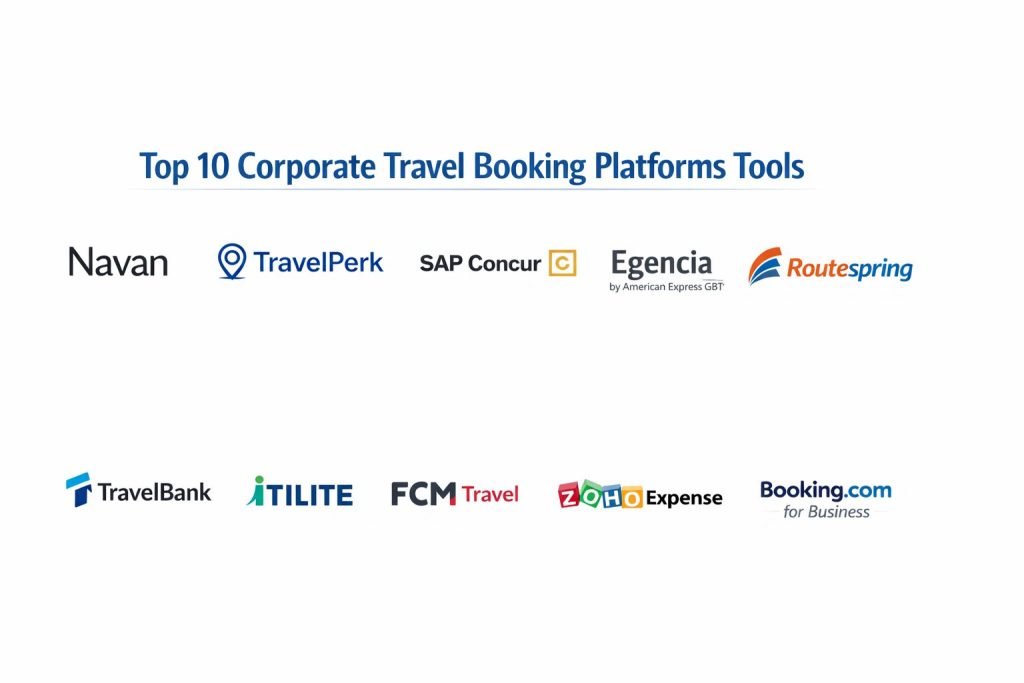
Top 10 Corporate Travel Booking Platforms
1. Navan
Navan (formerly TripActions) is a leading all-in-one platform that unifies travel management, corporate cards, and expense reporting. It is known for its high adoption rates due to a consumer-grade user interface.
Key Features
- Ava AI Assistant: A generative AI concierge that handles bookings, support, and policy questions.
- Integrated Corporate Cards: Real-time expense capture at the point of sale with automated reconciliation.
- Navan Rewards: An incentive program that gives employees personal travel credits when they book cost-effective business options.
- Global Inventory: Direct access to NDC content, GDS, and consumer-site rates in one place.
- Sustainability Dashboard: Real-time tracking of CO2 emissions with options for SAF (Sustainable Aviation Fuel) contributions.
Pros
- Exceptional mobile app experience that travelers actually enjoy using.
- Eliminates the need for traditional expense reports through 100% integration.
Cons
- Premium pricing tiers can be high for companies not utilizing the full card ecosystem.
- Some enterprise features require a minimum employee count.
Platforms / Deployment
- Web / iOS / Android
- Cloud-native
Security & Compliance
- SOC 2 Type II, GDPR, and PCI DSS compliance.
- Integrated traveler tracking and risk alerts.
Integrations & Ecosystem
Navan features deep, native connections with modern finance and HR tools to automate data flow.
- NetSuite
- Workday
- Slack
- Okta
Support & Community
24/7 global human support via chat, phone, and email, complemented by a proactive AI support layer.
2. TravelPerk
TravelPerk is a popular platform particularly strong in the European market, focusing on providing a massive inventory and flexible booking options for mid-market companies.
Key Features
- FlexiPerk: A unique feature allowing users to cancel any booking up to 2 hours before departure for an 80% refund.
- VAT Recovery: Automated collection and reporting of VAT-ready invoices to maximize tax reclaims.
- Policy Engine: Customizable approval workflows that can be set by team, budget, or location.
- Concierge Service: High-touch support for complex bookings that cannot be completed online.
- TravelCare: Built-in duty of care features providing real-time risk data and traveler locations.
Pros
- One of the largest travel inventories available in the industry.
- Transparent pricing model with a functional free tier for small teams.
Cons
- Expense management is handled primarily through integrations rather than a native unified tool.
- Some advanced reporting features are locked behind the Pro plan.
Platforms / Deployment
- Web / iOS / Android
- Cloud-native
Security & Compliance
- GDPR compliant with ISO 27001 certification signals.
- Secure single sign-on (SSO) support.
Integrations & Ecosystem
TravelPerk excels at connecting with third-party expense and HR platforms to fill the T&E gap.
- Expensify
- BambooHR
- Spendesk
- Divvy
Support & Community
Highly rated 7-star customer support with 24/7 availability and rapid response times.
3. SAP Concur
SAP Concur is the long-standing giant of the enterprise travel and expense world. It offers unparalleled depth for massive, complex organizations that require high levels of customization.
Key Features
- Concur Travel: A robust booking engine that integrates with almost all global travel suppliers.
- Ecosystem Connectivity: The largest app center in the industry, connecting travel data to hundreds of external services.
- Audit Services: AI and human-led auditing of expense reports to ensure 100% compliance.
- Request & Approval: Formalized pre-trip approval workflows for high-budget or high-risk travel.
- Global Tax Support: Advanced handling of complex international tax regulations and multi-entity accounting.
Pros
- Deepest level of integration with SAP ERP and other legacy enterprise systems.
- Highly configurable to meet the needs of regulated industries and government entities.
Cons
- The user interface is often criticized as clunky and dated compared to modern rivals.
- Implementation can be a lengthy, resource-intensive process taking several months.
Platforms / Deployment
- Web / iOS / Android
- Cloud / Enterprise
Security & Compliance
- Industry-leading security certifications and robust audit trails.
- FIPS and SOC compliance for government and financial sectors.
Integrations & Ecosystem
As a market leader, Concur integrates with virtually every major enterprise software provider.
- SAP ERP
- Oracle
- Salesforce
- American Express GBT
Support & Community
Support is often delivered through a network of certified Travel Management Company (TMC) partners.
4. Egencia (by American Express GBT)
Egencia combines a modern digital booking platform with the immense global scale and purchasing power of American Express Global Business Travel.
Key Features
- Smart Mix: An AI-driven search ranking that surfaces the most relevant results based on policy and traveler preference.
- Agentic AI: Proactive disruption management that identifies flight delays and suggests alternatives automatically.
- Egencia Analytics Studio: A highly visual reporting suite for benchmarking performance against industry peers.
- Meeting & Event Booking: Integrated tools for managing small group meetings within the same travel policy.
- Global Footprint: Consistent service and support across more than 60 countries.
Pros
- Access to Amex GBT’s exclusive negotiated rates and premium inventory.
- Backed by one of the most stable and experienced travel agencies in the world.
Cons
- Can feel “overbuilt” for smaller companies with simple travel needs.
- Support response times can vary depending on the service level agreement.
Platforms / Deployment
- Web / iOS / Android
- Hybrid Cloud
Security & Compliance
- Enterprise-grade data protection and global privacy compliance.
- Comprehensive “Guardian” traveler safety suite.
Integrations & Ecosystem
Strong focus on synchronizing travel data with financial systems and HR directories.
- SAP Concur (Co-developed integration)
- Microsoft Dynamics
- Workday
- Slack
Support & Community
Access to professional travel consultants 24/7, with specialized support for VIP travelers.
5. Routespring
Routespring is an emerging leader focused on providing an exceptionally easy-to-use platform with a focus on cost-effectiveness and transparency for mid-market businesses.
Key Features
- Unified UI: A streamlined interface that has been ranked #1 for ease of use in recent industry benchmarks.
- Budget-First Search: Prioritizes options that align with real-time budget consumption.
- Touchless Expense: Automatically generates expense entries at the moment of booking.
- Real-time Approval: Instant mobile notifications for managers to approve or deny requests on the go.
- Centralized Billing: Consolidates all travel spend into a single periodic invoice.
Pros
- Very fast implementation process, often completed in just a few weeks.
- Transparent pricing with a robust free starter plan and no long-term contracts.
Cons
- Lacks the deep global “high-touch” service found in legacy TMCs.
- Inventory may be less specialized for niche international regions.
Platforms / Deployment
- Web / iOS / Android
- Cloud-native
Security & Compliance
- Standard encryption and secure data handling protocols.
- Real-time traveler tracking dashboards.
Integrations & Ecosystem
Focuses on deep, two-way synchronization with modern, cloud-based accounting systems.
- QuickBooks
- Xero
- Sage
- NetSuite
Support & Community
Professional 24/7/365 support from experienced travel agents included as a core service.
6.TravelBank
TravelBank is a modern, all-in-one T&E platform that excels at providing a simple, mobile-first experience for startups and fast-growing companies.
Key Features
- Budgeting Tool: Predictive algorithm that tells employees what a trip “should” cost before they book.
- Marketplace: Curated deals on hotels and cars that are exclusive to TravelBank users.
- Camera-First Expense: High-speed receipt scanning and OCR for non-travel expenses.
- Traveler Rewards: Incentives for employees who choose hotels or flights below the predicted budget.
- Expense Policy Engine: Automated flagging of duplicate or out-of-policy expense submissions.
Pros
- One of the most intuitive and modern user interfaces on the market.
- Very effective at driving cost-saving behavior through its rewards program.
Cons
- Global inventory for international rail and boutique hotels can be limited.
- Not as deeply customizable for complex enterprise approval chains.
Platforms / Deployment
- Web / iOS / Android
- Cloud-native
Security & Compliance
- PCI DSS and SOC 2 compliance.
- Secure multi-factor authentication (MFA).
Integrations & Ecosystem
Strong focus on connecting with popular SMB and mid-market financial software.
- Bill.com
- NetSuite
- QuickBooks
- BambooHR
Support & Community
Responsive 24/7 support with a focus on digital-first communication channels.
7. Itilite
Itilite is an integrated platform that focuses heavily on using AI to reduce travel spend while maintaining high levels of employee satisfaction.
Key Features
- Incentive-Based Savings: Shares a portion of the savings with employees when they choose cheaper travel options.
- AI Personalization: Learns traveler preferences to show the most relevant options in the first three results.
- Audit Automation: 100% automated auditing of all travel and expense claims.
- Multi-TMC Integration: Allows companies to work with multiple travel agencies simultaneously for better inventory.
- Strategic Insights: Dashboards that highlight “missed savings” opportunities and policy leakage.
Pros
- Highly customizable platform that can be tailored to specific regional needs.
- Strong focus on ROI through gamified cost-saving features.
Cons
- The mobile app interface is slightly less polished than Navan or TravelBank.
- Setup can be complex due to the high level of customizability.
Platforms / Deployment
- Web / iOS / Android
- Cloud-native
Security & Compliance
- SOC 2 Type II and ISO 27001 certified.
- 24/7 traveler safety monitoring.
Integrations & Ecosystem
Connects with various HRIS and ERP systems to maintain data consistency.
- Oracle
- Workday
- Microsoft Dynamics
- Zoho
Support & Community
Dedicated account managers and 24/7 support via chat, email, and phone.
8. FCM Travel
FCM Travel is a global travel management company that provides a unique “blended” model—pairing a modern digital platform with local, human expertise in over 95 countries.
Key Features
- Sam Digital Assistant: A mobile-first AI bot that provides proactive trip updates and support.
- FCM Extension: A browser extension that brings policy and rates into consumer sites like Expedia or Booking.com.
- Crisis24 Integration: High-level risk intelligence and emergency response services for duty of care.
- Global Reporting: Aggregates data from multiple regions into a single, clean dashboard.
- Traveler Wellbeing KPI: Specific metrics that track traveler fatigue and trip frequency.
Pros
- Excellent for large companies that need “feet on the ground” support in multiple countries.
- Very strong at managing complex, multi-leg international itineraries.
Cons
- Pricing is typically transaction-based and can be less predictable for high volumes.
- The digital platform may feel less “unified” than pure cloud-native startups.
Platforms / Deployment
- Web / iOS / Android
- Hybrid / Managed Service
Security & Compliance
- Top-tier security intelligence via Crisis24 partnership.
- Full global regulatory compliance.
Integrations & Ecosystem
Works within a broad ecosystem of enterprise-level financial and security tools.
- SAP Concur
- International SOS
- Workday
- Salesforce
Support & Community
A “follow-the-sun” support model with dedicated agents available globally.
9. Zoho Expense
Zoho Expense is part of the massive Zoho ecosystem, offering an affordable and highly integrated travel and expense solution for businesses of all sizes.
Key Features
- Direct Integration: Seamless data flow with Zoho CRM, Zoho Books, and Zoho Projects.
- Travel Request Workflow: Formalized pre-trip requests that automatically turn into itineraries upon approval.
- Smart Receipt Store: Centralized digital vault for all travel documents and expense receipts.
- Multi-Stage Approvals: Customizable approval chains that can involve multiple departments.
- Comprehensive Analytics: Over 25 built-in reports for tracking every aspect of corporate spend.
Pros
- Incredibly cost-effective, especially for teams already using the Zoho suite.
- High degree of flexibility in creating custom fields and workflows.
Cons
- The booking inventory is not as deep as specialized travel-first platforms.
- Lacks some of the advanced AI “disruption management” features.
Platforms / Deployment
- Web / iOS / Android
- Cloud-native
Security & Compliance
- GDPR, HIPAA, and SOC 2 compliant.
- Robust user permission controls.
Integrations & Ecosystem
Naturally integrates with the Zoho universe and other popular third-party tools.
- Zoho Books
- QuickBooks
- Slack
- Microsoft 365
Support & Community
Strong community forums and tiered professional support options.
10. Booking.com for Business
Booking.com for Business is a free-to-use platform that leverages the world’s largest accommodation inventory to help small and medium businesses manage their travel.
Key Features
- Massive Inventory: Access to millions of hotels, homes, and apartments globally.
- Genius Rewards: Business travelers can utilize their personal Genius status for discounts and perks.
- Basic Policy Setting: Simple tools to set budget limits and highlight compliant options.
- Centralized Dashboard: A single view of all upcoming and past trips for the entire team.
- Billing Integration: Works with major expense tools to automate invoice flow.
Pros
- Completely free to use with no subscription or booking fees.
- The most extensive choice of accommodations, including non-hotel properties.
Cons
- Lacks advanced “duty of care” and 24/7 human agent support.
- Flight and car rental integrations are less robust than the hotel offering.
Platforms / Deployment
- Web / iOS / Android
- Cloud-native
Security & Compliance
- Standard web security and data privacy measures.
- Not publicly stated for enterprise-level safety certifications.
Integrations & Ecosystem
Focuses on making expense reporting easier through popular integrations.
- SAP Concur
- Expensify
- Zoho Expense
- Traxo
Support & Community
Standard customer support channels with a focus on self-service help centers.
Comparison Table
| Tool Name | Best For | Platform(s) Supported | Deployment | Standout Feature | Public Rating |
| Navan | All-in-one T&E | Web, iOS, Android | Cloud | 100% Card Integration | N/A |
| TravelPerk | Mid-Market | Web, iOS, Android | Cloud | FlexiPerk Refunds | N/A |
| SAP Concur | Global Enterprise | Web, iOS, Android | Enterprise | ERP Deep Sync | N/A |
| Egencia | Global Scale | Web, iOS, Android | Hybrid | Amex GBT Inventory | N/A |
| Routespring | Ease of Use | Web, iOS, Android | Cloud | Point-of-Sale Expense | N/A |
| TravelBank | Tech Startups | Web, iOS, Android | Cloud | Reward Incentives | N/A |
| Itilite | ROI & Savings | Web, iOS, Android | Cloud | Gamified Savings | N/A |
| FCM Travel | Managed Service | Web, iOS, Android | Managed | Blended Agent Model | N/A |
| Zoho Expense | Zoho Ecosystem | Web, iOS, Android | Cloud | CRM Integration | N/A |
| Booking.com | SMB / Budget | Web, iOS, Android | Cloud | Massive Hotel Choice | N/A |
Evaluation & Scoring of Corporate Travel Booking Platforms
The scores below reflect how these platforms perform against the rigorous demands of modern corporate finance and traveler expectations.
| Tool Name | Core (25%) | Ease (15%) | Integrations (15%) | Security (10%) | Performance (10%) | Support (10%) | Value (15%) | Weighted Total |
| Navan | 10 | 10 | 9 | 9 | 10 | 9 | 8 | 9.35 |
| TravelPerk | 9 | 9 | 8 | 8 | 9 | 10 | 9 | 8.85 |
| SAP Concur | 10 | 4 | 10 | 10 | 8 | 8 | 5 | 8.05 |
| Egencia | 9 | 7 | 9 | 9 | 9 | 9 | 7 | 8.40 |
| Routespring | 8 | 10 | 8 | 7 | 9 | 9 | 9 | 8.55 |
| TravelBank | 7 | 10 | 8 | 8 | 9 | 8 | 9 | 8.30 |
| Itilite | 8 | 7 | 8 | 9 | 9 | 8 | 9 | 8.15 |
| FCM Travel | 9 | 6 | 8 | 10 | 8 | 10 | 6 | 8.10 |
| Zoho Expense | 7 | 8 | 10 | 8 | 9 | 7 | 10 | 8.30 |
| Booking.com | 6 | 9 | 7 | 6 | 9 | 6 | 10 | 7.40 |
This evaluation highlights the shift toward platforms like Navan and Routespring, which lead in Ease and Performance, while SAP Concur retains the lead in Core enterprise features and Security.
Which Corporate Travel Booking Platforms Tool Is Right for You?
Solo / Freelancer
For individuals or solo consultants, Booking.com for Business is the most practical choice. It offers professional-looking travel management and consolidated billing without any monthly subscription fees or complex setup.
SMB
Small businesses (20–100 employees) should prioritize TravelPerk or TravelBank. These tools provide the necessary policy controls and inventory access to save money without requiring a dedicated travel manager to run the system.
Mid-Market
Growing companies with 100–1,000 employees will find the most value in Navan or Routespring. These platforms offer the “unified” experience that eliminates expense paperwork, which is a major pain point during rapid scaling.
Enterprise
For multinational corporations with deep SAP investments, SAP Concur remains the standard. However, those looking for a more modern, high-adoption alternative should consider Egencia or Navan’s enterprise tier.
Budget vs Premium
- Budget: Zoho Expense and Booking.com for Business provide the most functionality for the lowest cost.
- Premium: Genetec and Navan are premium solutions where the higher cost is offset by significant time savings and advanced AI features.
Feature Depth vs Ease of Use
- Depth: SAP Concur offers the most granular control but has a steep learning curve.
- Ease: Routespring and Navan offer a frictionless “one-click” experience that requires zero training for employees.
Integrations & Scalability
If your primary goal is to sync travel data with your existing HR and finance stack, Zoho Expense (for Zoho users) or Navan (for general ERP users) provide the most robust API and native connector ecosystems.
Security & Compliance Needs
Companies in the financial, legal, or government sectors should lean toward SAP Concur or FCM Travel, as these platforms offer the highest levels of risk intelligence and established audit trails.
Frequently Asked Questions (FAQs)
1. What is an “All-in-One” travel and expense platform?
An all-in-one platform combines the booking of travel with the filing and reimbursement of expenses. This means when you book a flight, the expense is automatically created, categorized, and sent for approval without manual entry.
2. How do these platforms save my company money?
They save money in three ways: by providing access to negotiated corporate rates, by automatically enforcing travel policies to prevent overspending, and by reducing the administrative time spent on manual expense reporting.
3. What does “Duty of Care” mean in travel software?
Duty of Care refers to the software’s ability to keep travelers safe. This includes real-time location tracking on a map, instant safety alerts about their destination, and a 24/7 “SOS” button for immediate help.
4. Can I still earn my personal frequent flyer miles?
Yes. Modern platforms allow you to save your loyalty program numbers in your profile. When the software books a flight or hotel, it automatically applies your loyalty info so you still earn personal points and status.
5. What is the “FlexiPerk” feature?
FlexiPerk is a TravelPerk feature that acts like a simplified insurance policy. For a small fee on every booking, you can cancel any flight, hotel, or train for any reason and receive a guaranteed refund of at least 80%.
6. Do I need to issue company credit cards to use these tools?
Not necessarily, but it is recommended. Platforms like Navan and TravelBank offer integrated cards that make reconciliation instant. However, most platforms still allow employees to use personal cards and be reimbursed.
7. How long does it take to switch to a new travel platform?
Cloud-native tools like Routespring or TravelPerk can be set up in a few days. Large enterprise transitions involving SAP Concur or Egencia can take 3 to 6 months depending on the complexity of your ERP integration.
8. Can these tools handle international “Bleisure” travel?
Yes. Many platforms now have “Bleisure” settings where employees can extend a business trip for personal reasons and easily separate the personal costs from the company-billed expenses in one transaction.
9. Are these platforms GDPR and SOC 2 compliant?
The top platforms (Navan, Concur, TravelPerk, etc.) are fully compliant with global data privacy regulations. This is critical because travel platforms store sensitive data like passport numbers and credit card info.
10. Do these platforms support group bookings for events?
Most mid-market and enterprise tools have a “Group Travel” or “Events” module. This allows a manager to book travel for a whole team or provide a specific booking link for attendees to book within a set budget.
Conclusion
The transition to a dedicated corporate travel booking platform is no longer a luxury reserved for the world’s largest companies; it is a fundamental requirement for any organization that values financial transparency and employee safety. As we have seen throughout this analysis, the industry is rapidly moving toward a unified model where travel and expense are indistinguishable. By choosing a platform that prioritizes high adoption rates and leverages AI for disruption management, companies can transform their travel program from a cost center into a strategic advantage that supports global growth.
Ultimately, the “right” tool is the one that your employees will actually use. Even the most powerful policy engine is useless if travelers are booking outside the system because the interface is too difficult to navigate. We suggest starting with a clear audit of your current travel “leakage” and then selecting two or three platforms from this list for a live demonstration. Focusing on the integration between your corporate cards and the booking engine will likely yield the highest immediate return on investment in the modern business landscape.