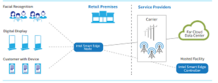
Cox Launches Full Stack Edge-cloud Computing Service
YOUR COSMETIC CARE STARTS HERE Find the Best Cosmetic Hospitals Trusted • Curated • Easy Looking for the right place […]
YOUR COSMETIC CARE STARTS HERE Find the Best Cosmetic Hospitals Trusted • Curated • Easy Looking for the right place […]
Serverless computing promises to eliminate server management overhead, letting developers upload code and pay only for what they use. Here’s what it delivers, and where it still falls short.
Serverless computing is reshaping how organisations build and scale applications by eliminating infrastructure management, enabling pay-per-use billing, and letting developers focus entirely on code. Here is what DevOps engineers need to know.
A Cloud Foundry Foundation survey of 601 IT decision-makers found that container adoption is on track to surpass DevOps adoption within two years — but the relationship between the two is more nuanced than the headline suggests.
Serverless computing is maturing fast, and with it comes a fresh wave of startup opportunities in tooling, monitoring, security, and APIs. Here is what developers and investors need to understand about the emerging serverless ecosystem.
Serverless computing abstracts infrastructure management away from developers, giving rise to the NoOps model. Learn what that means in practice, how serverless deployments work, and what trade-offs to expect.
Serverless computing abstracts infrastructure entirely from developers, enabling automatic scaling, pay-per-use billing, and faster delivery cycles. Here is what DevOps engineers need to know about the technology, its ecosystem, and its remaining challenges.
Microservices, serverless computing, and Function as a Service are fundamentally changing how development and operations teams work. Here is a clear breakdown of each model and what it means for DevOps practice.
Serverless computing abstracts infrastructure management away from developers, enabling event-driven, stateless microservices that scale automatically and bill only for what you consume. Here’s what DevOps engineers need to know.
Microsoft’s Azure Stack brings a consistent Azure application model to on-premises datacenters, enabling true hybrid cloud with shared APIs, DevOps pipelines, and serverless computing via Azure Functions.
Serverless computing lets individual functions spin up on demand, do minimal work, and shut down—saving cost and management overhead. Here are five open source frameworks that go beyond cloud-vendor lock-in.
Serverless computing removes the burden of server provisioning from developers, letting teams focus on code rather than infrastructure. Here is what that shift means in practice, including real benefits, genuine limitations, and how major platforms are approaching it.
AWS Lambda and Azure Functions are the two dominant serverless platforms. This guide compares their language support, pricing models, and ecosystem integrations to help you choose the right one for your team.