- What is Kubernetes?
Kubernetes, or k8s, is an open source platform that automates Linux container operations. It eliminates many of the manual processes involved in deploying and scaling containerized applications
In other words, you can cluster together groups of hosts running Linux containers, and Kubernetes helps you easily and efficiently manage those clusters. - Why Do we need Kubernetes?
- Benefits of kUbernetes?
Kubernetes eases the burden of configuring, deploying, managing, and monitoring even the largest-scale containerized applications. It also helps IT pros manage container lifecycles and related application lifecycles, and issues including high availability and load balancing - How Kubernetes works aka Kubernetes architecture with image
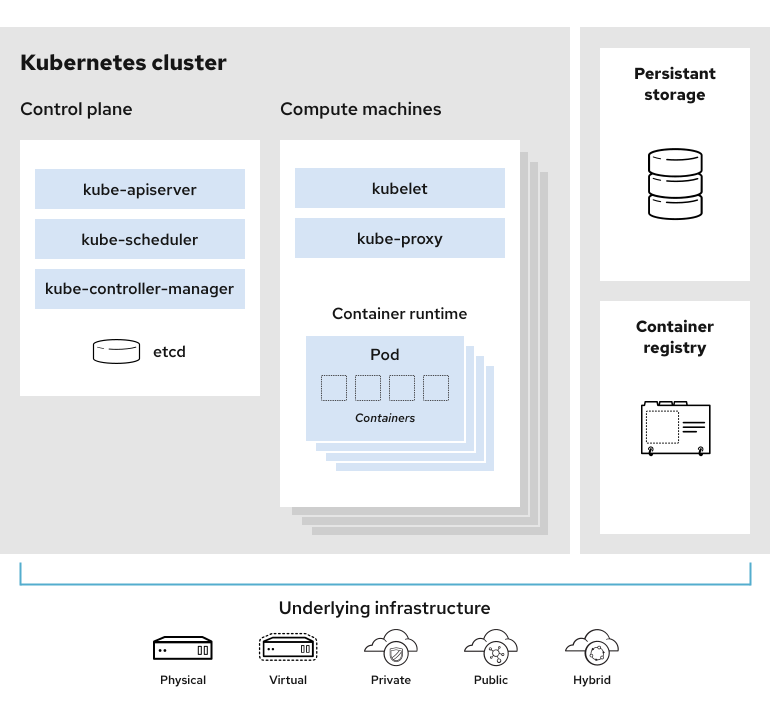
A working Kubernetes deployment is called a cluster. You can visualize a Kubernetes cluster as two parts: the control plane and the compute machines, or nodes. Each node is its own Linux® environment, and could be either a physical or virtual machine. Each node runs pods, which are made up of containers.
This diagram shows how the parts of a Kubernetes cluster relate to one another:
- What is POD?
This is essentially the smallest deployable unit of the Kubernetes ecosystem; more accurately, it’s the smallest object. A pod specifically represents a group of one or more containers running together on your cluster.