Can DevOps and MSPs Work Together?
DevOps and managed service providers (MSPs) are both growing forces in enterprise IT—but they can pull in opposite directions. Here’s how to understand the tension and find a path where both can coexist.
DevOps and managed service providers (MSPs) are both growing forces in enterprise IT—but they can pull in opposite directions. Here’s how to understand the tension and find a path where both can coexist.
The nature of work has fundamentally shifted. Understanding workflows—and how to automate, optimize, and continuously improve them—is now a core DevOps competency.
Blockchain’s decentralized, immutable data model and DevOps’s continuous-delivery culture share more common ground than you might expect. Here’s how combining the two can produce more transparent, reliable, and auditable software delivery pipelines.
YOUR COSMETIC CARE STARTS HERE Find the Best Cosmetic Hospitals Trusted • Curated • Easy Looking for the right place […]
DevOps has its own rich lexicon, but several of its most frequently used terms carry surprising ambiguity. Here is a plain-language breakdown of five DevOps terms that practitioners use daily yet rarely define the same way twice.
Security and DevOps don’t have to conflict. Learn how organizations can embed security throughout the CI/CD pipeline without sacrificing speed or agility.
Most organisations claim to practise CI/CD, yet still struggle with genuine Continuous Delivery. Here are ten concrete warning signs — and what to do about them.
Containers and microservices are natural allies for DevOps teams. Learn how combining these technologies drives agility, consistency, and continuous delivery across your software pipeline.
Signal Sciences announced Cloud WAF, a no-install web application firewall that deploys via a simple DNS change, extending its platform to cover cloud-native, legacy, and serverless applications.
Veeva Systems and Cerner Corporation are two of the most prominent cloud-based SaaS platforms in healthcare IT. This article compares their products, market positions, financial profiles, and growth trajectories to help you understand what sets them apart.
Continuous integration and continuous deployment aren’t just for application developers. Learn how CI/CD practices apply to data science and machine learning workflows, reduce technical debt, and help teams ship models with confidence.
DevOps has become a critical strategy for engineering teams navigating the cloud era. Discover perspectives from five practitioners shaping how modern software is built, deployed, and monitored.
Cloud waste is estimated at 35% of total cloud spend. Learn four proven strategies—eliminating waste, rightsizing, leveraging discounts, and automating governance—to bring your cloud costs under control.
Hannah McKelvie, DevOps Security Senior Lead at Telstra, explains what DevSecOps really means in practice, how a Security Champion Program works, and how to balance security with continuous delivery.
Slow releases, blurry roles, and skill gaps can quietly erode your DevOps practice. Here are four actionable steps—from clarifying responsibilities to modernising automation—that help engineering teams reset and accelerate delivery.
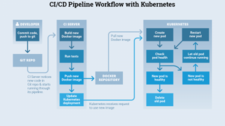
Learn how to build a robust CI/CD pipeline for open-source Kubernetes applications using free tools, covering unit testing, Docker image building, end-to-end tests with kind and GKE, and automated Helm chart releases.
From private 5G networks to edge computing and the resurgence of custom hardware, these five trends shaped the direction of wireless technology infrastructure heading into 2019 and beyond.
YOUR COSMETIC CARE STARTS HERE Find the Best Cosmetic Hospitals Trusted • Curated • Easy Looking for the right place […]
Legacy systems don’t have to be a barrier to DevOps adoption. Learn how to apply automation, shift-left testing, infrastructure-as-code, and cultural change to modernise legacy environments without a full rewrite.
In April 2019, Docker disclosed a database breach exposing usernames, hashed passwords, and GitHub/Bitbucket access tokens for approximately 190,000 users. Here is a clear breakdown of what was compromised, the risks involved, and the remediation steps Docker and affected users should take.