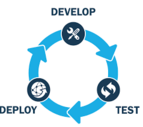
Continuous integration (CI) has moved from a niche XP practice to a baseline expectation in modern software delivery. As organizations scale DevOps adoption, the tooling market around CI has grown correspondingly complex. This article breaks down the current CI software landscape, the major platforms competing for adoption, and the factors that engineering and platform teams should weigh when choosing or evolving their CI strategy.
What Is Continuous Integration Software?
Continuous integration software automates the process of merging developer code changes into a shared repository, triggering builds and automated tests on every commit. The goals are straightforward: catch integration bugs early, shorten feedback loops, and keep the main branch in a releasable state. CI platforms typically provide pipeline definition, build runners, artifact management, test reporting, and integrations with version control systems and downstream CD tooling.
Major CI Platforms in the Market
The CI tooling space is populated by both open-source projects and commercial SaaS offerings. The platforms most commonly referenced in enterprise and startup contexts include:
- Jenkins – The dominant open-source CI server, with a vast plugin ecosystem. Self-hosted and highly customizable, but carries significant operational overhead.
- TeamCity (JetBrains) – A commercially supported CI server with strong IDE integration and build chain management, popular in Java and .NET shops.
- CircleCI – A cloud-native SaaS CI platform known for fast configuration via YAML and strong Docker support.
- Travis CI – One of the early SaaS CI platforms, widely adopted in open-source projects hosted on GitHub.
- AWS CodeBuild / CodePipeline – AWS-native CI/CD services that integrate tightly with the broader AWS ecosystem.
- Bitrise – Specializes in mobile CI/CD for iOS and Android pipelines.
- Bamboo (Atlassian) – A CI server tightly integrated with Jira and Bitbucket, suited for Atlassian-heavy organizations.
- Semaphore – A cloud CI/CD platform focused on speed and simplicity, with caching and parallelism built in.
- Codeship – A hosted CI service offering both a simple UI-based setup and a Docker-based pro mode.
- Hudson – The open-source predecessor to Jenkins; largely superseded but still referenced in legacy environments.
- Chef / Puppet Pipelines – Infrastructure-oriented tools that extend CI/CD concepts to configuration management and infrastructure automation.
In addition to these, GitHub Actions has become a major force since its 2019 general availability, and GitLab CI/CD is widely used by teams on the GitLab platform. Any current evaluation should include both.
Key Drivers of CI Adoption
Several forces continue to drive demand for CI tooling across industries:
- Shorter release cycles: Competitive pressure to ship features faster pushes teams toward automated pipelines that eliminate manual integration steps.
- Microservices architectures: Decomposed services mean more independent repositories and pipelines, increasing the surface area that CI tooling must cover.
- Cloud-native development: Container-first workflows require CI systems that can build, scan, and push container images as first-class pipeline steps.
- Shift-left security: Integrating SAST, dependency scanning, and secret detection into CI pipelines is now a standard security practice.
- Compliance requirements: Regulated industries require auditable build and test records, which CI platforms can provide natively.
Regional Adoption Patterns
CI adoption is globally distributed, but the pace and tooling preferences vary by region:
- North America: The most mature market, with high SaaS CI adoption driven by the startup ecosystem and large enterprise DevOps programs.
- Europe: Strong adoption particularly in fintech, automotive software, and telecommunications. GDPR considerations influence decisions around where build infrastructure is hosted.
- Asia-Pacific: Rapid growth, particularly in India, China, Australia, and Japan, as engineering organizations scale and invest in DevOps toolchains.
- South America and MEA: Earlier-stage adoption, with growth linked to cloud infrastructure expansion and increasing software engineering output in these regions.
Evaluating CI Platforms: What Engineering Teams Should Consider
Market reports are useful for understanding the vendor landscape, but the decision of which CI platform to adopt depends on your organization’s specific context. Key evaluation criteria include:
Build Speed and Parallelism
Slow pipelines are the primary reason teams abandon CI discipline. Evaluate how each platform handles test parallelism, caching of dependencies and Docker layers, and infrastructure scaling under concurrent load.
Pipeline-as-Code
Modern CI platforms define pipelines in version-controlled configuration files (YAML is the dominant format). This enables pipeline changes to go through the same review process as application code. Avoid platforms that require significant UI-based configuration that lives outside your repository.
Self-Hosted vs. SaaS
SaaS CI reduces operational burden but may raise data residency or network egress concerns for regulated industries. Self-hosted options like Jenkins or GitLab CI give full control at the cost of maintenance overhead. Hybrid models, where the control plane is SaaS but build agents run on your own infrastructure, are increasingly common.
Ecosystem Integration
Your CI platform needs to integrate with your version control system, artifact registry, secret management tooling, notification channels, and CD system. Native integrations reduce glue code and surface area for breakage.
Cost Model
SaaS CI platforms typically charge per concurrent build minute or per active user. Model your usage against pricing tiers carefully—costs can scale unexpectedly as team size and commit frequency grow. Open-source self-hosted platforms shift cost to infrastructure and engineering time.
Security and Secrets Management
CI pipelines require access to sensitive credentials. Evaluate how each platform handles secret injection, access scoping, audit logging, and integration with dedicated secrets managers like HashiCorp Vault or AWS Secrets Manager.
The Competitive Dynamics at Play
The CI software market is consolidating around a few patterns. Platform vendors (GitHub, GitLab, Atlassian) are pulling CI natively into their source control products, reducing the need for standalone CI servers. Cloud providers (AWS, Google Cloud, Azure) are doing the same within their own ecosystems. Standalone CI vendors must differentiate on speed, developer experience, mobile support, or depth of integrations to compete.
Open-source Jenkins remains widely deployed due to its maturity and extensibility, but newer teams increasingly start with SaaS-native solutions rather than taking on the operational cost of running Jenkins at scale.
Summary
Continuous integration software is a mature but actively evolving space. The right platform depends on your team’s size, cloud provider, security requirements, and operational capacity. Rather than relying on market share figures to drive tool selection, engineering teams are better served by running structured pilots against real workloads, measuring pipeline duration, flakiness rates, and total cost of ownership before committing to a platform at scale.