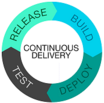
This article is based on a perspective piece originally published on cioreview.com, attributed to a CTO/CIO at Vivint Solar. The concepts are broadly applicable to any engineering organization adopting continuous delivery.
Why Continuous Delivery Demands a New Mental Model
Most engineering teams understand the mechanics of continuous delivery: automated pipelines, short-lived branches, frequent releases. What is harder to internalize is the mindset that makes it work. Tooling alone does not make an organization agile. Without a delivery philosophy that embraces changing priorities, even the most sophisticated CI/CD pipeline can become a vehicle for shipping the wrong things quickly.
The “first finish line” philosophy is one answer to that challenge. It reframes how teams think about project scope, release strategy, and prioritization — and it maps closely to the principles that make continuous delivery genuinely valuable rather than just technically possible.
What Is the First Finish Line?
The first finish line is a software delivery philosophy built around a simple question: What do your users need most urgently, and how quickly can you deliver it?
The name is deliberate. Traditional project thinking treats software delivery like a marathon — a long, planned route with a fixed destination. The first finish line model treats it more like a series of short sprints. You are not running 26 miles toward one goal; you are running the first 100 meters, repeatedly, toward whichever goal matters most right now.
This distinction has practical consequences for how work is scoped, resourced, and prioritized. Because business conditions change constantly — new regulations, new competitors, new customer needs — the finish line itself moves. A delivery model that assumes a fixed destination will always be fighting reality. A model built for a moving finish line is designed for it.
Core Principles of the First Finish Line Approach
1. Priorities Are Dynamic, Not Fixed
No backlog survives contact with the business unchanged. The first finish line model acknowledges this explicitly. Rather than treating priority changes as disruptions, teams treat them as the natural operating environment. This requires strong resource management practices and a culture of flexibility — the ability to pivot without losing momentum or morale.
2. The MVP Often Becomes the Product
One of the most important insights in this philosophy is that a second release for any given feature may never come. Business priorities shift, and teams move on to the next urgent race. This reality changes how teams should think about their minimum viable product (MVP): it is not a rough draft to be refined later — it is frequently the final version that users will rely on for an extended period.
Counterintuitively, this pressure improves quality. Knowing that you may only get one shot encourages teams to approach each release with greater focus and craftsmanship, rather than deferring polish to a follow-up that never arrives.
3. Small Increments Over Large Projects
Racing to the first finish line naturally favors smaller units of work — feature sets rather than full product rewrites, targeted fixes rather than platform overhauls. Smaller increments are easier to scope accurately, ship quickly, and validate with users. They also reduce the risk that a priority shift renders months of work obsolete before it ships.
4. A Shared Vision Provides Direction Without Rigidity
Agility without direction is chaos. The first finish line model does not abandon long-term planning — it holds a vision as a North Star while remaining adaptable in how the team moves toward it. Teams should not be rewriting their strategy every day, but they must be genuinely willing to adjust course when the business requires it. The vision guides; it does not constrain.
5. Collaboration Is Non-Negotiable
When priorities shift, resource allocation follows. Engineers, product managers, and stakeholders must be able to renegotiate work in progress without friction or defensiveness. This requires a genuinely collaborative culture — one where teams understand that reallocating effort toward a higher-priority race is a shared win, not a failure of planning.
Depending on how priorities shift, resources may need to be allocated elsewhere, requiring a collaborative mindset.
The Enabling Infrastructure: What You Need to Run This Way
The first finish line philosophy is not just a mindset — it has technical prerequisites. Teams cannot ship quickly and safely without the right infrastructure in place. The following capabilities are foundational:
- A common development stack: Standardizing on shared languages, frameworks, and tooling reduces friction when engineers move between projects. Context switching is cheaper when the technical environment is consistent.
- An efficient DevOps model: Automated testing, CI/CD pipelines, infrastructure as code, and environment parity between staging and production are prerequisites for frequent, safe releases.
- Architecture built for change: Monolithic systems make it expensive to change one thing without affecting everything else. Modular, service-oriented architectures lower the cost of targeted updates and reduce the blast radius of individual changes.
- Observability: Teams moving fast need to know quickly when something breaks. Logging, metrics, and alerting are not optional in a high-cadence delivery environment.
A Real-World Example: Field Sales Software
The original context for this philosophy came from a residential solar company with a large field sales operation. Sales professionals used tablets in the field to demonstrate products and close agreements with customers. Because these representatives were on the front lines interacting directly with customers, even a minor bug in the sales application — one that prevented them from completing a transaction — had an immediate and measurable business impact.
In that environment, waiting weeks or months to ship a fix is not acceptable. The first finish line model meant that critical field issues immediately became the top priority, and the engineering team was structured and empowered to respond at that speed. This is the type of scenario where continuous delivery stops being a technical aspiration and becomes a competitive necessity.
Speed vs. Quality: A False Trade-Off
A common objection to high-cadence delivery is that speed comes at the expense of quality. The first finish line model challenges this assumption directly. When teams know that a second release may never happen, they are motivated to get the first one right. Combined with automated testing and a culture of engineering excellence, frequent releases and high quality are not opposing forces — they reinforce each other.
This aligns with broader findings in the DevOps research community, which has consistently shown that high-performing engineering teams deploy more frequently and have lower change failure rates than their lower-performing peers. Speed and stability can coexist when supported by the right practices.
Applying This Approach in Your Organization
You do not need to be in a fast-moving industry for this model to be relevant. Every software team faces shifting priorities. The question is whether your delivery model is designed to absorb those shifts gracefully or to resist them unsuccessfully. Consider the following starting points:
- Audit your current release cadence. How long does it take from a decision to ship a change to that change being in production? If the answer is weeks or months, identify the bottlenecks in the pipeline rather than in the team.
- Treat every MVP as potentially permanent. Evaluate your next MVP against the question: “If we never ship v2, will this meet user needs adequately?” If the answer is no, refine the scope or the quality bar before releasing.
- Build explicit priority-change processes. Ad hoc priority changes create confusion. Document how priority shifts are communicated, how in-flight work is handled, and how teams are reallocated without losing context.
- Invest in the enabling infrastructure. Continuous delivery philosophy cannot outrun a slow, manual deployment process. Automation is not optional.
- Align your architecture with your delivery model. If your architecture makes it expensive to change one component without touching ten others, your system will act as a brake on delivery speed regardless of how agile your process is.
Summary
The first finish line is not a project management framework or a specific toolchain. It is a delivery philosophy that accepts the reality of changing priorities and designs around it rather than against it. At its core, it asks teams to focus relentlessly on the most urgent user need, ship it well, and be ready to pivot to the next race immediately after.
For organizations operating in competitive, fast-changing markets, this kind of delivery discipline is not a nice-to-have — it is a prerequisite for staying relevant. Combined with the right DevOps practices and a culture of collaboration and craftsmanship, it offers a model for continuous delivery that is both principled and practical.