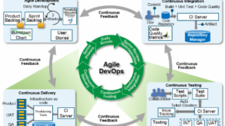
The appetite for Agile and DevOps has never been stronger, driven by the pressures of the application economy and the rising expectation that software must deliver genuine customer value—faster and at higher quality than ever before. Businesses are fundamentally rethinking how they design, develop, and ship applications, and both Agile and DevOps sit at the centre of that shift.
Yet in practice, many organisations adopt one without the other—or mature one far ahead of the other. The result is a gap that limits the return on investment from either discipline. This article explores why Agile and DevOps must be scaled together, how to do it, and how to prevent technical debt from undermining your progress.
The Case for Using Agile and DevOps Together
Agile and DevOps address different but complementary problems. Agile focuses on how teams plan and prioritise work—bringing the voice of the customer into the development cycle early and responding quickly to change. DevOps focuses on how software moves from development into production—reducing handoff friction, promoting collaboration between development and operations teams, and improving the reliability and speed of deployments.
Used in isolation, each practice delivers real benefits. Used together, the compound effect is significantly greater. Research commissioned by CA Technologies (cited in the original ITPro Portal analysis this article is based on) found that organisations combining DevOps practices with an Agile environment improved new business growth by 38% more than those using Agile alone, and increased operational efficiency by 23% compared to Agile-only implementations.
The same research found that 67% of UK organisations using an Agile methodology reported an improvement in customer experience—a metric that matters far more to business leadership than internal IT efficiency measures alone.
Maturity Matters: Advanced Adoption Yields Disproportionate Returns
Launching Agile and DevOps is only the beginning. The real payback comes from maturing both practices as quickly as possible. The CA Technologies research drew a clear distinction between basic and advanced users:
- Advanced Agile users experienced a 64% improvement in time to act on new opportunities—reducing response time from approximately 19.7 weeks to 7.1 weeks—compared to just 26% for basic users.
- Advanced DevOps users saw a 38% improvement in speed to market—reducing cycle time from roughly 12.4 weeks to 7.7 weeks—compared to 24% for basic users.
These figures underline that adopting Agile or DevOps at a surface level is not sufficient. Organisations need a deliberate strategy to deepen both practices over time.
Three Steps to Scaling Agile and DevOps at the Speed of Business
1. Measure Business Impact, Not Just IT Metrics
Internal metrics such as reduced IT costs or improved developer productivity are useful signals, but they are not the primary indicators of transformation success. Organisations that rely on internal measures alone risk optimising the wrong things. Customer satisfaction scores, customer experience ratings, revenue growth, and time-to-market for new features are the metrics that connect Agile and DevOps outcomes to board-level priorities. Make these the primary lens through which you evaluate your practices.
2. Break Down Silos Between Development and Operations
A fragmented, siloed approach to software delivery is one of the most common barriers to both Agile and DevOps success. When development and operations teams work in isolation, knowledge sharing is limited, handoffs create delays, and accountability becomes diffuse. DevOps is fundamentally a cultural and organisational practice built on cross-functional collaboration. Embedding a genuine DevOps mindset across the IT function—not just within a single team—is essential for it to take hold. This often requires organisational restructuring, shared tooling, and leadership sponsorship.
3. Close the Skills Gap Proactively
Talent is a genuine constraint. The CA Technologies research found that 72% of EMEA organisations would struggle to recruit or retain core development talent if they did not offer an Agile working environment. Beyond recruitment, the skills gap applies equally to DevOps tooling, automation, and continuous delivery practices. Organisations that invest in upskilling existing staff—building fluency in both the practices and the tools—accelerate the cultural change that Agile and DevOps require. People who have demonstrated adaptability to new ways of working are your most valuable change agents.
Managing Technical Debt Within an Agile and DevOps Framework
Technical debt is a recurring concern for organisations undertaking digital transformation. When development teams consistently choose expedient short-term solutions over architecturally sound ones—often under delivery pressure—the accumulated debt becomes a bottleneck that slows future development, increases defect rates, and ultimately delays the business transformation that Agile and DevOps are meant to enable.
The good news is that technical debt can be actively managed within an Agile workflow rather than allowed to accumulate invisibly. Practical approaches include:
- Measuring debt as part of continuous integration: Integrate static analysis and code quality tools into your CI pipeline so that debt is visible at the point it is introduced, not discovered months later during a major refactor.
- Establishing baselines and policies: Define acceptable debt thresholds and enforce them through automated quality gates. Prevent new debt from being merged if it breaches agreed policies.
- Allocating dedicated capacity in each sprint: Reserve a proportion of each sprint’s capacity for debt reduction. Treating debt remediation as a first-class backlog item—rather than aspirational work that never gets prioritised—is the only sustainable approach.
When technical debt is managed proactively, development velocity improves, defect rates fall, and new products and features reach customers more quickly—which is precisely the outcome that Agile and DevOps are designed to deliver.
Key Takeaways
- Agile and DevOps are complementary disciplines that deliver compounding returns when adopted together and matured in parallel.
- Advanced maturity in both practices produces significantly better outcomes than basic adoption—in speed to market, responsiveness, and customer experience.
- Measuring business-level outcomes (not just IT metrics), eliminating organisational silos, and closing the skills gap are the three foundational steps to scaling both practices effectively.
- Technical debt must be managed actively within the Agile workflow, using CI-integrated measurement and explicit sprint capacity for remediation.
This article draws on analysis originally published by ITPro Portal and research commissioned by CA Technologies. Specific statistics cited reflect the findings of that research as reported in the source material.