Originally reported by PCQuest. This article summarizes VMware’s VMworld 2019 announcements around the Tanzu portfolio and Project Pacific.
VMware Introduces the Tanzu Portfolio
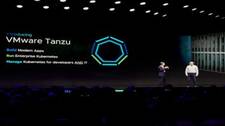
At VMworld 2019, VMware unveiled Tanzu, a portfolio of products and services aimed at transforming how enterprises build, run, and manage software on Kubernetes. The announcement represented a significant strategic pivot for VMware, positioning the company as a major player in the cloud-native ecosystem.
VMware Chief Operating Officer (Products and Cloud Services) Raghu Raghuram summarized the vision:
“We’re positioned to help customers succeed along each step of their journey—building their applications with the addition of Pivotal’s developer platform, tools and services; running their applications with the groundbreaking Project Pacific which will transform vSphere into a Kubernetes native platform; and managing their growing Kubernetes footprint across environments from a single control point with VMware Tanzu Mission Control.”
Raghu Raghuram, COO (Products and Cloud Services), VMware
Three Pillars: Build, Run, Manage
The Tanzu portfolio was structured around three core activities for enterprise Kubernetes adoption:
- Build: Helping development teams create modern applications using a modern software supply chain, supported by the pending Pivotal acquisition and its developer-centric platform.
- Run: Transforming VMware vSphere into a Kubernetes-native platform through Project Pacific, enabling enterprises to run containerized workloads alongside traditional VMs.
- Manage: Providing centralized control of Kubernetes clusters across environments using VMware Tanzu Mission Control.
Project Pacific: Kubernetes Embedded in vSphere
The centerpiece of the VMworld 2019 announcement was Project Pacific, a re-architecture of VMware vSphere to make it Kubernetes-native. Rather than treating Kubernetes as an add-on, Project Pacific aimed to embed Kubernetes capabilities directly into the vSphere hypervisor layer.
Key technical aspects of Project Pacific included:
- Container runtime in the hypervisor: A new ESXi-native pod concept was introduced, combining properties of both Kubernetes pods and virtual machines to deliver improved security and performance for mission-critical workloads.
- App-level policy controls: Operators could apply policies, resource quotas, and role-based access controls at the application level directly through vSphere tooling.
- Kubernetes API access to SDDC infrastructure: Developers could consume Software-Defined Data Center (SDDC) resources via standard Kubernetes APIs, while IT operators continued to use familiar vSphere tools to provision and manage Kubernetes clusters.
- Consistent view for all stakeholders: Both developers and IT operators would interact with the same underlying infrastructure through Kubernetes constructs, reducing operational friction.
This approach was designed to protect existing investments in vSphere skills, tooling, and infrastructure while enabling a gradual and practical migration toward cloud-native application architectures.
Acquisitions Underpinning the Portfolio: Pivotal and Bitnami
Two acquisitions were central to the Tanzu build story:
- Pivotal: VMware announced its intention to acquire Pivotal, which brought a comprehensive developer platform, professional services expertise, and a strong connection to the enterprise developer community. Pivotal’s Cloud Foundry heritage and Spring ecosystem were particularly relevant to enterprises modernizing Java-based applications.
- Bitnami: Bitnami contributed what VMware described as the largest catalog of pre-built, scanned, tested, and continuously maintained application content for Kubernetes clusters, with a stated audience of 2.5 million developers at the time of announcement.
Project Galleon: Curated Application Stacks for Developers
Also announced at VMworld 2019 was Project Galleon, introduced as a beta offering. Project Galleon was designed to allow enterprise IT teams to deliver customized, up-to-date application stacks and package formats to their internal developers, with multi-cloud readiness as a design goal. This addressed a common enterprise pain point: ensuring that developer-facing tooling is both current and compliant with organizational standards.
Tanzu Mission Control: Managing Kubernetes at Scale
VMware Tanzu Mission Control was positioned as the management layer for organizations running Kubernetes clusters across multiple environments. It leveraged several open-source projects to deliver key capabilities:
- Cluster API — for Kubernetes cluster lifecycle management
- Velero — for backup and recovery of cluster state and persistent volumes
- Sonobuoy — for conformance testing and configuration validation
- Contour — for ingress control using the Envoy proxy
VMware’s commitment to open-source was highlighted as a core principle of the Tanzu portfolio. The company cited its position as a top-three contributor to the Kubernetes project at the time of the announcement.
Industry Context
Jay Lyman, Principal Analyst at 451 Research, offered third-party perspective on the announcement:
“Kubernetes can help organizations achieve consistency and drive developer velocity across a variety of infrastructures, but enterprises also require effective control, policy and security capabilities. Building on its acquisitions, organic innovation and open source contributions, VMware has staked out its place as a leader in this rapidly evolving cloud-native industry.”
Jay Lyman, Principal Analyst, 451 Research
The Tanzu announcement signaled that VMware recognized Kubernetes as the de facto standard for enterprise container orchestration and was repositioning its core vSphere platform accordingly—rather than competing with Kubernetes or treating it as an optional feature.
Summary
VMware’s Tanzu portfolio, announced at VMworld 2019, represented a comprehensive response to the shift toward cloud-native application development in the enterprise. By embedding Kubernetes into vSphere through Project Pacific, acquiring developer-focused platforms via Pivotal and Bitnami, and providing multi-cluster management through Tanzu Mission Control, VMware aimed to position itself as the platform of choice for enterprises at every stage of their Kubernetes journey.