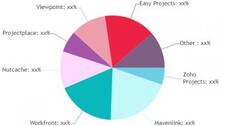
The project collaboration software market has grown significantly over the past decade, driven by the rise of distributed engineering teams, agile delivery practices, and tighter integration between development and operations workflows. Platforms such as JIRA, Asana, Wrike, Trello, and Basecamp have become central to how engineering and DevOps teams plan, track, and ship work.
Why Project Collaboration Software Matters for DevOps Teams
DevOps practice depends heavily on shared visibility. Developers, QA engineers, release managers, and operations staff need to coordinate work across sprints, deployments, and incident responses. Project collaboration platforms provide the shared backlog, task tracking, and communication layer that makes this coordination possible without relying on email threads or disconnected spreadsheets.
Key capabilities DevOps teams typically look for in these platforms include:
- Issue and bug tracking with customisable workflows
- Sprint and kanban board management
- Integration with CI/CD pipelines, version control systems, and monitoring tools
- Role-based permissions and audit trails for compliance
- Reporting and burndown charts for release planning
- API access for automation and custom toolchain integration
Major Platforms in the Market
A wide range of vendors compete in this space, each with a different emphasis. The following are among the most widely referenced platforms, according to market research published by HTF Market Intelligence:
- JIRA (Atlassian) — Dominant in software engineering teams; deeply integrated with Confluence, Bitbucket, and a broad ecosystem of DevOps plugins.
- Asana — Popular for cross-functional project management; strong timeline and dependency features.
- Wrike — Suited to marketing and operations teams as well as engineering; offers Gantt charts and resource management.
- Trello (Atlassian) — Lightweight kanban-style board tool, well suited to smaller teams or simpler workflows.
- Basecamp — Opinionated, simplified project management focused on reducing tool sprawl.
- Zoho Projects — Part of the broader Zoho suite; appeals to teams already in the Zoho ecosystem.
- Mavenlink — Targets professional services organisations with resource management and financial tracking.
- Workfront (now Adobe Workfront) — Enterprise-grade work management with strong approval workflow capabilities.
- Clarizen — Enterprise project and portfolio management with collaborative features.
- Nutcache, Projectplace, Easy Projects, Deskera, Comindware, Genius Project, ZilicuPM, QA Software, Huddle, Kanbanchi, Viewpoint — Additional vendors serving specific verticals or regional markets.
Market Segmentation
Deployment Model
Project collaboration tools are offered in two primary deployment models:
- Cloud-based (SaaS) — The dominant and fastest-growing model. Vendors manage infrastructure, and teams access the platform via a browser or native app. Reduces operational overhead and enables rapid onboarding.
- On-premise — Preferred by organisations with strict data sovereignty requirements, regulated industries, or large existing infrastructure investments. JIRA Data Center is a common example.
Organisation Size
- Large Enterprises — Require advanced security, single sign-on (SSO), enterprise support SLAs, portfolio management, and deep integrations with ERP and ITSM systems.
- SMEs (Small and Medium Enterprises) — Prioritise ease of setup, low total cost of ownership, and flexible pricing tiers. SaaS tools with free or low-cost entry plans dominate here.
Regional Adoption
Adoption is global, with notable concentration in the following regions:
- North America — United States, Canada, Mexico
- Europe — UK, France, Germany, Italy, Spain, Russia
- Asia-Pacific — India, China, Japan, South Korea, Indonesia, Singapore, Australia
- South & Central America — Brazil, Argentina, Chile
- Middle East & Africa — Saudi Arabia, UAE, Turkey, Egypt, South Africa
Trends Shaping the Market
1. Deep CI/CD and DevOps Toolchain Integration
Modern collaboration tools are increasingly expected to connect directly with CI/CD pipelines (Jenkins, GitHub Actions, GitLab CI), container orchestration platforms, and observability stacks. JIRA’s integration with Atlassian’s broader DevOps toolchain is a clear example of this trend. Teams want traceability from a story card through to a commit, build, deployment, and production incident.
2. No-Code and Low-Code Workflow Automation
Platforms are adding automation rules that non-developers can configure — for example, automatically transitioning a JIRA ticket to “In Review” when a pull request is opened, or notifying a Slack channel when a deployment task is marked complete. This reduces manual status updates and keeps boards accurate without requiring engineering intervention.
3. AI-Assisted Planning and Prioritisation
Several vendors have begun introducing AI features for sprint planning, workload balancing, and risk detection. These features are still maturing, but they represent a meaningful differentiator as teams deal with increasingly complex backlogs and cross-team dependencies.
4. Consolidation and Platform Expansion
Atlassian’s acquisition of Trello and Adobe’s acquisition of Workfront illustrate a broader trend of larger platforms absorbing point solutions. Teams evaluating tools should consider the long-term roadmap and parent company strategy alongside immediate feature requirements.
5. Asynchronous Collaboration for Distributed Teams
Remote and globally distributed engineering teams have driven demand for asynchronous-first features: structured comment threads on tasks, video updates, detailed activity logs, and richer notification controls. Tools that assume synchronous co-located work are losing ground.
Choosing the Right Tool for Your Team
No single platform is universally the best choice. When evaluating project collaboration software for a DevOps context, consider the following questions:
- What does your existing toolchain look like? Teams deeply invested in the Atlassian ecosystem will get the most from JIRA. Teams using GitHub heavily may prefer GitHub Projects or a tool with strong GitHub integration.
- What is the team’s primary working model? Scrum teams benefit from tools with first-class sprint management. Ops-heavy teams may prefer kanban-style boards.
- What are your compliance and data residency requirements? On-premise or single-tenant cloud options may be necessary for regulated industries.
- What is the cost structure at your scale? Per-seat pricing models can become expensive quickly at larger team sizes. Evaluate total cost of ownership, not just entry-level pricing.
- How much administrative overhead can you sustain? More powerful tools often require dedicated administrators to configure and maintain workflows effectively.
Source and Attribution
Market segmentation and vendor listings referenced in this article are based on a summary of the Global Project Collaboration Software market study published by HTF Market Intelligence (HTF MI), originally reported via industrynewsstock.com in 2019. Market size figures cited in the original report were redacted (shown as “xx million USD”) and have not been reproduced here. Readers requiring current market sizing data should consult up-to-date research directly from the publisher or comparable analyst sources.