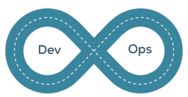
DevOps is far more than a set of tools or a job title. At its core, DevOps refers to the principles and practices that integrate software development and operations so that time to market shrinks, end-to-end accountability becomes the norm, and the delivery pipeline grows more flexible and reliable over time. Yet many organizations focus almost exclusively on tooling upgrades while neglecting the cultural changes that are the true foundation of a successful DevOps transformation. If that cultural shift never happens, even the best CI/CD platform will underdeliver.
The ten practices below address the human and organizational side of DevOps — the part that no tool can automate away.
1. Promote Communication and Collaboration
Breaking down silos is the first concrete step any DevOps leader must take. Traditional hierarchical communication channels — where messages travel up one chain of command and down another — create delays, misunderstandings, and duplicated effort. Instead, establish direct lines of communication between the development and operations teams that will work together. Encourage conversations about resources, scheduling, feature requirements, deployment constraints, and shared responsibilities early and often.
When teams talk directly, they surface potential problems before those problems become expensive incidents. Routing every conversation through management is bureaucratic and slow; in a fast-moving delivery environment, that overhead is a competitive disadvantage.
2. Start Small — But Not Too Small
Attempting to transform your entire engineering organization overnight is a reliable path to burnout and backlash. Choose a pilot project of manageable scope — one that is significant enough to demonstrate real value to leadership but small enough that the team can experiment, learn, and iterate without catastrophic risk. Gather feedback continuously throughout the pilot. Use what you learn to refine your approach before scaling it to larger, more complex projects.
A well-chosen pilot does more to sell DevOps than any presentation. Concrete, measurable outcomes from a real project are the most persuasive argument you have.
3. Get Leadership on Board
Cultural change driven only from the bottom up tends to stall at the management layer. Executive sponsorship removes organizational friction, signals that the transformation is a strategic priority rather than an experiment, and makes it easier for teams to obtain the resources they need. When leadership visibly champions DevOps practices — including tolerating the short-term discomfort of change — adoption accelerates throughout the organization.
If executive buy-in is not yet in place, a successful pilot project is often the most effective way to earn it. Results speak louder than roadmaps.
4. Set Common Goals
When development and operations teams are measured against different objectives — feature velocity on one side, system stability on the other — conflict is structurally guaranteed. A DevOps culture requires shared goals that both teams can rally around. Customer satisfaction, release frequency, mean time to recovery (MTTR), and change failure rate are examples of metrics that naturally align developer and operator incentives.
Defining those common goals explicitly, and making progress against them visible to everyone, turns inter-team collaboration from a soft aspiration into a practical daily reality.
5. Commit to Continuous Improvement
One of the defining characteristics of a mature DevOps culture is that it treats process improvement as ongoing work, not a one-time project. Greater cross-team communication makes it easier to identify bottlenecks, eliminate waste, and adjust course quickly as customer needs, competitive pressures, and regulatory requirements evolve.
With everyone pooling their skill-sets and resources toward a shared aim, development becomes more streamlined and more efficient. A DevOps culture is impossible without collaboration.
Practices like blameless post-mortems, regular retrospectives, and instrumented delivery pipelines give teams the data and psychological safety they need to improve incrementally and consistently, rather than lurching from crisis to crisis.
6. Make Automation a First-Class Priority
Automation is the technical backbone of DevOps culture. Continuous integration and continuous delivery (CI/CD) pipelines automate the repetitive, error-prone steps in building, testing, and deploying software — freeing engineers to focus on higher-value work. Common candidates for automation include:
- Build and compilation — triggered automatically on every code commit.
- Automated testing — unit, integration, and security scans run in the pipeline before code reaches production.
- Infrastructure provisioning — using infrastructure-as-code tools so environments are created consistently and repeatably.
- Deployment — scripted, auditable release processes that reduce human error and enable rollbacks.
Automation does not replace the human judgment that DevOps culture cultivates — it amplifies it by eliminating toil and making feedback loops faster.
7. Encourage Exploration and Cross-Functional Learning
DevOps culture requires team members to be curious about parts of the delivery lifecycle they have not traditionally owned. A developer who understands how their code is deployed and monitored writes more operable software. An operations engineer who understands the development workflow can design infrastructure that accelerates rather than constrains feature delivery.
Create structured opportunities for cross-functional learning: pairing sessions, internal tech talks, shared on-call rotations, and documentation that crosses team boundaries. The goal is not to make everyone a generalist, but to ensure everyone has enough context to make better decisions in their own domain.
8. Allow Room for Failure
Organizations that punish failure create environments where teams avoid risk, hide problems, and maintain the status quo even when the status quo is clearly inadequate. This is directly incompatible with DevOps culture, which depends on experimentation, rapid iteration, and learning from what goes wrong.
Unless management is willing to reward creativity and innovation and embrace the uncertainty and risk that these bring, they will not be able to shift toward a genuine DevOps organizational culture.
Practically, this means conducting blameless post-mortems that focus on systemic causes rather than individual mistakes, celebrating well-reasoned experiments even when they fail, and treating incidents as learning opportunities rather than occasions for assigning blame. Teams that feel safe to fail fast also learn fast.
9. Expect End-to-End Responsibility for Code
In a traditional hand-off model, developers write code and throw it over the wall to operations, who then own the problems that arise in production. DevOps eliminates that wall. Development and operations collaborate from the earliest stages of a project through deployment, post-release monitoring, and the resolution of production issues.
End-to-end ownership does not mean every developer is on call around the clock. It means that responsibility for the quality, reliability, and operability of a service is shared across the team that builds and runs it. This shared ownership surfaces design decisions early — when they are cheap to change — rather than late, when they have already caused incidents.
10. Share Knowledge Deliberately
Tribal knowledge — the kind that lives only in one person’s head — is a hidden risk in any organization. In a DevOps environment, where teams are expected to move quickly and cover for each other, undocumented expertise creates bottlenecks and single points of failure. Deliberately sharing knowledge through documentation, runbooks, internal wikis, code reviews, and pairing sessions makes the entire team more resilient.
Knowledge sharing also reinforces CI/CD culture: when any team member can understand and, if necessary, intervene at any stage of the pipeline, dependencies on specific individuals decrease and delivery cadence becomes more predictable.
DevOps Culture: Embrace the Organizational Change
Adopting DevOps tooling without changing the underlying culture is one of the most common reasons DevOps transformations stall. The tools matter, but they are multipliers on the quality of the culture — not substitutes for it. Building that culture takes deliberate effort, executive sponsorship, psychological safety, shared goals, and a genuine commitment to continuous improvement.
Start with the practices above. Begin with a well-scoped pilot, measure what matters, share what you learn, and expand from there. The organizational change is uncomfortable at first, but teams that get it right consistently deliver software faster, more reliably, and with greater confidence than those that do not.