This article is based on a post-mortem published by the Azure DevOps team regarding an incident that began with the M151 payload release. Original source credited to hub.packtpub.com.
Background: What Went Wrong
During the M151 payload release, the Azure DevOps team upgraded the versions of Python bundled inside the Ubuntu 16.04 hosted agent image. The upgraded Python versions were built from source using build scripts that treat sqlite3 as an optional module. Because the module is optional rather than required, the builds completed successfully and produced no build-time errors — even though sqlite3 was silently absent from the resulting image.
This class of regression is particularly difficult to catch: the build pipeline reports success, tests that do not explicitly exercise sqlite3 continue to pass, and users only discover the problem when their own pipelines attempt to import the module at runtime.
Incident Timeline
- M151 deployment: Python versions on the Ubuntu 16.04 image are upgraded. The
sqlite3module is omitted silently because Python’s build scripts treat it as optional. - May 20: A user reports the missing
sqlite3module to the Azure Developer Community after receiving the M151 deployment containing the bug. - May 31 (M152 deployment): Additional user reports arrive. The Azure support team escalates the issue internally only after these follow-up reports — not after the initial May 20 report.
- Post-M152: The support team posts a manual workaround for affected users. Because M152 rollout would take at least 10 days to complete, the team begins planning an accelerated M153 fix deployment.
- June 13: Due to an internal miscommunication, M153 does not begin rolling out to Ring 0 until this date — later than intended.
- June 17: M153 deployment resumes to Ring 1.
- June 20: M153 reaches Ring 2.
- June 26: After a number of failures during the rollout, the M153 fix is fully deployed across all rings.
How Azure DevOps Uses the Ring Deployment Model
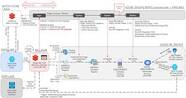
To protect production environments, Azure DevOps rolls out changes in a progressive and controlled manner using a ring model. Each ring represents a successively larger group of customers. A change must pass validation in an earlier ring before proceeding to the next. This model limits blast radius when a regression slips through, but it also means a confirmed bug can take days or weeks to fully remediate across all rings — as this incident demonstrated.
Planned Improvements: Short-Term Actions
The Azure DevOps team committed to the following short-term improvements to prevent similar regressions and speed up incident response:
- Full CI pipeline for image generation: Build and verify hosted agent images on a daily basis rather than relying solely on release-time checks.
- Expanded test coverage: Add explicit tests for all modules in the Python standard library, including
sqlite3, so that an optional-module omission is caught before the image ships. - Faster internal escalation: Improve communication between customer-facing support teams and engineering teams so that user-reported issues are escalated more quickly — ideally at first report rather than after repeated reports.
- Telemetry improvements: Instrument images with telemetry that makes it possible to detect and diagnose missing or broken components without waiting for user reports.
- Quick image rollback: Implement the operational capability to revert hosted agent images to a prior known-good version rapidly, reducing time-to-mitigation when a bad image ships.
Planned Improvements: Medium-Term Actions
- Image diff tooling: Build tooling that produces a structured comparison between successive image versions, making it straightforward to spot unexpected removals or additions that automated tests might not cover.
- Faster and more reliable deployments: Increase the speed and reliability of the ring deployment process so that validated fixes reach all customers more quickly.
Planned Improvements: Long-Term Vision
The team’s long-term goal is to give customers direct control over image versions — specifically, the ability to pin to or revert to a previous image as a self-service workaround when a new image introduces a regression. This would allow teams to unblock their pipelines immediately without waiting for a fix deployment to propagate through the ring model.
Key Takeaways for DevOps Teams
- Optional build-time dependencies are a silent failure risk. When building from source, verify that all expected modules are actually present in the output — especially in CI/CD image bake pipelines.
- Test what you ship, not just what you build. A green build does not guarantee a complete artifact. Post-build verification steps (smoke tests, module presence checks) catch omissions that compile-time checks miss.
- Escalation paths should be triggered at first signal, not at volume. A single user report of a missing standard-library module in a managed image is high-signal. Waiting for multiple reports before escalating delays mitigation unnecessarily.
- Progressive rollout models need fast rollback as a complement. Rings limit blast radius on the way out, but without a fast rollback path, confirmed bugs still propagate slowly to the full population.