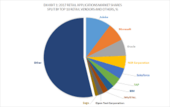
This article is based on a market research summary originally published at newstechmarkets.com (2019) by Ample Market Research. Specific market-size figures were redacted in the source as placeholders and are not reproduced here. The vendor landscape and segmentation information below reflects the original source.
What Is DevOps Incident Management Software?
DevOps Incident Management Software bridges the gap between development velocity and operational reliability. When a production system degrades or fails, these tools automate alert routing, on-call scheduling, escalation policies, and post-incident review workflows. By integrating with monitoring stacks, CI/CD pipelines, and ticketing systems, they help engineering teams detect, respond to, and learn from incidents faster than manual processes allow.
The category sits at the intersection of IT Service Management (ITSM) and modern DevOps practice, which is why the vendor landscape includes both traditional ITSM platforms and cloud-native alerting tools built specifically for on-call engineers.
Key Vendors in the Market
The research report identified the following platforms as notable players in the DevOps Incident Management Software space:
- PagerDuty – Cloud-native on-call management and event intelligence platform widely used by SRE and DevOps teams.
- OpsGenie – Alert management and on-call scheduling tool (acquired by Atlassian), designed to integrate tightly with Jira and other Atlassian products.
- VictorOps – Incident lifecycle management platform with timeline-based collaboration (later rebranded as Splunk On-Call after acquisition by Splunk).
- JIRA Service Desk – Atlassian’s ITSM product providing incident ticketing and workflow automation, now known as Jira Service Management.
- ServiceNow – Enterprise ITSM platform with broad incident, problem, and change management capabilities.
- Freshservice – Cloud-based ITSM solution from Freshworks targeting mid-market organizations.
- Samanage – IT asset and service management platform (now part of SolarWinds Service Desk).
- NinjaRMM – Remote monitoring and management tool aimed at managed service providers.
- Web Help Desk – SolarWinds’ help desk and ticketing product with asset management features.
- DERDACK – Enterprise alerting platform focused on critical infrastructure and manufacturing environments.
- SunView Software – Provider of ChangeGear, an ITSM suite with ITIL-aligned incident management.
- Symantec – Included for its security-incident management capabilities within broader IT operations tooling.
Deployment Models
Products in this category are generally available in two deployment models:
- Cloud-Based (SaaS) – Hosted and managed by the vendor. Preferred by teams that want fast onboarding, automatic updates, and elastic scalability without infrastructure overhead. Most cloud-native DevOps tools—PagerDuty, OpsGenie, VictorOps—operate exclusively or primarily in this model.
- On-Premises – Deployed within the organization’s own data center or private cloud. Preferred in regulated industries (finance, healthcare, government) where data residency and compliance requirements restrict the use of external SaaS platforms.
Industry and Enterprise Segmentation
Demand for incident management software spans organizations of all sizes, though requirements differ significantly:
- Large Enterprises – Typically require deep ITSM integration, role-based access control, audit logging, SLA tracking, and the ability to handle thousands of concurrent alerts across geographically distributed teams. Platforms like ServiceNow and JIRA Service Management are common choices.
- Small and Medium Enterprises (SMEs) – Generally prioritize ease of setup, transparent pricing, and integrations with common monitoring tools (Datadog, Prometheus, Grafana). Cloud-native tools with free or low-cost starter tiers are popular entry points.
Core Capabilities to Evaluate
When assessing DevOps Incident Management Software, engineering teams typically evaluate the following capabilities:
- Alert routing and noise reduction – Intelligent grouping and deduplication of alerts to prevent on-call fatigue.
- On-call scheduling – Rotation management, override handling, and escalation policies.
- Multi-channel notification – Phone, SMS, push, email, Slack, and Microsoft Teams integrations.
- Runbook and playbook automation – Linking alerts to documented response procedures or triggering automated remediation scripts.
- Post-incident review (PIR) tooling – Timeline reconstruction, contributing-factor analysis, and action-item tracking to support blameless retrospectives.
- Metrics and reporting – Mean Time to Detect (MTTD), Mean Time to Resolve (MTTR), and SLA compliance dashboards.
- Integration ecosystem – Native connectors to monitoring, logging, APM, CI/CD, and chat platforms.
Regional Market Footprint
The source report segmented market analysis across the following regions, reflecting where enterprise IT spend and DevOps adoption are most concentrated:
- North America – United States and Canada. Historically the largest market for DevOps tooling, driven by technology sector density and SRE adoption.
- Europe – Germany, UK, France, and Italy highlighted. Strong demand in financial services and manufacturing verticals with specific regulatory requirements influencing on-premises deployments.
- Asia-Pacific – China, Japan, India, and South Korea. Rapid growth driven by expanding cloud infrastructure investment and large software engineering workforces.
- South America and Middle East/Africa – Emerging adoption, often through multinational enterprise agreements.
Market Drivers and Challenges
Several factors have sustained demand for DevOps Incident Management Software:
- Rising system complexity – Microservices, Kubernetes, and distributed cloud architectures increase the blast radius and frequency of incidents.
- SRE adoption – The spread of Site Reliability Engineering practices formalizes incident response as a discipline requiring dedicated tooling.
- Regulatory pressure – Financial services and healthcare regulators increasingly require documented incident response procedures and audit trails.
- Remote and distributed teams – On-call tooling that works across time zones has become a baseline requirement for engineering organizations.
Key challenges include tool sprawl (teams maintaining overlapping alerting and ticketing tools), high alert volumes leading to on-call fatigue, and the difficulty of integrating incident data across heterogeneous monitoring stacks.
Choosing the Right Platform
No single platform is optimal for every team. Selection should be driven by the organization’s size, compliance constraints, existing toolchain, and the maturity of its incident response practice. Teams new to structured on-call processes often benefit from starting with a focused alerting tool like PagerDuty or OpsGenie before expanding into broader ITSM platforms. Enterprises already standardized on Atlassian or ServiceNow ecosystems may find the most value in extending those platforms rather than introducing a parallel toolchain.
Regardless of vendor, the underlying goal is the same: reduce the time between a production problem occurring and it being resolved, while generating the data needed to prevent recurrence.