Note: This article is based on a market research summary originally published at globalindustryinsight.com (via HTF Market Intelligence) in 2019. Specific market size figures, revenue projections, and CAGR percentages were redacted in the source material and are not reproduced here. Claims should be verified against current, primary research before business use.
What Is IT/DevOps Incident Management Software?
Incident management software gives engineering and IT operations teams a structured way to detect, triage, escalate, and resolve service disruptions. In a DevOps context, these tools connect tightly with monitoring, alerting pipelines, on-call scheduling, and post-incident review workflows. The goal is to minimise mean time to detect (MTTD) and mean time to resolve (MTTR) for production issues, while also building an audit trail that feeds continuous improvement.
The market spans organisations of all sizes — from small engineering teams running cloud-native services to large enterprises managing hybrid on-premise and cloud infrastructure — and the tooling reflects that breadth.
Key Players in the Incident Management Software Market
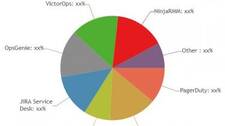
The following vendors were identified as major participants in the global IT/DevOps incident management software market as of the report’s publication date (2019). The landscape has continued to evolve through product updates and consolidation since then.
- PagerDuty — A dedicated incident response platform with on-call scheduling, escalation policies, and integrations with most observability and CI/CD tools.
- Freshservice — An ITSM platform from Freshworks with incident, problem, and change management modules aimed at IT service desks.
- Samanage (now SolarWinds Service Desk) — A cloud-based ITSM tool covering incident management alongside asset and service catalogue features.
- JIRA Service Management (formerly JIRA Service Desk) — Atlassian’s service management offering, tightly integrated with JIRA Software and Confluence for teams already in the Atlassian ecosystem.
- Opsgenie (acquired by Atlassian) — Alert management and on-call scheduling platform, now integrated with JIRA Service Management.
- VictorOps (now Splunk On-Call) — Collaborative incident response tooling with timeline-based incident views and Splunk observability integration.
- NinjaRMM (now NinjaOne) — A remote monitoring and management (RMM) platform targeting managed service providers and IT departments.
- ServiceNow — An enterprise-grade ITSM and ITOM platform with deep incident, problem, and change management workflows commonly used by large organisations.
- Symantec — Primarily a cybersecurity vendor; its incident management capabilities focus on security incident response.
- Web Help Desk (SolarWinds) — A help desk and ticketing tool with incident tracking for IT support teams.
- DERDACK Enterprise Alert — An alerting and incident notification platform with multi-channel notification and on-call management features.
- SunView Software (ChangeGear) — An ITIL-aligned service management platform covering incident, change, and problem management.
Market Segments
By Deployment Model
- Cloud-Based (SaaS) — Hosted by the vendor, accessible via browser or API. Reduces infrastructure overhead and is common among cloud-native and DevOps-focused teams. Most modern entrants (PagerDuty, Opsgenie, Freshservice) lead with SaaS delivery.
- On-Premise — Deployed within the customer’s own data centre. Preferred in regulated industries (finance, healthcare, government) where data residency or compliance requirements make SaaS problematic.
By Organisation Size
- Large Enterprises — Typically require deep ITIL alignment, complex escalation hierarchies, integration with CMDB and change management, and enterprise SSO/SAML support. ServiceNow and JIRA Service Management are common choices here.
- Small and Medium Enterprises (SMEs) — Prioritise ease of setup, transparent pricing, and out-of-the-box integrations with popular developer tools. PagerDuty, Freshservice, and Opsgenie have strong SME adoption.
Regional Market Presence
The report examined adoption across the following regions:
- North America (United States, Canada, Mexico) — The largest market, driven by high DevOps maturity and concentration of SaaS vendors headquartered in the US.
- Europe (Germany, France, UK, Russia, Italy) — Strong demand, particularly in the UK and Germany, with GDPR compliance influencing deployment model choices.
- Asia-Pacific (China, Japan, South Korea, India, Southeast Asia) — Rapidly growing market driven by digital transformation investment and a large base of IT services companies in India.
- South America (Brazil, Argentina, Colombia) — Emerging adoption, primarily in Brazil’s financial services and technology sectors.
- Middle East and Africa (Saudi Arabia, UAE, Egypt, Nigeria, South Africa) — Growing but smaller market, with investment tied to regional cloud infrastructure expansion.
Market Drivers and Restraints
What Is Driving Adoption
- Shift to always-on services: Organisations running SaaS products and e-commerce platforms face direct revenue impact from downtime, increasing willingness to invest in structured incident response tooling.
- DevOps and SRE adoption: The spread of site reliability engineering (SRE) practices has normalised concepts like error budgets, SLOs, and blameless post-mortems, all of which require good incident data.
- Cloud migration: Moving workloads to public cloud introduces new failure modes and shared-responsibility boundaries, making dedicated incident management tooling more valuable.
- Integration ecosystem maturity: Platforms like PagerDuty and Opsgenie offer hundreds of out-of-the-box integrations with monitoring, logging, APM, and communication tools, reducing adoption friction.
Factors Restraining Growth
- Fragmented tooling: Many organisations manage incidents partially through existing tools (ticketing systems, chat platforms, monitoring dashboards), reducing perceived need for a dedicated solution.
- Cost sensitivity in SMEs: Licensing costs for enterprise-grade tools can be prohibitive for smaller teams.
- On-premise complexity: Deploying and maintaining on-premise versions requires infrastructure investment that some organisations cannot justify.
- Alert fatigue: Poorly configured alerting reduces the value of incident management platforms and can lead teams to abandon or underuse them.
Evaluating Incident Management Platforms: What to Look For
When assessing incident management tools for a DevOps or IT operations team, consider the following criteria:
- Alerting and routing: Can the platform ingest alerts from your monitoring stack (Prometheus, Datadog, Nagios, CloudWatch, etc.) and route them to the right on-call engineer based on service ownership and schedules?
- On-call scheduling: Does it support rotations, overrides, escalation policies, and multi-timezone teams?
- Notification channels: Phone, SMS, push, Slack, Microsoft Teams, email — which channels matter to your team?
- Incident timeline and collaboration: Can multiple responders collaborate on a single incident with a shared, timestamped activity log?
- Post-incident review support: Does the tool surface incident data in a format useful for blameless post-mortems and trend analysis?
- ITIL alignment: If your organisation follows ITIL processes, does the tool support formal incident, problem, and change management disciplines?
- Deployment model: SaaS vs on-premise based on compliance and data residency requirements.
- Integration depth: Native integrations with your existing observability, CI/CD, and communication stack.
Competitive Landscape Trends (as of Report Period)
The competitive landscape in incident management software has been shaped by several trends visible at the time of this report and continuing since:
- Consolidation through acquisition: Atlassian’s acquisition of Opsgenie (2018) and Splunk’s acquisition of VictorOps (2018) signalled that large platform vendors see incident management as a core capability rather than a standalone product.
- Platform expansion: Vendors originally focused on alerting (PagerDuty, Opsgenie) have expanded into analytics, runbook automation, and status page functionality.
- AI and machine learning: Vendors have begun incorporating noise reduction, anomaly detection, and incident correlation features to address alert fatigue.
- New entrants: The relatively low barrier to building a basic on-call notification tool means new vendors continue to enter the market, competing on price or niche integrations.
Source and Attribution
This article is based on a market research summary published by HTF Market Intelligence Consulting Private Limited via globalindustryinsight.com, covering the global IT/DevOps Incident Management Software market for the period 2019–2026. The original report examined historical data from 2013–2018, with a base year of 2018 and a forecast period through 2023–2026. Specific revenue figures and CAGR values were not published in the available summary.
Readers requiring current market sizing, detailed CAGR projections, or vendor financial profiles should consult an up-to-date primary research report from a recognised analyst firm.