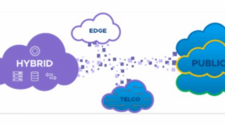
This article is based on reporting originally published by RCR Wireless News, featuring an interview with Gabriele Di Piazza, Vice President of Solutions for Telco NFV at VMware.
IT Modernization for 5G: The Road to Hybrid, Multi-Cloud
The global shift toward 5G is accelerating a broader transformation in how telecommunications networks are architected and operated. Early investments in Network Functions Virtualization (NFV) are proving foundational—paving the way toward an IT-centric network that harnesses both centralized data center compute and distributed edge compute to support new service categories and billions of newly connected devices.
At the heart of this evolution is the concept of network slicing: the ability to automatically create bespoke, on-demand data pipes tailored to a specific application or user requirement. Realizing network slicing at scale requires pervasive cloud computing infrastructure capable of handling diverse, geographically distributed workloads—while simultaneously allowing operators to optimize how they allocate network and spectral resources.
VMware’s Core Strategy: Any Application, Any Device, Any Cloud
The idea of connecting any device to any cloud to run any application—with end-to-end security baked in—is central to VMware’s corporate direction. Gabriele Di Piazza, Vice President of Solutions for Telco NFV at VMware, articulated this directly in an interview with RCR Wireless News:
“If you read through the overall corporate pitch, the corporate strategy from VMware, is really any application, any device, any cloud with intrinsic security. This is our corporate, core strategy. If you look at investments we’re making…it’s interesting how this matches well to some of what our customers in telco are doing right now. It is a roadmap of cloudification. You need to be able to program your network.”
— Gabriele Di Piazza, VP of Solutions for Telco NFV, VMware
This alignment between VMware’s platform strategy and the cloudification roadmaps being pursued by telecom operators is not coincidental. As carriers work to modernize their infrastructure, the vendor ecosystem is responding with platforms designed to abstract hardware, enable software-defined networking, and support dynamic workload placement across hybrid environments.
Edge Computing: Why Proximity to the Device Matters
One of the most visible dimensions of telcos becoming more like webscale companies is the movement of compute power toward the edge of the network. In a 5G context, this is not optional—it is a prerequisite for enabling latency-sensitive use cases such as:
- Autonomous vehicles — requiring near-real-time decision-making based on sensor data
- Precision robotics — where milliseconds of lag can compromise safety or accuracy
- Augmented and mixed reality — demanding consistent, low-latency rendering pipelines
- Industrial IoT — where control loops must operate faster than centralized cloud round-trips allow
The underlying physics is unforgiving: the speed of light imposes a hard ceiling on how quickly data can travel between a device and a distant data center. Edge computing addresses this by placing processing capacity as close to the end device as possible, reducing round-trip latency to acceptable levels for real-time applications.
Carriers at the Edge: Connectivity Provider or Platform Owner?
A strategic question facing every major carrier is whether to remain a connectivity provider—the “dumb pipe” enabling services built by others—or to own and monetize the edge infrastructure itself. Di Piazza sees genuine operator interest in the latter:
“I do think there’s a genuine interest in [operators] owning the edge infrastructure and opening that up for a variety of business models. Maybe the business model is just connectivity. I think the reality is they are starting to see the opportunity to build from there.”
— Gabriele Di Piazza, VMware
This creates a meaningful strategic fork: operators can use cloudification to deepen and defend their core competency in connectivity, or they can take a page from the hyperscale playbook and use virtualized, distributed infrastructure to build a broader platform ecosystem—attracting third-party developers, enterprises, and service providers to derive additional value from the same physical assets.
The Emerging Platform Model—and the Hyperscaler Wildcard
Di Piazza describes the emerging operator posture as a hybrid between pure connectivity provider and full platform owner:
“They try to become a bit in between where they want to have a platform with the ability to offer a new set of use cases. It’s interesting to also observe almost a reverse dynamic where you start to see some of the webscale or large cloud companies potentially enter this space and actually broker relationships between carriers. I think there will be a mix of both.”
— Gabriele Di Piazza, VMware
The entry of hyperscale cloud providers—companies with deep software expertise, global infrastructure, and established developer ecosystems—into the telco edge space introduces a competitive dynamic that operators cannot ignore. Rather than a clean division between telco and cloud, the reality is likely to be a complex, overlapping ecosystem where carriers, cloud vendors, and neutral host providers each play distinct but interdependent roles.
What Does Success Look Like in a 5G, Multi-Cloud World?
Di Piazza is candid about the difficulty of predicting winners in this transformation. Success, he argues, is deeply tied to organizational DNA:
“We probably might see a variety of successes and failures. I actually think this is highly dependent on the DNA of a company to transform themselves. Do you have the right skills from a branding perspective, from a marketing perspective, from a sales and support perspective? The economics of leveraging and implementing large scale, webscale—once you do it, how can I leverage this for more than placing my network functions? Can I evolve to a different business model? I think it’s opening up a whole new series of questions.”
— Gabriele Di Piazza, VMware
This framing is instructive for DevOps and platform engineering teams working within or alongside carriers. The technical work of virtualizing network functions, deploying Kubernetes at the edge, and building CI/CD pipelines for network software is necessary but not sufficient. The organizations that succeed will be those that pair technical capability with the commercial and organizational agility to exploit it.
Key Takeaways for DevOps and Platform Teams
- NFV is the foundation: Early NFV investments are now paying dividends as 5G deployments begin. Teams that built software-defined networking muscle early have a meaningful head start.
- Edge is a new deployment target: Distributed edge infrastructure requires rethinking deployment pipelines, observability strategies, and failure-mode assumptions. Latency and physical proximity become first-class architectural constraints.
- Network slicing demands automation: On-demand, bespoke network slices cannot be provisioned manually at scale. Platform automation and policy-driven orchestration are prerequisites.
- Multi-cloud is not optional: The “any cloud” requirement means workloads must be portable and infrastructure abstractions must hold across environments—whether carrier cloud, hyperscaler, or on-premises edge.
- Organizational transformation is the hard part: Technology is often the easier challenge. Building the skills, processes, and business models to exploit cloudified infrastructure requires deliberate organizational investment.
This is Part 3 of a series exploring VMware’s perspective on telco cloudification and the 5G transition. Original reporting by RCR Wireless News.