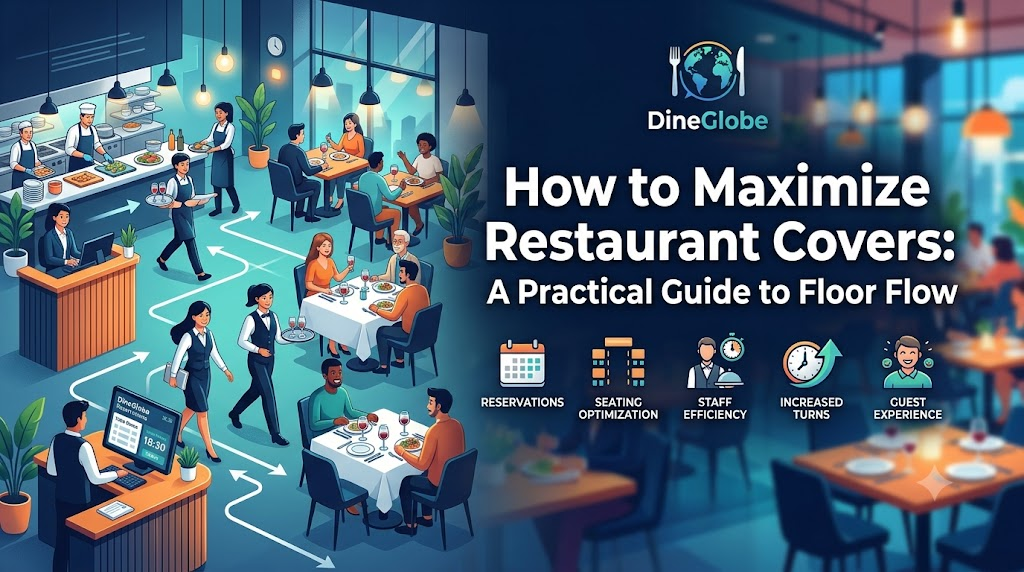
During a packed weekend dinner rush, the reception area often reveals how well the entire restaurant is functioning. When walk-in guests cluster awkwardly around the doorway, hosts scramble to locate an available four-top, and servers struggle with unevenly timed tables, the entire service rhythm stumbles.
Managing these dynamic moving pieces is the core challenge of modern front-of-house restaurant operations. To maintain an orderly room without sacrificing hospitality, forward-thinking operators increasingly lean on platforms like DineGlobe to orchestrate direct bookings, synchronize live table availability, and automate walk-in waitlists. When your front desk runs with structured precision rather than intuition, your team stays composed, covers increase, and the dining room operates at its peak potential.
Transforming that hectic entry counter into an orderly engine requires addressing systemic service delays, building an adaptable layout, and pacing service intentionally.
Where Dining Room Flow Breaks Down
Front-desk friction rarely stems from poor work ethic. Rather, it happens when the floor team lacks real-time operational visibility.
1. The Walk-Around Verification Habit
When host stands rely on static paper binders or unlinked spreadsheets, hosts have to leave their station repeatedly to check if table 22 has settled their bill or if table 8 is ready for water. Each scouting trip leaves the front counter unstaffed, lets incoming phone calls roll to voicemail, and leaves arriving parties standing around unattended.
2. Under-Leveraged Floor Real Estate
Empty chairs represent unrecoverable revenue. A frequent floor planning pitfall is assigning two guests to a spacious booth intended for four because smaller configurations were not mapped effectively. Without dynamic visibility into expected party sizes and service stages, dining rooms routinely operate below their true capacity during peak hours.
3. Kitchen Inundation via Batch Seating
When a host suddenly seats twenty covers across multiple stations in a frantic five-minute window, the ripple effect is immediate:
- The bar is flooded with a tidal wave of cocktail tickets.
- Servers fall behind on introductory greetings and water delivery.
- The kitchen line receives a massive stack of tickets simultaneously, driving up ticket times and extending turn durations.
Strategic Pillars for Seamless Service Coordination
Optimizing the floor requires treating table assignments, guest communication, and dining pacing as an integrated system.
Guest Arrival Cycle:
Direct Reservation Confirmed ➔ Visual Table Assignment ➔ Staggered Check-In ➔ Real-Time Dining Stages ➔ Fast Reset
1. Build an Agile Floor Plan
A static seating chart creates rigid limitations during variable service demands:
- Prioritize two-top flexibility: Deuces offer unmatched versatility. They accommodate solo business travelers and couples, and they can be paired or separated in seconds to accommodate unexpected larger parties.
- Guard primary service runways: Avoid packing supplementary tables into key pathways leading to the kitchen line or beverage station. Clear corridors protect service speed and minimize workplace accidents.
- Establish a comfortable holding zone: Direct waiting diners toward the bar or a dedicated waiting nook. This clears the entryway and captures incremental pre-dinner drink sales while guests wait.
2. Modernize the Waitlist with Digital Communication
Relying on hand-written clipboards and estimated wait times often leads to guest frustration and walkouts. Adopting an automated digital waitlist keeps guests updated via their mobile phones, allowing them to wait nearby without cluttering the doorway. Furthermore, basing wait times on real-time table statuses gives guests dependable expectations.
3. Transition from Third-Party Aggregators to Direct Bookings
Third-party reservation portals are useful for initial diner discovery, but recurring per-cover booking fees chip away at thin operational margins. Developing a strong channel for direct bookings ensures you retain full ownership of customer preferences, protect valuable guest relationships, and keep booking margins entirely in-house.
Centralizing Front-of-House Control with DineGlobe
Eliminating service bottlenecks does not require convoluted staff retraining. It requires giving the floor team purpose-built tools that match the tempo of modern hospitality.
This is where DineGlobe’s front-of-house management platform provides clear operational structure. By bringing reservation books, interactive floor plans, digital waitlists, and arrival pacing into a unified interface, the platform empowers host teams to:
- Drive Direct Bookings: Accept direct reservations through your own digital properties without incurring per-cover marketplace fees.
- Visualize Table Statuses Live: Track the state of every table across your dining room—identifying open, seated, check-presented, and ready-to-bus stations at a glance.
- Manage Waitlists Dynamically: Organize walk-in traffic digitally, notify diners via SMS, and assign seating based on realistic meal durations.
- Control Seating Pacing: Set arrival caps per time block to protect your kitchen line and service staff from sudden seating rushes.
Equipping your front-of-house team with reliable operational clarity removes the guesswork, allowing them to focus entirely on genuine guest care.
Simple Fixes to Recover 10 Minutes per Seating
Improving your table turnover rate does not mean rushing diners through their meal; it means stripping out inactive downtime between courses and turns.
| Service Phase | Typical Delay Point | Actionable Correction |
| Greeting & Seating | Host searches floor for an open table | Live digital layout displays clean, ready tables instantly |
| First Beverage Order | Server occupied delivering food elsewhere | Support staff delivers water and presents menus within 90 seconds |
| Payment Processing | Guests wait for server to bring and run the bill | Check presented promptly after dessert or payment accepted via handheld terminals |
| Table Reset | Clean table sits empty while guests wait | Bussing team notified immediately once a party departs |
Trimming two minutes from each of these stages removes eight to ten minutes of dead time per table. Across a full dining room over a multi-turn evening, those reclaimed minutes unlock additional seatings without rushing a single guest.
Frequently Asked Questions
What does front-of-house restaurant operations involve?
Front-of-house operations encompass all direct, guest-facing interactions within the restaurant. This includes handling online bookings, managing the host stand, coordinating the walk-in waitlist, seating guests, serving meals, and processing final payments.
How does an interactive floor plan increase seating capacity?
An interactive floor plan provides real-time visibility into table occupancy and dining phases (such as mains served or checks dropped). This allows hosts to seat newly cleared tables immediately, minimizing vacant table downtime during busy services.
Why should restaurants prioritize direct bookings over third-party channels?
Third-party reservation aggregators charge ongoing per-cover commissions and often limit access to customer data. Direct booking tools eliminate commission costs, keep guest data within your own business, and give you total authority over booking policies.
How does an SMS-based waitlist lower guest walkouts?
Digital waitlists send automated text messages to guests when their table is ready. This eliminates the need for diners to wait in crowded entryways, allowing them to relax nearby while significantly decreasing walkout rates.
What is reservation pacing and why is it important?
Reservation pacing sets a limit on the number of guests seated during specific time intervals (such as every 15 minutes). This intentional distribution prevents sudden seating spikes, keeping ticket flow manageable for both servers and line cooks.
Conclusion
An organized front desk sets the standard for everything that happens across the restaurant. When the greeting team has full visibility into live floor availability, servers work balanced sections, and guests transition comfortably from arrival to their table, the entire dining experience improves.
Take time to review your greeting procedures, refine your seating layout, and adopt tools that eliminate operational guesswork. By leveraging DineGlobe, you can simplify your front-of-house operations, capture more direct reservations, and run consistently calm, profitable shifts.