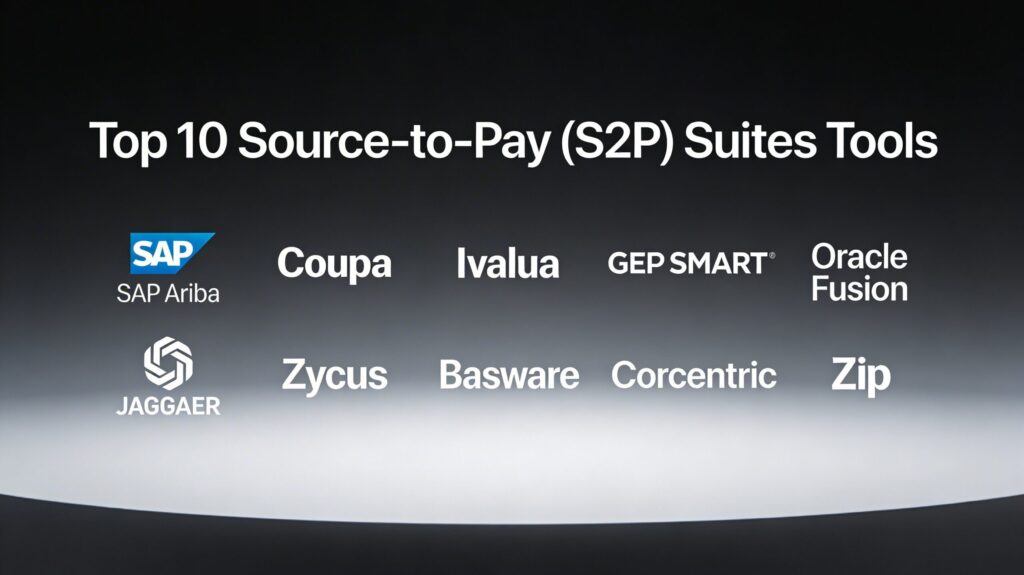
Introduction
Source-to-Pay (S2P) suites represent the technological zenith of corporate procurement, integrating the entire lifecycle of spend management into a unified digital ecosystem. Unlike fragmented solutions, an S2P suite bridges the gap between strategic sourcing—finding and contracting the best suppliers—and the transactional procure-to-pay process. This integration is critical for maintaining “data liquidity,” where information from a negotiated contract flows seamlessly into the purchasing requisition, ensuring that the financial department pays exactly what was agreed upon. As organizations face increasing regulatory pressures and supply chain volatility, these platforms act as the primary defense against maverick spend and vendor risk.
The operational objective of an S2P suite is to transform procurement from a back-office administrative function into a strategic value center. By centralizing supplier onboarding, e-auctions, contract management, and automated accounts payable, these tools provide a 360-degree view of organizational liquidity. Modern suites utilize advanced AI agents to perform complex tasks such as three-way matching and risk sentiment analysis across global news feeds. For the modern enterprise, deploying a robust S2P solution is no longer an optional efficiency gain; it is a fundamental requirement for achieving financial transparency and sustaining a resilient supply chain in a hyper-competitive global market.
Best for: Large-scale enterprises, multinational corporations, and highly regulated industries like healthcare and manufacturing that require end-to-end visibility and strict compliance across all spending categories.
Not ideal for: Small startups or businesses with very low procurement complexity that do not require strategic sourcing or advanced contract management features to manage their overhead.
Key Trends in Source-to-Pay (S2P) Suites
The most significant trend is the rise of “Agentic AI” and autonomous procurement. S2P platforms are shifting from simple automation to using intelligent agents that can independently evaluate supplier risks, suggest optimal contract clauses based on historical benchmarks, and even initiate “spot-buy” sourcing events when stock levels drop. These agents work in the background, reducing the need for human intervention in low-value, repetitive tasks, thereby allowing procurement teams to focus on high-level supplier relationship management and sustainability initiatives.
Another dominant trend is the “consumerization” of the procurement experience. Platforms are moving away from the dense, spreadsheet-style interfaces of the past toward “Amazon-like” guided buying portals. This shift is designed to drive internal adoption; if employees find the official procurement tool as easy to use as a personal shopping app, they are far less likely to bypass official channels. Additionally, there is a massive focus on “ESG (Environmental, Social, and Governance) Tracking,” with suites now providing real-time carbon footprint data and diversity scores for every supplier in the network directly within the sourcing dashboard.
How We Selected These Tools
The selection of these 10 suites was based on a rigorous evaluation of their “completeness of vision” and “ability to execute” within complex global environments. We prioritized platforms that offer a unified data model, meaning the “Source” side and the “Pay” side of the software share the same codebase to prevent information silos. Market leadership and analyst recognition from organizations like Gartner were heavily weighted, as these provide a reliable proxy for long-term stability and research and development investment.
Technical criteria included the robustness of the platform’s API for ERP integration (particularly with SAP, Oracle, and Microsoft Dynamics) and the maturity of their AI capabilities. We also looked for geographic reach—specifically the ability to handle multi-currency, multi-language, and localized tax compliance—which is essential for multinational operations. Finally, we assessed the quality of the “Supplier Network,” as the value of an S2P tool is significantly enhanced by the number of pre-connected, vetted vendors already active on the platform.
1. SAP Ariba
SAP Ariba is the global benchmark for enterprise S2P, leveraging the SAP Business Network—the world’s largest B2B marketplace—to connect millions of buyers and suppliers. It is designed for maximum scale, offering deep integration with SAP S/4HANA to ensure that procurement actions are instantly reflected in the company’s core financial records.
Key Features
The suite provides an end-to-end workflow covering strategic sourcing, contract lifecycle management, and a highly automated procure-to-pay engine. It features “Guided Buying,” which directs users to preferred suppliers and compliant items through a simplified interface. The platform includes advanced supplier risk monitoring that uses AI to track global events that might impact the supply chain. Its e-invoicing capabilities are industry-leading, supporting localized tax regulations in over 190 countries. Additionally, the SAP Business Network allows for rapid discovery of new vendors through a self-service directory.
Pros
Unmatched global reach and supplier network size make it the go-to for multinational firms. The integration with the broader SAP ecosystem provides a seamless “single source of truth” for finance and procurement.
Cons
Implementation is notoriously complex and often requires expensive third-party consultants. The user interface for back-end administrators can feel dated and overly technical compared to newer entrants.
Platforms and Deployment
Cloud-based web platform with native mobile integration for approvals.
Security and Compliance
Complies with SOC 1/2, ISO 27001, and FedRAMP; features robust data residency options for global compliance.
Integrations and Ecosystem
Deepest native integration with SAP S/4HANA and ERP Central Component, with open APIs for other major systems.
Support and Community
Extensive global partner network and a massive user community with regular regional “SAP Spend Connect” events.
2. Coupa
Coupa is recognized as the leader in “Business Spend Management” (BSM), focusing heavily on user adoption and “Community Intelligence.” By aggregating anonymized data from its entire customer base, Coupa provides users with real-time benchmarks and risk scores that help them make smarter buying decisions.
Key Features
The platform is built on a “User-First” philosophy, offering one of the most intuitive interfaces in the S2P market. It features “Coupa Advantage,” a pre-negotiated discount program that gives even mid-sized companies the buying power of a conglomerate. Its AI-driven “Spend Guard” acts as a real-time auditor, flagging suspicious transactions or duplicate invoices before they are paid. The suite includes robust modules for sourcing, treasury, and travel/expense management. It also offers “Open Buy,” allowing users to search and purchase items from marketplaces like Amazon Business directly within the Coupa environment.
Pros
The “Amazon-like” user experience leads to exceptionally high adoption rates across the workforce. Community-derived insights provide unique benchmarking data that isn’t available in other suites.
Cons
The premium features and high-tier modules can be significantly more expensive than competitors. Some users find the “Source” (Strategic Sourcing) side slightly less mature than the “Pay” (P2P) side.
Platforms and Deployment
Cloud-native web dashboard and a highly-rated mobile app for all spend activities.
Security and Compliance
Maintains high-level security certifications including SOC 2 Type II, HIPAA, and GDPR compliance.
Integrations and Ecosystem
Strong pre-built connectors for NetSuite, Workday, and Oracle, with a dedicated “App Marketplace” for third-party tools.
Support and Community
Features an active “Coupa Community” forum and the annual “Inspire” conference for knowledge sharing.
3. Ivalua
Ivalua stands out for its “single-codebase” architecture, offering a truly unified S2P experience without the technical debt of acquired software modules. It is highly prized by organizations with complex, unique procurement requirements that need a platform tailored to their specific workflows.
Key Features
The platform offers extreme configurability, allowing businesses to modify workflows, data models, and UI elements without breaking core software updates. It features a comprehensive “Supplier Value Management” module that goes beyond risk to track innovation and performance collaboration. Its “Generative AI” assistant helps procurement teams draft RFPs and summarize complex contracts in seconds. The suite excels in “Direct Spend” management, making it a favorite for manufacturing and automotive sectors. It also includes deep capabilities for bill-of-materials (BOM) sourcing and product lifecycle management integration.
Pros
The unified architecture ensures there are zero data silos between sourcing and payment. It offers the highest level of flexibility in the market for complex, non-standard business processes.
Cons
The high level of configurability can lead to “feature creep” and longer deployment timelines if not managed strictly. It has a smaller pre-connected supplier network compared to SAP Ariba.
Platforms and Deployment
Available as a cloud or hybrid deployment to meet specific enterprise data sovereignty needs.
Security and Compliance
Meets international standards including ISO 27001 and specialized certifications for government and highly regulated sectors.
Integrations and Ecosystem
Native integrations for all major ERPs and a “no-code/low-code” framework for building custom connectors.
Support and Community
Known for high customer retention and a “human-centric” support model with dedicated account managers.
4. GEP SMART
GEP SMART is a unified, AI-native S2P platform designed with a “mobile-first” philosophy. It is unique in that GEP provides both the software and managed procurement services, ensuring the tool is built from the ground up by practitioners who understand real-world sourcing challenges.
Key Features
The platform’s centerpiece is “GEP Qi,” an enterprise-grade agentic AI system that orchestrates complex workflows across sourcing and finance. It features a unified dashboard that combines S2P data with supply chain visibility, allowing users to see how procurement decisions impact inventory levels. The suite includes an “AI Studio” where organizations can build and deploy their own custom AI agents for specific tasks. It offers deep multi-language support and localized compliance for emerging markets. The contract management module uses OCR and AI to automatically extract key terms and obligations from legacy documents.
Pros
The “GEP Qi” AI agents provide some of the most advanced autonomous procurement capabilities currently available. The unified nature of the platform ensures high data accuracy across the entire lifecycle.
Cons
Small and mid-sized companies may find the feature set and pricing more geared toward global conglomerates. The mobile-first design, while modern, can be a transition for users accustomed to desktop-heavy legacy systems.
Platforms and Deployment
Cloud-native platform with a robust, feature-complete mobile experience.
Security and Compliance
Highly secure architecture with SOC 1/2, ISO 27001, and extensive GDPR data privacy controls.
Integrations and Ecosystem
Seamlessly integrates with SAP, Oracle, and Microsoft Dynamics, and offers a specialized partner ecosystem for implementation.
Support and Community
Offers 24/7 global support and benefits from GEP’s massive internal team of procurement subject matter experts.
5. Oracle Fusion Cloud Procurement
Oracle Fusion Cloud Procurement is a critical component of the broader Oracle ERP ecosystem, offering a highly disciplined and finance-centric approach to S2P. It is the natural choice for organizations that already rely on Oracle for their financial management and human resources.
Key Features
The suite provides a comprehensive set of modules for supplier qualification, strategic sourcing, and procurement. It uses “Social Collaboration” tools to allow internal stakeholders and suppliers to communicate directly within the procurement record. The platform includes a “Supplier Portal” where vendors can manage their own profiles and track payments, reducing the administrative burden on the buyer. It features embedded analytics that provide real-time insights into spend variance and contract leakage. The system is designed with a heavy focus on internal controls and auditability, making it ideal for publicly traded companies.
Pros
Deep integration with Oracle Financials ensures that procurement data is perfectly aligned with the general ledger. It offers one of the most robust and secure infrastructures for managing large-scale, sensitive financial data.
Cons
The user interface, while functional, is often viewed as more “industrial” and less intuitive than Coupa or Zip. It can be difficult to justify the cost if not already committed to the Oracle ecosystem.
Platforms and Deployment
Full cloud deployment as part of the Oracle Fusion Cloud Applications suite.
Security and Compliance
Adheres to the highest global standards, including specialized security tiers for government and defense agencies.
Integrations and Ecosystem
Natively integrated with Oracle’s suite of products; supports third-party integrations via Oracle Integration Cloud.
Support and Community
Vast global support network and an extensive “Oracle University” for training and certification.
6. JAGGAER
JAGGAER is a specialized S2P provider with a long history of serving complex, regulated industries like higher education, government, and manufacturing. It is known for its “JAGGAER ONE” platform, which offers modular flexibility to meet the specific needs of various verticals.
Key Features
The platform features an exceptionally strong “Sourcing Optimization” module, capable of handling thousands of line items and complex bid scenarios. It provides deep functionality for “Chemical Management” and “Grant Management,” which are essential for research-heavy institutions. The suite includes a centralized supplier management portal that tracks diversity certifications and sustainability metrics. It uses AI to perform “Predictive Sourcing,” identifying the best time to run an RFP based on market trends. The procure-to-pay module is highly customizable to support rigid public-sector approval hierarchies.
Pros
Industry-specific features make it the undisputed leader for the education and public sector markets. The sourcing optimization tools are among the most powerful for high-complexity bidding.
Cons
The platform can feel fragmented because it was built through several major acquisitions. Some users report that the user experience is inconsistent across different modules.
Platforms and Deployment
Cloud-based web platform with specific regional hosting options.
Security and Compliance
Compliant with major standards like ISO 27001 and GDPR; includes specialized features for public sector regulatory compliance.
Integrations and Ecosystem
Strong connectors for Ellucian, Oracle, and SAP, with a focus on interoperability in the education and government tech stacks.
Support and Community
Highly rated for customer service and features a very active user group for specialized industries.
7. Zycus
Zycus is an “AI-First” S2P provider that focuses on using cognitive technologies to automate the “Source” side of the suite. It is highly regarded for its spend analytics and its ability to turn raw data into actionable procurement strategies.
Key Features
The suite features “Merlin AI,” a suite of intelligent bots that handle everything from invoice extraction to supplier risk scoring. It offers a “Guided Procurement” experience that uses conversational AI to help employees create requisitions. The spend analysis module is widely considered one of the best in the market, capable of categorizing millions of transactions with high accuracy. It includes a “Supplier Network” that facilitates electronic document exchange and collaboration. The contract management module features an “Auto-Clause” generator that suggests legal language based on the risk profile of the vendor.
Pros
The AI-driven spend analytics provide a level of granular visibility that few other suites can match. It offers a modular adoption path, allowing companies to start with one module and expand as needed.
Cons
The “Pay” (Accounts Payable) functionality is sometimes viewed as less robust than dedicated AP automation specialists like Basware. The global supplier network is smaller than that of SAP Ariba.
Platforms and Deployment
Cloud-native web platform with an emphasis on modularity.
Security and Compliance
Full SOC 2 Type II and ISO 27001 compliance with a focus on secure data classification.
Integrations and Ecosystem
Solid integration capabilities with major ERPs; known for relatively fast deployment cycles compared to larger suites.
Support and Community
Provides dedicated support and is known for its “Horizon” user conference focusing on AI in procurement.
8. Basware
Basware is a “Pay-First” S2P provider that has successfully expanded into the “Source” side of the market. It is the global leader in e-invoicing and AP automation, making it the ideal choice for companies with extremely high transaction volumes and complex invoice requirements.
Key Features
The platform features a “100% Invoice Capture” guarantee, using a mix of OCR, EDI, and AI to digitize every incoming invoice. It provides the most extensive global e-invoicing network, ensuring compliance with the diverse and changing digital tax mandates in over 60 countries. The suite includes a “SmartPDF” feature that can read and extract data from unstructured emails without any manual setup. Its procurement module is designed to be lightweight and fast, focusing on the needs of the requisitioner. It also offers advanced “Dynamic Discounting” tools to help companies optimize their working capital.
Pros
The expertise in global e-invoicing compliance is unmatched, protecting companies from legal and tax risks in international markets. It handles high-volume invoice processing with extreme efficiency and accuracy.
Cons
The “Source” (Strategic Sourcing) and contract management modules are functional but not as deep as specialists like JAGGAER or Ivalua. The interface is highly optimized for finance, which may not always suit the sourcing team’s needs.
Platforms and Deployment
Cloud-based platform with a strong focus on “open” connectivity to multiple ERPs.
Security and Compliance
World-class compliance with digital signature laws and international tax regulations; ISO 27001 certified.
Integrations and Ecosystem
Integrates with over 250 different ERP systems, making it one of the most flexible “connective” suites in the market.
Support and Community
Strong global presence with localized support teams and deep expertise in global financial regulations.
9. Corcentric
Corcentric offers a holistic S2P suite that combines technology with “Managed Services.” It is a unique player that provides not just the software, but also the human expertise to manage category spend and negotiate with suppliers on the customer’s behalf.
Key Features
The platform covers the entire S2P and Order-to-Cash (O2C) cycles, providing a complete view of cash flow. It features a sophisticated “Catalog Management” system that can handle complex “punch-out” integrations with thousands of suppliers. The suite includes a built-in “B2B Payment” engine that allows companies to pay their vendors electronically and earn rebates. It offers a “Strategic Sourcing” service where Corcentric experts help customers run RFPs and manage vendor relationships. The contract management module includes automated obligation tracking to ensure vendors meet their SLAs.
Pros
The combination of software and managed services provides a massive ROI for companies with lean procurement teams. The unified view of S2P and O2C allows for advanced working capital optimization.
Cons
The platform can feel like a “managed service” first and a software product second, which may not appeal to companies that want total internal control. The user interface is functional but lacks some of the modern “polish” of Coupa.
Platforms and Deployment
Cloud-based web platform with integrated payment services.
Security and Compliance
Highly compliant with financial data standards, including SOC 1/2 and ISO 27001.
Integrations and Ecosystem
Strong focus on financial system integrations; works well with mid-market and enterprise ERPs alike.
Support and Community
Exceptional customer support, often acting as an extension of the client’s internal procurement team.
10. Zip
Zip is the newest entrant to the list, having pioneered the “Intake-to-Procure” category before expanding into a full S2P suite. It focuses on solving the “front door” of procurement, making it incredibly easy for any employee to start a request and see it through to payment.
Key Features
The platform features a “Universal Intake” form that uses AI to route requests to the correct department (IT, Legal, Security, etc.) automatically. It provides a visual “Workflow Builder” that allows procurement teams to create complex approval chains without writing any code. The suite recently added a full “Accounts Payable” and “Payments” module, allowing it to cover the entire S2P lifecycle. It includes a “Vendor Management” portal that centralizes all security reviews and SOC reports. The system provides real-time visibility for the requester, showing them exactly where their order is in the approval process.
Pros
The user interface is the most modern and “clean” in the industry, significantly reducing the training time for new users. The focus on the “Intake” process solves the biggest pain point in procurement: maverick spend.
Cons
As a newer platform, its strategic sourcing and e-auction features are not yet as mature as legacy giants like SAP Ariba or JAGGAER. It has a smaller internal supplier network compared to established players.
Platforms and Deployment
Cloud-native platform with deep integrations into modern workplace tools like Slack and MS Teams.
Security and Compliance
Built with a “security-first” mindset; fully SOC 2 Type II compliant and highly rated for its internal security controls.
Integrations and Ecosystem
Exceptional integrations with modern SaaS tools (Slack, Jira, Ironclad) and major ERPs like NetSuite and Workday.
Support and Community
Fast-growing and highly responsive support team with a very modern approach to customer success.
Comparison Table
| Tool Name | Best For | Platform(s) Supported | Deployment | Standout Feature | Public Rating |
| 1. SAP Ariba | Global Enterprises | Web, Mobile | Cloud | Largest B2B Network | 4.2/5 |
| 2. Coupa | High User Adoption | Web, iOS, Android | Cloud | Community Intelligence | 4.6/5 |
| 3. Ivalua | Complex Customization | Web | Cloud / Hybrid | Single-Codebase Architecture | 4.6/5 |
| 4. GEP SMART | AI-First Strategy | Web, Mobile | Cloud | GEP Qi AI Agents | 4.5/5 |
| 5. Oracle Fusion | Oracle ERP Users | Web | Cloud | Tight Finance Coupling | 4.1/5 |
| 6. JAGGAER | Higher Ed / Public Sector | Web | Cloud | Sourcing Optimization | 4.4/5 |
| 7. Zycus | Spend Analytics | Web | Cloud | Merlin AI Suite | 4.3/5 |
| 8. Basware | Global E-Invoicing | Web | Cloud | 100% Invoice Capture | 4.4/5 |
| 9. Corcentric | Managed Services | Web | Cloud | S2P + O2C Integration | 4.0/5 |
| 10. Zip | Intake Orchestration | Web, Slack/Teams | Cloud | Modern “Front Door” UX | 4.8/5 |
Evaluation & Scoring of Source-to-Pay (S2P) Suites
The scoring below is a comparative model intended to help shortlisting. Each criterion is scored from 1–10, then a weighted total from 0–10 is calculated using the weights listed. These are analyst estimates based on typical fit and common workflow requirements, not public ratings.
Weights:
- Core features – 25%
- Ease of use – 15%
- Integrations & ecosystem – 15%
- Security & compliance – 10%
- Performance & reliability – 10%
- Support & community – 10%
- Price / value – 15%
| Tool Name | Core (25%) | Ease (15%) | Integrations (15%) | Security (10%) | Performance (10%) | Support (10%) | Value (15%) | Weighted Total |
| 1. SAP Ariba | 10 | 6 | 10 | 10 | 9 | 8 | 7 | 8.75 |
| 2. Coupa | 9 | 10 | 9 | 9 | 9 | 9 | 8 | 9.05 |
| 3. Ivalua | 10 | 7 | 9 | 9 | 9 | 10 | 8 | 9.00 |
| 4. GEP SMART | 9 | 8 | 9 | 9 | 10 | 9 | 8 | 8.85 |
| 5. Oracle Fusion | 9 | 6 | 10 | 10 | 9 | 8 | 8 | 8.45 |
| 6. JAGGAER | 9 | 7 | 8 | 9 | 8 | 9 | 8 | 8.35 |
| 7. Zycus | 8 | 8 | 8 | 9 | 9 | 8 | 9 | 8.30 |
| 8. Basware | 8 | 8 | 10 | 10 | 10 | 9 | 8 | 8.80 |
| 9. Corcentric | 7 | 7 | 8 | 9 | 8 | 10 | 9 | 8.05 |
| 10. Zip | 7 | 10 | 9 | 9 | 9 | 10 | 8 | 8.65 |
How to interpret the scores:
- Use the weighted total to shortlist candidates, then validate with a pilot.
- A lower score can mean specialization, not weakness.
- Security and compliance scores reflect controllability and governance fit, because certifications are often not publicly stated.
- Actual outcomes vary with assembly size, team skills, templates, and process maturity.
Which Source-to-Pay (S2P) Suite Tool Is Right for You?
Solo / Freelancer
Source-to-Pay suites are enterprise-level tools and are typically not suitable for solo freelancers. Individuals looking to manage their own spending would be better served by simple expense management apps like Expensify or basic accounting software like QuickBooks.
SMB
For small to mid-sized businesses, Zip or Coupa are the most viable options. Their focus on user experience and relatively faster implementation cycles allows a smaller team to gain the benefits of spend control without being overwhelmed by the complexity of a legacy ERP module.
Mid-Market
Mid-market companies looking for a balance between cost and advanced features should consider Zycus or Corcentric. Zycus offers excellent AI-driven insights to help growing companies find savings, while Corcentric provides the additional human support that lean mid-market teams often need.
Enterprise
For global enterprises, the choice usually comes down to SAP Ariba, Ivalua, or GEP SMART. SAP Ariba is the logical choice for SAP-centric organizations, whereas Ivalua is preferred for those with highly unique or complex workflows. GEP SMART is ideal for firms that want to be at the absolute cutting edge of AI-driven procurement.
Budget vs Premium
If budget is the primary concern, modular suites like Zycus or the intake-focused model of Zip offer a more phased and cost-effective entry into S2P. Premium suites like SAP Ariba and Coupa require significant investment but deliver unrivaled network effects and community intelligence.
Feature Depth vs Ease of Use
JAGGAER and Ivalua offer incredible feature depth for specialized sourcing and complex contracts but require more extensive training. Conversely, Zip and Coupa prioritize ease of use, ensuring that the average employee can navigate the system with minimal friction.
Integrations & Scalability
Oracle Fusion and SAP Ariba offer the most “built-in” scalability for companies already using those respective ERP ecosystems. For companies with a “Best-of-Breed” tech stack, Basware and Zip provide the most flexible and open integration architectures.
Security & Compliance Needs
All listed tools meet high security standards, but Basware and SAP Ariba lead the market in handling complex international tax and e-invoicing compliance, which is a non-negotiable requirement for firms operating in regions with strict digital mandates.
Frequently Asked Questions (FAQs)
1. What is the main difference between P2P and S2P?
P2P (Procure-to-Pay) focuses on the transactional process of requesting, receiving, and paying for goods. S2P (Source-to-Pay) is a broader suite that includes P2P plus strategic sourcing, supplier management, and contract lifecycle management.
2. How long does a typical S2P suite implementation take?
For a full enterprise suite, implementation can range from 6 to 18 months. However, more modern, cloud-native tools like Zip can often be deployed in a “phased” approach in as little as 3 to 4 months.
3. Do S2P suites replace my ERP?
No, they complement it. The S2P suite handles the complex procurement workflows and supplier interactions, while the ERP remains the financial system of record for the general ledger and payments.
4. What is “Three-Way Matching”?
It is a critical security control where the system automatically compares the Purchase Order (PO), the Goods Receipt, and the Invoice. If all three match within a set tolerance, the invoice is automatically cleared for payment.
5. How does AI help in Source-to-Pay?
AI is used for spend categorization, identifying duplicate invoices, sentiment analysis of supplier news, and “agentic” tasks like drafting RFPs or recommending contract terms based on past performance.
6. Can S2P suites help with ESG and sustainability?
Yes, most modern suites now include “ESG Dashboards” that allow you to track the carbon footprint, diversity status, and labor practices of your suppliers, helping you meet corporate social responsibility goals.
7. Is a “Supplier Network” really that important?
Yes. A large network (like SAP Business Network or Coupa’s) means your suppliers are likely already onboarded, making it much faster to begin transacting and ensuring data accuracy in the onboarding process.
8. What is “Maverick Spend”?
Maverick spend occurs when employees purchase goods outside of the official procurement system and negotiated contracts. S2P suites reduce this by making the official “front door” easy to use.
9. Can these tools handle service-based procurement?
Yes, modern suites have specific modules for “Complex Services” and “Statement of Work” (SOW) management, allowing you to track milestones and service levels as easily as physical goods.
10. Do I need a consultant to implement these tools?
For major suites like SAP Ariba or Oracle, a certified implementation partner is almost always required. For more modern SaaS tools like Zip, the vendor’s internal team can often handle the deployment.
Conclusion
Implementing a Source-to-Pay suite is a transformative step that shifts procurement from a reactive cost center to a proactive driver of corporate strategy.Where supply chain resilience and data-driven agility are paramount, these platforms provide the essential visibility required to navigate global complexity. The evolution toward agentic AI and autonomous workflows is rapidly reducing the administrative burden, allowing procurement professionals to focus on higher-value activities like sustainability and strategic vendor innovation. By choosing the right suite—whether it is an industry titan like SAP Ariba or a modern disruptor like Zip—organizations can secure their financial integrity and build a foundation for long-term operational excellence. The journey toward a unified S2P ecosystem is not just an IT project; it is a fundamental redesign of how a business interacts with the global marketplace to ensure sustainable growth and total spend transparency.