Introduction
Global Trade Management (GTM) systems are specialized enterprise software solutions designed to streamline and automate the complex lifecycle of international trade. These platforms act as a centralized command center for managing cross-border transactions, ensuring that organizations can navigate the intricate web of customs regulations, trade agreements, and fluctuating tariff structures. A robust GTM system integrates core functions such as regulatory compliance, trade documentation, financial settlement, and supply chain visibility. By digitizing these processes, businesses can mitigate the risks of costly delays, legal penalties, and operational inefficiencies that often plague manual international logistics.
In the current global economic environment, the agility provided by GTM systems is no longer a luxury but a strategic necessity. With shifting geopolitical landscapes and frequently updated trade sanctions, organizations must possess the technical infrastructure to pivot their supply chains instantaneously. These systems allow companies to calculate total landed costs with precision, verify denied parties in real-time, and leverage preferential trade agreements that significantly impact the bottom line. When selecting a GTM partner, decision-makers must prioritize high-level security, the depth of the global regulatory database, and the platform’s ability to integrate seamlessly with existing Enterprise Resource Planning (ERP) and Transportation Management Systems (TMS).
Best for: Multinational corporations, large-scale importers and exporters, third-party logistics providers (3PLs), and manufacturers operating in highly regulated industries such as aerospace, pharmaceuticals, and electronics.
Not ideal for: Domestic-only retail businesses or small local service providers who do not engage in the movement of physical goods across international borders.
Key Trends in Global Trade Management Systems
The integration of artificial intelligence and machine learning has revolutionized automated classification, allowing systems to predict the correct Harmonized System (HS) codes with high accuracy, thereby reducing human error. Real-time visibility has evolved from simple tracking to predictive analytics, where platforms can now anticipate port congestion or regulatory shifts before they impact a shipment. There is a marked move toward “single window” digital environments where customs filings and trade documents are submitted and approved through unified government interfaces.
Sustainability and ESG (Environmental, Social, and Governance) tracking are now being embedded directly into GTM workflows, enabling firms to monitor the carbon footprint of their trade routes and ensure ethical sourcing compliance. Blockchain technology is increasingly used to create immutable “digital passports” for goods, providing an indisputable audit trail for high-value or sensitive shipments. Additionally, the rise of cloud-native architectures ensures that trade data is accessible to global teams in real-time, facilitating faster decision-making and more collaborative risk management across time zones.
How We Selected These Tools
The selection of these top GTM systems involved a rigorous analysis of their capability to handle high-volume, multi-jurisdictional trade operations. We prioritized platforms that demonstrate a deep commitment to regulatory intelligence, maintaining updated databases for hundreds of countries. Market presence and the longevity of the provider were key factors, as these indicate a proven track record in navigating complex global trade crises. We also evaluated the scalability of the architecture, ensuring the tools could serve both mid-market firms and massive global conglomerates.
Technical reliability was assessed through the lens of integration depth, specifically how well these systems communicate with major ERP environments. Security posture was a critical filter; we looked for platforms with advanced encryption, robust audit logs, and compliance with international data protection standards. Finally, we considered the user experience, focusing on systems that simplify the inherently complex nature of trade documentation and provide clear, actionable dashboards for compliance officers and supply chain managers.
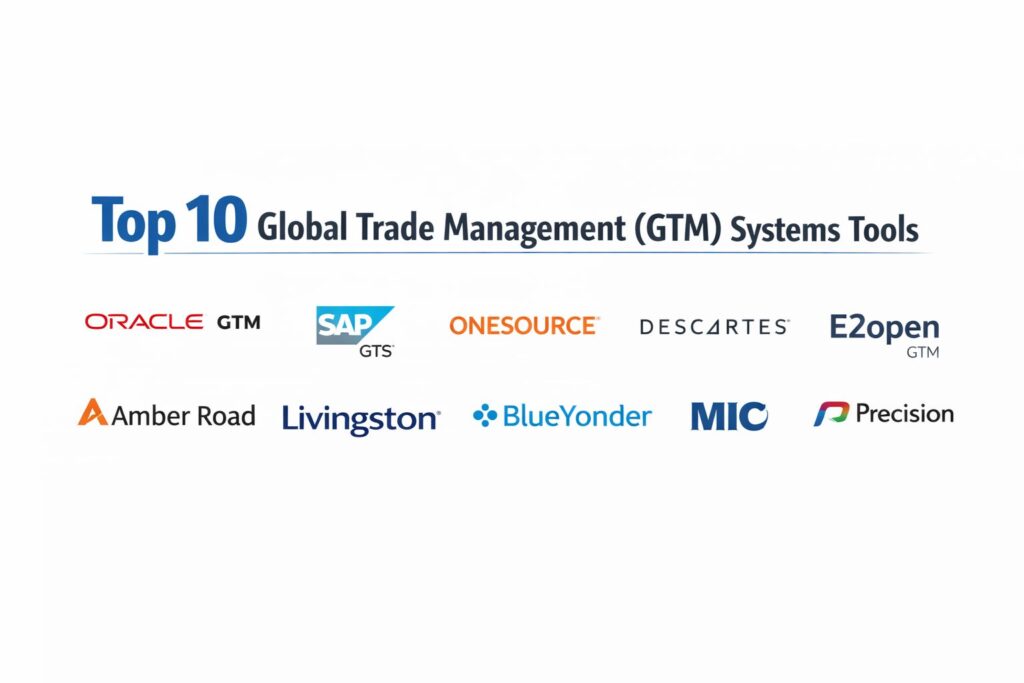
1. Oracle Global Trade Management
Oracle GTM is a comprehensive, cloud-based solution that is part of the broader Oracle Supply Chain Management suite. It is designed to provide organizations with a holistic view of their global trade operations, connecting compliance and logistics in a single platform. It is particularly effective for companies that need to manage high volumes of transactions across diverse regulatory environments while maintaining strict internal controls.
Key Features
The system offers an advanced automated screening process for restricted parties and sanctioned countries. it features a robust trade compliance engine that validates orders against global regulations in real-time. The platform provides detailed tools for managing customs entries and creating standardized trade documentation for various jurisdictions. It includes a sophisticated landed cost calculator that accounts for duties, taxes, and transportation fees. Additionally, the system supports the management of preferential trade agreements to help organizations maximize duty savings.
Pros
Exceptional integration with the Oracle ERP ecosystem, allowing for a seamless flow of data from order to shipment. The regulatory content is updated frequently, ensuring constant compliance with changing laws.
Cons
The complexity and depth of the system can lead to a long implementation timeline. It generally requires a significant investment in specialized training for the internal team.
Platforms and Deployment
Cloud-based deployment accessible via web browsers globally.
Security and Compliance
Utilizes Oracle’s enterprise-grade security infrastructure, including advanced encryption and comprehensive audit trails for regulatory reporting.
Integrations and Ecosystem
Seamlessly integrates with Oracle E-Business Suite, NetSuite, and external transportation management providers through a robust API.
Support and Community
Provides 24/7 global support, an extensive knowledge base, and a dedicated community of trade compliance experts.
2. SAP Global Trade Services (GTS)
SAP GTS is a market-leading solution that helps businesses automate their international trade processes and manage risks. Built to handle the requirements of the world’s largest corporations, it provides deep functionality for customs management, compliance, and electronic communication with government agencies.
Key Features
The platform features a highly automated system for classifying goods using international tariff structures. It provides centralized management for import and export licenses, ensuring that sensitive shipments are always authorized. The software includes specialized modules for managing Foreign Trade Zones (FTZ) and bonded warehouses. It offers real-time screening against thousands of denied-party lists. The system also automates the filing of customs declarations through direct electronic links to customs authorities in numerous countries.
Pros
Unrivaled for organizations already running on SAP S/4HANA or legacy SAP ERP systems. It offers incredibly granular control over every step of the international trade lifecycle.
Cons
Implementation often requires highly specialized consultants, leading to high initial costs. The user interface can be technical and demanding for non-power users.
Platforms and Deployment
Available as an on-premise solution, hybrid, or as part of the SAP S/4HANA Cloud.
Security and Compliance
Maintains high-level security certifications and provides detailed logging required for government audits and internal compliance checks.
Integrations and Ecosystem
Deeply integrated with the SAP digital core; supports numerous third-party content providers for regulatory data.
Support and Community
Extensive global support network and a vast community of certified partners and consultants.
3. Thomson Reuters ONESOURCE Global Trade
ONESOURCE is a specialized GTM solution known for its superior regulatory content and tax intelligence. It focuses on reducing the manual effort involved in trade compliance by providing automated updates on tariffs, duties, and trade regulations across the globe.
Key Features
The system is built around a world-class regulatory database that covers over 200 countries. It provides automated tools for HS code classification and duty management. The software excels in managing Free Trade Agreements (FTA) by automating the solicitation and qualification of certificates of origin. It features a comprehensive import and export documentation engine that generates country-specific forms. The platform also includes a robust analytics dashboard for monitoring trade spend and compliance performance.
Pros
The quality and accuracy of the underlying trade data are considered among the best in the industry. It is highly effective at identifying duty-saving opportunities that other systems might miss.
Cons
While it integrates well with major ERPs, the setup for custom or niche systems can be complex. The focus is heavily on compliance and tax, which may require additional tools for full logistics visibility.
Platforms and Deployment
Primarily a cloud-based SaaS platform.
Security and Compliance
Adheres to strict international security standards and provides the detailed reporting necessary for Sarbanes-Oxley (SOX) and GDPR compliance.
Integrations and Ecosystem
Strong integration capabilities with SAP, Oracle, and other Tier-1 ERP systems.
Support and Community
Offers professional implementation services and a global support team specialized in trade law and taxation.
4. Descartes Global Trade Directory
Descartes provides a modular GTM solution that is particularly strong in the areas of logistics and customs filing. It is part of a larger logistics technology ecosystem, making it a preferred choice for organizations that need to tightly couple their trade compliance with their physical transportation movements.
Key Features
The platform provides a massive database of international trade content, including duties, taxes, and restricted party lists. It features an industry-leading customs filing system that supports electronic communication with dozens of national customs agencies. The software includes tools for denied party screening that can be integrated directly into e-commerce checkouts. It offers a specialized module for ocean and air freight visibility. The system also assists in the automation of product classification and the management of export control laws.
Pros
The modular nature allows companies to purchase only the specific compliance or filing tools they need. It offers excellent connectivity to a vast network of carriers and logistics providers.
Cons
Managing multiple separate modules can sometimes lead to a fragmented user experience compared to unified suites. The documentation for self-service configuration can be technical.
Platforms and Deployment
Cloud-based architecture with various web-accessible modules.
Security and Compliance
Reliable security protocols with specific focus on secure communication with government entities and customs agencies.
Integrations and Ecosystem
Integrates with major ERPs and is part of the Descartes Global Logistics Network, providing access to thousands of logistics partners.
Support and Community
Offers a global support desk and specialized training for customs brokers and trade compliance professionals.
5. E2open Global Trade Management
E2open offers a unified cloud platform that combines GTM with supply chain planning and execution. It is designed to provide end-to-end visibility, allowing companies to manage the entire trade process from the initial sourcing of raw materials to the final delivery to the customer.
Key Features
The system utilizes a single global database for all trade content, ensuring consistency across regional offices. It features automated export and import compliance checks that trigger during the order fulfillment process. The platform provides a collaborative environment for communicating with suppliers and customs brokers. It includes sophisticated tools for managing global transportation and tracking shipments in real-time. The software also offers advanced analytics for identifying bottlenecks in the international supply chain.
Pros
The unified platform approach reduces the need for multiple disparate systems. It is exceptionally strong at managing complex, multi-tier supplier networks.
Cons
The breadth of the platform can make it overwhelming for smaller teams who only need basic compliance tools. The transition to a unified system can require significant data cleanup.
Platforms and Deployment
Cloud-native platform accessible globally via a web interface.
Security and Compliance
Enterprise-grade security with a focus on supply chain data integrity and secure multi-party collaboration.
Integrations and Ecosystem
Integrates with all major ERP and TMS systems, providing a bridge between planning and execution.
Support and Community
Provides dedicated account management and a global professional services team for large-scale implementations.
6. Amber Road (E2open)
Amber Road, now part of E2open, was a pioneer in the GTM space and remains a highly respected name for its deep functional capabilities. It is particularly well-regarded for its Global Knowledge database, which provides the foundation for its automated compliance and classification tools.
Key Features
The software offers a comprehensive suite for managing international trade, including restricted party screening and export license management. It features a specialized tool for automating the solicitation of supplier information for trade agreements. The system provides a centralized repository for all trade-related documents and communications. It includes modules for managing supply chain visibility and event management. The platform also assists with the calculation of complex duties and taxes for global shipments.
Pros
The underlying Global Knowledge database is one of the most comprehensive in the world. It provides a very mature set of features for managing specialized trade programs.
Cons
Since the acquisition, users must navigate the transition into the broader E2open ecosystem. Some legacy interfaces may feel less modern than newer cloud-native competitors.
Platforms and Deployment
Cloud-based SaaS.
Security and Compliance
Maintains rigorous security standards and a long history of supporting high-security industries like defense and energy.
Integrations and Ecosystem
Strong integration history with SAP and Oracle ERP systems.
Support and Community
Supported by E2open’s global infrastructure and an experienced team of GTM veterans.
7. Livingston Global Trade Management
Livingston is a unique player that combines GTM software with managed services and consulting. This makes them a strong partner for organizations that want to outsource part of their compliance operations while still maintaining visibility through a modern digital platform.
Key Features
The platform provides a centralized portal for managing customs brokerage and trade compliance across multiple countries. It features automated screening and classification tools backed by a team of trade experts. The software includes a robust document management system tailored for customs audits. It provides real-time visibility into the status of customs entries and shipments. The system also offers specialized modules for managing trade in North America, particularly regarding USMCA compliance.
Pros
The availability of “human-in-the-loop” support from trade consultants is a major advantage for complex regulatory issues. It is highly effective for companies focused on North American trade routes.
Cons
The software is often tied to Livingston’s brokerage services, which may not suit companies wanting a purely vendor-neutral platform. The global reach for certain specialized regions is not as deep as the top-tier suites.
Platforms and Deployment
Web-based portal and integrated managed service environment.
Security and Compliance
Strong focus on audit readiness and maintaining secure records for government inspection.
Integrations and Ecosystem
Integrates with various ERP systems, though often through custom-configured data exchanges.
Support and Community
Exceptional consulting and advisory support, with a community focused on practical trade compliance.
8. Blue Yonder GTM
Blue Yonder (formerly JDA Software) provides a GTM solution that is deeply integrated with its industry-leading supply chain planning and execution tools. It is designed for companies that view trade compliance as a critical component of their overall supply chain synchronization.
Key Features
The platform offers a unified view of trade compliance, transportation, and warehouse management. It features automated screening for restricted parties and export control compliance. The software includes tools for optimizing trade routes based on both cost and regulatory constraints. It provides real-time alerts for supply chain disruptions that could impact trade compliance. The system also assists in managing the complex documentation required for international movements in the retail and manufacturing sectors.
Pros
Excellent for companies that already use Blue Yonder for demand planning or warehouse management. It provides a unique perspective on how trade compliance impacts overall supply chain efficiency.
Cons
The GTM module is often sold as part of a larger suite, which may be costly for those only needing trade tools. The implementation process is comprehensive and time-intensive.
Platforms and Deployment
Cloud-based deployment through the Azure-powered Blue Yonder platform.
Security and Compliance
Leverages high-level cloud security protocols and provides detailed audit trails for global trade transactions.
Integrations and Ecosystem
Strongest within the Blue Yonder ecosystem; also integrates with major enterprise ERP systems.
Support and Community
Global support network with specialized expertise in retail and manufacturing supply chains.
9. MIC Global Trade Compliance
MIC (Managing International Customs) is a specialized European provider that has gained significant global traction. They are known for their “one system, one world” philosophy, offering a single software platform that can be configured to meet the specific customs requirements of over 55 countries.
Key Features
The system provides a unified global platform for customs filing, export control, and origin management. It features direct electronic interfaces to numerous national customs systems (e.g., ATLAS in Germany, ACE in the USA). The software includes a sophisticated central classification module that manages different tariff systems simultaneously. It offers a specialized module for managing excise duties and stock in bonded warehouses. The platform also provides a comprehensive audit trail that logs every change and communication within the system.
Pros
The ability to use a single, unified system for direct filing in dozens of countries is a major efficiency driver. It is highly configurable to specific regional requirements.
Cons
The software is highly technical and may require a dedicated internal team to manage the configuration. It is less of a general logistics tool and more of a specialized customs powerhouse.
Platforms and Deployment
Available as a cloud service (SaaS) or as an on-premise installation.
Security and Compliance
Meets the highest European and international data security standards, with a focus on direct, secure government communication.
Integrations and Ecosystem
Offers standardized interfaces for SAP, Oracle, and other major enterprise systems.
Support and Community
Strong European presence with growing global support and a community of high-volume international traders.
10. Precision Software (QAD)
Precision Software, a division of QAD, offers a GTM and multi-carrier shipping solution designed for global manufacturers and distributors. It is unique in its focus on combining trade compliance with the execution of high-volume parcel and freight shipping.
Key Features
The platform combines trade compliance screening with a robust multi-carrier shipping engine. It features automated generation of international shipping documents, including commercial invoices and packing lists. The software includes tools for verifying denied parties and managing export licenses. It provides real-time tracking for international shipments across multiple carriers. The system also assists in the calculation of landed costs and the management of hazardous materials shipping regulations.
Pros
The combination of GTM and shipping execution in one tool reduces the number of required integrations. It is particularly effective for high-volume distributors.
Cons
The trade compliance features, while robust, may not be as deep as specialized suites like SAP GTS or Oracle GTM for very complex regulatory environments.
Platforms and Deployment
Available as a cloud-based solution or on-premise.
Security and Compliance
Standard enterprise security with a focus on secure document generation and carrier communication.
Integrations and Ecosystem
Deeply integrated with QAD Adaptive ERP and supports other major enterprise systems.
Support and Community
Provides global support and has a strong user community within the manufacturing and distribution sectors.
Comparison Table
| Tool Name | Best For | Platform(s) Supported | Deployment | Standout Feature | Public Rating |
| 1. Oracle GTM | Oracle Ecosystem | Web Browser | Cloud | Integrated SCM Suite | 4.6/5 |
| 2. SAP GTS | SAP Ecosystem | Web, Desktop | Hybrid | Direct Customs Filing | 4.7/5 |
| 3. ONESOURCE | Regulatory Content | Web Browser | Cloud | Tax & Duty Intelligence | 4.5/5 |
| 4. Descartes | Logistics Connectivity | Web Browser | Cloud | Global Carrier Network | 4.4/5 |
| 5. E2open GTM | End-to-End Visibility | Web Browser | Cloud | Multi-tier Supplier View | 4.3/5 |
| 6. Amber Road | Deep Compliance | Web Browser | Cloud | Global Knowledge DB | 4.5/5 |
| 7. Livingston | North American Trade | Web Portal | Managed | Consulting Integration | 4.2/5 |
| 8. Blue Yonder | Supply Chain Sync | Web Browser | Cloud | Predictive Analytics | 4.4/5 |
| 9. MIC | Unified Direct Filing | Web, Desktop | Hybrid | 55+ Country Customs | 4.6/5 |
| 10. Precision | High-Volume Shipping | Web, Desktop | Hybrid | Shipping + Compliance | 4.1/5 |
Evaluation & Scoring of Global Trade Management Systems
The scoring below is a comparative model intended to help shortlisting. Each criterion is scored from 1–10, then a weighted total from 0–10 is calculated using the weights listed. These are analyst estimates based on typical fit and common workflow requirements, not public ratings.
Weights:
- Core features – 25%
- Ease of use – 15%
- Integrations & ecosystem – 15%
- Security & compliance – 10%
- Performance & reliability – 10%
- Support & community – 10%
- Price / value – 15%
| Tool Name | Core (25%) | Ease (15%) | Integrations (15%) | Security (10%) | Performance (10%) | Support (10%) | Value (15%) | Weighted Total |
| 1. Oracle GTM | 10 | 6 | 10 | 9 | 9 | 9 | 7 | 8.65 |
| 2. SAP GTS | 10 | 4 | 10 | 10 | 9 | 9 | 6 | 8.15 |
| 3. ONESOURCE | 9 | 7 | 8 | 9 | 9 | 8 | 8 | 8.35 |
| 4. Descartes | 8 | 8 | 8 | 8 | 9 | 8 | 8 | 8.10 |
| 5. E2open GTM | 9 | 6 | 9 | 8 | 8 | 8 | 8 | 8.10 |
| 6. Amber Road | 9 | 6 | 9 | 9 | 8 | 8 | 7 | 8.05 |
| 7. Livingston | 7 | 9 | 6 | 8 | 8 | 10 | 7 | 7.75 |
| 8. Blue Yonder | 8 | 7 | 9 | 9 | 8 | 8 | 7 | 8.05 |
| 9. MIC | 10 | 5 | 8 | 9 | 9 | 8 | 7 | 8.15 |
| 10. Precision | 7 | 8 | 8 | 8 | 8 | 8 | 9 | 7.85 |
How to interpret the scores:
- Use the weighted total to shortlist candidates, then validate with a pilot.
- A lower score can mean specialization, not weakness.
- Security and compliance scores reflect controllability and governance fit, because certifications are often not publicly stated.
- Actual outcomes vary with assembly size, team skills, templates, and process maturity.
Which Global Trade Management System Is Right for You?
Solo / Freelancer
Individual consultants or sole traders typically do not require a full GTM suite. Instead, they often rely on the basic compliance features built into high-end shipping platforms or standalone denied-party screening tools that can be accessed on a pay-per-use basis.
SMB
Small to medium businesses should look for modular solutions like Descartes or specialized tools like Precision. These allow a growing company to address immediate compliance needs without the overhead of a massive enterprise suite, providing a balance of cost and functionality.
Mid-Market
Organizations in the mid-market benefit from platforms like ONESOURCE or E2open. These systems provide a significant step up in regulatory intelligence and global visibility, helping companies professionalize their trade operations as they expand into new international markets.
Enterprise
For global conglomerates, SAP GTS and Oracle GTM are the gold standards. Their ability to handle massive transaction volumes, complex multi-jurisdictional filings, and deep integration with the core ERP makes them the only viable choice for high-stakes international trade.
Budget vs Premium
Budget-conscious firms often find value in modular or managed service providers like Livingston, where costs are more directly tied to volume. Premium suites like SAP and Oracle require significant upfront investment but offer the highest level of long-term automation and risk mitigation.
Feature Depth vs Ease of Use
If ease of use and rapid deployment are prioritized, Livingston and Descartes offer more intuitive entry points. However, if feature depth and the ability to automate complex customs regimes are required, MIC and SAP GTS provide unrivaled technical capabilities.
Integrations & Scalability
Scalability is best handled by cloud-native platforms like Oracle GTM and Blue Yonder. For companies with a highly specific or fragmented technical stack, the flexible API structures of E2open and ONESOURCE provide the best integration pathways.
Security & Compliance Needs
High-security industries such as defense or aerospace should prioritize SAP GTS, Oracle GTM, or MIC. These providers have the most robust audit capabilities and have been vetted by government agencies for secure electronic communication and data handling.
Frequently Asked Questions (FAQs)
1. What is the primary purpose of a GTM system?
A GTM system is designed to automate and manage the complexities of international trade, focusing on regulatory compliance, customs filing, and trade documentation. It helps businesses reduce the risk of legal penalties and operational delays in the global supply chain.
2. How does a GTM system improve trade compliance?
It automatically screens every transaction against restricted party lists and current trade sanctions. This ensures that a business never inadvertently trades with a prohibited entity, protecting it from massive fines and loss of export privileges.
3. Can a GTM system help save money on duties?
Yes, by identifying and managing preferential trade agreements and automating the qualification process for certificates of origin. It also calculates landed costs accurately, helping businesses choose the most cost-effective trade routes.
4. Is a GTM system different from an ERP?
Yes, an ERP handles general business processes like accounting and HR, whereas a GTM is a specialized tool for international trade regulations. While they are different, they must integrate closely to share order and shipment data.
5. How long does it take to implement a GTM system?
For a mid-market cloud solution, implementation can take 3 to 6 months. For a full-scale enterprise suite in a multinational corporation, the process can take 12 to 18 months due to the complexity of data integration and regional configurations.
6. Do I need a GTM system for domestic shipping?
Generally, no. GTM systems are specifically built for the complexities of crossing international borders. For domestic-only shipping, a standard Transportation Management System (TMS) or basic ERP shipping module is usually sufficient.
7. How does the system stay updated with new laws?
Most GTM providers use a “content engine” that receives daily updates from global regulatory bodies. These updates are automatically fed into the system, ensuring that your compliance checks are always based on the latest legal requirements.
8. What is “denied party screening”?
It is the process of checking potential customers, suppliers, and partners against lists of individuals or entities that are banned from international trade. GTM systems automate this process to prevent illegal transactions.
9. Can GTM software help with customs audits?
Yes, by maintaining a complete, immutable digital record of every trade document, communication, and compliance check. This provides a clear audit trail that can be easily presented to government authorities during an inspection.
10. Does a GTM system help with real-time tracking?
Many modern GTM systems include or integrate with tracking tools to provide visibility into the movement of goods. This helps businesses manage expectations and respond quickly to delays at ports or customs checkpoints.
Conclusion
Selecting a Global Trade Management system is a critical decision that impacts an organization’s regulatory standing and bottom-line efficiency. In a world defined by geopolitical shifts and complex trade regimes, the right system acts as both a protective shield and an operational accelerator. Success in international trade today requires moving beyond manual spreadsheets and embracing high-level automation that can classify goods, screen parties, and file customs declarations with absolute precision. Whether your organization requires the massive breadth of an enterprise suite or the targeted agility of a modular platform, the ultimate goal remains the same: ensuring that goods move across borders as fast as the data that describes them. The “best” system is the one that aligns with your specific trade routes, integrates seamlessly with your existing technology, and provides the regulatory intelligence needed to navigate the future of global commerce with confidence.
I find that this comprehensive review of Global Trade Management (GTM) systems offers a vital roadmap for any Global Trade Compliance Officer looking to navigate the increasingly complex world of international commerce. I learned from this blog that modern GTM platforms, such as Oracle GTM and SAP GTS, have evolved into centralized command centers that automate everything from Harmonized System (HS) code classification to real-time denied party screening.
In my professional experience, transitioning from manual spreadsheets to an integrated GTM solution is a necessity for reducing the risk of costly regulatory penalties and port delays. By using automated landed cost calculators and preferential trade agreement modules, I can significantly improve the company’s bottom line while ensuring every cross-border transaction is audit-ready. For others in the industry, these tools provide the “predictive intelligence” needed to pivot supply chains quickly in response to shifting geopolitical landscapes or new trade sanctions.