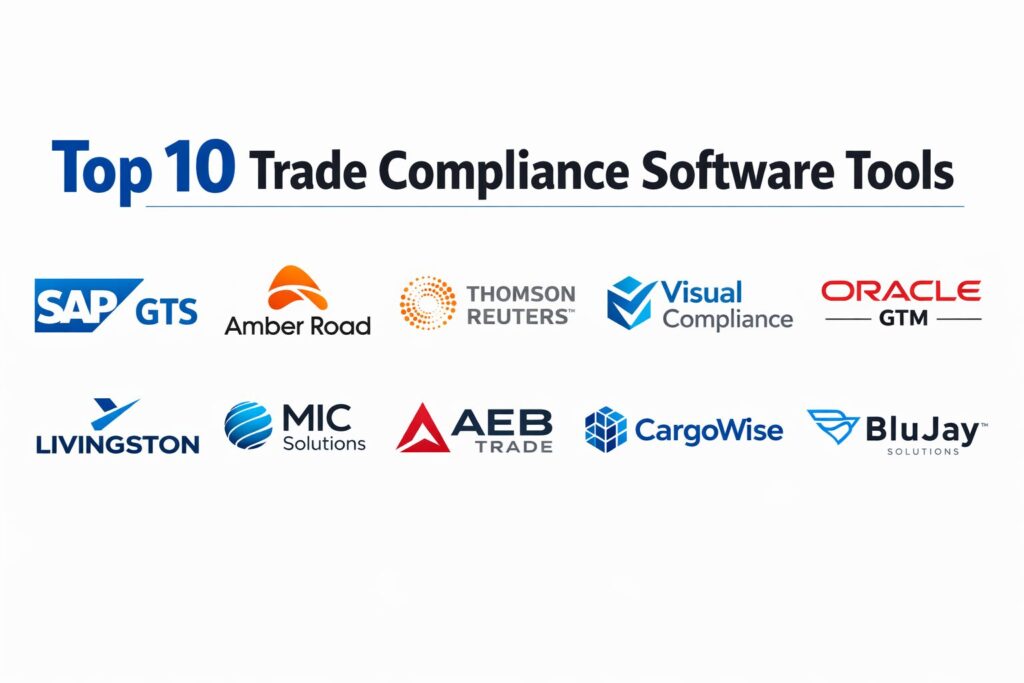
Introduction
Trade compliance software has become a non-negotiable component of the global supply chain, serving as the digital gatekeeper for organizations moving goods across international borders. As regulatory environments grow increasingly complex, these platforms provide a centralized system for managing the intricate legal requirements associated with imports and exports. Unlike manual processes that are prone to human error, trade compliance technology automates the screening of restricted parties, manages the classification of goods under the Harmonized System, and ensures that all necessary licenses and permits are in place. For modern enterprises, this technology acts as a shield against the severe financial penalties and reputational damage associated with non-compliance.
In the current global trade landscape, the necessity of a dedicated compliance platform is driven by the rapid shift in geopolitical sanctions and the intensification of government audits. Organizations must now navigate a “real-time” regulatory world where a shipping lane or a business partner can be restricted overnight. A robust system enables seamless integration with customs authorities, provides precise audit trails for every transaction, and offers sophisticated risk management tools to identify potential bottlenecks before they occur. When selecting a platform, organizations must evaluate the depth of the global regulatory database, the strength of the screening algorithms, and the scalability of the infrastructure to support expanding international operations.
Best for: International manufacturers, global logistics providers, aerospace and defense firms, and multi-national retail corporations that require automated oversight of cross-border regulatory requirements.
Not ideal for: Domestic-only businesses with no international shipping needs, or very small local distributors whose trade activity does not trigger complex export control or licensing requirements.
Key Trends in Trade Compliance Software
The integration of Artificial Intelligence has moved from a secondary feature to a core requirement, with systems now utilizing machine learning to automate the Harmonized System (HS) classification process with high accuracy. We are also seeing a significant move toward “Interconnected Compliance,” where software bridges the gap between trade data and environmental, social, and governance (ESG) reporting, ensuring that suppliers meet ethical labor and sustainability standards. Real-time visibility into the “Sanctioned Ownership” of entities—often referred to as the 50 percent rule—is replacing static screening lists, allowing firms to identify hidden risks in complex corporate structures.
Mobile-first compliance management is another dominant trend, with platforms now supporting digital “Customs Wallets” and secure document signing to cater to a faster, paperless logistics environment. There is a heightened focus on data sovereignty and cloud security, as organizations handling sensitive dual-use technology data adopt localized cloud hosting to comply with strict export control laws. Furthermore, the shift toward “Platform Interoperability” allows trade compliance systems to plug directly into enterprise resource planning and warehouse management systems, ensuring that a compliance “hold” instantly stops a shipment at the loading dock.
How We Selected These Tools
Our selection process involved a rigorous assessment of regulatory depth and technical reliability specifically within the global trade sector. We prioritized platforms that maintain a vast, frequently updated database of global trade content, covering thousands of jurisdictions and restricted party lists. A key criterion was “Pipeline Integration,” evaluating how well each software connects with major ERP systems to provide automated screening throughout the order-to-cash lifecycle. We looked for a balance between sophisticated technical depth for specialized exports and a user interface that can be navigated by logistics and legal teams.
Scalability was also a major factor; we selected tools that can grow alongside an organization, from managing a few high-value shipments to millions of daily cross-border transactions. Security certifications were scrutinized to ensure alignment with international standards such as SOC 2 and ISO 27001, which are critical for protecting proprietary trade secrets and sensitive government-controlled data. Finally, we assessed the quality of the “Duty and Tax” calculation engines to ensure the list provides options that help organizations accurately forecast the total landed cost of their international commerce.
1. SAP Global Trade Services (GTS)
SAP Global Trade Services is an enterprise-grade platform built to handle the most complex international trade requirements. It offers a comprehensive environment for managing exports, imports, and preference management within a single, unified system. Its highly structured nature makes it the standard for large-scale multi-nationals that require deep integration with their financial and supply chain workflows.
Key Features
The platform features automated restricted party screening against hundreds of global lists in real-time. It includes a robust “Classification” module that uses AI to suggest correct HS codes for new products. The system provides a centralized hub for managing export licenses and tracking their usage against specific shipments. Advanced “Preference Management” tools allow organizations to calculate and claim duty savings under various free trade agreements. It also supports automated communication with customs authorities for electronic filing of declarations.
Pros
The level of integration with the broader SAP ecosystem is unmatched, providing a single source of truth for all business data. It offers exceptional scalability for organizations with millions of daily transactions.
Cons
The platform is highly complex and typically requires a significant time and financial investment for implementation and training. It is often too robust and expensive for smaller organizations.
Platforms and Deployment
Web-based (SaaS), on-premise, and hybrid deployment models are available.
Security and Compliance
Industry-leading security including SOC 2 Type II and GDPR compliance, supported by SAP’s enterprise-grade infrastructure.
Integrations and Ecosystem
Seamlessly integrates with SAP S/4HANA and other major ERP systems through a wide range of native connectors.
Support and Community
Offers the “SAP Learning Hub” and a massive global network of certified consultants and user groups.
2. Amber Road (E2open)
Amber Road, now part of the E2open ecosystem, is a pioneer in global trade management software. It is designed for mid-to-large enterprises that want a cloud-based system that combines deep regulatory content with a highly automated execution engine.
Key Features
The standout feature is the “Global Knowledge” database, which contains trade content from over 180 countries. It includes automated “Duty Management” tools that help firms identify opportunities for duty drawback and tax deferral. The system features a “Supplier Portal” that allows for the collaborative management of trade documents and certificates of origin. It also offers a “Landed Cost” calculator that provides a complete picture of shipping costs, including taxes and fees. Simple, interactive dashboards allow users to monitor compliance risks across the entire supply chain.
Pros
The interface is intuitive for logistics professionals and focuses heavily on reducing operational friction. Its regulatory database is considered one of the most comprehensive in the industry.
Cons
Some users find the integration process with non-E2open products can be technical and time-consuming. Pricing scales based on the volume of trade data processed.
Platforms and Deployment
Web-based SaaS with a focus on cloud-native accessibility.
Security and Compliance
Maintains high standards for data privacy and is fully compliant with international trade security protocols.
Integrations and Ecosystem
Offers native integrations within the E2open supply chain suite and connects well with major external logistics providers.
Support and Community
Known for providing detailed trade compliance training and a wealth of webinars on global regulatory shifts.
3. Thomson Reuters ONESOURCE Global Trade
Thomson Reuters ONESOURCE is a sophisticated platform tailored for tax and compliance professionals who require high-level accuracy in trade data. It combines world-class regulatory intelligence with automated workflows for import and export management.
Key Features
It includes “Direct Filing” capabilities for multiple countries, allowing for faster clearance through customs. The “Product Classification” tool provides a step-by-step wizard to ensure accurate HS and ECCN coding. It features automated restricted party screening with “Fuzzy Logic” to reduce false positives. The platform offers a dedicated “Free Trade Agreement” module to manage and solicit certificates of origin from suppliers. It also provides advanced analytics tools for identifying cost-saving opportunities in the global supply chain.
Pros
It is built by a company renowned for its data and legal intelligence, ensuring the regulatory content is always up to date. The reporting tools are exceptionally detailed and audit-ready.
Cons
The software can be complex for users who do not have a background in trade or tax law. Pricing is typically geared toward mid-market and enterprise budgets.
Platforms and Deployment
Cloud-based SaaS accessible via any modern web browser.
Security and Compliance
Maintains rigorous security standards including SOC 2 and PCI DSS for secure financial transactions.
Integrations and Ecosystem
Part of the broader ONESOURCE tax suite, integrating seamlessly with Oracle and Microsoft Dynamics ERPs.
Support and Community
Provides professional training programs and access to a very large network of trade compliance experts.
4. Descartes Visual Compliance
Descartes Visual Compliance is a specialized screening and compliance tool designed for speed and ease of use. It is a favorite among mid-market companies and research institutions that need robust restricted party screening without the weight of a full ERP.
Key Features
The platform features an “Instant Screening” tool that allows users to check names and entities against global lists in seconds. It features a “Dynamic Screening” engine that re-screens your entire database whenever a regulatory list is updated. The “Export Classification” module helps teams determine if a license is required for a specific destination. It includes a “Controlled Technology” module for managing sensitive data access. The system also offers a specialized “Deemed Export” tracking tool for organizations with foreign national employees.
Pros
The automation capabilities for daily screening are some of the most efficient in the sector. The user interface is straightforward and requires very little training.
Cons
It is primarily focused on screening and classification and may lack some of the deeper “Customs Management” features of larger suites. It is a premium specialized tool.
Platforms and Deployment
Cloud-based SaaS with various API options for integration.
Security and Compliance
Full data encryption and ISO 27001 compliance, ensuring that sensitive export data is handled with care.
Integrations and Ecosystem
Strong API for custom connections and a wide array of native integrations with CRM and ERP tools.
Support and Community
Offers a dedicated customer success model and a library of resources on export control best practices.
5. Oracle Global Trade Management (GTM)
Oracle Global Trade Management is a versatile, all-in-one platform that serves large enterprises looking to manage global logistics and compliance in a single place. It is known for its high level of automation and its ability to handle complex, multi-leg shipments.
Key Features
The software includes a comprehensive “Trade Master” module for managing all product-related compliance data. It features an integrated “Customs Management” system that handles electronic filings for various jurisdictions. Users can create custom “Compliance Rules” that automatically block orders that violate specific company or government policies. It offers automated restricted party screening and license management. The reporting engine is highly flexible, allowing for the creation of global compliance dashboards.
Pros
The “all-in-one” nature with Oracle Transportation Management reduces the need for disparate logistics software. It offers excellent value for global manufacturers with complex shipping lanes.
Cons
The initial configuration and setup process can be intensive and usually requires specialized consultants. Some users find the interface less modern compared to newer SaaS entrants.
Platforms and Deployment
Web-based SaaS and cloud-native deployment.
Security and Compliance
Adheres to rigorous Oracle cloud security standards and international data protection regulations.
Integrations and Ecosystem
Offers a solid integration marketplace with deep connections to the broader Oracle Cloud ERP ecosystem.
Support and Community
Provides a range of support tiers, including a dedicated help desk and an extensive online documentation library.
6. Livingston Global Trade Management
Livingston is a highly respected trade compliance platform designed specifically for the North American and global market. It provides a robust set of import and export tools with a focus on customs brokerage and trade consulting.
Key Features
The platform features a “Compliance Audit” tool that helps organizations prepare for government inspections. It includes a simple but powerful “Landed Cost” calculator that accounts for duties, taxes, and shipping fees. Users can manage “Trade Agreements” with integrated tracking for compliance with USMCA and other regional deals. The software offers a “Visibility Portal” where all trade documents and customs entries are stored centrally. It also provides a task management system to help compliance teams stay organized.
Pros
It is one of the most reliable tools for organizations heavily focused on US-Canada-Mexico trade. The software is remarkably stable and backed by a company with deep brokerage expertise.
Cons
It lacks some of the high-end AI-driven classification features found in more expensive global platforms. The interface is functional but lacks the modern aesthetic of newer tools.
Platforms and Deployment
Web-based SaaS.
Security and Compliance
Maintains secure, encrypted servers and follows industry-standard data privacy and customs security practices.
Integrations and Ecosystem
Integrates well with major shipping platforms and various regional customs filing systems.
Support and Community
Known for having a very helpful and responsive support team and a detailed knowledge base on North American trade.
7. MIC Customs Solutions
MIC is an integrated platform designed for large multi-national corporations that want to consolidate their entire global customs and trade compliance stack. It is particularly strong in automated customs filing and inventory management for bonded warehouses.
Key Features
The system features a “Global Customs” module that supports electronic filing in over 55 countries. It includes advanced tools for managing “Export Control” including ITAR and EAR regulations. The “Origin Calculation” module allows organizations to automate the solicitation and verification of certificates of origin. It offers sophisticated workflow automation for special customs regimes like “Free Trade Zones.” The platform also includes a full-featured “Audit Trail” for every compliance decision.
Pros
Having a single vendor for global customs filing and trade compliance simplifies the technical architecture for large firms. The feature set is exceptionally deep for global logistics.
Cons
The setup process is highly technical and requires a significant time commitment from the IT and compliance teams. The interface can be complex due to the density of regulatory tools.
Platforms and Deployment
Web-based SaaS and on-premise options.
Security and Compliance
SOC 2 certified and adheres to the highest standards of data security for international trade information.
Integrations and Ecosystem
Designed to be an all-in-one solution, though it maintains an open API for essential ERP connections.
Support and Community
Offers dedicated account management and a comprehensive training program for its global client base.
8. AEB International Trade
AEB is a leading European-based trade compliance platform that offers unparalleled flexibility for organizations moving goods within and outside of the EU. It offers a modular approach to managing customs, compliance, and risk.
Key Features
Because it is modular, the feature set can be tailored to specific needs, such as “Sanctions List Screening” or “Export Filing.” It includes deep modules for managing “Import Management” and automated duty calculations. The software integrates directly into popular logistics platforms and web shops. It allows for highly complex data structures for dual-use goods. It also features a robust “License Management” system that tracks international trade permits.
Pros
The modularity makes it a very cost-effective option for organizations that only need specific compliance features. It has a deep understanding of European customs requirements.
Cons
It requires technical expertise to customize the modules for complex global workflows. The learning curve for the full suite can be significant.
Platforms and Deployment
Cloud-based SaaS.
Security and Compliance
Maintains high standards for data privacy and is fully compliant with EU GDPR and trade regulations.
Integrations and Ecosystem
Has a massive ecosystem of connectors and integrates natively with major European ERP and logistics systems.
Support and Community
Supported by a dedicated team of trade experts with extensive documentation available in multiple languages.
9. CargoWise (WiseTech Global)
CargoWise is a modern, logistics-focused platform that includes a built-in trade compliance module. It is designed for freight forwarders and logistics providers who want to combine operational execution with a reliable compliance database.
Key Features
The platform features integrated “Customs Clearance” tools for over 30 countries. It includes a built-in “Restricted Party Screening” tool that checks every shipment automatically. The CRM component creates profiles for every entity involved in a shipment to track compliance history. It offers automated “Duty and Tax” calculations for international quotes. The system also includes a simple document management suite for storing commercial invoices and packing lists.
Pros
The platform is built for the logistics industry, making the compliance features very relevant to shipping workflows. The automation for customs filing is among the most integrated in the industry.
Cons
The compliance functionality is not as deep as specialized regulatory suites like SAP or Thomson Reuters. It is primarily a logistics tool with compliance added on.
Platforms and Deployment
Web-based SaaS and mobile app.
Security and Compliance
Uses industry-standard encryption and secure data processing, adhering to global logistics security standards.
Integrations and Ecosystem
Strong native integration with global port authorities and several thousand logistics partners.
Support and Community
Known for being extremely user-friendly with a vibrant user community and a detailed online training portal.
10. BluJay Solutions (E2open)
BluJay, now part of the E2open family, is an “intelligence-driven” platform for mid-to-large shippers that uses data science to help teams manage global trade. It provides a balanced suite of tools for customs management, compliance, and transportation.
Key Features
The “Customs Management” tool allows for the automated processing of import and export declarations. It features a built-in “Denial Party Screening” system that links directly to global watchlists. Users can create automated “Compliance Workflows” that trigger alerts for high-risk shipments. The platform includes integrated “Global Trade Content” for over 100 countries. It also offers “Visibility” features where shippers can track the compliance status of their entire global network.
Pros
The combination of transportation and compliance management helps keep the whole supply chain team aligned. The automated filing features provide professional-level speed to smaller logistics teams.
Cons
The reporting tools, while powerful, can take some time to master for complex custom regulatory queries. Some integrations are still being finalized under the E2open umbrella.
Platforms and Deployment
Web-based SaaS.
Security and Compliance
Strong data privacy protocols and secure customs filing integrations, adhering to global trade regulations.
Integrations and Ecosystem
Integrates with major ERPs, warehouse systems, and various international customs authorities.
Support and Community
Offers a high-quality “Help Center” and a dedicated success team for onboarding large global shippers.
Comparison Table
| Tool Name | Best For | Platform(s) Supported | Deployment | Standout Feature | Public Rating |
| 1. SAP GTS | Enterprise / Multi-National | Web-Based | Hybrid | SAP ERP Integration | 4.7/5 |
| 2. Amber Road | Mid-Market / Global Content | Web-Based | Cloud SaaS | Global Knowledge Base | 4.6/5 |
| 3. Thomson Reuters | Professional / Tax Depth | Web-Based | Cloud SaaS | Legal Intelligence | 4.5/5 |
| 4. Visual Compliance | Speed / Specialized Export | Web-Based | Cloud SaaS | Fuzzy Logic Screening | 4.8/5 |
| 5. Oracle GTM | All-in-One / Logistics | Web-Based | Cloud SaaS | Rule-Based Automation | 4.4/5 |
| 6. Livingston | North American Trade | Web-Based | Cloud SaaS | Brokerage Expertise | 4.3/5 |
| 7. MIC Solutions | Enterprise Consolidation | Web-Based | Hybrid | Multi-Country Filing | 4.5/5 |
| 8. AEB Trade | EU / Modular Flexibility | Web-Based | Cloud SaaS | Modular Architecture | 4.6/5 |
| 9. CargoWise | Logistics / Forwarders | Web-Based | Cloud SaaS | Customs Execution | 4.7/5 |
| 10. BluJay Solutions | Shippers / Data-Driven | Web-Based | Cloud SaaS | Automated Declarations | 4.4/5 |
Evaluation & Scoring of Trade Compliance Software
The scoring below is a comparative model intended to help shortlisting. Each criterion is scored from 1–10, then a weighted total from 0–10 is calculated using the weights listed. These are analyst estimates based on typical fit and common workflow requirements, not public ratings.
Weights:
- Core features – 25%
- Ease of use – 15%
- Integrations & ecosystem – 15%
- Security & compliance – 10%
- Performance & reliability – 10%
- Support & community – 10%
- Price / value – 15%
| Tool Name | Core (25%) | Ease (15%) | Integrations (15%) | Security (10%) | Performance (10%) | Support (10%) | Value (15%) | Weighted Total |
| 1. SAP GTS | 10 | 3 | 10 | 10 | 9 | 9 | 6 | 8.20 |
| 2. Amber Road | 9 | 8 | 8 | 9 | 9 | 8 | 7 | 8.35 |
| 3. Thomson Reuters | 9 | 6 | 9 | 9 | 8 | 8 | 7 | 7.95 |
| 4. Visual Compliance | 8 | 10 | 8 | 9 | 9 | 9 | 8 | 8.55 |
| 5. Oracle GTM | 9 | 5 | 9 | 9 | 8 | 8 | 7 | 7.75 |
| 6. Livingston | 7 | 8 | 7 | 8 | 8 | 9 | 9 | 7.80 |
| 7. MIC Solutions | 10 | 4 | 8 | 10 | 9 | 8 | 6 | 7.90 |
| 8. AEB Trade | 8 | 7 | 9 | 8 | 8 | 9 | 8 | 8.00 |
| 9. CargoWise | 7 | 9 | 8 | 8 | 9 | 8 | 9 | 8.10 |
| 10. BluJay Solutions | 8 | 7 | 8 | 8 | 8 | 8 | 8 | 7.75 |
How to interpret the scores:
- Use the weighted total to shortlist candidates, then validate with a pilot.
- A lower score can mean specialization, not weakness.
- Security and compliance scores reflect controllability and governance fit, because certifications are often not publicly stated.
- Actual outcomes vary with assembly size, team skills, templates, and process maturity.
Which Trade Compliance Software Tool Is Right for You?
Solo / Freelancer
For very small exporters or founder-led logistics startups, a tool that is easy to implement and focused on basic screening is critical. You need something that doesn’t require a legal team to manage, allowing you to focus on early-stage international sales without the risk of shipping to restricted parties.
SMB
Organizations with a small logistics staff should prioritize ease of use and automated classification. Your goal is to reduce the administrative burden of international paperwork so your team can spend more time on supply chain efficiency. A platform with simple screening and basic document generation is the most efficient choice here.
Mid-Market
Mid-sized organizations need to start thinking about duty savings and regional trade agreements. You should look for a system that offers “Landed Cost” calculations and automated origin solicitation to help your growing compliance team improve margins while maintaining regulatory safety.
Enterprise
Large, complex organizations require a system that can act as a global control tower for trade. Security, custom workflows, and the ability to integrate with multiple international customs authorities are the top priorities to ensure global compliance and data integrity across diverse business units.
Budget vs Premium
If budget is the primary concern, modular or specialized screening tools provide professional oversight for a lower entry cost. Premium platforms, however, offer specialized features like automated customs filing in 50+ countries and deep ERP integrations that can provide a much higher return on investment for established global shippers.
Feature Depth vs Ease of Use
Highly complex tools offer infinite possibilities for automation but can stall a team if they are too hard to use. Often, a slightly less powerful tool that everyone on the logistics staff actually uses is more valuable than a “perfect” system that is too difficult for the average user to navigate daily.
Integrations & Scalability
Your compliance software must be able to talk to your ERP and shipping platforms. As you grow, the ability to add modules for new countries or connect to new logistics partners without a total system migration is a vital consideration for long-term technical health in the supply chain.
Security & Compliance Needs
If you handle ITAR-controlled technology or sensitive government contracts, your software choice is a security decision as much as a technical one. Ensure the provider has the specific certifications required for your operational region and that the data is hosted in a secure, compliant environment.
Frequently Asked Questions (FAQs)
1. What is the difference between a shipping tool and a trade compliance tool?
A shipping tool focuses on labels and tracking. A trade compliance tool focuses on the legal requirements of the shipment, such as checking if the buyer is on a restricted list, ensuring the correct tax is paid, and managing the necessary export licenses.
2. Is it difficult to classify goods for international trade?
Yes, goods are classified using the Harmonized System, which has thousands of categories. Professional software uses AI and database lookups to help ensure you pick the correct code, which is essential for determining the correct duty and tax rates.
3. Why do some platforms charge per transaction?
This is a common pricing model for trade compliance because it aligns the software cost with your shipping volume. This allows smaller exporters to pay less while larger organizations pay for the increased scale of their global trade activity.
4. Can trade compliance software help with free trade agreements?
Yes, many professional systems include modules to track if your goods qualify for reduced duties under deals like USMCA or EU trade pacts, and they can automatically send requests to your suppliers for the necessary documentation.
5. Is cloud-based software safe for export-controlled data?
Most modern SaaS providers offer highly secure, encrypted environments. However, for certain high-level government regulations, you must ensure the provider offers “GovCloud” or localized hosting that meets specific national security standards.
6. Do these tools integrate with SAP or Oracle?
Almost every tool on this list has either a native integration or a strong API connection to major ERPs. This is essential for ensuring that compliance checks happen automatically as soon as an order is entered into your system.
7. How does a CRM help with restricted party screening?
By integrating screening into your CRM, you can check potential customers against global watchlists before you even send a quote. This prevents you from wasting time on deals that are legally prohibited from proceeding.
8. Is data security different for global trade?
Global trade data often includes sensitive intellectual property and information about dual-use technologies. Therefore, enterprise-grade encryption and multi-factor authentication are absolute requirements for any trade compliance software.
9. Can I use a compliance tool to manage bonded warehouses?
Specialized platforms like MIC and SAP GTS offer modules specifically for managing “Special Customs Regimes,” allowing you to track inventory in bonded warehouses and delay the payment of duties until the goods are actually sold.
10. Do these platforms provide training on trade laws?
Most vendors offer a combination of software training and access to trade experts. Choosing a tool with a robust “Compliance Academy” or a dedicated success team is a major advantage for keeping your staff updated on shifting global regulations.
Conclusion
In the modern global economy, trade compliance software is the critical infrastructure upon which an organization’s international growth is built. Whether you are a small exporter or a global multi-national, the ability to automate regulatory oversight is the key to maintaining operational speed and legal safety. By choosing a system that balances technical depth with operational ease, you empower your logistics team to move away from manual paperwork and back to the strategic work of supply chain optimization. The ideal platform is one that not only secures your current shipments but also provides the scalable foundation and intelligent insights needed to navigate the complexities of future international trade.
I find that this comparative analysis of Trade Compliance Software provides a critical framework for any Compliance Officer navigating the shifting sands of global regulations. I learned from this blog that the industry has evolved from simple restricted party screening to sophisticated, AI-driven platforms like SAP GTS and Amber Road that manage the entire “order-to-cash” lifecycle.
In my professional experience as a Global Logistics Manager, moving away from manual customs checks to an automated system is the only way to effectively shield a company from severe financial penalties and port delays. By integrating these platforms with existing ERPs, I can ensure that “Customs Wallets” and automated HS classification engines handle the heavy lifting, allowing my team to focus on strategic supply chain pivots rather than administrative paperwork. For others in the field, this technology transforms compliance from a “necessary hurdle” into a competitive advantage by providing the predictive intelligence needed to optimize duty savings and guarantee audit readiness.