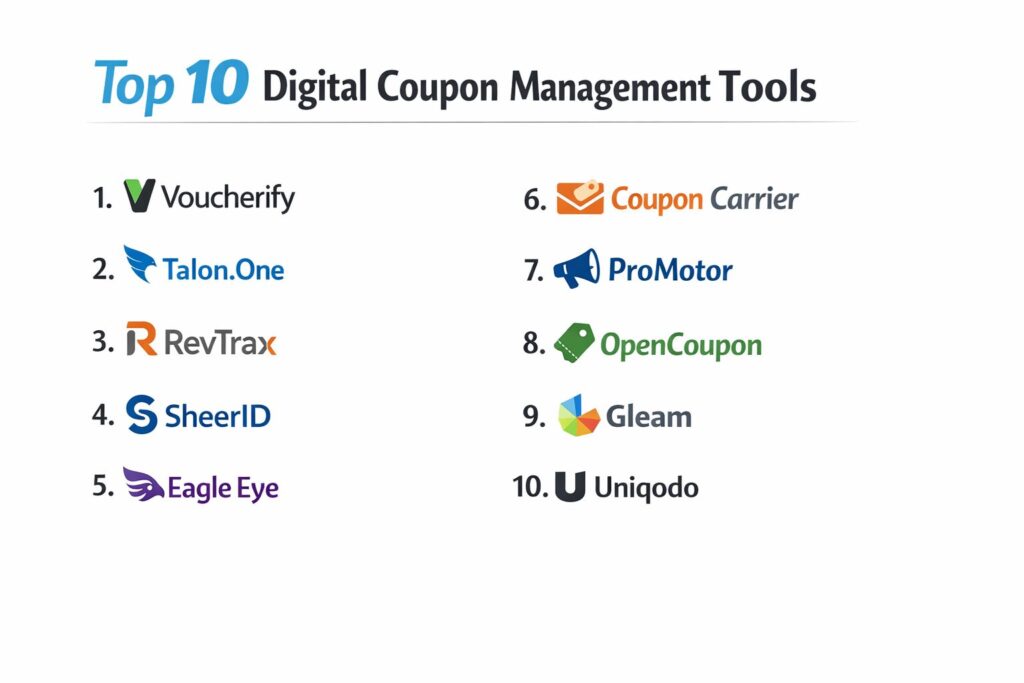
Introduction
Digital coupon management tools represent a specialized segment of marketing technology designed to handle the complex lifecycle of digital incentives, from generation and distribution to secure redemption. Unlike basic discount codes, a dedicated coupon management platform provides a centralized system for creating unique, single-use identifiers that prevent fraud and ensure data integrity across multiple sales channels. These systems act as a critical bridge between a brand’s marketing strategy and its financial bottom line by allowing precise control over discount margins. For modern enterprises, this technology is the primary driver for customer acquisition and retention in a highly competitive digital marketplace.
In the current landscape, the necessity of a robust coupon management system is driven by the shift toward hyper-personalized commerce where generic codes no longer suffice. Fragmented systems often lead to unauthorized coupon stacking or viral leakage of codes intended for specific audiences. A professional management tool enables automated distribution based on consumer behavior, real-time validation at the point of sale, and sophisticated attribution reporting that measures the true return on investment for every campaign. When selecting a platform, organizations must evaluate the technical depth of the API, the scalability of the validation engine during peak traffic, and the strength of security protocols to prevent bulk code generation by unauthorized third parties.
Best for: E-commerce retailers, global consumer packaged goods brands, digital marketing agencies, and large-scale service providers requiring secure, trackable, and personalized promotional campaigns.
Not ideal for: Small local shops with very low transaction volumes, organizations looking for static discount graphics without tracking capabilities, or businesses that do not require individualized code security.
Key Trends in Digital Coupon Management Tools
The integration of artificial intelligence has transformed couponing from a reactive tactic into a predictive science where systems suggest the optimal discount depth for specific customer segments. We are seeing a major shift toward headless coupon architecture, allowing brands to inject promotional logic into any digital touchpoint via flexible APIs. Real-time omnichannel synchronization is now a core requirement, ensuring that a coupon clipped on a mobile app is instantly recognized and updated at a physical retail terminal.
Another dominant trend is the move toward zero-party data collection, where coupons are used as an incentive for customers to share their preferences directly with the brand. There is a heightened focus on dynamic security where codes are tied to specific user IDs or geographic locations to eliminate the risk of coupon fraud. Furthermore, the industry is seeing an increase in social-first distribution models, with tools now offering direct integrations for influencer-driven campaigns and automated SMS delivery. The rise of digital wallets has also forced platforms to prioritize seamless “save to wallet” features to improve redemption rates and brand visibility.
How We Selected These Tools
Our selection process involved a rigorous assessment of market reliability and functional depth specifically within the digital promotion sector. We prioritized platforms that have demonstrated long-term stability and high performance during massive traffic events like major shopping holidays. A key criterion was the developer-first nature of the tool, evaluating how easily the coupon logic can be integrated into existing web, mobile, and point-of-sale environments. We looked for a balance between sophisticated logic engines and user interfaces that allow marketing teams to launch campaigns without constant technical intervention.
Scalability was also a major factor; we selected tools that can handle millions of unique code generations and validations per second. Security certifications were scrutinized to ensure alignment with international standards for data protection and financial transaction integrity. Finally, we assessed the breadth of the reporting suites, prioritizing platforms that offer real-time insights into redemption patterns and campaign profitability. This ensures the list provides viable options for organizations that view digital incentives as a core part of their growth infrastructure.
1. Voucherify
Voucherify is an API-first promotion engine built for digital teams that require highly customizable coupon and loyalty programs. It offers a comprehensive environment for building complex logic, allowing organizations to manage unique codes, gift cards, and referral programs within a single cloud-native infrastructure. Its developer-centric approach makes it the standard for brands that need to embed promotional logic into custom-built applications.
Key Features
The platform features a robust rules engine that allows for granular conditions based on order volume, customer attributes, or specific product categories. It includes a unique “distribution manager” that automates the delivery of codes via email, SMS, or mobile push notifications. The system features real-time validation to prevent code leakage and unauthorized redemptions across multiple channels. Advanced analytics tools allow for deep-dive reporting on campaign performance and customer engagement levels. It also supports a massive range of custom metadata, allowing you to track unique business-specific data points.
Pros
The level of flexibility is unmatched, allowing the software to adapt to virtually any promotional strategy or technical environment. It has an excellent documentation portal that simplifies the integration process for engineering teams.
Cons
The platform is technically dense and usually requires a developer to fully implement the API integrations. Ongoing costs can scale quickly as the number of monthly redemptions increases.
Platforms and Deployment
Web-based (SaaS) with extensive API libraries for various programming languages. It is a cloud-native deployment.
Security and Compliance
Industry-leading security including SOC 2 compliance and rigorous data encryption standards for constituent information.
Integrations and Ecosystem
Integrates with hundreds of applications through Zapier and native connections to platforms like Segment, Braze, and various e-commerce engines.
Support and Community
Offers a dedicated technical support desk and a comprehensive knowledge base tailored for both marketers and developers.
2. Talon.One
Talon.One is a powerful enterprise-grade promotion engine designed for high-volume retailers and global brands. It focuses on providing a centralized “brain” for all promotional activities, using a sophisticated rule builder to create personalized experiences for millions of users simultaneously.
Key Features
The standout feature is the “Rule Engine,” which uses a visual interface to build complex logic without writing code. It includes automated anti-fraud measures that detect and block suspicious redemption patterns in real-time. The system features a robust geofencing capability, allowing coupons to be activated only in specific geographic locations. It also offers a highly scalable infrastructure designed to handle peak traffic events without latency. Detailed performance dashboards provide a holistic view of promotional spend and revenue impact.
Pros
The interface is exceptionally powerful for marketing teams while maintaining enterprise-level technical depth. Its ability to handle extreme scale makes it ideal for global organizations.
Cons
It is a premium product with a significant entry price point that may be prohibitive for smaller businesses. The initial configuration of complex rules can require a strategic mindset.
Platforms and Deployment
Cloud-based SaaS accessible via a modern web interface and robust REST APIs.
Security and Compliance
Features enterprise-grade security including GDPR compliance and high-standard data encryption protocols.
Integrations and Ecosystem
Offers deep native integrations with major e-commerce platforms like commercetools, Shopify Plus, and Salesforce Commerce Cloud.
Support and Community
Known for providing dedicated account management and high-touch technical support for enterprise clients.
3. RevTrax
RevTrax is a long-standing leader in the digital incentive space, specifically tailored for consumer packaged goods (CPG) and retail brands. It combines a secure coupon engine with sophisticated data collection tools that help brands understand the path to purchase across digital and physical stores.
Key Features
It includes “SmartCoupon” technology that tracks the individual user journey from the digital click to the physical in-store redemption. The system features a robust clearinghouse integration to ensure that manufacturer coupons are processed accurately by retailers. It offers automated fraud prevention tools that limit the number of prints or downloads per device. The platform provides advanced data visualization tools that transform redemption data into actionable consumer insights. It also supports unique barcode formats required for legacy point-of-sale systems.
Pros
It is built specifically for the unique needs of CPG brands, particularly the bridge between online marketing and offline sales. The security surrounding individual code tracking is highly effective.
Cons
The software has a focus on traditional retail environments, which may be less relevant for purely digital SaaS businesses. Pricing is typically geared toward large enterprise budgets.
Platforms and Deployment
Cloud-based SaaS designed for integration with web and mobile marketing campaigns.
Security and Compliance
Maintains rigorous security standards for financial data and is compliant with industry-standard privacy regulations.
Integrations and Ecosystem
Integrates with major retail point-of-sale systems and national clearinghouses for seamless coupon processing.
Support and Community
Provides professional managed services and access to a team with deep expertise in the retail incentive industry.
4. SheerID
SheerID is a specialized verification platform that focuses on “gated” offers for specific consumer communities like students, teachers, or military members. It allows brands to provide high-value coupons securely by verifying the identity of the user against authoritative data sources.
Key Features
The platform uses “Identity Marketing” to instantly verify a user’s status without requiring sensitive documents like social security numbers. It features a robust verification engine that connects to thousands of authoritative data sources globally. The system can trigger a unique, single-use coupon code only after a successful verification event. It includes integrated tools for email marketing and landing page creation for community-specific appeals. The system also offers a specialized analytics module to track community-specific ROI.
Pros
The verification accuracy is the highest in the industry, effectively eliminating discount abuse by non-eligible users. The user interface for consumers is modern and frictionless.
Cons
The focus on community verification means it is not a general-purpose coupon generator for the entire public. It is a premium service that requires a clear strategy for gated offers.
Platforms and Deployment
Cloud-based SaaS that can be embedded into any checkout or registration flow.
Security and Compliance
Full data privacy compliance including GDPR and CCPA, ensuring that consumer data is handled with extreme care.
Integrations and Ecosystem
Strong native integrations with major e-commerce engines like Shopify and BigCommerce.
Support and Community
Offers a dedicated customer success model and a library of research on community-based marketing trends.
5. Eagle Eye
Eagle Eye is a versatile, all-in-one digital promotion platform that serves large-scale retailers and hospitality brands. It is known for its high level of integration with point-of-sale systems and its ability to manage real-time digital issuance and redemption.
Key Features
The software includes a comprehensive “AIR” platform that manages digital coupons, loyalty, and gift cards in a single environment. It features a real-time connection to the point of sale, ensuring that coupons are validated and retired instantly. Users can create custom “Digital Wallet” integrations to allow customers to store offers easily on their phones. It offers automated reporting on redemption rates across different store locations. The reporting engine is highly flexible, allowing for the creation of custom views for different management roles.
Pros
The “all-in-one” nature reduces the technical complexity of managing disparate loyalty and coupon tools. It offers excellent performance for high-volume physical retail environments.
Cons
The platform is primarily focused on the retail and hospitality sectors and may be overkill for smaller digital businesses. Implementation requires deep integration with physical hardware.
Platforms and Deployment
Web-based SaaS with local connectivity for retail hardware.
Security and Compliance
PCI compliant for secure transactions and adheres to global data protection standards.
Integrations and Ecosystem
Offers a solid integration marketplace with connections to major POS systems like Oracle, NCR, and Toshiba.
Support and Community
Provides a range of support tiers, including 24/7 technical monitoring for critical retail operations.
6. Coupon Carrier
Coupon Carrier is a highly respected tool designed for small to mid-sized businesses that want to automate the distribution of unique codes. It acts as the “delivery layer” between your coupon codes and your email marketing or lead generation platforms.
Key Features
The platform features a simple “Code Vault” where you can upload lists of unique codes from other systems. It includes a powerful automation engine that sends a code to a user as soon as they sign up for a newsletter. Users can manage multiple distribution “triggers” such as form submissions or specific website interactions. The software offers customizable email templates that ensure the coupon delivery matches the brand aesthetic. It also provides a basic tracking system to see which codes have been sent.
Pros
It is one of the most cost-effective ways to manage unique code distribution. The software is remarkably stable and does exactly what it promises without unnecessary complexity.
Cons
It lacks the advanced “generation” and “validation” logic found in enterprise engines like Voucherify. It is primarily a distribution tool rather than a full logic engine.
Platforms and Deployment
Web-based SaaS.
Security and Compliance
Maintains secure, encrypted servers and follows standard privacy practices for handling email lists.
Integrations and Ecosystem
Integrates perfectly with Mailchimp, ActiveCampaign, HubSpot, and various form builders like Typeform.
Support and Community
Known for having a very helpful and responsive support team and a detailed knowledge base for self-service.
7. ProMotor
ProMotor is an integrated promotion platform designed for mid-market retailers that want to consolidate their entire incentive stack. It is particularly strong in multi-channel distribution and complex campaign scheduling.
Key Features
The system features an in-house code generation engine that can produce millions of unique identifiers in seconds. It includes advanced tools for managing “Batch” campaigns for mass email distributions. The “Promotion Calendar” allows organizations to plan and visualize their incentive strategy months in advance. It offers sophisticated workflow automation for recurring monthly offers. The platform also includes a full-featured landing page builder for promotional sign-ups.
Pros
The scheduling and calendar features are among the best in the industry for planning-heavy marketing teams. The feature set is exceptionally deep for the price.
Cons
The setup process for the API can be intensive for teams without a dedicated developer. The interface can be complex due to the density of available settings.
Platforms and Deployment
Web-based SaaS.
Security and Compliance
Features standard data encryption and is compliant with major privacy regulations.
Integrations and Ecosystem
Maintains an open API and several native integrations with popular email service providers.
Support and Community
Offers professional onboarding services and a comprehensive training program for new users.
8. OpenCoupon
OpenCoupon is a leading open-source coupon management framework built for organizations that want total control over their promotional logic. It offers unparalleled flexibility for companies that have internal technical resources and want to avoid per-transaction fees.
Key Features
Because it is a flexible framework, the feature set is nearly infinite for teams that can write custom extensions. It includes deep modules for managing expiration dates, usage limits, and customer-specific restrictions. The software can be integrated directly into custom-built e-commerce architectures or mobile apps. It allows for highly complex data structures and custom relationships between coupons and users. It also features a robust audit log for tracking every change to the coupon database.
Pros
There are no recurring licensing fees, making it a very low-cost option for technically capable teams. You have 100% ownership and control of your promotional data and code.
Cons
It requires significant technical expertise to install, customize, and maintain securely. Without a developer, the learning curve is functionally insurmountable.
Platforms and Deployment
Self-hosted on Linux servers or via private cloud providers.
Security and Compliance
Security depends entirely on the hosting environment and the expertise of the internal security team.
Integrations and Ecosystem
Has a small but dedicated community and integrates natively with major open-source databases and web frameworks.
Support and Community
Supported by a community of developers with extensive technical documentation available for free.
9. Gleam
Gleam is a modern, social-focused marketing platform that includes a built-in “Rewards” and coupon system. It is designed for brands that want to exchange coupons for social actions, such as following an account or sharing a post.
Key Features
The platform features integrated social media API support to verify that a user has completed a specific action before giving them a code. It includes a built-in “Capture” tool for website pop-ups and lead generation. The Rewards module automatically distributes unique codes to users who reach a certain point threshold. It offers viral sharing features that reward users for referring friends to the promotion. The system also includes a simple dashboard to track campaign engagement and code distribution.
Pros
The platform is exceptionally easy to set up for social media-driven giveaways. The “verified action” system ensures that coupons are only given to engaged users.
Cons
The coupon logic is not as deep as specialized relational engines like Talon.One. It is primarily a social engagement tool with coupon delivery features.
Platforms and Deployment
Web-based SaaS.
Security and Compliance
Uses industry-standard encryption and secure data handling for social media authentication.
Integrations and Ecosystem
Strong native integration with Shopify, Instagram, YouTube, and several hundred other apps via Zapier.
Support and Community
Known for being extremely user-friendly with very fast customer support and a wealth of marketing strategy guides.
10. Uniqodo
Uniqodo is an “intelligence-driven” coupon engine for mid-market and enterprise brands that focuses on stopping coupon code leakage and improving attribution. It provides a balanced suite of tools for code generation, distribution, and advanced analytics.
Key Features
The “Leakage Protection” tool uses advanced logic to ensure that codes shared on discount sites are invalidated if they were intended for specific users. It features a built-in tracking system that links every redemption to the specific marketing source. Users can create automated “Abandonment” offers that trigger when a customer leaves the checkout page. The platform includes integrated tools for managing influencer and affiliate coupon campaigns. It also offers a “Real-time Discovery” feature to find where your codes are being shared online.
Pros
The focus on stopping code leakage can save large organizations thousands of dollars in lost margin. The attribution data provides professional-level insights into which marketing channels are actually driving sales.
Cons
The interface can take some time to master due to the sophistication of the tracking settings. It is a premium service tailored for larger marketing budgets.
Platforms and Deployment
Web-based SaaS.
Security and Compliance
Strong data privacy protocols and secure API connectivity, adhering to standard enterprise regulations.
Integrations and Ecosystem
Integrates with major affiliate networks and e-commerce platforms like Magento and Shopify.
Support and Community
Offers a high-quality success team and dedicated technical support for complex integrations.
Comparison Table
| Tool Name | Best For | Platform(s) Supported | Deployment | Standout Feature | Public Rating |
| 1. Voucherify | Developers / API-First | Web-Based API | Cloud-Native | Rules Engine | 4.8/5 |
| 2. Talon.One | Enterprise Scalability | Web-Based | Cloud SaaS | Rule Builder | 4.7/5 |
| 3. RevTrax | CPG / Retail Brands | Web-Based | Cloud SaaS | Offline Tracking | 4.4/5 |
| 4. SheerID | Gated / Identity Offers | Web-Based | Cloud SaaS | Identity Verification | 4.9/5 |
| 5. Eagle Eye | Physical Retail / POS | Web, POS | Hybrid | Real-Time POS Link | 4.5/5 |
| 6. Coupon Carrier | Small Biz Automation | Web-Based | Cloud SaaS | Distribution Vault | 4.8/5 |
| 7. ProMotor | Campaign Scheduling | Web-Based | Cloud SaaS | Promotion Calendar | 4.3/5 |
| 8. OpenCoupon | Custom / Open-Source | Linux (Self-Hosted) | On-Prem/Cloud | Total Code Control | N/A |
| 9. Gleam | Social / Viral Growth | Web-Based | Cloud SaaS | Social Action Verification | 4.8/5 |
| 10. Uniqodo | Leakage / Attribution | Web-Based | Cloud SaaS | Code Protection | 4.6/5 |
Evaluation & Scoring of Digital Coupon Management Tools
The scoring below is a comparative model intended to help shortlisting. Each criterion is scored from 1–10, then a weighted total from 0–10 is calculated using the weights listed. These are analyst estimates based on typical fit and common workflow requirements, not public ratings.
Weights:
- Core features – 25%
- Ease of use – 15%
- Integrations & ecosystem – 15%
- Security & compliance – 10%
- Performance & reliability – 10%
- Support & community – 10%
- Price / value – 15%
| Tool Name | Core (25%) | Ease (15%) | Integrations (15%) | Security (10%) | Performance (10%) | Support (10%) | Value (15%) | Weighted Total |
| 1. Voucherify | 10 | 4 | 10 | 10 | 9 | 8 | 7 | 8.20 |
| 2. Talon.One | 10 | 5 | 9 | 10 | 10 | 9 | 5 | 8.25 |
| 3. RevTrax | 8 | 6 | 8 | 9 | 8 | 8 | 6 | 7.35 |
| 4. SheerID | 7 | 8 | 9 | 10 | 9 | 9 | 8 | 8.15 |
| 5. Eagle Eye | 9 | 5 | 10 | 9 | 9 | 8 | 7 | 8.15 |
| 6. Coupon Carrier | 6 | 10 | 8 | 8 | 8 | 9 | 10 | 7.90 |
| 7. ProMotor | 8 | 7 | 7 | 8 | 8 | 8 | 8 | 7.55 |
| 8. OpenCoupon | 9 | 2 | 8 | 7 | 8 | 5 | 10 | 7.00 |
| 9. Gleam | 6 | 9 | 8 | 8 | 9 | 8 | 9 | 7.80 |
| 10. Uniqodo | 9 | 6 | 8 | 9 | 9 | 8 | 7 | 8.05 |
How to interpret the scores:
- Use the weighted total to shortlist candidates, then validate with a pilot.
- A lower score can mean specialization, not weakness.
- Security and compliance scores reflect controllability and governance fit, because certifications are often not publicly stated.
- Actual outcomes vary with assembly size, team skills, templates, and process maturity.
Which Digital Coupon Management Tool Is Right for You?
Solo / Founder-Led
For very small startups or founder-led initiatives, a tool that focuses on simple distribution is the most practical choice. You need a system that doesn’t require complex coding to get your first codes into the hands of customers. A distribution-first tool that plugs into your existing email list is usually the fastest path to launching a campaign.
Small Nonprofit
Organizations with a small staff should prioritize ease of use and automated delivery. Your goal is to use incentives to drive donations or event attendance without creating extra manual work for the team. A platform that can automatically send a reward when a donation is made is the most efficient choice here.
Mid-Market
Mid-sized organizations need to start thinking about campaign attribution and fraud prevention. You should look for a CRM-integrated engine that offers a visual rule builder, allowing your marketing team to create personalized offers based on customer segments without waiting for developer support.
Enterprise
Large, complex organizations require a system that can act as a global promotional nervous system. Security, massive scalability, and the ability to integrate with diverse point-of-sale and e-commerce platforms are the top priorities to ensure global data integrity and margin protection.
Budget vs Premium
If budget is the primary concern, simple distribution tools or open-source frameworks provide professional capabilities for a fraction of the cost. Premium platforms, however, offer specialized features like identity verification and real-time leakage protection that can save enough money in lost revenue to pay for themselves.
Feature Depth vs Ease of Use
Highly technical API-first tools offer infinite possibilities but can slow down a marketing team if they are too hard to manage. Often, a platform that provides a user-friendly dashboard for campaign managers is more valuable than a technically perfect system that remains unused because of its complexity.
Integrations & Scalability
Your coupon engine must be able to talk to your existing data stack and checkout flow. As you grow, the ability to validate thousands of codes per second during a major sale without crashing your site is a vital consideration for long-term technical health.
Security & Compliance Needs
If you handle sensitive customer identifiers or are working in a highly regulated industry, your choice is a security decision as much as a marketing one. Ensure the provider has the specific certifications required to protect against bulk code scraping and unauthorized use in your specific region.
Frequently Asked Questions (FAQs)
1. What is the difference between a static code and a unique code?
A static code like “SAVE20” is used by everyone and is easily shared online. A unique code is a one-time-use identifier that is tied to a specific customer, preventing unauthorized sharing and providing 100% accurate attribution.
2. Can these tools stop people from sharing my coupons on discount sites?
Yes, enterprise engines can use logic to ensure a code only works if the customer’s email address matches the one the code was sent to. This prevents leaked codes from working for unauthorized users.
3. Why do some platforms charge per transaction or redemption?
This model accounts for the server load required to validate and retire a code in real-time. It allows the platform to scale its infrastructure during massive traffic spikes like Black Friday or viral marketing events.
4. Can a coupon management tool help with influencer marketing?
Yes, you can generate unique code batches for each influencer. This allows you to track exactly how many sales each person drove, making it much easier to calculate their commission and overall campaign effectiveness.
5. Is open-source coupon software truly free?
While there are no licensing fees, you still have to pay for hosting, security maintenance, and the developer hours required for setup. For many, a “paid” SaaS solution is actually more cost-effective because it is managed for you.
6. Do these tools integrate with Shopify or WooCommerce?
Almost every professional tool on this list has a native plugin or an API connection for major e-commerce platforms. This ensures that the coupon validation happens seamlessly during the checkout process.
7. How does a coupon tool improve customer retention?
By using AI to analyze purchase history, the tool can send a personalized discount on a product the customer has previously bought or expressed interest in, significantly increasing the likelihood of a repeat purchase.
8. Is data security different for coupon management?
Yes, because coupons represent real financial value, the codes must be stored and transmitted using high-level encryption to prevent unauthorized generation, which could lead to significant financial loss for the company.
9. Can I use these tools for in-store physical redemptions?
Professional platforms can generate barcodes or QR codes that are scannable by traditional point-of-sale hardware. This allows you to bridge the gap between digital marketing and physical retail foot traffic.
10. Do these platforms provide training for marketing teams?
Most vendors offer a combination of video libraries, documentation, and live success calls. Choosing a tool with a robust “Academy” is a major advantage for ensuring your team uses all the advanced features effectively.
Conclusion
In the modern digital economy, a dedicated coupon management system is the essential safeguard between an organization’s promotional strategy and its financial integrity. As consumer expectations shift toward personalized incentives, the ability to securely generate, distribute, and track unique codes has become a fundamental technical requirement for scalable growth. By implementing a system that prioritizes real-time validation and deep attribution data, businesses can transition from generic, high-risk discounting to intelligent, data-driven relationship building. The ideal platform is one that not only secures your profit margins but also provides the scalable infrastructure and intelligent insights needed to navigate the complexities of future commerce.