Introduction
Product Reviews and User-Generated Content (UGC) platforms have become the primary engines of digital trust and conversion in the modern e-commerce landscape. These systems are designed to automate the collection, moderation, and display of authentic customer feedback, including written testimonials, star ratings, and visual media like photos and videos. Unlike traditional marketing content, UGC serves as social proof that validates product quality and brand reliability through the lens of actual consumers. For businesses, these platforms act as a bridge between brand promises and consumer reality, significantly reducing purchase hesitation and lowering return rates by providing clear, peer-led expectations.
In the current global market, the shift toward “authenticity-driven commerce” means that static product descriptions are no longer sufficient to drive growth. A robust review and UGC platform enables organizations to syndicate social proof across multiple sales channels, from high-traffic marketplaces to social media storefronts. These tools utilize advanced algorithms to filter out fraudulent content, ensuring that the data displayed is trustworthy and compliant with international consumer protection standards. When selecting a platform, brands must evaluate the depth of integration with their existing e-commerce stack, the sophistication of visual content management, and the ability to leverage customer data for advanced sentiment analysis and product improvement.
Best for: E-commerce brands, global retail organizations, and D2C startups that require a scalable system to manage customer feedback and visual social proof to drive online sales.
Not ideal for: B2B service firms with strictly confidential client lists, non-commercial entities without products, or organizations looking for simple internal feedback tools without a public-facing display component.
Key Trends in Product Reviews & UGC Platforms
The integration of Artificial Intelligence (AI) has transformed how brands manage high volumes of feedback, with modern systems now offering AI-powered review summarization and automated sentiment tagging. These features allow shoppers to quickly grasp the consensus on a product without reading hundreds of individual posts. We are also seeing a significant move toward “Video-First” UGC, where platforms prioritize short-form video testimonials that resonate with younger demographics on platforms like TikTok and Instagram. This visual-heavy approach provides a more immersive and believable proof of product performance compared to traditional text-only reviews.
Another dominant trend is the rise of retail syndication networks, which allow brands to share their collected reviews across a wide array of partner retail sites automatically. This ensures that even on third-party marketplaces, a product maintains its social proof and rating history. There is also a heightened focus on “Visual Commerce,” where UGC is made shoppable through interactive galleries on homepages and product pages. Furthermore, platforms are increasingly adopting strict “Authenticity Protocols” and blockchain-based verification to combat the growing issue of AI-generated fake reviews, maintaining the integrity of the consumer feedback ecosystem.
How We Selected These Tools
Our selection process involved a comprehensive analysis of market performance and technical reliability within the global e-commerce sector. We prioritized platforms that demonstrate high “conversion lift” statistics and have integrated seamlessly with major e-commerce engines. A key criterion was the strength of the moderation infrastructure, evaluating how effectively each tool identifies and flags suspicious content while maintaining a smooth user experience for genuine reviewers. We looked for platforms that offer a balance between automated efficiency and granular human control over the public-facing content.
Scalability was a major factor, as we chose tools that can support a brand’s journey from a few hundred monthly orders to millions of global transactions. Security certifications and compliance with data privacy regulations such as GDPR and CCPA were non-negotiable requirements for this list. Finally, we assessed the “Ecosystem Value” of each tool, specifically looking at how well they integrate with peripheral marketing technologies like email automation, loyalty programs, and customer service helpdesks to create a unified customer intelligence loop.
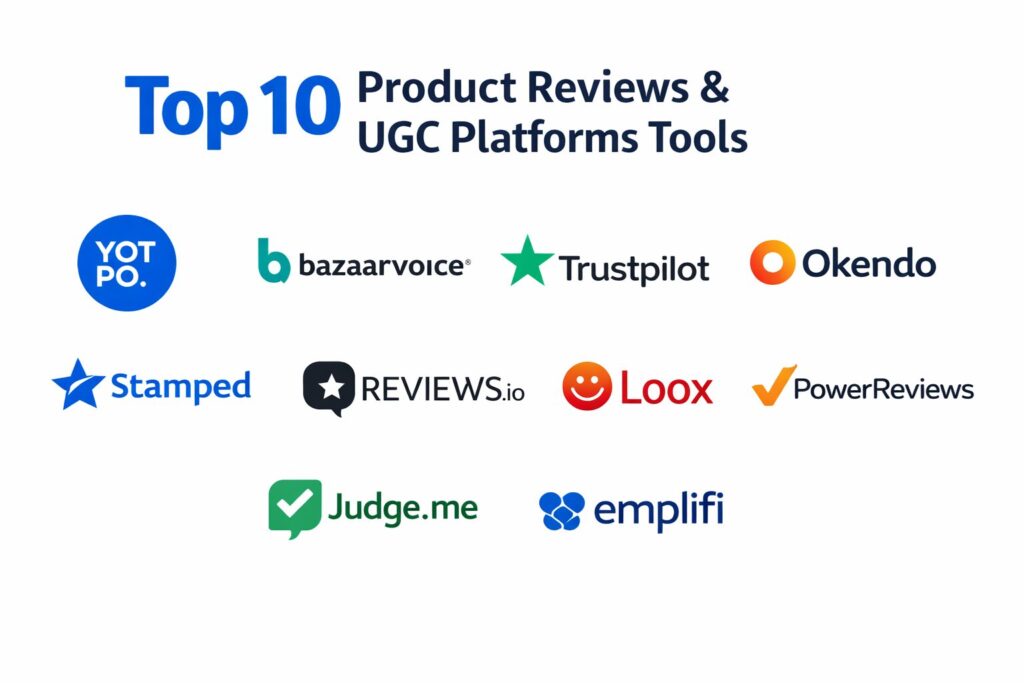
1. Yotpo
Yotpo is a comprehensive retention marketing platform that has evolved from a specialized review tool into an all-in-one ecosystem for e-commerce growth. It is highly regarded for its ability to unify reviews, visual UGC, loyalty programs, and SMS marketing within a single data-driven environment.
Key Features
The platform features an advanced AI engine that automatically extracts topics and sentiments from reviews to create “Smart Filters” for shoppers. It includes a robust visual UGC suite that collects and displays shoppable customer photos and videos across the site. The system offers seamless syndication to Google Shopping and Walmart to boost visibility across search results. It also features automated “Smart Prompts” that guide reviewers to mention specific product attributes like fit or quality. Its integration with loyalty modules allows brands to reward customers instantly for high-quality content.
Pros
The “all-in-one” nature reduces the need for multiple disparate apps, ensuring data consistency across marketing channels. Its AI capabilities are among the most advanced for summarizing long-tail feedback.
Cons
The pricing is at the premium end of the market and can scale rapidly with order volume. Some smaller teams may find the full suite of features overwhelming to manage.
Platforms and Deployment
Cloud-based SaaS with deep native integrations for Shopify, BigCommerce, and Adobe Commerce.
Security and Compliance
Fully compliant with GDPR and CCPA, featuring SOC 2 Type II certification and secure PCI-compliant data handling.
Integrations and Ecosystem
Extensive marketplace integrations including Klaviyo, Zendesk, and major social media platforms for cross-channel content distribution.
Support and Community
Provides a dedicated “Success Manager” for enterprise tiers and a comprehensive online learning center called Yotpo Academy.
2. Bazaarvoice
Bazaarvoice is the global leader in the enterprise space, known primarily for its massive retail syndication network. It is designed for large brands that sell through multiple international retailers and need to maintain consistent social proof everywhere.
Key Features
The standout feature is the “Bazaarvoice Network,” which syndicates reviews to thousands of retail sites globally, ensuring brand consistency. It includes a sophisticated “Sampling” module that helps brands generate reviews for new product launches by sending samples to targeted segments. The platform features an AI-powered “Authenticity” engine that monitors for fraudulent activity at a global scale. It offers deep insights into competitor benchmarking and market trends based on consumer feedback. It also supports complex multi-language and multi-region review management for global teams.
Pros
The syndication capabilities are unmatched, making it essential for brands with a heavy presence in big-box retail. The data insights provided are enterprise-grade and highly actionable for product development.
Cons
The implementation process is intensive and usually requires a significant time commitment. Pricing is high and generally tailored for enterprise-level budgets.
Platforms and Deployment
Enterprise SaaS platform with flexible API-first deployment options.
Security and Compliance
Maintains the highest security standards including ISO 27001, SOC 2, and rigorous global privacy compliance.
Integrations and Ecosystem
Integrates with major enterprise ERP and CRM systems, alongside a vast network of retail partner portals.
Support and Community
Offers 24/7 global support and strategic consulting services for large-scale digital transformation projects.
3. Trustpilot
Trustpilot is a widely recognized independent review portal that focuses on brand-level reputation and public transparency. It is the go-to platform for service-based businesses and retailers looking to build an “open” and credible brand image.
Key Features
The platform is built on an open community model where anyone can leave a review, which enhances perceived authenticity. It features a “TrustScore” that is highly recognized by consumers and appears directly in Google search results via seller ratings. The system includes automated invitation triggers to ensure a steady stream of verified feedback. It offers a suite of “TrustBoxes” or widgets that can be embedded on any website to show live ratings. It also features a “Find Reviewer” tool to help businesses resolve issues with specific customers.
Pros
The high brand recognition of the Trustpilot logo can significantly boost immediate trust for new visitors. The public nature of the platform encourages active reputation management.
Cons
Because it is an open platform, managing negative or unverified reviews requires constant vigilance. The feature set for specific product-level attributes is less deep than specialized D2C tools.
Platforms and Deployment
Web-based SaaS with easy-to-implement widgets for any web platform.
Security and Compliance
Adheres to strict European privacy laws and features dedicated fraud-detection algorithms to maintain platform integrity.
Integrations and Ecosystem
Broad integrations with common e-commerce platforms and customer service tools like Freshdesk and Salesforce.
Support and Community
Provides extensive documentation and a dedicated account management team for business-tier subscribers.
4. Okendo
Okendo is a high-performance review platform built specifically for the Shopify ecosystem. it is known for its sleek design, deep Shopify integration, and its focus on gathering detailed “customer profiles” alongside reviews.
Key Features
The platform features “Attributes” which allow brands to collect specific data such as a customer’s age, height, or skin type to add context to reviews. It includes a mobile-first review capture form that achieves significantly higher completion rates. The system offers a “Media First” display that showcases high-quality customer photos and videos in elegant galleries. It features an automated “Review Request” workflow that is highly customizable for different product segments. It also includes an integrated “Surveys” tool for post-purchase NPS tracking.
Pros
The level of detail collected in reviews helps other shoppers make much more informed decisions based on similar profiles. The widgets are modern, fast-loading, and highly customizable.
Cons
It is primarily focused on the Shopify ecosystem, which may limit its utility for brands using other specialized e-commerce platforms. Some advanced features are locked behind higher-tier plans.
Platforms and Deployment
Native Shopify app and web-based management dashboard.
Security and Compliance
Fully GDPR compliant and uses secure, encrypted connections for all data transfers.
Integrations and Ecosystem
Deeply integrated with the “Shopify Plus” partner ecosystem, including Klaviyo, Gorgias, and Smile.io.
Support and Community
Highly rated for its responsive customer success team and detailed onboarding guides.
5. Stamped
Stamped is a versatile and cost-effective platform that combines product reviews with loyalty and referrals. It is designed for mid-market brands that want a robust set of features without the complexity of enterprise-only suites.
Key Features
The software includes a “Multi-Channel” collection engine that requests reviews via email, SMS, and Facebook Messenger. It features a “Net Promoter Score” (NPS) tool to measure overall brand health alongside product feedback. Users can create “Checkout Reviews” to capture immediate sentiment from happy buyers. It offers automated Google Rich Snippets to ensure star ratings appear in search results. The platform also includes a “Community Q&A” module where customers can ask and answer questions directly on the product page.
Pros
It offers one of the best feature-to-price ratios in the industry. The setup is remarkably fast, allowing brands to start collecting reviews within minutes of installation.
Cons
The interface, while functional, lacks some of the visual polish of higher-end competitors. Some users report that advanced customization requires basic CSS knowledge.
Platforms and Deployment
Cloud-based SaaS supporting Shopify, BigCommerce, WooCommerce, and Magento.
Security and Compliance
Compliant with GDPR and CCPA, maintaining high standards for data encryption and reviewer privacy.
Integrations and Ecosystem
Strong integration marketplace with connections to popular marketing and support tools.
Support and Community
Offers tiered support levels including a comprehensive knowledge base and live chat for higher plans.
6. Reviews.io
Reviews.io is a highly flexible and transparent platform known for its “Video First” approach and its focus on brand ownership of data. It is popular among brands that want total control over their review widgets and collection workflows.
Key Features
The platform features a powerful “Video Review” collector that allows customers to record testimonials directly from their smartphones. It includes a “Social Content” tool that pulls in Instagram mentions and turns them into shoppable galleries. Users can manage both company and product reviews in a single dashboard. It offers a “Product Attributes” feature to track specific qualities like “Comfort” or “Durability.” The system also features a “Timeline” view that shows the complete history of a brand’s reputation growth.
Pros
The video collection interface is one of the smoothest in the market, leading to higher video submission rates. The company is known for its transparent pricing and lack of long-term contracts.
Cons
The wide range of features can make the initial configuration feel a bit complex for small teams. The reporting tools, while deep, require some time to master.
Platforms and Deployment
Web-based SaaS with support for all major e-commerce platforms.
Security and Compliance
PCI DSS compliant and fully adheres to global data protection regulations.
Integrations and Ecosystem
Integrates with Google, Bing, and major social platforms, as well as e-commerce tools like ReCharge and Klaviyo.
Support and Community
Highly proactive support team and a public product roadmap where users can vote on new features.
7. Loox
Loox is a visual-centric review app designed specifically for brands where “seeing is believing.” It encourages customers to share photos and videos of their purchases through a highly incentivized and intuitive workflow.
Key Features
The software features a unique “Photo Review” incentive system that automatically offers discounts in exchange for visual feedback. It includes a “Happy Customers” page that aggregates all visual UGC into a single, high-converting social proof wall. The system offers sleek, mobile-optimized popup widgets that display recent reviews to visitors in real-time. It features a “Referral” module that turns reviewers into brand ambassadors. The platform also includes automated “Upsell” prompts based on positive review sentiment.
Pros
The focus on visual content makes it perfect for fashion, home decor, and lifestyle brands. It is exceptionally easy to set up and requires almost zero maintenance once configured.
Cons
The features for text-heavy, technical reviews are less developed than other platforms. It is primarily built for Shopify, which limits its flexibility for custom-built sites.
Platforms and Deployment
Native Shopify and Shopify Plus application.
Security and Compliance
Maintains standard data protection protocols and is fully compliant with Shopify’s app requirements and global privacy laws.
Integrations and Ecosystem
Works seamlessly with major Shopify apps for marketing, upsells, and customer support.
Support and Community
Offers 24/7 email support and a wealth of educational content on visual marketing best practices.
8. PowerReviews
PowerReviews is a direct competitor to Bazaarvoice, focusing on enterprise and large mid-market brands. It emphasizes “Authenticity First” and provides heavy-duty tools for retail syndication and deep consumer analytics.
Key Features
The platform features a “Human Moderation” team that reviews content to ensure it meets strict brand and legal standards. It includes a “Progressive Collection” tool that asks follow-up questions over time to build a deeper donor profile. The “Intelligence Reports” provide advanced competitive analysis and product improvement suggestions. It offers a “Social Curation” tool that identifies and licenses high-quality UGC from social media. The system also features a comprehensive “Questions & Answers” module for high-consideration products.
Pros
The level of human oversight in moderation ensures a very high quality of content. Its retail syndication network is robust and highly effective for multi-channel brands.
Cons
The software has a significant learning curve and requires a dedicated administrator for larger deployments. Pricing is opaque and tends toward the higher end.
Platforms and Deployment
Enterprise-grade SaaS with flexible deployment options for global catalogs.
Security and Compliance
SOC 2 compliant and follows rigorous data security protocols for enterprise-level safety.
Integrations and Ecosystem
Integrates with major retail portals and enterprise marketing technology stacks.
Support and Community
Provides dedicated account management and professional services for custom implementations.
9. Judge.me
Judge.me is a highly popular, “affordable-first” review platform that provides a surprising amount of power for small to mid-sized businesses. It is known for its “forever free” tier and its extremely fast widget performance.
Key Features
The platform features “In-Email Reviews” which allow customers to submit their feedback directly inside the email without visiting a separate page. It includes unlimited review requests even on the lower-tier plans. The system offers automated “Social Push” features to share positive reviews to Facebook and Pinterest. It features a “Spam Filter” that uses machine learning to identify fake reviews automatically. The software also provides “Cross-Shop Syndication” for brands that operate multiple related storefronts.
Pros
It provides an incredible amount of functionality for a very low cost, making it the top choice for startups. The widgets are some of the fastest-loading in the industry.
Cons
The visual design of the widgets and the back-end interface is more basic compared to premium tools like Yotpo or Okendo. Support can be slower on the free plan.
Platforms and Deployment
SaaS platform supporting Shopify, WooCommerce, and BigCommerce.
Security and Compliance
Adheres to standard privacy regulations and secure data handling practices.
Integrations and Ecosystem
A surprisingly large integration list for its price point, including major marketing and SEO tools.
Support and Community
Known for having a very helpful support team and a straightforward, easy-to-navigate help center.
10. Emplifi (formerly Pixlee TurnTo)
Emplifi is a unified social commerce platform that combines ratings and reviews with advanced visual UGC and influencer management. It is designed for large brands that want to treat UGC as a core part of their social media strategy.
Key Features
The platform features “Advanced Social Listening” that finds content where the brand is mentioned even if it isn’t tagged. It includes a “Community Q&A” tool that allows past buyers to answer questions for prospective shoppers. The “Influencer CRM” helps brands manage relationships with content creators alongside their organic customer content. It offers “Shoppable Instagram” features that sync directly with the product database. The system also provides deep “ROI Attribution” to show exactly how UGC influences sales.
Pros
It is the most advanced tool for brands that want to blur the line between social media marketing and product reviews. The community-driven Q&A feature is highly effective for building trust.
Cons
The sheer breadth of the platform can make it difficult for smaller teams to fully utilize every feature. It is an enterprise product with a corresponding price tag.
Platforms and Deployment
Global SaaS platform with enterprise-level deployment options.
Security and Compliance
ISO 27001 and SOC 2 certified, providing the highest level of security for global brand data.
Integrations and Ecosystem
Integrates with all major social networks, e-commerce engines, and enterprise marketing clouds.
Support and Community
Offers global 24/7 support and dedicated strategic success teams for its enterprise clients.
Comparison Table
| Tool Name | Best For | Platform(s) Supported | Deployment | Standout Feature | Public Rating |
| 1. Yotpo | Shopify Scaling Brands | Shopify, BigCom, Adobe | Cloud SaaS | Unified Marketing Suite | 4.7/5 |
| 2. Bazaarvoice | Enterprise Retailers | Multi-Platform API | Global SaaS | Retail Syndication | 4.6/5 |
| 3. Trustpilot | Brand Trust / Service | Any Web Platform | Web SaaS | Independent Trust Portal | 4.4/5 |
| 4. Okendo | D2C / Customer Profiles | Shopify Exclusive | Native App | Customer Attribute Data | 4.9/5 |
| 5. Stamped | Mid-Market Value | Shopify, Woo, BigCom | Cloud SaaS | Loyalty-Integrated UGC | 4.7/5 |
| 6. Reviews.io | Video UGC / Customization | Multi-Platform | Cloud SaaS | Video Review Collector | 4.8/5 |
| 7. Loox | Visual Brands / Aesthetics | Shopify Only | Native App | Photo Review Incentives | 4.8/5 |
| 8. PowerReviews | Large Scale Retail | Multi-Platform | Enterprise SaaS | Human-Led Moderation | 4.5/5 |
| 9. Judge.me | Startups / SMB | Shopify, Woo, BigCom | Cloud SaaS | In-Email Review Forms | 4.9/5 |
| 10. Emplifi | Social Commerce / Enterprise | Global Platforms | Enterprise SaaS | Community-Driven Q&A | 4.6/5 |
Evaluation & Scoring of Product Reviews & UGC Platforms
The scoring below is a comparative model intended to help shortlisting. Each criterion is scored from 1–10, then a weighted total from 0–10 is calculated using the weights listed. These are analyst estimates based on typical fit and common workflow requirements, not public ratings.
Weights:
- Core features – 25%
- Ease of use – 15%
- Integrations & ecosystem – 15%
- Security & compliance – 10%
- Performance & reliability – 10%
- Support & community – 10%
- Price / value – 15%
| Tool Name | Core (25%) | Ease (15%) | Integrations (15%) | Security (10%) | Performance (10%) | Support (10%) | Value (15%) | Weighted Total |
| 1. Yotpo | 10 | 7 | 10 | 9 | 9 | 8 | 6 | 8.35 |
| 2. Bazaarvoice | 9 | 5 | 9 | 10 | 10 | 9 | 5 | 8.10 |
| 3. Trustpilot | 7 | 9 | 8 | 8 | 9 | 8 | 8 | 7.90 |
| 4. Okendo | 9 | 9 | 8 | 8 | 9 | 9 | 8 | 8.65 |
| 5. Stamped | 8 | 8 | 8 | 8 | 8 | 8 | 9 | 8.15 |
| 6. Reviews.io | 8 | 8 | 9 | 8 | 8 | 9 | 8 | 8.20 |
| 7. Loox | 7 | 10 | 7 | 8 | 9 | 8 | 9 | 8.10 |
| 8. PowerReviews | 9 | 6 | 8 | 9 | 9 | 8 | 7 | 8.10 |
| 9. Judge.me | 7 | 10 | 8 | 8 | 10 | 8 | 10 | 8.50 |
| 10. Emplifi | 9 | 6 | 9 | 9 | 8 | 8 | 6 | 7.95 |
How to interpret the scores:
- Use the weighted total to shortlist candidates, then validate with a pilot.
- A lower score can mean specialization, not weakness.
- Security and compliance scores reflect controllability and governance fit, because certifications are often not publicly stated.
- Actual outcomes vary with assembly size, team skills, templates, and process maturity.
Which Product Reviews & UGC Platform Is Right for You?
Solo / Founder-Led
For new founders and solo operators, the priority should be automation and low upfront cost. You need a system that works in the background to collect initial social proof without requiring daily management. A tool with a robust free tier or a very low monthly cost that handles the basics perfectly is the smartest choice for early-stage growth.
Small Nonprofit
If you are managing a social enterprise or small nonprofit with physical products, look for ease of implementation. Your focus should be on building trust and demonstrating impact through customer stories. A platform that offers simple, clean widgets and automated thank-you emails will serve your mission best without draining limited resources.
Mid-Market
Mid-sized brands should focus on deepening their customer relationships through detailed feedback. At this stage, collecting “Attributes” like fit or preference becomes vital for reducing returns and personalizing marketing. You need a platform that integrates deeply with your email and loyalty tools to create a seamless reward loop for your most vocal supporters.
Enterprise
Large organizations with complex global catalogs require a system that emphasizes governance, security, and syndication. The ability to manage reviews across multiple regions and languages while pushing that data to a global retail network is the top priority to ensure a consistent brand reputation across the entire digital shelf.
Budget vs Premium
If budget is the primary concern, “efficiency-first” tools provide enterprise-level features for a fraction of the cost. However, premium platforms offer advanced AI insights and unified marketing suites that can provide a much higher return on investment for high-volume brands that want to consolidate their technology stack.
Feature Depth vs Ease of Use
Powerful enterprise tools offer infinite customization but can be slow to deploy. Often, a more specialized D2C tool that is “Shopify-native” or “platform-native” will provide a better user experience and faster results for teams that don’t have a large technical department to manage the back-end.
Integrations & Scalability
Your UGC platform must be able to share data with your CRM and email marketing tools. As you grow, the ability to turn a positive review into a targeted marketing campaign or a support ticket into a resolved customer relationship is critical for maintaining long-term technical and operational health.
Security & Compliance Needs
For brands operating in multiple international markets, compliance is a legal necessity. Ensure your chosen platform has the certifications required to handle global consumer data and a proven track record of fighting fraudulent reviews to protect your brand’s legal and reputational integrity.
Frequently Asked Questions (FAQs)
1. Why is visual UGC more effective than text reviews?
Visual content provides immediate proof that a product is real and functions as advertised. It allows prospective buyers to see the product in a real-world context, which is significantly more influential for purchasing decisions than a text-based testimonial alone.
2. How do platforms prevent fake or AI-generated reviews?
Leading platforms use a combination of “Verified Buyer” badges (triggered by purchase data), IP tracking, and machine-learning algorithms to identify unnatural patterns. Some enterprise tools also employ human moderation teams for an additional layer of security.
3. Does having a review widget slow down my website?
While adding any third-party script can have an impact, professional platforms use asynchronous loading and content delivery networks (CDNs) to ensure that their widgets do not block the rest of the page from rendering quickly.
4. Can I migrate my existing reviews from one platform to another?
Yes, almost every professional platform provides CSV import and export tools. It is important to ensure that your data is cleaned and formatted correctly during the migration to maintain your star ratings and historical SEO value.
5. What is review syndication?
Syndication is the process of sharing your reviews with other websites, such as Google, Walmart, or Target. This ensures that your products have social proof everywhere they are sold, not just on your own branded website.
6. Is it legal to offer incentives for reviews?
Yes, but most regulations require that you disclose when a review was incentivized (e.g., with a discount or loyalty points). Professional platforms handle this automatically by adding a “Reviewer received an incentive” badge to the post.
7. How do reviews help with SEO?
Reviews provide fresh, keyword-rich content that search engines love. Furthermore, “Rich Snippets” allow star ratings to appear directly in Google search results, which significantly increases click-through rates.
8. Can I reply to negative reviews?
Yes, and you should. Responding to negative feedback demonstrates that your brand is responsive and cares about customer satisfaction. This can often turn a poor experience into a positive impression for other prospective buyers.
9. What is the average response rate for review requests?
Across the industry, the average response rate for post-purchase review requests is between 5% and 15%. This can be significantly increased by using SMS requests, visual incentives, and well-timed automated follow-ups.
10. Do these tools handle international languages?
Most mid-market and enterprise tools offer multi-language support, allowing you to collect and display reviews in the native language of each specific storefront or region, which is essential for global growth.
Conclusion
In the modern e-commerce ecosystem, a Product Reviews and UGC platform is the cornerstone of consumer trust and operational transparency. Whether you are a high-growth startup or a global enterprise, the ability to mobilize your customers as brand advocates is the single most effective way to scale your mission and increase sustainability. By selecting a system that aligns with your specific technical needs and aesthetic values, you transform raw feedback into a strategic asset that drives conversion and cultivates long-term loyalty. The ideal platform is one that not only secures your current reputation but also provides the intelligent infrastructure to navigate the evolving demands of authentic digital commerce.