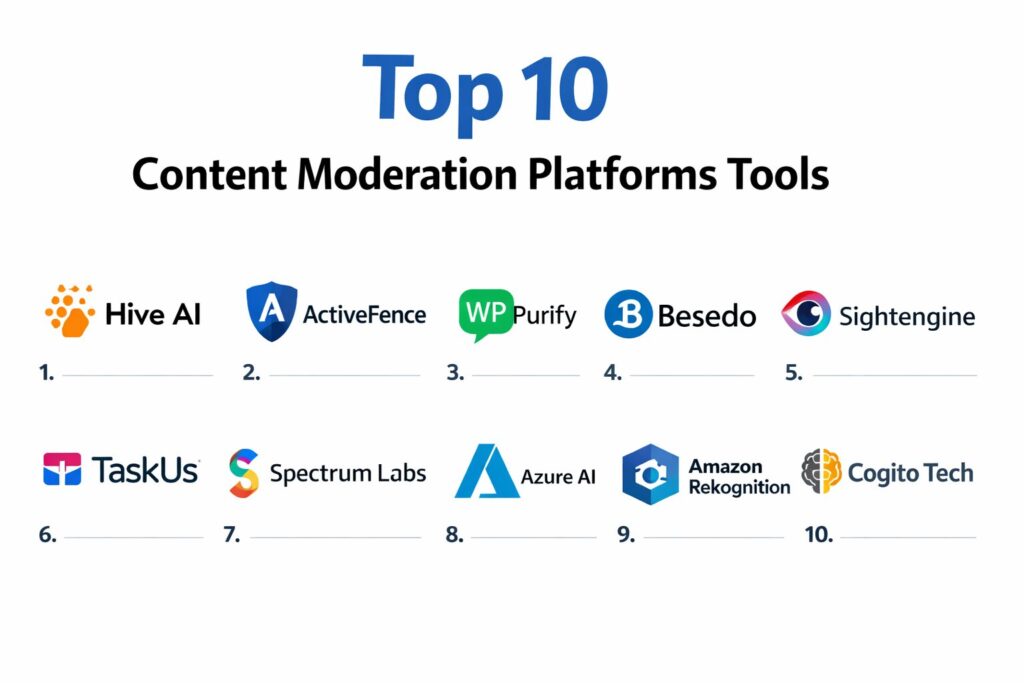
Introduction
Content moderation platforms have evolved into the essential gatekeepers of the digital era, tasked with the monumental challenge of maintaining platform integrity while fostering open communication. These systems leverage sophisticated algorithms and human-in-the-loop workflows to identify, flag, and remove content that violates community standards or legal regulations. From a technical perspective, these platforms operate at the intersection of large-scale data processing and high-precision machine learning, handling billions of data points in near real-time. In the current landscape, the complexity of user-generated content—ranging from live video streams to encrypted messaging and AI-generated deepfakes—has made robust moderation a non-negotiable requirement for any brand with a digital presence.
Beyond simple profanity filtering, modern moderation infrastructure is now a cornerstone of corporate risk management and brand safety. Organizations utilize these tools to protect their users from harassment, prevent the spread of misinformation, and ensure compliance with global data laws. The architectural demand for these platforms is immense; they must be capable of sub-second latency to prevent harmful content from ever reaching an audience, while also maintaining a high degree of contextual accuracy to avoid over-censorship. When evaluating a moderation solution, enterprises must look past basic detection and focus on the platform’s ability to provide detailed audit logs, support multi-regional legal frameworks, and offer emotional support for human moderators who handle sensitive material.
Best for: Social media networks, e-commerce marketplaces, gaming communities, and enterprise communication platforms that handle high volumes of user-generated text, images, and video.
Not ideal for: Private, one-on-one encrypted communications where privacy laws prohibit scanning, or small-scale websites with static content that does not involve user interaction.
Key Trends in Content Moderation Platforms
The shift toward multimodal AI is perhaps the most significant trend, where systems analyze text, audio, and visual data simultaneously to understand the full context of a post. We are also seeing a major move toward proactive threat detection, where platforms identify coordinated harassment campaigns before they gain momentum. Regulatory compliance has become a primary driver for innovation, with new laws requiring platforms to be more transparent about their moderation decisions and to provide clear paths for user appeals.
Another critical trend is the focus on moderator wellness, with platforms integrating AI to blur disturbing images for human reviewers and providing built-in mental health resources. The rise of generative AI has also forced moderation tools to develop “synthetic content detectors” that can distinguish between human-made and machine-generated media. Finally, edge-based moderation is gaining traction, allowing some filtering to happen directly on the user’s device to enhance privacy and reduce server-side processing loads.
How We Selected These Tools
Our selection process involved a rigorous evaluation of both automated AI capabilities and the robustness of human-in-the-loop service offerings. We prioritized platforms that demonstrate high accuracy in “edge cases”—scenarios where cultural context and slang often confuse standard algorithms. The ability to scale was a primary criterion, ensuring that these tools can handle sudden spikes in traffic during viral events or global crises without a dip in performance.
We also scrutinized the security architecture of each platform, looking for SOC 2 compliance and alignment with major privacy regulations like GDPR. The depth of the integration ecosystem was another key factor, as enterprise users need these tools to plug seamlessly into existing CRM and community management stacks. Finally, we assessed the transparency of each provider, favoring those who offer detailed reporting on both automated decisions and human reviewer accuracy.
1. Hive AI
Hive AI provides one of the most comprehensive suites for automated content moderation, utilizing massive datasets to train highly accurate models. It is particularly strong in visual moderation, capable of detecting subtle nuances in images and videos that other tools might miss. The platform is built for extreme scale, making it a favorite for global social media giants and large-scale marketplaces.
Key Features
The platform offers real-time API-based scanning for images, videos, and text with incredibly low latency. It includes specialized models for detecting specific categories such as hate speech, violence, and promotional spam. A standout feature is its ability to identify brand logos and intellectual property violations across user uploads. It also provides a distributed human workforce for data labeling and secondary verification. Furthermore, it features advanced tools for detecting AI-generated content and deepfakes.
Pros
It offers some of the highest accuracy rates in the industry for visual content. The API is designed for easy integration into existing high-traffic pipelines.
Cons
The pricing structure can be complex for smaller companies with fluctuating volumes. Some users may find the sheer number of specialized models overwhelming at first.
Platforms and Deployment
Cloud-based API with SDKs for major programming languages.
Security and Compliance
Fully compliant with SOC 2 Type II and GDPR requirements. It offers robust data encryption and role-based access controls.
Integrations and Ecosystem
Integrates deeply with major cloud providers and offers webhooks for asynchronous moderation workflows.
Support and Community
Provides dedicated enterprise support teams and extensive technical documentation for developers.
2. ActiveFence
ActiveFence focuses on “Trust and Safety” as a proactive discipline, going beyond simple filtering to identify malicious actors and coordinated groups. It is designed for enterprise-level platforms that need to manage complex risks like disinformation, fraud, and child safety.
Key Features
The platform features a sophisticated risk-scoring engine that evaluates users based on their behavior across the entire platform. It includes ActiveOS, a dedicated operating system for moderation teams to manage queues and investigations. Its global intelligence network monitors off-platform signals to predict upcoming threats. The tool also provides deep-dive investigation capabilities for trust and safety teams. Additionally, it offers automated policy enforcement that can be customized for different regional laws.
Pros
It is excellent for identifying coordinated attacks and malicious networks rather than just individual posts. The interface for human moderators is highly efficient and well-designed.
Cons
The advanced feature set comes at a premium price point. It may be more complex than necessary for platforms only needing basic profanity filtering.
Platforms and Deployment
SaaS-based platform with comprehensive API access.
Security and Compliance
Maintains high standards for data privacy and is used by highly regulated industries.
Integrations and Ecosystem
Works well with external data lakes and enterprise security information and event management (SIEM) systems.
Support and Community
Offers expert-led training sessions and a dedicated “Trust and Safety” community for its users.
3. WebPurify
WebPurify is a pioneer in the moderation space, offering a hybrid approach that combines fast AI filtering with a professional live moderation team. It is particularly well-regarded for its focus on brand safety and its “family-friendly” moderation standards.
Key Features
The service provides a hybrid image moderation system where AI handles the bulk of the work and humans review the edge cases within minutes. It features a robust profanity filter that supports over 15 languages and includes custom blocklists. Its “Live Video” moderation service is one of the few that can effectively manage real-time streams. The platform also offers one-click plugins for popular content management systems. Additionally, it provides specialized filters for identifying PII like phone numbers and addresses.
Pros
The hybrid model offers a perfect balance between speed and human accuracy. It is very easy to set up for smaller teams while remaining scalable for larger ones.
Cons
The cost of live human moderation can scale quickly with high content volumes. Some of its automated text features are less nuanced than specialized NLP tools.
Platforms and Deployment
Cloud-based service with various CMS plugins and a REST API.
Security and Compliance
Adheres strictly to COPPA and GDPR, making it ideal for children’s apps and European markets.
Integrations and Ecosystem
Has built-in integrations for WordPress, Drupal, and various social media management tools.
Support and Community
Known for highly responsive 24/7 customer support and a straightforward onboarding process.
4. Besedo
Besedo specializes in the classifieds and marketplace sector, offering a platform called Implio that streamlines the moderation of listings and user communications. It focuses on improving the quality of user-generated content to drive higher engagement and trust.
Key Features
Implio provides a unified dashboard that combines automated filters with manual review queues. It includes pre-built automation rules specifically designed for e-commerce, such as duplicate detection and fraud prevention. The platform allows for easy A/B testing of moderation rules to see how they impact user behavior. It also features a “knowledge base” tool that helps human moderators stay consistent with platform policies. Furthermore, it provides detailed analytics on common violation trends.
Pros
It is highly optimized for marketplaces, effectively catching scams and low-quality listings. The interface is very intuitive for manual review teams.
Cons
It is less focused on social media-specific challenges like viral hate speech. The automation capabilities require some initial manual configuration to be most effective.
Platforms and Deployment
SaaS platform with API and webhook support.
Security and Compliance
Enterprise-grade security with data residency options in multiple regions.
Integrations and Ecosystem
Integrates with popular helpdesk software and marketplace platforms.
Support and Community
Provides extensive industry-specific advice and dedicated account management for enterprise clients.
5. Sightengine
Sightengine provides a developer-centric API for real-time image and video moderation. It is built for speed and ease of integration, making it a top choice for developers who want to add a moderation layer to their applications quickly.
Key Features
The API can detect nudity, violence, and offensive gestures in images and video frames within milliseconds. it features a specialized model for detecting “scammer” profiles and fraudulent account activity. Its video moderation service supports both uploaded files and live streams. The platform also offers optical character recognition (OCR) to find text hidden within images. Additionally, it provides a “quality” score for images to help platforms prioritize high-resolution content.
Pros
Extremely fast and reliable API that is very easy for developers to implement. The pricing is transparent and accessible for projects of all sizes.
Cons
It lacks a robust dashboard for non-technical users to manage moderation queues. It does not offer a native human-in-the-loop service.
Platforms and Deployment
Pure API-based service hosted in the cloud.
Security and Compliance
Compliant with standard web security protocols and privacy regulations.
Integrations and Ecosystem
Offers SDKs for all major languages and integrates easily into serverless architectures.
Support and Community
Technical support is excellent, with very clear documentation and quick response times for developers.
6. TaskUs
TaskUs provides a comprehensive “Trust and Safety” service that combines advanced AI tools with a highly trained, specialized global workforce. They are known for handling the most complex and sensitive moderation tasks for the world’s largest tech companies.
Key Features
They offer a hybrid model that uses proprietary AI to pre-sort content before it reaches human eyes. Their “Wellness First” approach includes built-in mental health support and resiliency training for all moderators. They provide specialized teams for different content types, such as political content or high-stakes legal review. The platform includes advanced data analytics to track moderation accuracy and sentiment trends. Additionally, they offer global coverage with support for dozens of languages and cultural contexts.
Pros
Exceptional at handling highly nuanced content that requires deep cultural understanding. Their focus on moderator well-being leads to higher quality and more consistent results.
Cons
As a service-heavy provider, they are typically more expensive than pure software solutions. They are best suited for large-scale operations rather than small apps.
Platforms and Deployment
Managed services integrated with client platforms via API.
Security and Compliance
World-class security with SOC 2, ISO 27001, and HIPAA compliance where necessary.
Integrations and Ecosystem
Highly flexible, they can work within a client’s proprietary tools or provide their own moderation stack.
Support and Community
Offers high-touch account management and strategic consulting on platform policy.
7. Spectrum Labs (Guardian)
Spectrum Labs, through its Guardian platform, focuses on voice and text moderation in real-time environments like gaming and social apps. It is a leader in identifying toxic behavior and fostering healthy online communities.
Key Features
The platform utilizes specialized AI to detect toxic intent in voice chat, including tone and context analysis. It features a “Community Health” dashboard that provides high-level insights into user sentiment and toxicity trends. Its text moderation engine is highly effective at catching “l33t speak” and other attempts to bypass filters. The tool allows for automated, tiered responses to violations, such as temporary mutes or warnings. It also provides a robust system for managing user appeals and reputation scores.
Pros
One of the best tools for real-time voice and gaming environments. It focuses on “behavioral” moderation rather than just individual words.
Cons
The focus on gaming and real-time chat may make it less suitable for static content platforms. Integration for voice moderation can be technically demanding.
Platforms and Deployment
Cloud-based API with specific SDKs for game engines like Unity and Unreal.
Security and Compliance
High-level data protection standards with a focus on user privacy in real-time settings.
Integrations and Ecosystem
Strong partnerships with gaming infrastructure providers and social platforms.
Support and Community
Provides expert guidance on community management and building healthy digital spaces.
8. Microsoft Azure AI Content Safety
Microsoft offers a powerful, enterprise-grade moderation service as part of its Azure AI suite. It is built to handle the rigorous demands of modern platforms, particularly those utilizing generative AI and large-scale user interaction.
Key Features
It provides a unified API for detecting harmful content across text, images, and video. A unique feature is its “Jailbreak Detection,” which helps prevent users from manipulating generative AI models. It includes a multi-severity scoring system, allowing platforms to set different thresholds for different types of content. The service is deeply integrated with the broader Microsoft security ecosystem. Additionally, it offers pre-built templates for common moderation policies.
Pros
Benefits from the massive R&D and security infrastructure of Microsoft. It is highly reliable and scales effortlessly to handle enterprise-level traffic.
Cons
Users not already in the Azure ecosystem may find the setup and billing more complex. The interface is more technical and geared toward developers.
Platforms and Deployment
Azure cloud platform with global availability.
Security and Compliance
Industry-leading compliance certifications including SOC 1/2/3, ISO, and GDPR.
Integrations and Ecosystem
Integrates perfectly with other Azure services and Microsoft 365, as well as external platforms via REST API.
Support and Community
Comprehensive enterprise support and a vast library of documentation and community forums.
9. Amazon Rekognition
Amazon Rekognition is a highly scalable computer vision service that includes robust tools for content moderation. It is part of the AWS ecosystem, making it a natural choice for organizations already hosting their infrastructure on Amazon’s cloud.
Key Features
The service can automatically detect inappropriate or suggestive content in millions of images and videos. It features a hierarchical taxonomy for labels, allowing for very granular control over what is flagged. Its video moderation capability can process stored files or real-time streams with high efficiency. The platform also offers celebrity recognition and face analysis, which can be useful for identifying impersonation. Furthermore, it integrates with AWS A2I for easy human-in-the-loop review workflows.
Pros
Extremely cost-effective for high volumes of visual content. It benefits from the vast scaling capabilities of AWS.
Cons
The text moderation features are not as deep as specialized NLP platforms. It requires significant technical expertise to set up custom moderation workflows.
Platforms and Deployment
Available through AWS as an API-driven service.
Security and Compliance
Meets the highest global standards for data security and privacy within the AWS framework.
Integrations and Ecosystem
Deeply integrated with all other AWS services, making it ideal for cloud-native pipelines.
Support and Community
Backed by the massive AWS support network and a global community of developers.
10. Cogito Tech
Cogito Tech provides human-powered moderation services with a focus on data labeling and AI training. They are a vital partner for companies looking to build proprietary moderation models or handle nuanced manual review tasks.
Key Features
They offer a vast, multilingual workforce that can handle text, image, and video moderation across different cultures. Their focus is on high-accuracy data annotation that helps improve a platform’s internal AI models over time. They provide specialized moderation for sensitive areas like medical content and legal compliance. The service includes rigorous quality assurance processes to ensure consistent results. Additionally, they offer 24/7 coverage with the ability to scale teams up or down quickly.
Pros
Excellent for generating high-quality training data for custom AI moderation systems. Their global reach makes them a strong choice for multi-lingual platforms.
Cons
As a service provider, their turnaround time for manual review is slower than pure AI solutions. They are less of a “software” platform and more of an operational partner.
Platforms and Deployment
Managed services that integrate with a client’s existing workflow or tools.
Security and Compliance
Maintains strict data security protocols and is compliant with major international standards.
Integrations and Ecosystem
Highly flexible, they can adapt to work within any proprietary or third-party moderation software.
Support and Community
Offers dedicated project management and strategic advice on data strategy and moderation policy.
Comparison Table
| Tool Name | Best For | Platform(s) Supported | Deployment | Standout Feature | Public Rating |
| 1. Hive AI | High-Scale Visuals | Cloud API | SaaS | Deepfake Detection | 4.8/5 |
| 2. ActiveFence | Trust & Safety Ops | Cloud API / Dash | SaaS | ActiveOS Dashboard | 4.7/5 |
| 3. WebPurify | Hybrid Brand Safety | Web, API, CMS | SaaS/Hybrid | 2-Min Live Review | 4.6/5 |
| 4. Besedo | Marketplace Quality | Cloud API / Dash | SaaS | Fraud/Scam Detection | 4.5/5 |
| 5. Sightengine | Developer-First API | Cloud API | SaaS | Millisecond Latency | 4.7/5 |
| 6. TaskUs | Nuanced Human Review | Managed Services | Hybrid | Moderator Wellness | 4.9/5 |
| 7. Spectrum Labs | Gaming / Voice | Cloud API / SDK | SaaS | Voice Intent Analysis | 4.4/5 |
| 8. Azure AI Safety | Enterprise GenAI | Azure Cloud | Cloud | Jailbreak Detection | 4.8/5 |
| 9. Amazon Rekognition | AWS Native Visuals | AWS Cloud | Cloud | Hierarchical Labeling | 4.6/5 |
| 10. Cogito Tech | AI Training Data | Managed Services | Hybrid | Multilingual Human Ops | 4.3/5 |
Evaluation & Scoring of Content Moderation Platforms
The scoring below is a comparative model intended to help shortlisting. Each criterion is scored from 1–10, then a weighted total from 0–10 is calculated using the weights listed. These are analyst estimates based on typical fit and common workflow requirements, not public ratings.
Weights:
- Core features – 25%
- Ease of use – 15%
- Integrations & ecosystem – 15%
- Security & compliance – 10%
- Performance & reliability – 10%
- Support & community – 10%
- Price / value – 15%
| Tool Name | Core (25%) | Ease (15%) | Integrations (15%) | Security (10%) | Performance (10%) | Support (10%) | Value (15%) | Weighted Total |
| 1. Hive AI | 10 | 7 | 9 | 9 | 10 | 8 | 8 | 8.95 |
| 2. ActiveFence | 10 | 8 | 8 | 9 | 9 | 10 | 7 | 8.75 |
| 3. WebPurify | 9 | 10 | 9 | 8 | 8 | 10 | 9 | 9.05 |
| 4. Besedo | 8 | 9 | 8 | 8 | 8 | 9 | 8 | 8.25 |
| 5. Sightengine | 9 | 10 | 9 | 7 | 10 | 8 | 10 | 9.15 |
| 6. TaskUs | 10 | 6 | 7 | 10 | 9 | 10 | 7 | 8.45 |
| 7. Spectrum Labs | 9 | 7 | 8 | 8 | 9 | 8 | 8 | 8.30 |
| 8. Azure AI | 10 | 6 | 10 | 10 | 10 | 9 | 8 | 9.05 |
| 9. Amazon Rekognition | 9 | 7 | 10 | 10 | 10 | 8 | 9 | 9.00 |
| 10. Cogito Tech | 7 | 8 | 6 | 9 | 7 | 9 | 8 | 7.45 |
How to interpret the scores:
- Use the weighted total to shortlist candidates, then validate with a pilot.
- A lower score can mean specialization, not weakness.
- Security and compliance scores reflect controllability and governance fit, because certifications are often not publicly stated.
- Actual outcomes vary with assembly size, team skills, templates, and process maturity.
Which Content Moderation Platform Is Right for You?
Solo / Freelancer
Individuals running small forums or communities should prioritize tools with “set and forget” automation and transparent, low-cost pricing. An API-first approach or a simple CMS plugin is usually the most efficient way to maintain a safe environment without a dedicated team.
SMB
Small businesses need a balance between cost and accuracy. A hybrid solution that offers automated filtering with the option for occasional human review is often the best choice, as it provides professional-level safety without the need for an in-house trust and safety department.
Mid-Market
At this scale, the focus shifts to efficiency and reporting. Platforms that offer a robust dashboard for managing moderation queues and detailed analytics on user behavior allow mid-sized companies to scale their communities while keeping operational costs under control.
Enterprise
Large organizations require comprehensive “Trust and Safety” ecosystems. This includes deep security integrations, support for dozens of languages, and the ability to handle highly complex legal and reputational risks across multiple global regions.
Budget vs Premium
Budget solutions often rely purely on AI and may have higher rates of false positives or negatives. Premium services, while significantly more expensive, offer the human insight and proactive threat intelligence necessary for protecting high-profile brands and global users.
Feature Depth vs Ease of Use
If you have a large technical team, a feature-rich API that allows for custom model training is ideal. For teams without developers, a user-friendly SaaS platform with pre-built rules and an intuitive management interface is a much better investment.
Integrations & Scalability
Your choice must grow with your user base. Ensure the platform you select has a proven track record of handling high-traffic events and offers the integrations needed to plug into your existing customer support and community tools.
Security & Compliance Needs
For platforms operating in Europe or handling sensitive data, SOC 2 and GDPR compliance are mandatory. Always prioritize providers who are transparent about their data handling practices and offer the security features required by your specific industry.
Frequently Asked Questions (FAQs)
1. What is the difference between automated and human moderation?
Automated moderation uses AI to scan and filter content instantly based on patterns, while human moderation involves people reviewing content to understand context, nuance, and cultural intent that AI might miss.
2. Can these platforms handle live video streams?
Yes, several top platforms offer specialized live-stream moderation that analyzes frames and audio in real-time, allowing them to cut a stream or flag it for review as soon as a violation occurs.
3. Do moderation tools work in multiple languages?
Most professional platforms support dozens of languages and even use AI to understand localized slang and “leet speak” used to bypass standard keyword filters.
4. Is content moderation legal under privacy laws?
Yes, but it must be handled carefully. Most platforms operate under “Terms of Service” that users agree to, and they prioritize compliance with privacy laws like GDPR by anonymizing data and using secure processing.
5. How do these tools deal with AI-generated spam?
Modern platforms have integrated specific “synthetic media detectors” that look for the mathematical signatures of AI-generated text and images, allowing them to flag or remove high-volume spam campaigns.
6. Can I customize the rules for my specific community?
Absolutely. All professional platforms allow you to create custom blocklists, allowlists, and specific policy thresholds that reflect your community’s unique culture and standards.
7. How do platforms protect the mental health of human moderators?
Leading service providers use AI to blur or grayscale disturbing content and provide mandatory mental health breaks, counseling, and specialized training to build psychological resilience.
8. What is “shadow banning” in content moderation?
This is a moderation technique where a user’s content is made invisible to everyone except themselves. It is often used to neutralize spammers without alerting them that their account has been restricted.
9. How accurate is AI at detecting hate speech?
AI has become very good at detecting obvious hate speech, but it still struggles with sarcasm and subtle context. This is why many platforms use AI for the “obvious” cases and humans for the nuanced ones.
10. What are the costs associated with these platforms?
Costs vary widely from “pay-as-you-go” API calls (fractions of a cent per image) to monthly SaaS subscriptions and high-end enterprise contracts that include managed human services.
Conclusion
Content moderation is no longer just a back-office utility; it is a mission-critical component of digital infrastructure that directly impacts user trust and brand longevity. In a world where online harms can scale globally in seconds, the ability to maintain a safe and compliant community is a significant competitive advantage. The platforms highlighted here represent the cutting edge of what is possible when human insight is amplified by machine learning. Whether you are a developer building a new social app or an enterprise executive managing a global marketplace, choosing a moderation partner that aligns with your technical scale and cultural values is the most important step in building a sustainable digital future. As technology continues to shift toward more complex, AI-driven interactions, your moderation strategy must remain proactive, transparent, and, above all, user-centric.