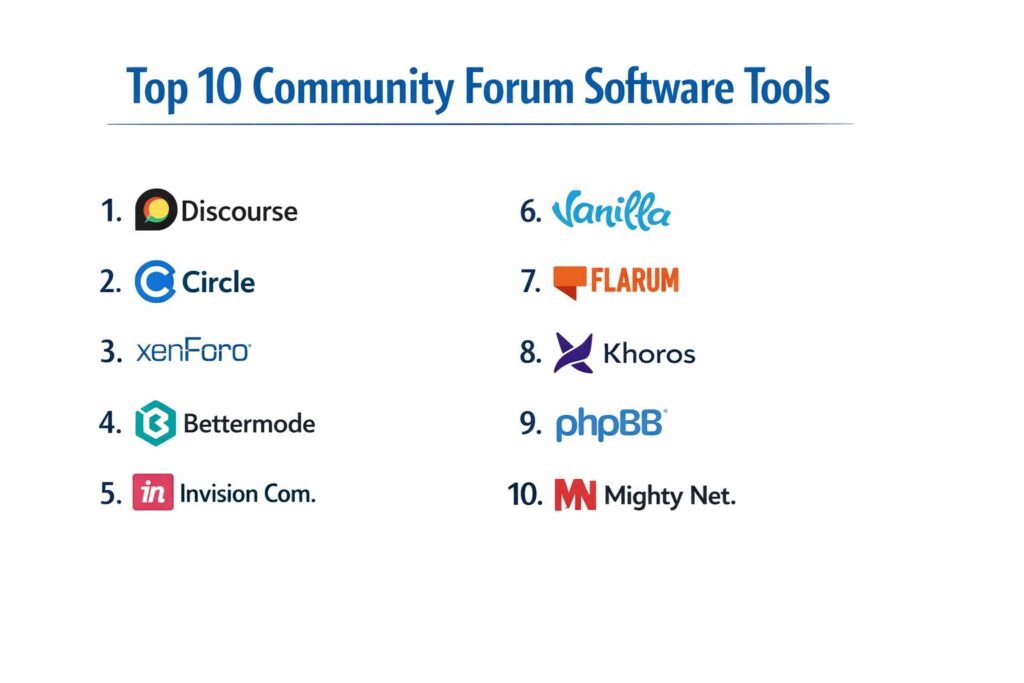
Introduction
Community forum software is the digital infrastructure designed to facilitate structured, persistent, and searchable discussions among a group of users. Unlike real-time chat applications that prioritize immediate presence, forum platforms are built for longevity, ensuring that knowledge shared today remains accessible and organized for future members. These tools utilize hierarchical structures—categories, sub-forums, and threaded topics—to manage large volumes of information while providing sophisticated moderation capabilities to maintain a healthy environment. In a professional context, these platforms serve as the primary hub for customer support, peer-to-peer learning, and product feedback loops.
The strategic value of a dedicated community space lies in its ability to centralize brand interactions and build institutional memory. Modern organizations leverage these tools to deflect support tickets by empowering users to help one another, significantly reducing operational costs. Furthermore, forums act as a powerful engine for organic search traffic, as long-form discussions often rank well for specific user queries. When selecting a platform, it is crucial to evaluate the software’s extensibility, its ability to integrate with existing identity management systems, and the robustness of its data export features to prevent vendor lock-in. A well-implemented forum is not just a message board; it is a collaborative asset that drives user retention and brand advocacy.
Best for: SaaS product teams, enterprise customer success departments, open-source projects, and membership-based organizations looking to foster deep, long-term engagement.
Not ideal for: High-speed, transient team communication or basic one-way broadcast announcements. If your goal is a casual group chat without the need for archiving or complex moderation, a standard messaging app is more appropriate.
Key Trends in Community Forum Software
The integration of artificial intelligence is currently transforming community management by automating the heavy lifting of moderation and content organization. AI-driven sentiment analysis helps moderators identify potential conflicts before they escalate, while intelligent auto-tagging ensures that new posts are categorized accurately without manual intervention. There is also a significant move toward “headless” community platforms, where the forum’s backend is used to power community features directly inside a company’s main application or website via high-performance APIs.
Gamification has evolved beyond simple badges; modern systems now use complex trust levels and reputation scores to automatically grant permissions to helpful members, creating a self-governing ecosystem. Mobile responsiveness is no longer an optional feature but a core architectural requirement, with many platforms offering “Progressive Web App” capabilities or native mobile shells to ensure engagement across all devices. Finally, data privacy and sovereignty have become paramount, leading to a resurgence in self-hosted, open-source solutions that give organizations total control over their user data and compliance standards.
How We Selected These Tools
The selection process for this list involved an intensive review of technical architecture, market stability, and the depth of administrative controls. We prioritized platforms that offer a balance between a modern, intuitive user experience and the technical power required to manage thousands of active threads. Performance was a primary benchmark, specifically evaluating how these systems handle database queries and concurrent users during peak traffic periods. We also examined the quality of the developer documentation, as a platform’s ability to be customized is vital for professional integration.
Security and compliance were heavily weighted, focusing on tools that offer robust single sign-on options and granular permission sets. We looked for software that provides a clear roadmap for future updates and has an active ecosystem of developers and consultants. User-facing features, such as search efficiency and notification management, were also tested to ensure they meet the expectations of modern digital citizens. Ultimately, we chose ten tools that represent the full spectrum of community needs—from lightweight open-source projects to massive enterprise-grade suites.
1. Discourse
Discourse is widely considered the modern standard for forum software, moving away from the cluttered layouts of the past toward a clean, mobile-first interface. It is an open-source platform that emphasizes civilized discussion through its unique trust system and “infinite scrolling” experience. It is the preferred choice for tech companies and developer communities who need a highly reliable and searchable knowledge base.
Key Features
The software features a robust trust-level system that automatically promotes users based on their positive contributions. It includes a real-time notification engine and supports rich media embedding through a simple drag-and-drop interface. The platform is built with a powerful API, allowing for deep integration with other services, and features a built-in search engine optimized for fast results across millions of posts. It also offers a comprehensive set of moderation tools, including shadow-banning and automated spam protection.
Pros
It offers an exceptional user experience that feels more like a modern social network than a traditional bulletin board. The open-source nature ensures that you have total control over your data and code.
Cons
Self-hosting requires specialized technical knowledge, specifically with Docker. The extensive range of settings in the admin panel can be overwhelming for a first-time community manager.
Platforms and Deployment
Web-based, compatible with all modern browsers, and offers a mobile app shell. It can be self-hosted on Linux servers or used via a managed cloud service.
Security and Compliance
Supports enterprise-grade authentication including SAML and OAuth. It is designed to be highly secure, with frequent updates to patch any emerging vulnerabilities.
Integrations and Ecosystem
It integrates seamlessly with tools like Slack, GitHub, and various CRM platforms. There is a massive library of community-built plugins and themes available to extend its functionality.
Support and Community
Offers a very active meta-community for self-hosters and professional, high-tier support for enterprise customers.
2. Circle
Circle is a modern community platform designed specifically for creators, coaches, and brands who want to combine discussions, events, and memberships in one place. It prioritizes a sleek, “all-in-one” experience that feels like a private social network rather than a technical forum. It is particularly popular for communities that are built around online courses or premium content.
Key Features
The platform allows for the creation of “spaces” which can be organized into different groups for discussions, curated content, or live events. It features a built-in payment system for managing memberships and subscriptions directly. Users can engage in real-time group chats and direct messaging alongside traditional threaded posts. The software also offers a native live-streaming feature, allowing community leaders to host broadcasts without leaving the platform.
Pros
The interface is incredibly intuitive and visually appealing, making it easy for non-technical users to join and participate. The built-in monetization tools simplify the process of running a paid community.
Cons
It is a closed-source SaaS platform, meaning you have less control over the underlying infrastructure compared to open-source options. Customization is somewhat limited to the layouts provided by the developer.
Platforms and Deployment
Cloud-based SaaS accessible via web and native iOS/Android applications.
Security and Compliance
Provides standard secure login options and data encryption. It adheres to general data protection standards suitable for global communities.
Integrations and Ecosystem
It has a strong integration with Zapier and specialized tools like Teachable and Memberstack, making it ideal for course creators.
Support and Community
Offers excellent customer support and a dedicated community for “Circle Experts” to share best practices.
3. XenForo
XenForo is a premium, self-hosted forum software known for its extreme speed and highly polished administrative tools. It is a favorite among professional forum owners who want a high-performance system with a classic structure but modern sensibilities. It is built to be efficient, even when managing massive communities with millions of posts.
Key Features
The software includes a highly sophisticated template system that allows for total visual customization. It features a robust alert system that keeps users engaged by notifying them of relevant activity in real-time. The search engine is exceptionally fast and can be upgraded with specialized add-ons for even larger datasets. It also includes built-in SEO tools to help the community grow through search engine traffic and a dedicated system for managing user upgrades and trophies.
Pros
It is one of the fastest forum platforms available, ensuring a snappy experience for users regardless of community size. The community of developers creating third-party add-ons is incredibly deep and professional.
Cons
There is a licensing fee required for the software, and professional hosting is an additional cost. The initial setup requires more technical effort than a cloud-based SaaS solution.
Platforms and Deployment
PHP/MySQL based, requiring a web server. It is primarily a self-hosted solution but can be managed via third-party hosting partners.
Security and Compliance
Offers robust security features, including two-factor authentication for admins and comprehensive permission masks.
Integrations and Ecosystem
It has a well-documented API and thousands of available add-ons ranging from complex commerce systems to simple UI tweaks.
Support and Community
Provides professional ticket-based support and has one of the most knowledgeable user communities in the industry.
4. Bettermode
Bettermode (formerly Tribe) is a versatile community platform that focuses on helping businesses build customer-centric communities. It is designed to be highly embeddable, allowing companies to integrate forum features directly into their existing products. It uses a “blocks” system for building pages, making it highly customizable without needing to write code.
Key Features
The platform uses a modular design studio where admins can drag and drop different elements to create custom layouts. It features a sophisticated AI-driven moderation engine that can automatically flag or hide inappropriate content. The software supports various “space” types, including Q&A, ideation, and traditional discussions. It also offers deep analytics to help community managers understand user behavior and engagement trends.
Pros
The ability to embed the community experience directly into a SaaS product is a significant advantage for customer success teams. It is very easy to white-label the platform to match your brand’s identity.
Cons
The pricing can scale significantly as your community grows in size and activity. Some advanced features are restricted to the higher-tier enterprise plans.
Platforms and Deployment
Cloud-based SaaS with a focus on web and mobile-responsive experiences.
Security and Compliance
Enterprise-ready with SOC2 compliance and advanced SSO options. It provides high-level data security suitable for large corporate deployments.
Integrations and Ecosystem
Integrates deeply with business tools like Salesforce, HubSpot, and Intercom. It also offers a GraphQL API for custom development.
Support and Community
Provides dedicated account management for enterprise clients and an extensive knowledge base for all users.
5. Invision Community
Invision Community is a comprehensive suite of community tools that goes beyond simple forums to include blogs, galleries, calendars, and a commerce system. It is designed for organizations that want a full-featured community portal where users can share various types of content in one central location.
Key Features
The software includes a “Pages” database system that allows you to build custom content types and directories. It features a powerful commerce module for selling physical goods, digital downloads, or community subscriptions. The platform includes a sophisticated notification center and a unified search that covers all different content types. It also offers advanced moderation features, including a “warning” system and automated rules for user management.
Pros
It is a truly all-in-one solution, eliminating the need for multiple different plugins or platforms. The design tools are powerful, allowing for a very professional-looking community hub.
Cons
The software is complex and can take time to master for both users and administrators. The cost of the full suite is higher than many standalone forum tools.
Platforms and Deployment
Available as a self-hosted PHP application or as a managed cloud service.
Security and Compliance
Offers extensive security settings and is compliant with major global data regulations. Managed cloud versions include automated backups and security monitoring.
Integrations and Ecosystem
Has a thriving marketplace for themes and applications, as well as robust hooks for integrating with external databases.
Support and Community
Provides high-quality technical support and a large community of developers who can be hired for custom projects.
6. Higher Logic Vanilla
Vanilla is a cloud-based forum platform that focuses on providing an elegant, branded experience for mid-market and enterprise companies. It is known for its ability to handle large-scale communities while maintaining a simple and clean user interface. It is often chosen by brands that want a professional, “set it and forget it” community solution.
Key Features
The platform features an advanced gamification engine that uses reputation and badges to drive engagement. It includes a specialized “Product Ideation” tool where users can suggest and vote on new features for a product. The software provides deep moderation capabilities, including automated workflows for handling reported content. It also features a robust theme engine that allows for precise control over the community’s visual identity.
Pros
The platform is exceptionally stable and capable of scaling to millions of users without performance degradation. Its focus on customer advocacy makes it ideal for B2B companies.
Cons
It is a premium enterprise product with a price point that reflects its target market. It may lack some of the “hobbyist” features found in older forum platforms.
Platforms and Deployment
Managed cloud platform (SaaS) with a strong emphasis on mobile responsiveness and web standards.
Security and Compliance
Meets high-level enterprise security requirements and offers detailed audit logs and permission management.
Integrations and Ecosystem
Integrates with major CRM and support platforms like Zendesk and Salesforce, ensuring that community data is synced with customer records.
Support and Community
Provides top-tier enterprise support, including dedicated success managers for larger accounts.
7. Flarum
Flarum is a lightweight, open-source forum software built with modern web technologies. It is designed to be fast, simple, and aesthetically pleasing right out of the box. It is an excellent choice for smaller communities or projects that want a modern look without the complexity of larger enterprise platforms.
Key Features
The software uses a single-page application (SPA) architecture, meaning the page never reloads when navigating between discussions. It features a modular design where almost every function is a separate extension, allowing you to keep the core software lean. The user interface is highly intuitive, featuring a two-pane layout that makes browsing topics very efficient. It also includes a robust permission system and support for various third-party authentication providers.
Pros
It is one of the most beautiful and modern-feeling forum platforms available for free. The codebase is clean and easy for developers to extend with their own logic.
Cons
The project is still in a continuous state of development, and some advanced features may require community-built extensions. It lacks some of the built-in “all-in-one” features of larger suites.
Platforms and Deployment
PHP/MySQL based, requiring a modern web server. It is primarily a self-hosted solution.
Security and Compliance
Security is managed through regular updates and a modern code structure. Users are responsible for their own server security.
Integrations and Ecosystem
Has a growing ecosystem of extensions that add features like SEO tools, social login, and advanced text editing.
Support and Community
Supported by a passionate open-source community through forums and GitHub documentation.
8. Khoros
Khoros (formerly Lithium) is the “heavy hitter” in the community space, designed for the world’s largest brands that need to manage massive user bases across multiple global regions. It is an enterprise-grade social media and community management platform that provides industrial-strength tools for engagement and analytics.
Key Features
The platform features an advanced “Knowledge Hub” system that turns community discussions into a structured support library. It includes military-grade security and moderation tools capable of managing thousands of posts per minute. The software provides deep AI-driven insights into community health and member sentiment. It also features a sophisticated workflow engine that allows community teams to coordinate with support and marketing departments seamlessly.
Pros
It is the most scalable community platform in existence, used by many of the world’s largest companies. The level of analytical detail it provides is unmatched in the industry.
Cons
The cost and complexity make it inaccessible for small or even medium-sized businesses. The implementation process can be lengthy and requires significant corporate resources.
Platforms and Deployment
Enterprise cloud platform with full support for global deployments and high availability.
Security and Compliance
Adheres to the highest global security standards, including specialized compliance for regulated industries like finance and healthcare.
Integrations and Ecosystem
Integrates with virtually every major enterprise software suite, acting as a central node in a company’s digital ecosystem.
Support and Community
Provides elite, 24/7 enterprise support and a dedicated consulting team to help with community strategy and growth.
9. phpBB
phpBB is the classic choice for open-source forums and has been a staple of the internet for decades. It is a highly traditional bulletin board system that is completely free to use and offers an incredible amount of depth for those who want to customize their own discussion space.
Key Features
The software includes a very granular permission system that allows for precise control over what every user can see and do. It features a robust extension system that can add almost any imaginable feature to the forum. The platform supports an unlimited number of categories and sub-forums, making it ideal for large, structured communities. It also includes built-in tools for managing user groups, private messaging, and automated spam prevention.
Pros
It is completely free and has zero licensing fees, making it accessible to anyone. Because it has been around for so long, there is an answer to almost every technical question you might have.
Cons
The default interface feels very dated compared to modern alternatives like Discourse or Circle. Managing and updating the software requires a fair amount of technical manual labor.
Platforms and Deployment
PHP/MySQL based, capable of running on almost any standard web hosting environment.
Security and Compliance
Has a long history of security updates and a dedicated security team. Being open-source, the code is transparent and can be audited by the user.
Integrations and Ecosystem
Offers thousands of free styles and extensions. While it doesn’t have many modern “native” SaaS integrations, it can be customized to work with almost anything.
Support and Community
Backed by one of the largest and oldest open-source communities on the web, with extensive documentation available in dozens of languages.
10. Mighty Networks
Mighty Networks is a platform that focuses on building “communities you can own,” combining forums with online courses and content subscriptions. It is designed to replace the need for Facebook Groups by providing a branded, private space for members to interact and learn together.
Key Features
The platform features a “dynamic feed” that looks and feels like a social media timeline but is organized around community topics. It includes built-in tools for creating and selling online courses with a dedicated student experience. Users can join various “sub-groups” within the main community for more specialized discussions. The software also provides a native mobile app option, allowing members to engage with the community through a branded icon on their phone’s home screen.
Pros
It is excellent for organizations that want to monetize their expertise through courses and community access. The focus on member-to-member connections helps build a more vibrant and active space.
Cons
The platform can feel a bit “busy” due to the high number of different features available. It is a hosted service, so you are subject to their specific platform rules and updates.
Platforms and Deployment
Cloud-based SaaS with high-quality web and native mobile application support.
Security and Compliance
Provides secure payment processing and standard data protection for members. It is designed for brand safety and privacy.
Integrations and Ecosystem
Strong integration with Zapier allows it to connect with thousands of other apps, and it has built-in tools for managing member data.
Support and Community
Offers a wealth of resources for “Community Design,” helping leaders build active and sustainable spaces.
Comparison Table
| Tool Name | Best For | Platform(s) Supported | Deployment | Standout Feature | Public Rating |
| 1. Discourse | Modern Discussion | Web, Cloud, Linux | Hybrid | Trust-level System | 4.8/5 |
| 2. Circle | Creators & Coaches | Web, iOS, Android | Cloud (SaaS) | In-app Live Streaming | 4.7/5 |
| 3. XenForo | High Performance | Web (PHP/MySQL) | Self-hosted | Ultra-fast Core | 4.6/5 |
| 4. Bettermode | Customer Success | Web, Cloud | Cloud (SaaS) | Block-based Design | 4.5/5 |
| 5. Invision Community | All-in-one Portals | Web, Cloud | Hybrid | Integrated Commerce | 4.4/5 |
| 6. Higher Logic Vanilla | Enterprise Advocacy | Web, Cloud | Cloud (SaaS) | Ideation & Feedback | 4.3/5 |
| 7. Flarum | Minimalist Forums | Web (PHP/MySQL) | Self-hosted | SPA Architecture | 4.5/5 |
| 8. Khoros | Fortune 500 | Web, Enterprise Cloud | Cloud (SaaS) | AI Sentiment Analysis | 4.2/5 |
| 9. phpBB | Classic Open-source | Web (PHP/MySQL) | Self-hosted | Deep Permission System | 4.0/5 |
| 10. Mighty Networks | Courses & Groups | Web, iOS, Android | Cloud (SaaS) | Branded Mobile Apps | 4.6/5 |
Evaluation & Scoring of Community Forum Software
The scoring below is a comparative model intended to help shortlisting. Each criterion is scored from 1–10, then a weighted total from 0–10 is calculated using the weights listed. These are analyst estimates based on typical fit and common workflow requirements, not public ratings.
Weights:
- Core features – 25%
- Ease of use – 15%
- Integrations & ecosystem – 15%
- Security & compliance – 10%
- Performance & reliability – 10%
- Support & community – 10%
- Price / value – 15%
| Tool Name | Core (25%) | Ease (15%) | Integrations (15%) | Security (10%) | Performance (10%) | Support (10%) | Value (15%) | Weighted Total |
| 1. Discourse | 10 | 6 | 9 | 9 | 9 | 9 | 10 | 9.05 |
| 2. Circle | 8 | 10 | 8 | 8 | 9 | 9 | 8 | 8.55 |
| 3. XenForo | 9 | 7 | 8 | 9 | 10 | 9 | 8 | 8.55 |
| 4. Bettermode | 8 | 9 | 10 | 9 | 8 | 8 | 7 | 8.35 |
| 5. Invision Com. | 10 | 6 | 8 | 8 | 7 | 9 | 7 | 8.15 |
| 6. Vanilla | 8 | 8 | 9 | 10 | 8 | 10 | 6 | 8.30 |
| 7. Flarum | 7 | 8 | 6 | 7 | 9 | 7 | 10 | 7.60 |
| 8. Khoros | 10 | 4 | 10 | 10 | 9 | 10 | 5 | 8.10 |
| 9. phpBB | 8 | 5 | 5 | 8 | 8 | 7 | 10 | 7.20 |
| 10. Mighty Net. | 8 | 9 | 8 | 8 | 8 | 9 | 8 | 8.25 |
How to interpret the scores:
- Use the weighted total to shortlist candidates, then validate with a pilot.
- A lower score can mean specialization, not weakness.
- Security and compliance scores reflect controllability and governance fit, because certifications are often not publicly stated.
- Actual outcomes vary with assembly size, team skills, templates, and process maturity.
Which Community Forum Software Tool Is Right for You?
Solo / Freelancer
For an individual looking to host a simple discussion space without a budget, open-source options are the gold standard. They provide professional-grade features for the cost of basic web hosting, allowing you to build a community without financial pressure.
SMB
Small businesses should prioritize ease of use and aesthetics to ensure high engagement with minimal management time. A hosted solution that looks great out of the box allows a small team to focus on content and community building rather than technical maintenance.
Mid-Market
At this level, the focus turns to branding and integration with other business tools. Software that offers white-labeling and connects with your existing CRM or support helpdesk will provide the best return on investment by creating a seamless customer journey.
Enterprise
Large organizations need industrial-strength security and the ability to manage complex data compliance. Tools designed for this market offer the audit logs, specialized permissions, and dedicated support teams necessary to maintain a global community safely.
Budget vs Premium
The decision often comes down to “time vs money.” Free open-source tools require more time for setup and maintenance, while premium SaaS platforms charge a monthly fee to handle all the technical details for you, allowing you to launch instantly.
Feature Depth vs Ease of Use
If you need highly specialized features like integrated shops or complex database systems, you will have to accept a steeper learning curve. If your goal is simple, high-engagement discussion, a streamlined modern platform will be more effective.
Integrations & Scalability
A forum that cannot talk to your other software will eventually become a data silo. Ensure the tool you choose has a robust API or native integrations with the apps you already use to manage your users and their data.
Security & Compliance Needs
If you are operating in a regulated industry or handling sensitive data, security is your primary constraint. Look for platforms that offer SOC2 compliance, advanced SSO, and clear data residency options to meet your legal requirements.
Frequently Asked Questions (FAQs)
1. Is a forum better than a Facebook group?
A forum offers total ownership of your data, better searchability, and a structured environment that you can brand entirely as your own. Unlike social media groups, forums allow you to create long-term knowledge bases that are not subject to changing platform algorithms.
2. Can I migrate from one forum tool to another?
Yes, most professional tools offer import scripts for the most popular platforms. However, migrations can be technically complex, so it is often wise to choose a platform that supports open data standards to make future moves easier.
3. Do forums help with SEO?
Forums are incredibly powerful for SEO because they naturally generate a high volume of long-tail keyword content. When users ask questions and get detailed answers, those pages often rank well in search results, driving new visitors to your site.
4. What is the difference between self-hosting and a managed cloud?
Self-hosting gives you total control but requires you to handle updates, security, and server performance. A managed cloud (SaaS) provider takes care of all the technical work for a monthly fee, letting you focus entirely on your community.
5. How do I prevent spam in my community?
Modern forum tools use a combination of AI filtering, CAPTCHAs, and community-driven moderation. Setting up “trust levels” where new users have limited permissions until they have proven themselves is one of the most effective ways to stop spam.
6. Can I monetize my forum?
Many platforms include built-in tools for selling memberships, charging for access to specific sub-forums, or running targeted advertisements. You can also integrate external payment processors to handle subscriptions and physical goods.
7. Are forums mobile-friendly?
Most modern forum software is built with “responsive design,” meaning it automatically adjusts to look great on any screen size. Some platforms also offer native iOS and Android apps for a more integrated mobile experience.
8. What is “Gamification” in a forum context?
Gamification involves using points, badges, and leaderboards to reward users for positive behavior, such as answering questions or starting helpful threads. This encourages activity and helps identify the most valuable members of your community.
9. How much does community forum software cost?
The cost ranges from completely free for open-source software to several thousand dollars per month for enterprise-level suites. Managed hosting for mid-range tools typically starts around $20 to $50 per month.
10. What is a “Threaded Discussion”?
Threaded discussion means that replies to a specific post are visually grouped together, often indented. This makes it easy to follow multiple different conversations happening within a single topic without getting confused.
Conclusion
Building a successful online community is a long-term investment that requires the right balance of human strategy and technical infrastructure. The tool you choose acts as the “architecture” of your digital city, dictating how people interact, how knowledge is preserved, and how your brand is perceived. Whether you prioritize the total freedom of an open-source solution like Discourse or the seamless, all-in-one experience of a platform like Circle, the key is to select a system that can grow alongside your audience. By focusing on scalability, security, and a superior user experience, you create a space where users feel empowered to contribute, ultimately turning your community into a sustainable engine for growth, support, and innovation.