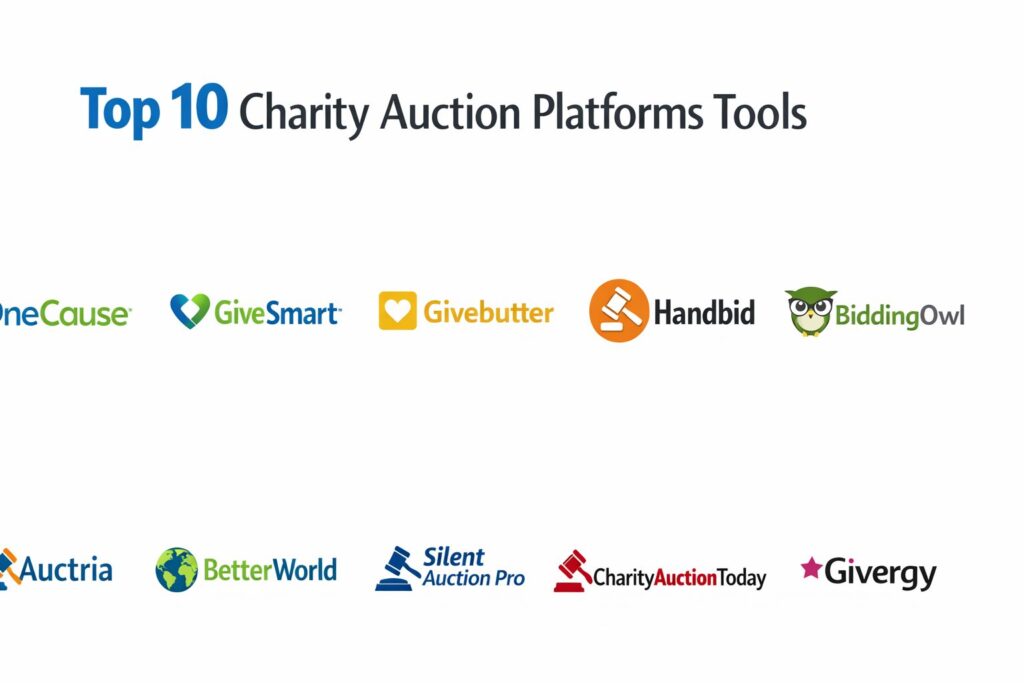
Introduction
Charity auction platforms represent a critical intersection of philanthropic intent and sophisticated e-commerce technology. These digital environments facilitate the movement of donated goods and experiences from benefactors to the highest bidders, ensuring that non-profit organizations can maximize their revenue recovery with minimal operational friction. Modern auction systems have evolved beyond simple bidding interfaces; they now integrate complex financial reconciliation, automated donor communication, and real-time data visualization. For any organization, the shift to a dedicated digital platform is no longer optional but a strategic necessity to reach a global audience and overcome the geographic limitations of traditional physical events.
The adoption of these platforms is driven by the need for transparency and efficiency in the donation lifecycle. Manually managing bid sheets and payment collection is prone to human error and often results in lost revenue. Digital solutions provide a secure, auditable trail for every transaction, satisfying both legal compliance and donor trust. When selecting a platform, decision-makers must evaluate the total cost of ownership, including flat fees and percentage-based commissions. Additionally, the technical infrastructure must support high-concurrency traffic during the final minutes of an auction and offer seamless integration with existing donor management systems. A well-chosen platform acts as a force multiplier, allowing small teams to execute enterprise-level fundraising campaigns with precision.
Best for: Non-profit organizations, educational institutions, healthcare foundations, and community groups seeking to modernize their gala events and online fundraising efforts.
Not ideal for: Individual sellers looking for a generic marketplace like eBay or businesses running commercial liquidations without a charitable component.
Key Trends in Charity Auction Platforms
The most significant trend is the move toward “mobile-first” or even “mobile-only” bidding experiences. Donors now expect to participate in auctions via their smartphones, receiving instant push notifications when they are outbid, which naturally drives up final prices. There is also a major shift toward hybrid event models, where software must simultaneously manage in-person attendees and remote bidders without lag. AI is increasingly used to generate compelling item descriptions and predict which donors are most likely to bid on specific categories based on their historical behavior.
Gamification has also become a standard feature, with live leaderboards and “thermometer” displays that create a sense of urgency and community during a live event. Integration with digital wallets and instant payment processors has significantly reduced the time it takes to close out an auction, with many platforms now offering one-click checkout. Finally, there is a growing emphasis on sustainability, with digital bid sheets and electronic catalogs replacing large amounts of printed material, aligning the event’s execution with the organization’s broader social values.
How We Selected These Tools
The selection process for these platforms focused on reliability, donor experience, and administrative depth. We prioritized software that has demonstrated a high success rate in live-event environments where technical failure is not an option. Market reputation and long-term stability were key factors, as non-profits need partners they can trust with sensitive financial data. We also examined the flexibility of pricing models, looking for options that accommodate both small volunteer-led groups and large international NGOs.
User interface design was scrutinized from two perspectives: the simplicity for the donor and the robustness for the administrator. We sought out platforms that offer specialized features like “proxy bidding” and “buy-it-now” options, which are essential for maximizing revenue. Furthermore, the availability of professional support and training resources was a deciding factor, as many users are volunteers who require clear guidance. Finally, we looked for platforms that offer strong security protocols and standard integrations with popular CRM and accounting software to ensure a holistic fundraising ecosystem.
1. OneCause
OneCause is an enterprise-grade fundraising platform known for its robust capabilities in managing high-stakes galas and complex mobile auctions. It is designed to handle every aspect of an event, from initial ticketing and table management to the final second of bidding. The platform is particularly favored by large organizations that require a high degree of customization and white-glove support during live productions.
Key Features
The software includes a sophisticated AI-powered tool for generating item descriptions, which saves significant administrative time. It offers a seamless check-in and checkout process that utilizes pre-authorized credit cards to eliminate long lines. The real-time “Smart Bidding” feature keeps donors engaged with instant outbid alerts and personalized recommendations. Administrators have access to deep analytics that track donor behavior throughout the event. It also supports specialized “Paddle Raise” features for direct donations during a live program.
Pros
The platform is exceptionally reliable for large-scale, high-concurrency events. Its comprehensive feature set means organizations rarely need to supplement it with other software.
Cons
The pricing reflects its enterprise status and may be prohibitive for very small groups. The sheer number of features can also create a steeper learning curve for occasional users.
Platforms and Deployment
Cloud-based web platform with mobile-optimized interfaces for donors.
Security and Compliance
PCI Level 1 compliant, ensuring the highest standards for processing donor financial information.
Integrations and Ecosystem
Offers direct integrations with major non-profit CRMs like Salesforce and Blackbaud, as well as various marketing automation tools.
Support and Community
Provides extensive professional services, including on-site event staff and dedicated success managers.
2. GiveSmart
GiveSmart, by CommunityBrands, focuses on creating a highly visual and interactive experience for donors. It is built to support year-round fundraising, allowing organizations to run multiple auctions, peer-to-peer campaigns, and donation pages from a single dashboard. The platform emphasizes ease of use, making it popular for organizations that rely heavily on volunteer labor.
Key Features
The platform features a “Design Center” that allows for the creation of on-brand, high-conversion auction pages without technical skills. It includes integrated text-to-donate and mobile bidding tools that are intuitive for users of all ages. Live streaming capabilities are built-in, supporting virtual and hybrid gala models. The system also manages “Sign-up Parties” and fixed-price merchandise sales alongside traditional bidding. Automated tax receipts are sent immediately upon payment, simplifying the post-event workload.
Pros
The user interface is modern and very easy for donors to navigate. It offers great flexibility for organizations that want to run diverse types of fundraising campaigns throughout the year.
Cons
Some users have reported that the initial setup can be time-consuming due to the deep level of customization available. Pricing usually requires a consultative call rather than a transparent flat rate.
Platforms and Deployment
Web-based cloud platform accessible via any modern browser.
Security and Compliance
Adheres to strict data privacy standards and uses encrypted payment gateways for all transactions.
Integrations and Ecosystem
Integrates with the broader CommunityBrands suite and other popular non-profit management tools.
Support and Community
Offers 24/7 customer service and a vast knowledge base of training materials and best practices.
3. Givebutter
Givebutter is a modern, social-driven fundraising platform that has gained massive popularity for its transparent pricing and high-energy donor interface. It combines auctions with a social media-like feed, where donors can see real-time updates and leave messages of support. It is particularly effective for organizations looking to engage a younger or more tech-savvy donor base.
Key Features
The platform offers a completely mobile-first bidding experience that requires no app download. It features a unique “Tipping” model where the platform can be used for free if donors choose to leave an optional tip. The auction module is integrated with peer-to-peer fundraising, allowing supporters to champion specific items. Real-time leaderboards and “Goal Trackers” help build momentum during the final hours of a campaign. It also supports modern payment methods like Apple Pay and Google Pay.
Pros
The setup is incredibly fast, often taking only minutes to launch a live campaign. The social features significantly increase the “viral” potential of an auction.
Cons
While powerful, it may lack some of the deeply specialized “back-office” event management features found in enterprise suites. The tip-based model may not appeal to every organization’s donor culture.
Platforms and Deployment
Cloud-hosted web application with a strong focus on mobile responsiveness.
Security and Compliance
Uses industry-standard encryption and secure payment processing through Stripe.
Integrations and Ecosystem
Connects with over 1,000 apps through Zapier and offers native integrations with popular CRMs.
Support and Community
Known for a very responsive support team and an active community of non-profit users.
4. Handbid
Handbid distinguishes itself by offering a native mobile application for bidding, rather than just a mobile-responsive website. This approach allows for a more “game-like” experience with faster notifications and smoother interactions. It is a favorite for organizations that want to maximize engagement during high-energy live auctions.
Key Features
The native app provides robust push notifications that are more reliable than browser-based alerts. It includes a “Proxy Bidding” engine that allows donors to set their maximum price and let the system bid on their behalf. The platform manages ticket sales, guest check-in, and paddle raises in one unified system. For large events, it supports iPad-based “Kiosks” for those who prefer not to use their own devices. It also offers detailed reporting on bidder engagement and item popularity.
Pros
The app-based bidding experience is widely considered one of the fastest and most engaging in the industry. It is highly effective at driving “bidding wars” that increase final sale prices.
Cons
Requiring donors to download an app can occasionally be a point of friction for less tech-savvy attendees. The pricing tiers are based on the number of items and auctions, which requires careful planning.
Platforms and Deployment
Native iOS and Android apps, supplemented by a web-based management portal.
Security and Compliance
SOC 2 compliance readiness and HECVAT completion for higher education security standards.
Integrations and Ecosystem
Integrates with Stripe for payment processing and offers an API for custom data connections.
Support and Community
Provides dedicated event coaches and on-site support options for larger galas.
5. BiddingOwl
BiddingOwl is a specialized platform tailored for small to mid-sized non-profits and schools that need a straightforward, cost-effective auction solution. It focuses on the core mechanics of bidding without the complexity of a full event management suite, making it ideal for groups with limited technical resources.
Key Features
The platform provides customizable auction homepages that allow for sponsor recognition and item galleries. It supports “Buy Now” and “Proxy Bidding” to cater to different donor preferences. Administrators can easily print bid sheets and item display cards for in-person components. The system handles automated notifications for winners and provides simple billing tools. It also allows for “Pre-Bidding” to start generating interest and revenue weeks before a main event.
Pros
It is extremely affordable, making it accessible to even the smallest community groups. The interface is simple and gets the job done without unnecessary bloat.
Cons
The visual design of the landing pages is somewhat dated compared to modern competitors. It lacks the advanced AI and data visualization features of higher-end platforms.
Platforms and Deployment
Cloud-based web platform accessible on all devices.
Security and Compliance
Uses secure, standard payment processing gateways to handle transactions.
Integrations and Ecosystem
Primarily a standalone tool, though it supports standard data exports for use in other systems.
Support and Community
Offers phone and email support, with a library of simple guides for volunteer organizers.
6. Auctria
Auctria is a versatile and highly affordable platform that scales well from small school auctions to large regional fundraisers. It is known for its transparent pricing and a comprehensive feature set that rivals much more expensive competitors.
Key Features
The platform includes a powerful website builder that allows users to create professional-looking auction sites with custom CSS. It supports multiple auction types, including silent, live, and “online-only.” The system excels at managing complex donor data and item procurement tracking. It features a robust mass-edit tool that allows administrators to update thousands of items simultaneously via a spreadsheet-like interface. It also offers text-based bidding for donors who prefer not to use a web interface.
Pros
Offers one of the best feature-to-price ratios in the market. The ability to manage both the website and the auction data in one place is a major time-saver.
Cons
The administrative interface can be complex due to the sheer number of configuration options. Some users may find the learning curve steeper than the more “social-first” platforms.
Platforms and Deployment
Web-based cloud installation.
Security and Compliance
Integrates with PCI-compliant processors like Stripe and Authorize.net.
Integrations and Ecosystem
Strong connections to payment gateways and basic export functions for donor CRMs.
Support and Community
Highly rated for its responsive email support and detailed documentation.
7. BetterWorld
BetterWorld is a modern fundraising suite that offers its entire auction platform for free to non-profits, funded primarily by optional donor contributions. It is designed for aesthetic beauty and simplicity, making it a favorite for organizations that want a premium look without the premium price tag.
Key Features
The platform features a clean, “Pinterest-style” layout for browsing auction items. It allows for unlimited auctions, items, and bidders on its free tier. In addition to auctions, it includes modules for giveaways, raffles, and direct donation campaigns. The system automatically handles winner notifications and payment collection. It also provides impact reporting tools that show donors exactly how their contributions are making a difference.
Pros
Completely free to the organization, which is ideal for maximizing every dollar raised. The modern design helps elevate the professional image of the non-profit.
Cons
Because it relies on donor tips, some organizations may worry about the “ask” competing with their own fundraising. It lacks some of the hyper-specialized features for massive live galas.
Platforms and Deployment
Cloud-hosted web platform.
Security and Compliance
Uses bank-level encryption and secure payment processing through established partners.
Integrations and Ecosystem
Integrates with popular marketing and management tools through Zapier.
Support and Community
Offers a friendly support team and a focus on empowering small non-profits through education.
8. Silent Auction Pro
Silent Auction Pro is a long-standing player in the industry, known for its extreme reliability and focus on the practical logistics of event management. It is designed by people who understand the “controlled chaos” of a live fundraising event and provides the tools to manage it.
Key Features
The software provides specialized tools for group and table management, ensuring that seating charts are handled alongside the auction. It includes professional “Bidder Paddle” generation and hardware rentals like card swipers for in-person events. The “Event Coach” feature provides users with expert guidance throughout the setup process. It features a robust system for tracking sponsorships and ensuring fulfillment. The check-out process is optimized for speed, allowing for “Mass Checkout” of all winners at once.
Pros
The level of personalized support through “Event Coaches” is a major differentiator. It is highly dependable for in-person events that require physical hardware and staff.
Cons
The user interface for both admins and donors can feel a bit industrial and less “modern” than web-first competitors. The pricing can be complex depending on the modules selected.
Platforms and Deployment
Web-based multi-user platform.
Security and Compliance
Full PCI compliance and secure data management practices.
Integrations and Ecosystem
Supports integrations with popular accounting software and payment processors.
Support and Community
Renowned for its “Event Coaches” and high-quality phone support.
9. CharityAuctionToday
CharityAuctionToday is built around speed and simplicity, with a “Setup Wizard” that can guide a user through creating an entire auction in under five minutes. It is perfect for organizations that need to launch a professional auction quickly with minimal technical training.
Key Features
The platform features automated item procurement tools that help organizations find donated goods more easily. It offers “Pre-Bidding” to build excitement and “Buy It Now” options to capture immediate revenue. The mobile-optimized bidding pages require no app download and are designed for high-speed interaction. It includes a bulk image and data uploader for managing large inventories. The system also features “Sponsor Highlight” blocks to provide additional value to corporate partners.
Pros
The ease of setup is unmatched, making it the best choice for busy volunteers. It offers a clear, flat-rate pricing model that is easy to budget for.
Cons
It may lack the deep “all-in-one” ecosystem features (like donor CRM) found in larger enterprise platforms. The customization of the page layout is somewhat restricted compared to other tools.
Platforms and Deployment
Cloud-based web platform.
Security and Compliance
Standard secure payment processing and data protection protocols.
Integrations and Ecosystem
Connects with major payment gateways and allows for easy data export.
Support and Community
Provides a helpful knowledge base and email support focused on rapid problem-solving.
10. Givergy
Givergy is a global platform that specializes in high-end fundraising events, offering both a powerful software suite and a range of “no-risk” auction items. It is often chosen by organizations that want to supplement their own items with luxury travel and unique experiences to drive higher bids.
Key Features
The platform supports silent auctions, live auctions, and “Sealed Bids” for exclusive items. It features a unique system where the platform can provide high-end items for the auction on a consignment basis. Real-time “Outbid” notifications and live leaderboards are standard. It includes a guest messaging system to keep attendees informed throughout the event. The checkout process is fully automated, charging winning bidders the moment the auction closes to prevent non-payment.
Pros
The access to “no-risk” luxury items can significantly boost the revenue of an auction without any upfront cost. It has a very polished, premium feel suitable for high-net-worth donor events.
Cons
Managing “no-risk” items requires careful attention to the “reserve” prices to ensure the organization makes a profit. The full-service model can be more expensive than self-service alternatives.
Platforms and Deployment
Cloud-based platform with a focus on mobile and tablet interfaces.
Security and Compliance
Utilizes industry-standard encryption and secure processing via Stripe.
Integrations and Ecosystem
Syncs with major fundraising CRMs and provides detailed data for post-event analysis.
Support and Community
Offers global 24/7 human support and expert advice on item selection and event strategy.
Comparison Table
| Tool Name | Best For | Platform(s) Supported | Deployment | Standout Feature | Public Rating |
| 1. OneCause | Enterprise Galas | Web / Mobile | Hybrid | AI Item Generator | 4.7/5 |
| 2. GiveSmart | All-in-one Events | Web / Mobile | Cloud | Interactive Design Center | 4.5/5 |
| 3. Givebutter | Social Fundraising | Web / Mobile | Cloud | Social Donor Feed | 4.9/5 |
| 4. Handbid | Mobile Engagement | iOS / Android / Web | Native App | Native Push Alerts | 4.7/5 |
| 5. BiddingOwl | Small Non-profits | Web / Mobile | Cloud | Affordable Simplicity | 4.6/5 |
| 6. Auctria | High-volume Items | Web / Mobile | Cloud | Mass Spreadsheet Edit | 4.8/5 |
| 7. BetterWorld | Budget-Conscious | Web / Mobile | Cloud | 100% Free Platform | 4.6/5 |
| 8. Silent Auction Pro | Hybrid Logistics | Web / Mobile | Local Hardware | Event Coaching | 4.8/5 |
| 9. CharityAuctionToday | Rapid Launch | Web / Mobile | Cloud | 5-Minute Setup Wizard | 4.5/5 |
| 10. Givergy | High-end Luxury | Web / Mobile | Cloud | No-Risk Luxury Items | 4.4/5 |
Evaluation & Scoring of Charity Auction Platforms
The scoring below is a comparative model intended to help shortlisting. Each criterion is scored from 1–10, then a weighted total from 0–10 is calculated using the weights listed. These are analyst estimates based on typical fit and common workflow requirements, not public ratings.
Weights:
- Core features – 25%
- Ease of use – 15%
- Integrations & ecosystem – 15%
- Security & compliance – 10%
- Performance & reliability – 10%
- Support & community – 10%
- Price / value – 15%
| Tool Name | Core (25%) | Ease (15%) | Integrations (15%) | Security (10%) | Performance (10%) | Support (10%) | Value (15%) | Weighted Total |
| 1. OneCause | 10 | 6 | 10 | 10 | 10 | 10 | 6 | 8.80 |
| 2. GiveSmart | 9 | 8 | 9 | 9 | 9 | 9 | 7 | 8.60 |
| 3. Givebutter | 8 | 10 | 10 | 9 | 10 | 9 | 10 | 9.15 |
| 4. Handbid | 9 | 7 | 8 | 10 | 10 | 9 | 8 | 8.70 |
| 5. BiddingOwl | 6 | 9 | 5 | 8 | 7 | 8 | 10 | 7.15 |
| 6. Auctria | 9 | 7 | 8 | 9 | 8 | 10 | 10 | 8.70 |
| 7. BetterWorld | 7 | 10 | 9 | 9 | 8 | 8 | 10 | 8.55 |
| 8. Silent Auction Pro | 9 | 7 | 7 | 9 | 9 | 10 | 8 | 8.40 |
| 9. CharityAuctionToday | 7 | 10 | 6 | 8 | 8 | 8 | 9 | 7.90 |
| 10. Givergy | 8 | 8 | 7 | 9 | 9 | 9 | 7 | 8.05 |
How to interpret the scores:
- Use the weighted total to shortlist candidates, then validate with a pilot.
- A lower score can mean specialization, not weakness.
- Security and compliance scores reflect controllability and governance fit, because certifications are often not publicly stated.
- Actual outcomes vary with assembly size, team skills, templates, and process maturity.
Which Charity Auction Platforms Tool Is Right for You?
Solo / Community Groups
If you are a single volunteer or a very small group running a one-time auction for a local cause, BetterWorld or BiddingOwl are the most logical choices. They remove the financial risk of high platform fees and offer a simple interface that doesn’t require a technical background to manage.
SMB
Small to mid-sized non-profits with an established donor base should look at Givebutter or Auctria. These tools offer a professional appearance and more advanced features like peer-to-peer integration, which can help expand your reach beyond your immediate community without a massive budget.
Mid-Market
For organizations running several events a year with a dedicated fundraising team, Handbid or GiveSmart provide the scalability and deep engagement tools needed to drive significant revenue. The focus here is on maximizing the ROI of every event through better donor communication.
Enterprise
Large national or international foundations require the stability and support of OneCause or Givergy. At this level, the ability to manage complex logistics, high traffic, and luxury item procurement is worth the higher investment in the platform and professional services.
Budget vs Premium
BetterWorld represents the ultimate budget choice by being free for the organization. On the premium end, OneCause provides a level of concierge service and advanced AI tools that can justify its cost for high-revenue galas where every 1% increase in bidding matters.
Feature Depth vs Ease of Use
CharityAuctionToday is the winner for pure ease of use with its rapid setup wizard. Conversely, Auctria and OneCause offer incredible depth for those who need to customize every field and automate complex back-office workflows, though they require more time to master.
Integrations & Scalability
If your organization relies heavily on a CRM like Salesforce, OneCause or GiveSmart are essential for keeping your donor data synchronized. For those who want to build a custom tech stack, Handbid’s API offers the flexibility needed to scale your operations.
Security & Compliance Needs
All top-tier platforms now offer strong security, but organizations with strict institutional requirements should look toward Handbid or OneCause, which provide higher-level compliance certifications and more robust role-based access controls for data management.
Frequently Asked Questions (FAQs)
1. What is the difference between a silent auction and a live auction?
In a silent auction, bidders place their offers privately over a period of time, often using a mobile device or paper sheet. In a live auction, an auctioneer calls out prices in real-time, and bidders compete publicly in a high-energy environment.
2. Do these platforms charge a percentage of the money raised?
Many platforms charge a small percentage fee (usually 1% to 5%) in addition to credit card processing fees. Some platforms, however, use a “tip-based” model where the organization pays zero platform fees if donors choose to support the software directly.
3. Can I run an auction if I don’t have any items yet?
Yes, several platforms offer “no-risk” consignment items, such as vacation packages or memorabilia. You only pay for these items if they sell above a certain price, allowing you to build a full auction without any upfront inventory costs.
4. How do donors pay for the items they win?
Most platforms require donors to register a credit card before they can bid. Once the auction ends, the system automatically charges the winning card and sends a digital receipt, making the checkout process nearly instantaneous.
5. Is it better to use a native app or a web browser for bidding?
Native apps, like Handbid, generally offer faster notifications and a smoother experience but require a download. Web-based platforms, like Givebutter, have lower friction because donors can bid immediately through a simple link.
6. Can I use these platforms for raffles as well?
Many charity auction tools include modules for raffles, giveaways, and “Buy It Now” merchandise. However, you must check local regulations, as raffles are often governed by different legal rules than auctions.
7. How do I handle physical items at a live event?
Most platforms allow you to print “Display Cards” with QR codes. Donors can scan the code to see more details and place their bids, while the physical item remains on a table for guests to inspect during the event.
8. What happens if a donor wins but doesn’t pay?
Because most platforms pre-authorize credit cards, non-payment is rare. However, if a payment fails, the administrative dashboard allows you to contact the donor or offer the item to the next highest bidder with a single click.
9. Can I run an auction globally?
Yes, cloud-based platforms allow anyone with a link to bid from anywhere in the world. You simply need to ensure that your shipping policies or digital delivery methods are clearly stated for international participants.
10. Do I need a professional auctioneer for a digital auction?
For a purely online or “silent” auction, an auctioneer is not necessary. For a live gala, a professional auctioneer can still add immense value by building excitement, even if they are using the software to track the final bids.
Conclusion
Navigating the landscape of charity auction platforms requires a strategic alignment of your organization’s goals with the technical capabilities of the software. Whether your priority is minimizing upfront costs through a tip-based model or maximizing high-net-worth engagement with a native mobile application, the right tool acts as the digital engine for your mission’s success. As fundraising becomes increasingly data-driven, the ability to capture and analyze bidder behavior will provide the insights needed to grow your donor base year over year. The transition to a digital-first auction strategy is not just about adopting new software; it is about creating a frictionless, transparent, and engaging experience that honors the generosity of your supporters while securing the financial future of your cause.