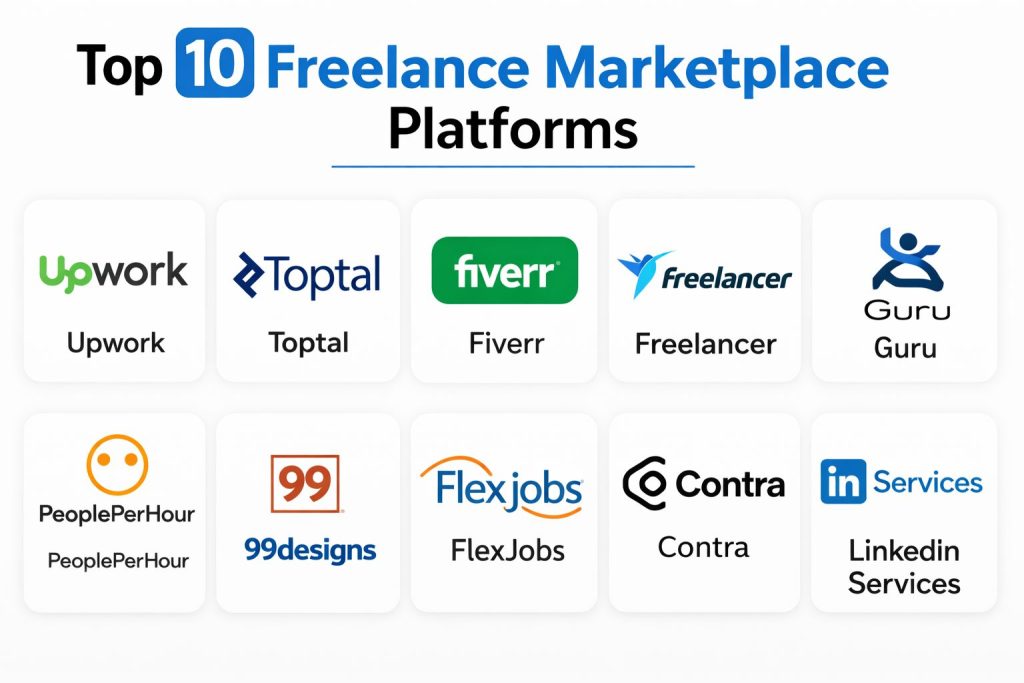
Introduction
Freelance marketplace platforms have evolved into sophisticated ecosystems that facilitate the global exchange of specialized labor, providing the infrastructure necessary for modern distributed workforces. These digital intermediaries remove the primary barriers to independent contracting by centralizing talent discovery, automating financial escrow, and providing standardized legal frameworks. For enterprises, these platforms offer immediate access to a “liquid” workforce, allowing for rapid scaling of technical and creative teams without the overhead of traditional recruitment.
The strategic importance of these marketplaces is underscored by the shift toward fractional expertise. Organizations now leverage these platforms to secure high-level consultants and specialized engineers for discrete projects, effectively transforming fixed labor costs into variable operational expenses. When evaluating a marketplace for professional use, decision-makers must prioritize platforms that offer robust identity verification, clear intellectual property transfer protocols, and compliance features such as SOC 2 or GDPR adherence. The choice of platform directly impacts project velocity, talent quality, and the overall security of the company’s digital assets.
Best for: Independent professionals, small-to-medium businesses (SMBs), and global enterprises seeking to bridge skill gaps in software development, digital marketing, and strategic consulting.
Not ideal for: High-sensitivity government contracts requiring physical presence, roles requiring permanent local employment status, or simple errand-running tasks that do not involve digital deliverables.
Key Trends in Freelance Marketplace Platforms
The integration of artificial intelligence has moved beyond simple search filters to predictive matching, where algorithms analyze project briefs to recommend the most suitable experts based on past performance data. Real-time collaboration tools are now being embedded directly into the platforms, allowing for seamless communication and file versioning without leaving the secure environment. There is also a marked trend toward “verticalization,” where niche marketplaces focus exclusively on specific industries like medical research, legal services, or high-end engineering.
Financial transparency is increasing through the adoption of multi-currency digital wallets and instant cross-border payment systems that bypass traditional banking delays. Professional reputation is becoming more portable, with platforms exploring blockchain-based verification of skills and work history to provide a unified “trust score” for freelancers. Furthermore, enterprise-grade governance features, such as single sign-on (SSO) and advanced audit trails, are becoming standard for platforms catering to the corporate sector.
How We Selected These Tools
The selection criteria for these top platforms centered on marketplace liquidity, which measures the ease with which buyers can find qualified sellers. We evaluated the depth of the talent pool across various technical categories and the rigor of the freelancer vetting processes. Platforms that provide comprehensive project management suites and secure escrow systems were given priority, as these features are essential for mitigating the risks associated with remote contracting.
We also analyzed the cost structures for both freelancers and clients, seeking a balance between platform fees and the value of provided services. Security and compliance were non-negotiable factors, particularly the ability to handle international tax documentation and data privacy requirements. Finally, we considered the long-term stability and market reputation of each platform, ensuring that the selected tools represent the most reliable options for sustaining professional freelance relationships.
1. Upwork
Upwork is the largest generalist marketplace in the world, serving as a comprehensive hub for virtually every type of digital service. It offers a sophisticated bidding system where freelancers submit detailed proposals for jobs ranging from short-term tasks to multi-year contracts. The platform is particularly noted for its robust enterprise features, including talent shortlisting and managed payroll services.
Key Features
The platform utilizes an AI-driven assistant to help clients draft job descriptions and identify top-tier talent automatically. It features a built-in time tracker that captures periodic screenshots to ensure transparency in hourly contracts. Clients can access an “expert-vetted” tier, which highlights the top 1% of professionals in specific technical fields. The system includes an integrated escrow service for fixed-price milestones and a comprehensive dispute resolution center.
Pros
It offers the most diverse talent pool available, making it a one-stop shop for diverse project needs. The platform’s work diary and payment protection provide high security for both parties.
Cons
The platform fees can be significant for high-value contracts, and the bidding environment is highly competitive. Screening through a high volume of low-quality applications can be time-consuming for clients.
Platforms and Deployment
Web, iOS, and Android. It is a cloud-native platform accessible via any modern browser.
Security and Compliance
Upwork is SOC 2 Type II, GDPR, and HIPAA compliant. It offers advanced enterprise security features like SSO and multi-factor authentication.
Integrations and Ecosystem
It integrates with major project management tools like Jira, Slack, and Trello. It also offers a public API for companies to build custom recruitment workflows.
Support and Community
It provides 24/7 premium support for business users and maintains an extensive library of educational resources through its dedicated academy.
2. Toptal
Toptal positions itself as an elite network, famously accepting only the top 3% of freelance applicants through a grueling screening process. Unlike open marketplaces, Toptal acts as a matchmaking service where dedicated account managers manually pair clients with pre-vetted experts in software development, design, and finance.
Key Features
The screening process includes language proficiency tests, personality evaluations, and technical live-coding sessions. Clients are matched with a candidate typically within 48 hours of a request. It offers a no-risk trial period where clients only pay if they are satisfied with the freelancer’s initial performance. The platform focuses heavily on high-end technical roles and strategic business consulting.
Pros
It eliminates the need for clients to perform their own technical vetting, saving significant time. The quality of talent is consistently high, making it ideal for critical, high-stakes projects.
Cons
The hourly rates are significantly higher than generalist platforms, reflecting the premium talent level. It is not suitable for small, low-budget tasks or simple administrative work.
Platforms and Deployment
Web-based platform. Managed through a high-touch personalized service model.
Security and Compliance
Compliant with ISO 27001 and GDPR standards. It utilizes secure, custom-built contracts for intellectual property protection.
Integrations and Ecosystem
While less focused on software integrations, it provides seamless onboarding into a client’s existing development or finance tools.
Support and Community
Offers white-glove service with dedicated account managers and a professional network for its elite members.
3. Fiverr
Fiverr revolutionized the industry by “productizing” freelance services into discrete, fixed-price “Gigs.” This model is designed for speed and clarity, allowing clients to purchase a specific deliverable, such as a logo or a translated document, as easily as they would buy a physical product online.
Key Features
The platform uses a catalog-style interface where buyers browse pre-defined service packages. “Fiverr Pro” provides a curated tier of hand-vetted professionals for enterprise-level needs. An AI-powered conversational interface helps buyers refine their search and find the right service provider quickly. The platform also includes a workspace for managing orders and communicating with sellers.
Pros
It offers unparalleled speed for well-defined, tactical tasks. Pricing is transparent and upfront, which simplifies budgeting for small projects.
Cons
It is less effective for complex, ongoing projects that require deep collaboration or shifting scopes. The fixed-price model can sometimes lead to rigid deliverables that lack nuance.
Platforms and Deployment
Web, iOS, and Android. Optimized for mobile use and rapid transactions.
Security and Compliance
GDPR compliant with secure payment gateways and anti-fraud monitoring systems.
Integrations and Ecosystem
Fiverr Enterprise provides tools for managing off-platform freelancers and integrating with corporate accounting systems.
Support and Community
Features a massive community forum and a structured resolution center for handling order-related disputes.
4. Freelancer.com
Freelancer.com is a global powerhouse known for its massive scale and its unique contest-based model. It is a high-volume platform that caters to every conceivable niche, from basic data entry to advanced aerospace engineering, and is popular for its competitive bidding environment.
Key Features
The platform features design and coding contests where multiple freelancers submit work, and the client only pays the winner. It includes a sophisticated desktop application for time tracking and real-time collaboration. The “Recruiter” service provides human assistance to help clients choose the best bidder for their project. It also supports a wide range of local currencies and payment methods globally.
Pros
It often provides the most competitive pricing due to its global reach and bidding wars. The contest feature is excellent for crowdsourcing creative ideas.
Cons
The high volume of bidders can result in significant “noise,” requiring careful filtering by the client. The interface is often described as cluttered and more complex than its competitors.
Platforms and Deployment
Web, iOS, and Android. It offers a dedicated desktop app for work monitoring.
Security and Compliance
Utilizes Escrow.com for high-value transactions and is fully GDPR compliant.
Integrations and Ecosystem
Offers a robust API and integrates with various cloud storage and productivity applications.
Support and Community
Provides 24/7 technical support and has one of the largest online communities of independent workers.
5. Guru
Guru is a professional marketplace that emphasizes long-term relationships and streamlined project management. It is built around the concept of the “WorkRoom,” a dedicated virtual space where clients and freelancers can collaborate, track progress, and manage multiple milestones in one place.
Key Features
The WorkRoom feature allows for the management of multiple freelancers on a single project with shared files and communication. It offers highly flexible payment models, including hourly, fixed-price, task-based, and recurring retainers. The “SafePay” system ensures that funds are held in escrow and only released upon successful completion of work. It also provides a dashboard for tracking spending across different departments.
Pros
The platform fees for freelancers are among the lowest in the industry, which can lead to better rates for clients. It is exceptionally well-suited for long-term, ongoing professional engagements.
Cons
The talent pool is smaller than Upwork or Freelancer.com, particularly in emerging technical niches. The search and discovery tools are functional but less advanced than AI-driven competitors.
Platforms and Deployment
Web-based platform. Designed for desktop-centric professional management.
Security and Compliance
Maintains high standards for data privacy and utilizes secure, encrypted payment processing.
Integrations and Ecosystem
Focuses on its own internal project management tools rather than an extensive external integration marketplace.
Support and Community
Provides dedicated support for billing and technical issues with a focus on professional account management.
6. PeoplePerHour
PeoplePerHour is a UK-based platform that blends the gig-based model with traditional project bidding. It is particularly strong in the European market and is favored by small businesses for digital marketing, writing, and design projects.
Key Features
The platform features “Hourlies,” which are fixed-price service offers that can be started almost instantly. An AI-powered matching system analyzes project requirements to suggest the most relevant freelancers. It includes a “WorkStream” interface that consolidates all project communication, files, and invoices into a single thread. The platform maintains a high quality of talent through a manual application and approval process for all freelancers.
Pros
The localized focus in Europe and the UK provides a better experience for regional clients. The “Hourlies” model makes it very easy to test a freelancer’s skills with a small task.
Cons
It has a smaller global presence compared to the major US-based platforms. The fees can be relatively high for smaller, one-off projects.
Platforms and Deployment
Web, iOS, and Android. It is a cloud-based service.
Security and Compliance
Compliant with UK and EU data protection laws (GDPR) and features a secure escrow system.
Integrations and Ecosystem
Integrates with standard business tools for invoicing and communication.
Support and Community
Offers a structured customer support system and a community-driven help center.
7. 99designs
99designs is a specialized marketplace dedicated entirely to graphic design and branding. It is the premier destination for businesses that need high-quality visual work and want to choose from a variety of creative concepts through a competitive process.
Key Features
The core feature is the design contest, where dozens of designers submit concepts based on a client’s brief. It also allows for direct 1-to-1 projects for ongoing design needs. The platform includes specialized tools for providing feedback on visual assets, such as annotation and cropping tools. It handles all copyright and intellectual property transfers as part of the project completion process.
Pros
It is the gold standard for visual work, providing a high volume of creative ideas in a short time. The support team is highly specialized in resolving design-related disputes.
Cons
It is strictly limited to design, so it cannot serve as a general-purpose freelance platform. The contest model can be more expensive than hiring a single freelancer directly.
Platforms and Deployment
Web-based platform. Optimized for high-resolution visual reviews.
Security and Compliance
Features robust intellectual property transfer agreements that are legally binding in multiple jurisdictions.
Integrations and Ecosystem
Integrates with Adobe Creative Cloud and other professional design software for file handling.
Support and Community
Offers exceptional high-touch support for managing the creative process and designer relations.
8. FlexJobs
FlexJobs is unique because it is a subscription-based service that focuses on vetted, scam-free remote work and freelance opportunities. It functions more like a high-end job board than a transactional marketplace, targeting professionals who want quality leads without the noise of open bidding sites.
Key Features
Every job listing is manually reviewed and screened for legitimacy to protect freelancers from scams and low-quality posts. It provides a wide range of professional development resources, including skills testing and career coaching. The platform focuses on flexible, remote, and part-time roles from established companies. It does not take a commission from the freelancer’s earnings, as the service is funded by subscriptions.
Pros
It provides the highest signal-to-noise ratio for professional, long-term remote roles. Users can search with confidence, knowing every listing is from a verified employer.
Cons
The subscription fee can be a barrier for some freelancers. It does not provide the escrow or project management tools found in transactional marketplaces.
Platforms and Deployment
Web-based platform. Primarily a research and application tool.
Security and Compliance
Highly focused on employer verification and protecting the user’s personal data from bad actors.
Integrations and Ecosystem
Operates as a standalone service with links to external corporate application portals.
Support and Community
Offers extensive support through webinars, career coaching, and a highly responsive customer service team.
9. Contra
Contra is a modern, commission-free marketplace designed for the next generation of digital professionals. It positions itself as a portfolio-first platform where freelancers can display their work and get hired without the platform taking a cut of their earnings.
Key Features
The platform charges 0% commission to freelancers, instead generating revenue through premium features and client-side fees. It features a sleek, modern portfolio system that acts as an independent professional website. Integrated “smart contracts” help automate the proposal and payment process. It also offers a discovery algorithm focused on marketing and tech-related creative roles.
Pros
Freelancers keep 100% of their earnings, making it highly attractive for top-tier talent. The interface is modern and intuitive, catering to a younger, design-conscious demographic.
Cons
As a newer platform, it has less marketplace liquidity than established giants. Its enterprise-level project management features are still evolving.
Platforms and Deployment
Web and mobile-optimized site.
Security and Compliance
Uses Stripe for secure payment processing and adheres to standard digital security protocols.
Integrations and Ecosystem
Integrates with Slack and other modern communication tools for seamless workflow.
Support and Community
Maintains an active Slack community and provides fast, modern support for its users.
10. LinkedIn Services
LinkedIn Services leverages the world’s largest professional network to connect freelancers with their existing 1st and 2nd-degree connections. It turns a standard professional profile into a searchable service listing, allowing for high-trust hiring based on social proof and recommendations.
Key Features
Freelancers can add a “Providing Services” section to their profile to appear in dedicated service searches. It utilizes the platform’s existing recommendation system to provide instant credibility. Clients can request quotes directly from a professional’s profile. It integrates with LinkedIn’s broader recruitment and networking tools, making it a natural extension of professional networking.
Pros
It builds on existing relationships and professional reputation, leading to higher-trust engagements. There are no direct fees for listing services on a standard profile.
Cons
It lacks the specialized project management and escrow features of dedicated marketplaces. The search filters for services are less granular than those on platforms like Upwork.
Platforms and Deployment
Web, iOS, and Android. Part of the main LinkedIn ecosystem.
Security and Compliance
Backed by Microsoft’s enterprise-grade security and compliance infrastructure.
Integrations and Ecosystem
Deeply integrated with the entire LinkedIn suite, including Sales Navigator and Recruiter.
Support and Community
Provides support through the standard LinkedIn help channels and is backed by a global network of professionals.
Comparison Table
| Tool Name | Best For | Platform(s) Supported | Deployment | Standout Feature | Public Rating |
| 1. Upwork | Enterprise/Generalist | Web, iOS, Android | Cloud | Expert-Vetted Tier | 4.3/5 |
| 2. Toptal | Elite Tech/Finance | Web | Cloud | Top 3% Vetting | 4.6/5 |
| 3. Fiverr | Quick Scoped Gigs | Web, iOS, Android | Cloud | Productized Packages | 4.1/5 |
| 4. Freelancer.com | Global Bidding | Web, iOS, Android | Cloud | Creative Contests | 4.0/5 |
| 5. Guru | Long-term Retainers | Web | Cloud | Dedicated WorkRooms | 3.8/5 |
| 6. PeoplePerHour | European SMBs | Web, iOS, Android | Cloud | “Hourlies” Offers | 3.9/5 |
| 7. 99designs | Graphic Design | Web | Cloud | Design Contest Model | 4.7/5 |
| 8. FlexJobs | Scam-Free Remote | Web | Cloud | Hand-Screened Jobs | 4.5/5 |
| 9. Contra | 0% Commission | Web | Cloud | Portfolio-First Logic | 4.4/5 |
| 10. LinkedIn Services | Social Proof Hiring | Web, iOS, Android | Cloud | Professional Network | N/A |
Evaluation & Scoring of Freelance Marketplace Platforms
The scoring below is a comparative model intended to help shortlisting. Each criterion is scored from 1–10, then a weighted total from 0–10 is calculated using the weights listed. These are analyst estimates based on typical fit and common workflow requirements, not public ratings.
Weights:
- Core features – 25%
- Ease of use – 15%
- Integrations & ecosystem – 15%
- Security & compliance – 10%
- Performance & reliability – 10%
- Support & community – 10%
- Price / value – 15%
| Tool Name | Core (25%) | Ease (15%) | Integrations (15%) | Security (10%) | Performance (10%) | Support (10%) | Value (15%) | Weighted Total |
| 1. Upwork | 10 | 7 | 9 | 9 | 9 | 10 | 7 | 8.85 |
| 2. Toptal | 9 | 10 | 6 | 9 | 10 | 10 | 5 | 8.35 |
| 3. Fiverr | 8 | 10 | 8 | 8 | 10 | 8 | 8 | 8.55 |
| 4. Freelancer.com | 10 | 5 | 8 | 8 | 8 | 9 | 9 | 8.25 |
| 5. Guru | 8 | 7 | 6 | 8 | 8 | 8 | 9 | 7.60 |
| 6. PeoplePerHour | 7 | 8 | 7 | 8 | 8 | 8 | 8 | 7.60 |
| 7. 99designs | 10 | 9 | 7 | 9 | 9 | 10 | 7 | 8.85 |
| 8. FlexJobs | 6 | 9 | 5 | 10 | 9 | 9 | 8 | 7.85 |
| 9. Contra | 7 | 9 | 8 | 8 | 9 | 8 | 10 | 8.25 |
| 10. LinkedIn Services | 6 | 9 | 10 | 9 | 9 | 7 | 9 | 8.15 |
How to interpret the scores:
- Use the weighted total to shortlist candidates, then validate with a pilot.
- A lower score can mean specialization, not weakness.
- Security and compliance scores reflect controllability and governance fit, because certifications are often not publicly stated.
- Actual outcomes vary with assembly size, team skills, templates, and process maturity.
Which Freelance Marketplace Platform Is Right for You?
Solo / Freelancer
The ideal platform for an individual depends on their level of experience and niche. Beginners often find success on sites with low entry barriers where they can quickly build a portfolio. More seasoned professionals should seek out platforms that allow them to keep a higher percentage of their earnings or those that offer specialized, high-paying opportunities.
SMB
Small businesses should prioritize speed and value. Platforms that offer fixed-price services or rapid bidding cycles allow small teams to execute projects without the burden of long recruitment phases. Look for tools that include basic project management and easy invoicing to keep administrative tasks to a minimum.
Mid-Market
Companies in this category need a balance of talent diversity and quality control. Platforms that offer “vetted” tiers or recruiter assistance help mid-market firms scale their operations without needing a massive internal HR department. The ability to manage multiple freelancers in a shared workspace is a key requirement here.
Enterprise
For global organizations, compliance and security are the primary drivers. Enterprise-grade platforms provide the legal frameworks, tax documentation, and security integrations necessary for large-scale operations. These firms should look for managed service options and custom contract capabilities.
Budget vs Premium
Budget-conscious users will find the best rates on large, global bidding sites where competition drives prices down. However, this requires more time spent on quality control. Premium solutions charge more but reduce risk by pre-screening every freelancer, making them the better choice for mission-critical work.
Feature Depth vs Ease of Use
Some platforms offer exhaustive toolsets for managing every aspect of a project, which can be overwhelming for simple tasks. Others are designed for “one-click” hiring. Users must decide if they need a full project management suite or just a simple way to facilitate a transaction.
Integrations & Scalability
A platform’s ability to fit into an existing tech stack is crucial for larger teams. If your company relies heavily on specific communication or developer tools, choosing a marketplace with native integrations will significantly reduce friction in the onboarding process.
Security & Compliance Needs
If you are handling sensitive data or working in a regulated industry, you must choose a platform with verifiable security certifications. Features like data encryption at rest, secure file handling, and background checks on freelancers become essential in these scenarios.
Frequently Asked Questions (FAQs)
1. How do freelance platforms protect my payments?
Most professional platforms use an escrow system where the client’s funds are held by a neutral third party until the work is completed and approved. This ensures the freelancer gets paid for their work and the client only pays for a satisfactory deliverable.
2. Is it safe to share company data with freelancers?
It is safe provided you use platforms that offer secure file-sharing and non-disclosure agreements (NDAs). For sensitive projects, it is recommended to use enterprise-tier platforms that provide additional security layers like SSO and data isolation.
3. What happens if a freelancer disappears mid-project?
Established marketplaces have dispute resolution centers that can intervene. If funds are in escrow, they can be refunded to the client or a new freelancer can be brought in to finish the work based on the existing documentation.
4. Why do platforms charge a commission fee?
The commission covers the cost of maintaining the marketplace infrastructure, providing payment security, and marketing the platform to attract more clients and talent. Some newer platforms are moving toward subscription models to offer 0% commission to freelancers.
5. Can I hire a freelancer for a full-time role?
Yes, several platforms now offer “hire-to-full-time” options and managed payroll services. This allows companies to “try before they buy” by working with a freelancer on a contract basis before offering a permanent position.
6. Are the reviews and ratings on these sites reliable?
Most platforms only allow reviews to be left after a transaction is completed, which prevents fake ratings. However, it is always wise to look for detailed, written feedback rather than just numerical scores to understand a freelancer’s true performance.
7. Do I need to provide a contract to a freelancer?
Most platforms provide a standardized service agreement as part of their terms of service. For complex projects, however, many businesses choose to have the freelancer sign a custom NDA or intellectual property agreement to ensure full legal protection.
8. How do I handle taxes when hiring internationally?
Professional marketplaces typically generate the necessary tax forms and documentation automatically. They often provide W-8BEN or W-9 compliance tools, simplifying the administrative burden of international hiring for the client’s finance department.
9. What is the difference between a bidding site and a curated network?
A bidding site allows any freelancer to apply for a job, giving the client many options at various price points. A curated network performs the vetting for you, providing a few highly qualified candidates who are guaranteed to meet a certain standard.
10. How can I attract the best talent on these platforms?
Writing a clear, detailed project brief with realistic budgets and timelines is the best way to attract top professionals. Highly skilled freelancers look for clients who have a verified payment history and a clear understanding of what they need to achieve.
Conclusion
Navigating the freelance marketplace landscape requires a strategic approach that aligns your project complexity with the specific strengths of a platform. Whether you are seeking the rapid execution of tactical tasks through gig-based models or the specialized expertise of elite, pre-vetted networks, the underlying goal remains the same: the secure and efficient acquisition of talent. In the current professional environment, these platforms are no longer just for small tasks; they are essential engines for enterprise innovation and global scalability. By prioritizing security, liquidity, and integration, organizations can build a flexible workforce that is capable of responding to the ever-changing demands of the digital economy.
I find that this detailed comparison of Freelance Marketplace Platforms serves as a vital strategic guide for my role as a Digital Transformation Consultant. I learned from this blog that the shift toward “liquid labor” requires a more nuanced approach than just picking the largest platform; instead, I must match project complexity with specific marketplace logic, such as using Toptal for high-stakes technical engineering or Upwork for broad-scale operations. In my real-world projects, applying these insights has allowed me to move from traditional, slow-moving recruitment to an agile model where I can activate elite talent in under 48 hours, significantly increasing project velocity. For other organizations, this knowledge means transforming fixed salary overhead into variable operational expenses, while the embedded compliance features of these platforms protect against the legal risks of international contracting. My advice for anyone looking to learn from this list is to prioritize platforms that offer Expert-Vetted tiers or Managed Services if you are handling enterprise-level projects; the reduced “noise” from low-quality bids is well worth the premium price when technical accuracy is non-negotiable.
Navigating the world of freelance marketplaces has completely changed the way I approach staffing, and this breakdown really hits the nail on the head regarding how we’ve moved toward a “liquid” workforce. I learned from this post that the real secret to staying agile is moving away from the “post and pray” method and instead utilizing platforms like Toptal or Upwork Enterprise that offer pre-vetted talent and built-in compliance. In my daily work as a Strategic Operations Manager, this shift has been a lifesaver, allowing me to turn fixed labor costs into flexible project expenses that I can scale up or down in minutes. For others in the corporate world, this means we can finally stop wasting weeks on traditional recruitment and start focusing on high-velocity execution with specialized experts. My best advice for anyone digging into this blog is to prioritize platforms that offer identity verification and SSO integration; when you’re hiring at scale, protecting your company’s intellectual property is just as critical as the speed of the final deliverable.