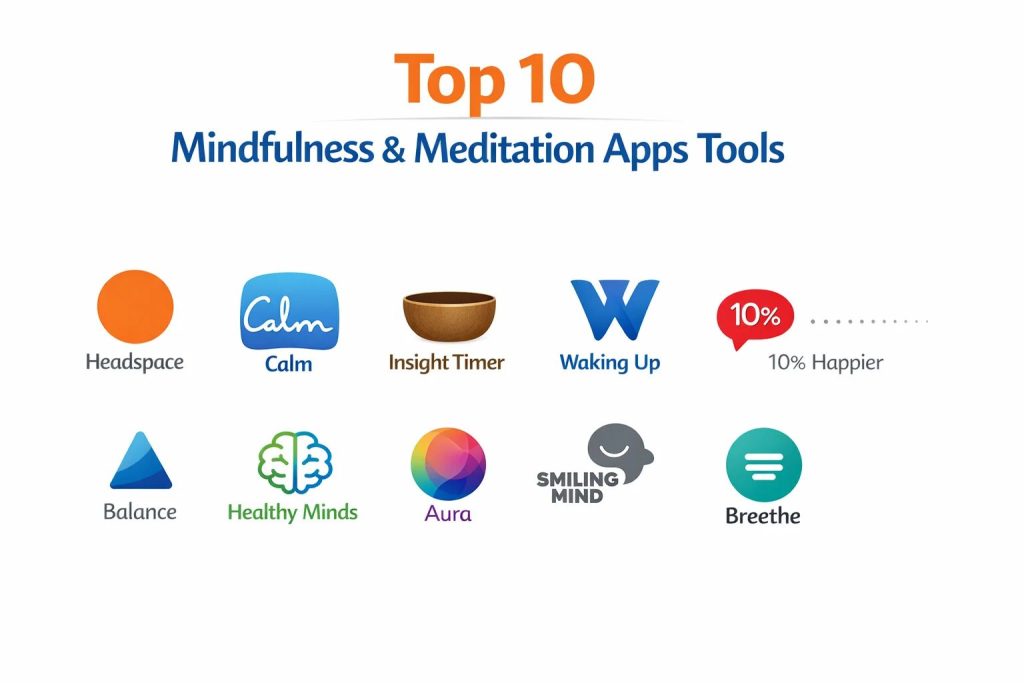
Introduction
Mindfulness and meditation applications have evolved into sophisticated mental health platforms that utilize psychological frameworks to improve cognitive resilience and emotional regulation. These tools are no longer viewed as simple lifestyle accessories but as essential components of a modern mental wellness strategy, particularly in high-pressure professional environments. By providing structured access to breathwork, neuro-scientific habit-building, and focused attention training, these apps allow users to mitigate the neurological effects of chronic stress. In the current corporate and individual landscape, maintaining peak mental performance requires more than just physical health; it demands a disciplined approach to internal state management and psychological recovery.
The necessity for digital mindfulness solutions arises from the constant fragmentation of attention caused by persistent connectivity and information overload. Organizations and individuals now prioritize these tools to combat burnout, improve creative problem-solving, and foster a more empathetic culture. When selecting a platform, it is crucial to evaluate the pedagogical approach—whether it is secular and theory-driven or focused on ambient relaxation and sleep. Key considerations include the depth of the content library, the qualifications of the instructors, the robustness of the data privacy frameworks, and the effectiveness of the AI-driven personalization engines. Integrating the right tool can fundamentally alter an individual’s stress response and long-term mental clarity.
Best for: Corporate wellness programs, high-stress professionals, students, and anyone seeking to build a consistent habit of mental training through evidence-based mindfulness practices.
Not ideal for: Individuals in need of acute clinical psychiatric intervention or those looking for a substitute for professional one-on-one therapy for severe mental health conditions.
Key Trends in Mindfulness & Meditation Apps
There is a significant shift toward AI-powered personalization, where algorithms analyze user mood, heart rate variability, and historical usage to suggest specific practices in real-time. We are also seeing the integration of biofeedback technology, allowing apps to sync with wearable devices to provide tangible data on how a user’s physiology changes during a session. Another trend is the rise of “micro-mindfulness,” which offers one-to-five-minute exercises specifically designed to be performed during transitions in the workday, such as between meetings or while commuting.
Corporate-grade security and data privacy have become paramount, as enterprise users demand assurance that their mental health data is protected and compliant with global regulations. There is also an increasing move toward “theory-first” content, where users are taught the underlying neuroscience and philosophy of mindfulness rather than just following guided instructions. Furthermore, the market is expanding into specialized content for diverse demographics, including age-specific programs for children and elderly users, as well as culturally sensitive practices available in multiple languages.
How We Selected These Tools
The selection of these top ten platforms was based on a rigorous evaluation of their scientific grounding and user-centric design. We prioritized apps developed in collaboration with renowned neuroscientists, psychologists, and traditional meditation experts to ensure the content is both effective and authentic. Market stability and the frequency of content updates were also key factors, as a stagnant platform often fails to maintain user engagement over the long term. We examined the versatility of each tool, looking for a mix of guided sessions, unguided timers, and educational theory.
Performance across different operating systems and the quality of the user interface were scrutinized to ensure a friction-free experience, as technical hurdles can be a major barrier to consistent practice. We also considered the availability of offline modes and the strength of the community or social features that help with accountability. Finally, we assessed the value proposition of each app, comparing the cost of subscriptions against the depth and exclusivity of the content provided. This holistic approach ensures that the selected tools represent the highest standard of digital mindfulness available today.
1. Headspace
Headspace is often the first point of entry for those new to mindfulness, offering a highly structured and visually engaging approach to meditation. Founded by a former Buddhist monk, the app excels at breaking down complex concepts into digestible, animated lessons. It provides a “classroom” feel that guides users through progressive levels of skill-building.
Key Features
The app features foundational courses that teach the core mechanics of meditation over several days. It includes a dedicated “Move” mode for mindful fitness and a “Focus” section with music curated by world-class artists. The “Sleepcast” feature provides long-form audio visualizations designed to help the mind drift off naturally. Users also have access to SOS sessions for immediate relief during moments of acute anxiety.
Pros
The structured learning path is excellent for beginners who need a clear roadmap. The high-quality animations make technical concepts very easy to understand.
Cons
Experienced meditators might find the introductory content too basic. The subscription cost is on the higher end of the market spectrum.
Platforms and Deployment
iOS, Android, and Web. It is a cloud-based service with offline download capabilities.
Security and Compliance
It maintains enterprise-grade security standards and is frequently used in large-scale corporate health initiatives.
Integrations and Ecosystem
It integrates with Apple Health and Google Fit to track mindful minutes and can be synced across multiple devices.
Support and Community
Offers robust customer support and a vast library of educational resources for both individuals and organizations.
2. Calm
Calm focuses heavily on relaxation, sleep, and the environmental aspects of mindfulness. It is famous for its celebrity-led content and its “Daily Calm” sessions that provide a fresh meditation topic every day. The app is designed to be a soothing sanctuary from the moment it is opened.
Key Features
The standout feature is the extensive library of Sleep Stories narrated by famous voices. It includes a variety of breathing exercises with customizable timers and visual guides. The app offers masterclasses taught by wellness experts on topics like creative productivity and better sleep. Nature soundscapes and ambient music are available to provide a calming background for work or relaxation.
Pros
It has arguably the best library of sleep-related content in the industry. The user interface is exceptionally aesthetic and calming.
Cons
The meditation guidance can sometimes be less technical or structured compared to other apps. The free version is quite limited in its offerings.
Platforms and Deployment
iOS, Android, and Web. It is a cloud-based platform.
Security and Compliance
It adheres to standard data protection policies and offers dedicated security features for its business-tier users.
Integrations and Ecosystem
It supports integration with Apple Health and various smart speakers for hands-free use.
Support and Community
Provides extensive help centers and has a massive global following that contributes to a sense of shared experience.
3. Insight Timer
Insight Timer is unique for hosting the world’s largest free library of meditations, acting as a community-driven marketplace for thousands of teachers. It caters to a wide range of traditions, from secular mindfulness to spiritual and religious practices.
Key Features
The app features a highly customizable meditation timer with a variety of ambient bells and ending sounds. It hosts live meditation events where users can practice in real-time with teachers from around the globe. The library includes over 150,000 guided tracks covering every possible wellness topic. It also features a community group system where users can discuss specific interests or traditions.
Pros
The sheer volume of free content is unmatched by any other platform. It allows users to explore many different teaching styles and traditions.
Cons
The massive amount of content can sometimes make it difficult to find high-quality sessions. The interface can feel a bit cluttered compared to more curated apps.
Platforms and Deployment
iOS, Android, and Web. It is a cloud-based community platform.
Security and Compliance
Privacy settings are granular, allowing users to control how much of their activity is visible to the community.
Integrations and Ecosystem
Integrates with health tracking apps and offers a “Member Plus” subscription for advanced features like offline listening.
Support and Community
The community is the heart of the app, providing a high level of peer support and interaction.
4. Waking Up
Waking Up, created by Sam Harris, is a “new operating system for the mind.” It goes beyond simple stress reduction to explore the deeper philosophy and neuroscience of mindfulness, making it ideal for those who want an intellectual understanding of their practice.
Key Features
It includes a comprehensive introductory course that focuses on the nature of consciousness. The app features long-form “Theory” lessons and conversations with leading philosophers and scientists. Advanced practices include non-dual awareness and Stoic reflections. It also offers a “Life” section that applies mindfulness to ethics, productivity, and parenting.
Pros
The intellectual depth and theoretical framework are far superior to most “wellness” apps. It offers a very clean, distraction-free user experience.
Cons
The approach may be too technical or philosophical for those just looking for simple relaxation. There is no focus on ambient sleep sounds or music.
Platforms and Deployment
iOS, Android, and Web. It is a cloud-based educational platform.
Security and Compliance
It follows strict data privacy protocols and offers a unique “scholarship” program for those who cannot afford the subscription.
Integrations and Ecosystem
Integrates with Apple Health and offers a seamless experience across mobile and desktop.
Support and Community
Support is highly professional, with a focus on providing a high-quality educational experience.
5. 10% Happier
Based on the work of journalist Dan Harris, 10% Happier is specifically designed for skeptics. It takes a pragmatic, no-nonsense approach to meditation, stripping away the “woo-woo” and focusing on practical benefits for busy professionals.
Key Features
The app features video-led courses where Dan Harris interviews world-renowned meditation teachers. It offers a “Quick Hits” section for sessions under five minutes. Users can message real meditation coaches for personalized guidance. The content is heavily focused on topics like productivity, relationship management, and dealing with work-related stress.
Pros
The relatable, journalistic tone is perfect for those who are suspicious of traditional spiritual practices. The access to real coaches provides a layer of accountability.
Cons
The content library is smaller than some of the major competitors. The focus is strictly secular, which may not appeal to those seeking a spiritual connection.
Platforms and Deployment
iOS and Android. It is a cloud-based service.
Security and Compliance
It maintains high standards for user data protection and secure payment processing.
Integrations and Ecosystem
Integrates with standard health tracking apps and offers a robust podcast ecosystem.
Support and Community
The coaching feature serves as a high-level support system, backed by a community of like-minded professionals.
6. Balance
Balance is a highly personalized app that uses an AI-driven “check-in” system to customize your meditation path every single day. It treats meditation as a skill to be leveled up, much like a fitness program.
Key Features
Each day, the app asks questions about your current mood and goals to tailor your session. It features a “Skills” library where users can practice specific techniques like visualization or breath control. The app offers a “Wind Down” feature for sleep and “Immersive” sessions that use 3D audio. It tracks your progress across various meditation dimensions to show how your skills are evolving.
Pros
The level of personalization ensures that the content always feels relevant to your current state. The “skill-building” approach is very motivating for goal-oriented users.
Cons
The constant questioning might feel repetitive for some users. It is currently more focused on mobile users than desktop or web.
Platforms and Deployment
iOS and Android. It is a cloud-based personalized service.
Security and Compliance
It uses encrypted data storage to ensure that personal mood and wellness data remains private.
Integrations and Ecosystem
Strong integration with Apple Health to visualize the impact of meditation on overall well-being.
Support and Community
Offers reactive customer support and a well-structured onboarding process for new users.
7. Healthy Minds Program
The Healthy Minds Program is a nonprofit app developed by neuroscientists at the University of Wisconsin-Madison. It is one of the few entirely free, evidence-based platforms that focuses on the four pillars of well-being: Awareness, Connection, Insight, and Purpose.
Key Features
The app is structured as a podcast-style learning journey that combines theory with practice. It includes “Active” meditations designed to be done while walking, commuting, or doing chores. Users can take scientific assessments to measure their current levels of well-being. The program is designed to be a long-term mental training curriculum rather than a collection of random sessions.
Pros
It is completely free with no hidden costs or ads. The content is directly derived from world-class neuroscientific research.
Cons
The interface is more functional than aesthetic. It lacks the celebrity “flair” and extensive sleep libraries of commercial apps.
Platforms and Deployment
iOS and Android. It is a cloud-based nonprofit platform.
Security and Compliance
As a research-based organization, they maintain rigorous standards for data ethics and privacy.
Integrations and Ecosystem
Integrates with Apple Health and is designed to fit into a broader lifestyle of mental health awareness.
Support and Community
Supported by a dedicated research team, offering high-quality educational materials and community updates.
8. Aura
Aura describes itself as the “Spotify for mental wellness.” It uses AI to provide a personalized experience from a massive marketplace of coaches, therapists, and storytellers.
Key Features
The app provides a daily three-minute mindfulness micro-session tailored to your mood. It includes life coaching, CBT (Cognitive Behavioral Therapy) exercises, and hypnosis sessions. Users can track their mood and sleep patterns to see correlations over time. The platform features a wide variety of content creators, providing a very diverse range of voices and perspectives.
Pros
The variety of content types (CBT, hypnosis, stories) makes it a comprehensive wellness hub. It is excellent for those who only have a few minutes to spare.
Cons
The sheer variety can lead to inconsistent content quality. The AI recommendations can sometimes feel a bit generic until it has significant user data.
Platforms and Deployment
iOS, Android, and Web. It is a cloud-based marketplace.
Security and Compliance
Uses industry-standard encryption and provides clear disclosures on how user data is used for personalization.
Integrations and Ecosystem
Connects with major health apps and offers a premium tier for full access to all coaches.
Support and Community
The marketplace model allows for direct interaction with various wellness experts through the platform.
9. Smiling Mind
Smiling Mind is an Australian nonprofit app developed by psychologists and educators. It is specifically designed to be used in schools and workplaces, offering age-appropriate mindfulness programs for everyone from children to adults.
Key Features
The app features specialized modules for different age groups, including primary and secondary school students. It includes a “Workplace” program focused on leadership and stress management. The content is evidence-based and focuses on building mental fitness as a proactive habit. It offers a simple, easy-to-navigate interface that is accessible for all technical levels.
Pros
It is 100% free and specifically tailored for families and educational environments. The programs are highly structured and research-backed.
Cons
The focus is heavily geared toward beginners and younger users. It lacks some of the high-end production features of paid American competitors.
Platforms and Deployment
iOS, Android, and Web. It is a cloud-based nonprofit platform.
Security and Compliance
Adheres to strict privacy standards, especially concerning data related to minors and educational institutions.
Integrations and Ecosystem
Widely used in the Australian education system and integrates with standard mobile health trackers.
Support and Community
Offers extensive resources for teachers and parents to help implement mindfulness in group settings.
10. Breethe
Breethe is an all-in-one wellness app that combines meditation with clinical hypnotherapy and practical life advice. It aims to be a “best friend” for your mental health, offering a more informal and supportive tone.
Key Features
The app features a “Made4You” AI tool that builds a custom wellness plan based on a short daily quiz. It includes a significant library of hypnotherapy sessions for weight loss, smoking cessation, and confidence. The “Real Life” talks cover practical advice on relationships and career growth. It also features a massive sleep library with music, stories, and guided relaxations.
Pros
The inclusion of hypnotherapy and practical life talks sets it apart from traditional meditation apps. The AI personalization is very proactive.
Cons
The interface can feel a bit crowded with many different types of content. Some users may prefer a more traditional, “pure” meditation experience.
Platforms and Deployment
iOS, Android, and Web. It is a cloud-based wellness platform.
Security and Compliance
Maintains secure, private accounts and adheres to standard digital health data protocols.
Integrations and Ecosystem
Integrates with Apple Health and offers a variety of subscription options for families and individuals.
Support and Community
Provides a very personal touch to customer support and maintains an active, supportive user community.
Comparison Table
| Tool Name | Best For | Platform(s) Supported | Deployment | Standout Feature | Public Rating |
| 1. Headspace | Beginners | iOS, Android, Web | Cloud | Animated Basics Course | 4.9/5 |
| 2. Calm | Sleep & Relaxation | iOS, Android, Web | Cloud | Celebrity Sleep Stories | 4.8/5 |
| 3. Insight Timer | Free Variety | iOS, Android, Web | Cloud | 150k+ Free Meditations | 4.9/5 |
| 4. Waking Up | Intellectual Theory | iOS, Android, Web | Cloud | Philosophy & Theory | 4.8/5 |
| 5. 10% Happier | Skeptics | iOS, Android | Cloud | 1-on-1 Teacher Coaching | 4.7/5 |
| 6. Balance | Personalization | iOS, Android | Cloud | Daily AI Check-ins | 4.8/5 |
| 7. Healthy Minds | Science-Based | iOS, Android | Cloud | Neuroscientific Pillars | 4.9/5 |
| 8. Aura | Short Resets | iOS, Android, Web | Cloud | 3-Min Mood Sessions | 4.7/5 |
| 9. Smiling Mind | Schools/Families | iOS, Android, Web | Cloud | Age-Based Curriculum | 4.6/5 |
| 10. Breethe | Hypnotherapy | iOS, Android, Web | Cloud | Made4You AI Planner | 4.5/5 |
Evaluation & Scoring of Mindfulness & Meditation Apps
The scoring below is a comparative model intended to help shortlisting. Each criterion is scored from 1–10, then a weighted total from 0–10 is calculated using the weights listed. These are analyst estimates based on typical fit and common workflow requirements, not public ratings.
Weights:
- Core features – 25%
- Ease of use – 15%
- Integrations & ecosystem – 15%
- Security & compliance – 10%
- Performance & reliability – 10%
- Support & community – 10%
- Price / value – 15%
| Tool Name | Core (25%) | Ease (15%) | Integrations (15%) | Security (10%) | Performance (10%) | Support (10%) | Value (15%) | Weighted Total |
| 1. Headspace | 10 | 10 | 9 | 9 | 9 | 9 | 7 | 9.05 |
| 2. Calm | 9 | 10 | 8 | 8 | 9 | 9 | 7 | 8.55 |
| 3. Insight Timer | 8 | 7 | 8 | 7 | 8 | 10 | 10 | 8.25 |
| 4. Waking Up | 10 | 8 | 8 | 8 | 9 | 9 | 8 | 8.85 |
| 5. 10% Happier | 9 | 9 | 7 | 8 | 8 | 10 | 7 | 8.45 |
| 6. Balance | 9 | 9 | 8 | 8 | 9 | 8 | 9 | 8.65 |
| 7. Healthy Minds | 10 | 7 | 7 | 9 | 8 | 8 | 10 | 8.50 |
| 8. Aura | 8 | 9 | 8 | 8 | 9 | 8 | 8 | 8.25 |
| 9. Smiling Mind | 8 | 8 | 7 | 9 | 8 | 8 | 10 | 8.25 |
| 10. Breethe | 8 | 8 | 8 | 8 | 8 | 8 | 8 | 8.00 |
How to interpret the scores:
- Use the weighted total to shortlist candidates, then validate with a pilot.
- A lower score can mean specialization, not weakness.
- Security and compliance scores reflect controllability and governance fit, because certifications are often not publicly stated.
- Actual outcomes vary with assembly size, team skills, templates, and process maturity.
Which Mindfulness & Meditation App Is Right for You?
Solo / Freelancer
For those managing their own time and stress, flexibility is key. A tool that offers quick “SOS” sessions or short, mood-based resets can be incredibly helpful for maintaining focus throughout a fragmented workday without requiring a massive time commitment.
SMB
Small businesses should look for platforms that are cost-effective yet provide enough variety to satisfy a diverse team. Apps with specific workplace modules can help foster a culture of wellness without the need for an expensive dedicated HR health platform.
Mid-Market
Mid-market companies often need a balance of structured content and administrative oversight. Platforms that offer organizational dashboards can help leadership track engagement and the overall well-being of the workforce while providing high-quality tools to employees.
Enterprise
At the enterprise level, security and integration with existing health benefits are the top priorities. Large organizations require platforms that can scale to thousands of users, provide robust data analytics, and offer dedicated account management to ensure a high return on investment.
Budget vs Premium
If the budget is the primary constraint, nonprofit and community-driven platforms provide professional-grade content for free. Premium apps justify their cost through exclusive celebrity content, advanced AI features, and more polished user interfaces that can improve long-term adherence.
Feature Depth vs Ease of Use
If you want to understand the “why” behind meditation, choose a tool with deep theoretical content. If you just want to feel better quickly after a stressful meeting, a platform that prioritizes ease of use and immediate relaxation is a much better fit.
Integrations & Scalability
For power users, the ability to sync mindful minutes with other health data is essential. Look for apps that fit into a broader ecosystem of wearables and health tracking to get a 360-degree view of your personal mental and physical health.
Security & Compliance Needs
Professionals in regulated industries should verify that their chosen app follows stringent privacy laws. Ensuring that your mental health data isn’t being monetized or shared inappropriately is a critical step in the selection process.
Frequently Asked Questions (FAQs)
1. Can mindfulness apps really reduce workplace stress?
Yes, numerous peer-reviewed studies have shown that consistent use of mindfulness apps can significantly lower cortisol levels and improve self-reported measures of stress and resilience in professional settings.
2. Is it better to meditate in the morning or evening?
Morning meditation helps set a baseline of calm for the day, while evening sessions are better for winding down and improving sleep quality. Most apps offer specific content tailored to both times of day.
3. Do I need to use the app every day to see results?
While daily practice is the goal for building a long-term habit, even practicing three to four times a week has been shown to provide measurable cognitive and emotional benefits.
4. Are the free versions of these apps sufficient?
For many users, free apps provide more than enough content to build a solid practice. Premium versions are generally only necessary if you want access to specific teachers, specialized courses, or advanced offline features.
5. How do these apps handle my personal mental health data?
Reputable apps use high-level encryption and follow global privacy standards. However, it is always important to review the privacy policy to see how data is used for AI personalization and whether it is shared with third parties.
6. Can I use these apps with my smart watch?
Most of the top-tier apps have dedicated watch versions that allow you to follow breathing exercises or time your meditations without needing to look at your phone.
7. Is guided meditation better than silent meditation?
Guided meditation is excellent for beginners and for specific goals like sleep or stress relief. Silent, unguided meditation is often preferred by advanced practitioners who want to develop their own internal focus.
8. Can children use these apps safely?
Yes, several apps on this list have specific “Kids” sections designed with child psychologists to teach mindfulness through storytelling and simple breathing games in a safe, ad-free environment.
9. What should I do if I find meditation difficult?
It is normal for the mind to wander. Many apps offer “skeptic-friendly” content that addresses the common frustrations of meditation and teaches you how to handle a busy mind with compassion.
10. Do these apps work without an internet connection?
Most premium subscriptions allow you to download sessions for offline use, which is ideal for meditating during flights, commutes, or in areas with poor connectivity.
Conclusion
In a professional world that increasingly demands cognitive flexibility and emotional equilibrium, a digital mindfulness platform is no longer a luxury—it is a strategic necessity. Whether you are a skeptic looking for pragmatic stress relief or a seasoned practitioner seeking deep philosophical insight, the right tool can serve as a powerful anchor in a chaotic environment. The key to long-term success lies in choosing a platform that aligns with your learning style and fits seamlessly into your existing technical ecosystem. By committing to a consistent practice through one of these verified tools, you are not just managing stress; you are actively re-wiring your brain for sustained clarity, empathy, and resilience. As technology continues to bridge the gap between ancient wisdom and modern neuroscience, these apps will remain at the forefront of the global movement toward proactive mental health.
I find that this breakdown of the top 10 mindfulness and meditation apps provides a definitive roadmap for building mental resilience in a high-pressure world from my perspective as a Corporate Wellness Strategist. I learned that modern mindfulness technology has moved far beyond simple relaxation, evolving into a sophisticated discipline of cognitive regulation and emotional performance where tools like Headspace and Waking Up leverage neuroscientific frameworks to help us re-wire our stress responses.
In my professional life, these tools are indispensable for managing chronic stress and fostering a culture of clarity and focused attention among teams. For others in high-stakes roles, this blog highlights how different methodologies—from the structured, classroom-style learning of Headspace to the deep philosophical and scientific theory of Waking Up—can be tailored to fit your specific psychological needs. My advice for anyone looking to master these tools is to prioritize “micro-mindfulness” as mentioned in the key trends; starting with just one-to-five-minute exercises during workday transitions is the most effective way to build a sustainable habit that leads to long-term mental clarity. Do you think the trend toward biofeedback-integrated meditation (using wearables to track heart rate variability in real-time) will eventually make traditional guided sessions obsolete, or is there still a unique value in the human voice of an expert teacher?