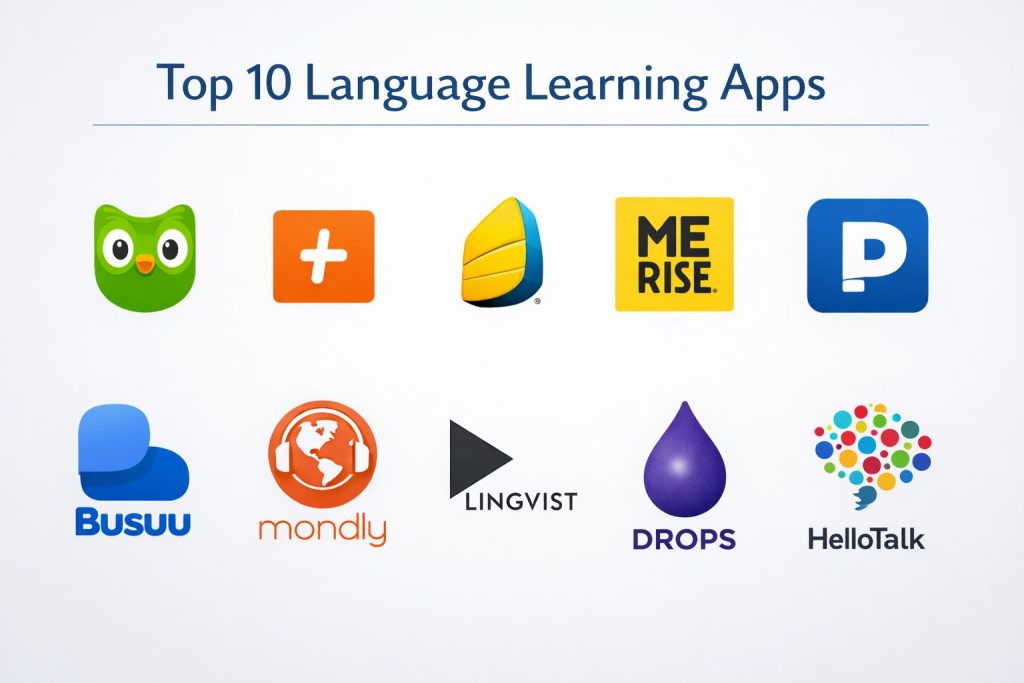
Introduction
Language learning software represents a sophisticated category of educational technology designed to facilitate the acquisition of new linguistic skills through digital interfaces. These platforms utilize advanced algorithms, speech recognition engines, and structured pedagogical frameworks to guide users from basic vocabulary to complex conversational fluency. In the modern globalized economy, the ability to communicate across linguistic barriers is no longer a luxury but a strategic necessity. For professionals, digital language tools serve as a bridge to international markets, enabling more effective collaboration in distributed teams and providing a competitive edge in global talent acquisition.
The relevance of these applications is amplified by the rise of remote work and the increasing need for cultural competency in leadership. Organizations leverage these tools to upskill employees for international assignments, while individuals use them to enhance cognitive flexibility and open new career pathways. When selecting a platform, it is essential to look beyond the surface-level gamification. A robust evaluation should focus on the underlying instructional design, the accuracy of the speech evaluation systems, the breadth of the content library, and the ability of the software to adapt to the specific learning pace of the user. Furthermore, data privacy and the security of user-generated content are paramount considerations for any enterprise-grade deployment.
Best for: International business travelers, expatriate professionals, students, and organizations seeking to provide scalable language training to a diverse workforce.
Not ideal for: Individuals seeking immediate, high-stakes legal or medical translation, where certified human interpreters are required. It is also less effective for those who lack the discipline for self-paced study without external accountability.
Key Trends in Language Learning Software
The integration of generative artificial intelligence has transformed static lesson plans into dynamic, conversational experiences where the software can simulate real-world scenarios with high accuracy. Adaptive learning paths now use big data to identify exactly when a user is likely to forget a word, scheduling reviews at the precise moment required for long-term retention. Speech recognition technology has moved beyond simple sound matching to sophisticated neural analysis that provides granular feedback on accent and intonation.
There is a significant trend toward micro-learning, where complex linguistic concepts are broken down into small, manageable units that fit into the workflow of a busy professional. Immersive technologies, including augmented and virtual reality, are being used to place learners in simulated environments like a boardroom or a marketplace to practice their skills in context. Cross-platform synchronization is now a baseline expectation, ensuring that progress is maintained whether the user is on a mobile device or a desktop. Finally, there is an increasing focus on professional-grade security, with platforms adopting enterprise standards for data handling and user authentication.
How We Selected These Tools
The selection of these top ten platforms followed a rigorous technical assessment focused on architectural stability and pedagogical effectiveness. We prioritized tools that demonstrate high market share and have been adopted by reputable educational institutions or multinational corporations. The completeness of the feature set was a major factor, specifically looking for platforms that cover reading, writing, listening, and speaking with equal depth.
Technical performance signals, such as the responsiveness of the mobile interface and the reliability of the cloud synchronization, were heavily weighted. We also evaluated the security posture of each application, looking for clear indicators of modern data protection practices. The strength of the integration ecosystem was considered, favoring tools that can be managed within a broader corporate learning management system. Finally, we looked for a balance between consumer accessibility and the sophisticated features required for professional-level mastery.
1. Duolingo
Duolingo is a widely adopted platform that utilizes heavy gamification to encourage daily practice. It is designed to make the initial stages of language acquisition highly engaging through a series of short, interactive challenges. The software relies on a data-driven approach, constantly refining its lessons based on the performance patterns of millions of users worldwide.
Key Features
The platform features a branched learning tree that covers essential vocabulary and grammar through translation exercises. It uses an automated streak system to maintain user engagement and provide consistent motivation. A sophisticated speech recognition engine allows users to practice pronunciation in a low-pressure environment. The app includes specialized stories that help with reading comprehension and listening skills. It also provides a dedicated space for reviewing past mistakes and reinforcing weak areas in the user’s knowledge base.
Pros
The interface is extremely intuitive and requires almost no onboarding for new users. Its free tier is exceptionally robust, making it accessible to a massive global audience regardless of financial constraints.
Cons
The heavy focus on gamification can sometimes distract from deeper linguistic nuance or formal grammar rules. It is often viewed more as a supplemental tool rather than a primary source for reaching professional-level fluency.
Platforms and Deployment
Web, Windows, macOS, iOS, and Android. It is a cloud-based SaaS platform with offline capabilities on mobile devices.
Security and Compliance
Standard encryption for data in transit and at rest. It adheres to general consumer data privacy regulations and offers secure account management via third-party providers.
Integrations and Ecosystem
It offers a specialized version for schools and educators, allowing for classroom-level tracking. While it lacks a broad API for public use, it integrates well with mobile operating system health and notification frameworks.
Support and Community
There is a massive online community of users who share tips and translations, backed by an extensive help center and automated support systems.
2. Babbel
Babbel is a structured, curriculum-based platform developed by linguistic experts. It focuses on practical, real-world conversation and formal language instruction, making it a favorite for professionals who need to use a language in a business or social context. The lessons are tailored to the user’s native language, acknowledging that a Spanish speaker learns German differently than an English speaker.
Key Features
The software offers a comprehensive review manager that uses spaced repetition to ensure vocabulary is moved to long-term memory. Lessons are organized by practical topics such as business meetings, travel, or dining out. It features high-quality audio recordings from native speakers to help users master authentic accents. The platform includes a dedicated business version with modules specifically designed for corporate communication. It also offers live, teacher-led sessions for those who want to supplement their digital learning with human interaction.
Pros
The curriculum is highly structured and focuses on useful, adult-oriented content rather than abstract sentences. The cultural context provided alongside the language lessons is invaluable for professionals.
Cons
The platform requires a paid subscription to access most content, which might be a barrier for some. The visual interface is more functional and less entertaining than gamified competitors.
Platforms and Deployment
Web, iOS, and Android. It is a cloud-native application requiring an internet connection for synchronization.
Security and Compliance
It follows strict European data privacy standards and provides clear documentation on user data rights. Enterprise tiers support standardized authentication protocols.
Integrations and Ecosystem
Babbel for Business allows for integration into corporate training portals. It provides detailed reporting for managers to track the progress of their teams.
Support and Community
Comprehensive customer support is available through multiple channels, supported by a rich library of language-learning articles and guides.
3. Rosetta Stone
Rosetta Stone is a veteran in the industry, known for its immersive immersion method that avoids translation entirely. It teaches language through a series of visual and auditory associations, mimicking the way children learn their first language. This approach is designed to help users think in the target language from the very first lesson.
Key Features
The proprietary speech recognition engine is specifically tuned to evaluate the nuances of non-native speakers. Its immersion technique uses high-resolution imagery to teach nouns, verbs, and adjectives in context. The software includes a library of extended learning content, such as audio stories and phrasebooks. It offers a coaching feature where users can practice with native speakers in a small group setting. The mobile app includes a camera-based feature that identifies objects in the real world and provides their names in the target language.
Pros
The immersion method is excellent for building a strong intuitive foundation without the crutch of constant translation. The speech recognition technology is among the most accurate in the consumer market.
Cons
The lack of explicit grammar explanations can be frustrating for adult learners who prefer a more analytical approach. The pace of the lessons can feel slow for those who want to move quickly through basic concepts.
Platforms and Deployment
Web, Windows, macOS, iOS, and Android. It offers both online subscriptions and downloadable content for offline study.
Security and Compliance
The platform is widely used by government and military organizations, indicating a high level of security and data integrity. It is compliant with major global privacy standards.
Integrations and Ecosystem
It features robust enterprise management tools for large-scale deployments in schools and corporations. It supports single sign-on for enterprise users.
Support and Community
A highly professional support structure is in place, offering live assistance and a wealth of troubleshooting resources for both individual and corporate clients.
4. Memrise
Memrise focuses on the intersection of memory science and real-world usage. It utilizes spaced repetition and mnemonic techniques to help users memorize large amounts of vocabulary. A standout feature is its use of thousands of short video clips featuring native speakers in their local environments, providing a highly authentic listening experience.
Key Features
The platform uses an AI-powered language assistant to provide conversational practice in a safe environment. Its “Learn with Locals” feature uses video content to teach regional accents and slang. The software allows users to create and share their own courses, leading to a massive variety of niche subjects. It features a sophisticated dashboard that tracks exactly which words a user is struggling with. The mobile interface is designed for rapid-fire review sessions during short periods of downtime.
Pros
The use of real video clips makes it one of the best tools for understanding how people actually speak in everyday life. The community-created content provides an almost infinite library of specific topics.
Cons
The quality of community-created courses can vary significantly compared to official content. The interface can sometimes feel cluttered due to the variety of different learning modes available.
Platforms and Deployment
Web, iOS, and Android. It operates as a cloud-hosted service with mobile synchronization.
Security and Compliance
Standard modern security protocols are in place for user accounts and payment processing. Data handling practices are transparent and follow industry norms.
Integrations and Ecosystem
While it is primarily a consumer-facing tool, its flexible course creation system allows it to be adapted for specialized training. It lacks deep integration with enterprise learning management systems.
Support and Community
It has a very active community of course creators and learners who interact through forums and collaborative projects.
5. Pimsleur
Pimsleur is an audio-centric platform based on the scientific research of Dr. Paul Pimsleur. It focuses almost exclusively on listening and speaking, using a highly refined interval-based recall system. It is designed to be used while commuting or multitasking, making it ideal for busy professionals who cannot sit in front of a screen.
Key Features
The core of the program consists of thirty-minute audio lessons that require active participation from the user. It uses a graduated interval recall system to ensure that new information is moved into long-term memory at the optimal time. The digital version now includes reading lessons and digital flashcards to supplement the audio. It features a hands-free mode that is compatible with smart home and automotive interfaces. The software includes voice-activated challenges that simulate real-world conversations.
Pros
This is arguably the best method for developing an authentic accent and conversational confidence without the need for visual materials. It is perfectly suited for professionals who spend a lot of time traveling or commuting.
Cons
It is not ideal for those who need to master the written form of a language or complex grammatical structures. The audio-only nature can be a limitation for visual learners.
Platforms and Deployment
Web, iOS, Android, and various smart speaker platforms. It is a cloud-based service with strong offline support.
Security and Compliance
Standard account security is utilized, and the platform maintains high standards for protecting user subscription data.
Integrations and Ecosystem
The platform integrates well with automotive entertainment systems and mobile voice assistants. It is primarily a standalone learning environment.
Support and Community
Professional support is available through standard digital channels, and the platform has a long-standing reputation for customer satisfaction and reliability.
6. Busuu
Busuu combines high-quality digital lessons with a social network of native speakers. Users can complete exercises and then send them to a community of native speakers for corrections and feedback. This peer-to-peer interaction provides a level of cultural nuance and correction that automated systems often miss.
Key Features
The curriculum is aligned with the Common European Framework of Reference for Languages, ensuring a standardized level of instruction. It features a vocabulary trainer that uses AI to prioritize words that need review. The social feedback mechanism allows users to receive written and audio corrections from people around the world. It includes specialized courses for business and travel, as well as official certification exams. The platform also offers a feature for offline learning, allowing users to download entire levels.
Pros
The ability to get feedback from real people is a significant advantage for those who want to understand subtle linguistic differences. The courses are professionally designed and very thorough.
Cons
The social aspect depends on the quality of the community, which can occasionally lead to inconsistent or delayed feedback. A subscription is required to access the most valuable social and review features.
Platforms and Deployment
Web, iOS, and Android. It is a cloud-hosted social and educational platform.
Security and Compliance
It follows comprehensive data protection regulations and provides a secure environment for social interactions. It is widely used in corporate settings, indicating strong security standards.
Integrations and Ecosystem
Busuu for Business provides a complete management console for tracking employee progress. It integrates with major corporate portal frameworks and educational systems.
Support and Community
The community is the heart of the platform, supplemented by professional customer service and extensive documentation for both users and business administrators.
7. Mondly
Mondly is a technology-focused platform that was an early adopter of augmented and virtual reality in language learning. It provides a highly visual and interactive experience, using speech recognition to help users navigate simulated conversations. The platform is designed to be quick and accessible, focusing on common phrases and core vocabulary.
Key Features
The software includes a dedicated VR app that places users in scenarios like a hotel check-in or a taxi ride. An AR feature allows users to bring a digital teacher into their physical room to demonstrate concepts and objects. It features a daily lesson system that tracks progress across a global leaderboard. The platform supports a vast number of language combinations, allowing users to learn from their native tongue. It also includes a specialized version for children and a robust business dashboard.
Pros
The use of VR and AR provides an immersive experience that can help overcome the fear of speaking in a new language. The interface is modern, fast, and very engaging for tech-savvy users.
Cons
The depth of the grammar instruction is less comprehensive than that found in more traditional platforms. The VR and AR features require specific hardware to be fully utilized.
Platforms and Deployment
Web, iOS, Android, and various VR platforms. It is a cloud-based service with strong cross-device synchronization.
Security and Compliance
Standard encryption and data privacy measures are in place. The platform provides clear information on how user voice data is handled for the speech recognition engine.
Integrations and Ecosystem
It offers a comprehensive enterprise solution with an API for integrating progress data into company systems. It is highly compatible with modern mobile and wearable technology.
Support and Community
Automated and human support are available, and the platform maintains an active presence on social and professional networks.
8. Lingvist
Lingvist is built on a foundation of big data and computational linguistics. It is designed to be the fastest way to learn vocabulary by using a placement test to determine exactly what the user already knows. The software then focuses exclusively on the words the user needs to learn next, based on their frequency in real-world texts and conversations.
Key Features
The core engine uses a mathematical model to predict when a user will forget a word. It features a “knowledge map” that visualizes the user’s progress through the most common words in a language. The platform allows users to upload their own texts to create custom courses based on their specific professional interests. It includes a focus on the most frequent 4,000 to 5,000 words, which cover the vast majority of daily communication. The interface is extremely minimal and focused on efficiency.
Pros
This is perhaps the most efficient tool for rapidly expanding vocabulary without wasting time on things you already know. The ability to create custom courses from professional documents is a unique and powerful feature.
Cons
It lacks the rich cultural content and conversational practice found in other apps. The focus is almost entirely on vocabulary and basic grammar, requiring other tools for full fluency.
Platforms and Deployment
Web, iOS, and Android. It is a cloud-native, data-driven application.
Security and Compliance
The platform maintains high standards for data security and uses encrypted connections for all user data and progress tracking.
Integrations and Ecosystem
While it is a specialized tool, its focus on data allows for interesting applications in professional environments where specific terminology must be mastered quickly.
Support and Community
Support is handled through digital channels, and the platform provides a wealth of information on the science behind its learning methodology.
9. Drops
Drops is a visually oriented tool that limits learning sessions to five minutes a day. It focuses entirely on vocabulary through a series of rapid-fire, swipe-based games. The software is designed to be habit-forming in a positive way, helping users build a consistent daily practice without feeling overwhelmed.
Key Features
The platform uses high-quality illustrations for every word, creating a strong visual association. It covers over 40 languages and features specialized categories like “Business & Tech” or “Emergency Basics.” The five-minute limit is designed to prevent mental fatigue and keep the experience fresh. It includes a “Travel Talk” feature for learning essential phrases quickly before a trip. The interface is award-winning for its clean design and fluid interaction model.
Pros
It is the perfect tool for building a daily habit and learning essential nouns and verbs with minimal effort. The visual style makes the experience feel more like a game than a classroom.
Cons
It does not teach grammar or speaking skills, making it strictly a supplemental tool for vocabulary building. The five-minute limit can be frustrating for those who want to study for longer periods.
Platforms and Deployment
Web, iOS, and Android. It is a cloud-based service optimized for mobile interactions.
Security and Compliance
Standard mobile app security practices are followed, with a focus on protecting user account information and subscription data.
Integrations and Ecosystem
It is owned by a larger educational technology company, allowing for some integration with other learning tools. It is primarily used as a standalone mobile application.
Support and Community
Professional support is available through the app and website, and the platform has a very positive reputation among its millions of global users.
10. HelloTalk
HelloTalk is a language exchange platform that connects users with native speakers around the world. It functions like a social media app where the primary goal is mutual learning. Users can text, send voice messages, or make video calls to practice their target language with a partner who wants to learn their native language.
Key Features
The app includes built-in translation and correction tools that allow partners to fix each other’s messages in real-time. It features a “Moments” feed where users can post updates and receive corrections from the entire community. The software supports over 150 languages and includes a search feature to find partners with similar interests. It offers structured lessons as a supplement to the social interaction. The platform also includes a feature for finding language partners in your local city.
Pros
This is the closest experience to total immersion available in a digital format. It provides an authentic look into the culture and slang of a language that textbooks often miss.
Cons
As a social platform, the quality of the experience depends entirely on the reliability of your language partners. It can be time-consuming to find a partner whose schedule and goals align with your own.
Platforms and Deployment
iOS and Android. It is a mobile-first social network for language learners.
Security and Compliance
It includes various privacy settings to control who can contact you and what information is shared. The platform actively moderates its community to maintain a safe and respectful environment.
Integrations and Ecosystem
It is a self-contained social ecosystem. While it does not integrate with corporate software, it serves as a powerful real-world laboratory for any language learner.
Support and Community
The community is the core support system, supplemented by a dedicated moderation and customer service team to handle user reports and technical issues.
Comparison Table
| Tool Name | Best For | Platform(s) Supported | Deployment | Standout Feature | Public Rating |
| 1. Duolingo | Gamified Daily Practice | Win, Mac, iOS, Android | Cloud | Engagement Loops | 4.7/5 |
| 2. Babbel | Real-world Context | Win, Mac, iOS, Android | Cloud | Expert Curriculum | 4.6/5 |
| 3. Rosetta Stone | Visual Immersion | Win, Mac, iOS, Android | Cloud/Offline | Immersive Learning | 4.5/5 |
| 4. Memrise | Natural Listening | Win, Mac, iOS, Android | Cloud | Learn with Locals | 4.6/5 |
| 5. Pimsleur | Audio-only Learning | Win, Mac, iOS, Android | Cloud/Offline | Spaced Recall | 4.7/5 |
| 6. Busuu | Peer Corrections | Win, Mac, iOS, Android | Cloud | Social Feedback | 4.5/5 |
| 7. Mondly | Tech-first Immersion | Win, Mac, iOS, Android | Cloud | VR/AR Experiences | 4.4/5 |
| 8. Lingvist | Rapid Vocabulary | Win, Mac, iOS, Android | Cloud | Data-driven Learning | 4.3/5 |
| 9. Drops | Visual Nouns/Verbs | Win, Mac, iOS, Android | Cloud | 5-Minute Sessions | 4.8/5 |
| 10. HelloTalk | Authentic Exchange | iOS, Android | Cloud | Social Interaction | 4.2/5 |
Evaluation & Scoring of Language Learning Apps
The scoring below is a comparative model intended to help shortlisting. Each criterion is scored from 1–10, then a weighted total from 0–10 is calculated using the weights listed. These are analyst estimates based on typical fit and common workflow requirements, not public ratings.
Weights:
- Core features – 25%
- Ease of use – 15%
- Integrations & ecosystem – 15%
- Security & compliance – 10%
- Performance & reliability – 10%
- Support & community – 10%
- Price / value – 15%
| Tool Name | Core (25%) | Ease (15%) | Integrations (15%) | Security (10%) | Performance (10%) | Support (10%) | Value (15%) | Weighted Total |
| 1. Duolingo | 7 | 10 | 6 | 8 | 10 | 8 | 10 | 8.20 |
| 2. Babbel | 9 | 8 | 8 | 9 | 9 | 9 | 8 | 8.60 |
| 3. Rosetta Stone | 8 | 7 | 9 | 10 | 8 | 10 | 7 | 8.25 |
| 4. Memrise | 8 | 9 | 5 | 7 | 9 | 8 | 9 | 7.95 |
| 5. Pimsleur | 9 | 9 | 6 | 8 | 9 | 8 | 7 | 8.10 |
| 6. Busuu | 8 | 8 | 9 | 8 | 9 | 9 | 8 | 8.35 |
| 7. Mondly | 7 | 9 | 7 | 8 | 10 | 8 | 8 | 8.00 |
| 8. Lingvist | 7 | 7 | 6 | 8 | 10 | 7 | 7 | 7.20 |
| 9. Drops | 6 | 10 | 5 | 8 | 10 | 8 | 9 | 7.75 |
| 10. HelloTalk | 6 | 8 | 4 | 7 | 9 | 7 | 10 | 7.10 |
How to interpret the scores:
- Use the weighted total to shortlist candidates, then validate with a pilot.
- A lower score can mean specialization, not weakness.
- Security and compliance scores reflect controllability and governance fit, because certifications are often not publicly stated.
- Actual outcomes vary with assembly size, team skills, templates, and process maturity.
Which Language Learning App Tool Is Right for You?
Solo / Freelancer
For those working independently, a tool like Duolingo or Memrise provides a high-value, low-cost entry point into a new language. These platforms offer enough depth to build basic communication skills while being engaging enough to maintain consistent progress without an external team.
SMB
Small businesses that need to upskill a handful of employees should look for tools with a balance of structured curriculum and reasonable pricing. Babbel is often the ideal choice here, as its business-focused modules provide immediate utility for professional interactions.
Mid-Market
Organizations in the mid-market segment benefit from platforms that offer both standardized learning and social interaction. Busuu provides a strong middle ground, offering professional courses and the ability to track team progress through a centralized dashboard.
Enterprise
For global enterprises with thousands of employees, security, scalability, and integration are paramount. Rosetta Stone and Babbel for Business are the most viable options, providing the administrative controls and compliance certifications required for high-level corporate deployment.
Budget vs Premium
If budget is the primary concern, Blender and the free tier of Duolingo are unbeatable. For those willing to invest in a premium experience, Pimsleur and Rosetta Stone offer specialized methodologies that are well worth the subscription cost for serious learners.
Feature Depth vs Ease of Use
If you want deep grammatical knowledge, Babbel or Busuu are the best choices. If you prefer a tool that is extremely easy to use and requires very little mental friction, Drops or Duolingo are the clear leaders in user experience.
Integrations & Scalability
Platforms like Babbel and Busuu lead the market in terms of how well they scale within a corporate environment. Their dedicated business tiers are designed to integrate with existing professional development frameworks.
Security & Compliance Needs
For organizations with strict data protection requirements, Rosetta Stone and Babbel offer the most robust security postures. These platforms have a long history of serving government and corporate clients with high standards for privacy.
Frequently Asked Questions (FAQs)
1. Can a language app really make me fluent?
Fluency is a high bar that usually requires a combination of digital tools and real-world immersion. These apps are excellent for building a strong foundation in vocabulary and grammar, but true mastery often requires conversation with native speakers.
2. How much time should I spend on an app each day?
Consistency is more important than duration. Spending fifteen to thirty minutes every day is generally more effective for long-term retention than a single four-hour session once a week.
3. Are paid language apps worth the money?
Paid apps often provide a more structured curriculum, better speech recognition, and no advertisements. For professionals, the time saved through a more efficient and focused learning path usually justifies the cost.
4. Which app is best for learning a specific professional vocabulary?
Lingvist and Babbel are particularly strong in this area. Lingvist allows you to create custom courses from your own texts, while Babbel has pre-built modules for various business sectors.
5. How do these apps handle different accents?
Modern apps use AI-driven speech recognition that is trained on a wide variety of native and non-native accents. However, some platforms are more rigid than others, requiring closer adherence to a standard pronunciation.
6. Can I learn multiple languages at the same time?
While most platforms allow you to switch between languages, it is generally recommended to focus on one until you reach an intermediate level to avoid confusion between different grammatical structures.
7. Do I need an internet connection to use these tools?
Most platforms are cloud-based, but many offer an offline mode where you can download lessons in advance. This is a critical feature for travelers who may not always have reliable data access.
8. Are these apps suitable for children as well?
Many of these tools are designed for adults, but platforms like Duolingo and Mondly have specialized versions or content that is highly engaging and safe for younger learners.
9. How do language apps track my progress?
Most tools use a combination of experience points, levels, and mastery percentages. The most sophisticated apps use spaced repetition algorithms to track exactly how well you know each individual word or concept.
10. What is the most effective way to supplement an app?
Watching movies, listening to podcasts, and using language exchange apps like HelloTalk are the best ways to supplement a structured digital course. This provides the cultural context and listening practice that apps sometimes lack.
Conclusion
Navigating the landscape of language learning technology requires a clear understanding of your specific goals and the technical constraints of your environment. Whether you are an individual contributor seeking to expand your career opportunities or an enterprise leader looking to build a more globally competent workforce, the selection of a primary tool is a strategic decision. The market in 2026 is defined by a move toward highly personalized, AI-driven experiences that prioritize real-world utility over simple gamification. By choosing a platform that balances pedagogical depth with modern security and integration capabilities, you ensure a learning path that is both sustainable and effective. The most successful learners are those who view these digital tools as the foundation of a broader, more immersive journey into a new culture and way of thinking.
I find that this analysis of the Top 10 Language Learning Apps provides a critical roadmap for any professional looking to bridge the gap between technical expertise and global communication. From my perspective as a Corporate Training Lead, I learned that selecting the right app isn’t just about the “streak” or the gamification, but about the underlying pedagogical framework and its ability to simulate real-world business scenarios.