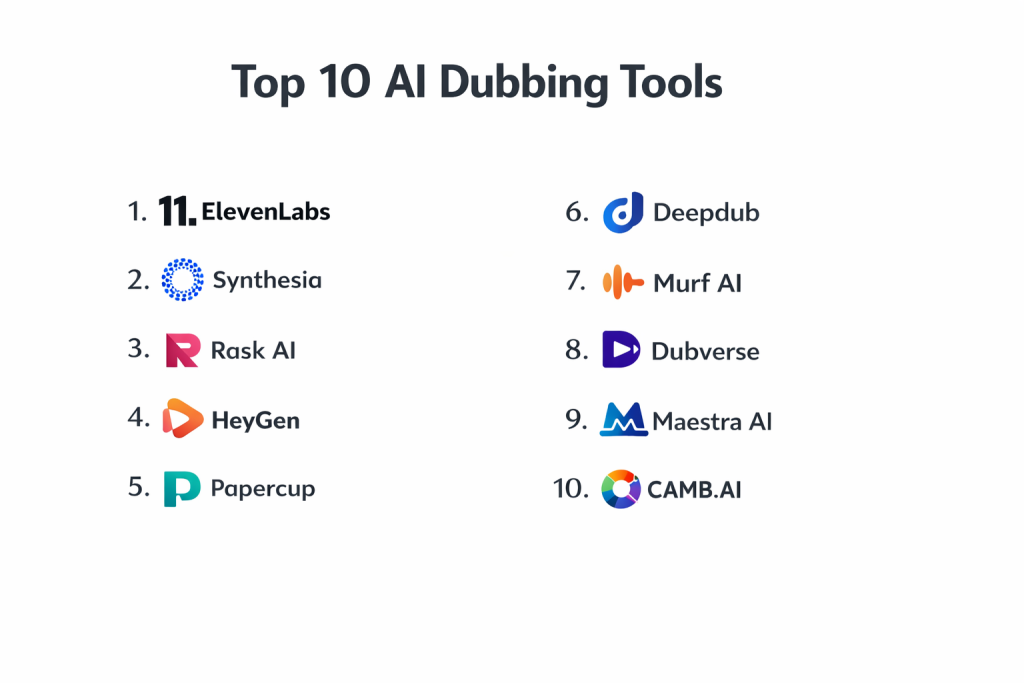
Introduction
AI dubbing technology has fundamentally altered the landscape of global content distribution by removing the traditional barriers of language and production cost. Unlike basic text-to-speech, modern AI dubbing involves a sophisticated interplay of automated speech recognition, neural machine translation, and voice cloning to produce a performance that retains the original speaker’s intent, emotion, and rhythmic cadence. This technology allows organizations to transform a single piece of video content into a multilingual asset that feels native to every audience it reaches. In a world where digital boundaries are non-existent, the ability to communicate authentically in dozens of languages simultaneously is no longer a luxury but a strategic necessity for any global enterprise.
For professional teams, the shift toward AI-driven localization represents a move from manual, linear workflows to scalable, automated pipelines. These tools do not merely translate words; they adapt cultural nuances and synchronize audio with visual cues, such as lip movements, to maintain high levels of viewer engagement. When selecting an enterprise-grade dubbing solution, technical leaders must evaluate the robustness of the underlying acoustic models, the security of the data processing environment, and the flexibility of the API for integration into existing content management systems. The following analysis explores the premier platforms currently defining the standards for quality and reliability in the AI dubbing sector.
Best for: Global media broadcasters, e-learning platforms, corporate training departments, and high-volume content creators who require rapid, high-fidelity video localization.
Not ideal for: Local-only marketing campaigns, projects requiring highly specific artistic improvisation that exceeds current algorithmic capabilities, or users without a stable high-speed internet connection for cloud processing.
Key Trends in AI Dubbing Software
The most significant trend is the rise of end-to-end speech-to-speech translation, which significantly reduces the latency between the original recording and the dubbed output. We are also seeing a massive leap in lip-sync accuracy, where AI models now physically manipulate the video of a speaker’s mouth to match the phonetic requirements of the target language. Multimodal understanding is also becoming a standard feature, allowing the software to analyze visual context—such as a character’s facial expressions or the environment—to better inform the emotional tone of the translated voice.
Another critical development is the democratization of professional voice cloning, enabling even small teams to maintain consistent brand voices across different regions. Ethical AI practices are also gaining traction, with platforms implementing strict verification processes to ensure that voice clones are created only with the explicit consent of the original speaker. Finally, there is a clear shift toward real-time dubbing for live events, allowing webinars and international conferences to offer instant audio translation that sounds natural and preserves the speaker’s unique vocal identity.
How We Selected These Tools
The selection of these ten platforms was based on a rigorous evaluation of their performance in professional production environments. We prioritized tools that offer a combination of high-fidelity audio output and advanced video synchronization features. Language coverage was a major factor, with a preference for tools that support a wide array of global dialects and localized accents. We also analyzed the technical infrastructure of each platform, focusing on those that provide enterprise-grade security features and reliable uptime for high-volume workflows.
User experience was assessed not just through the interface but through the efficiency of the editing tools, such as the ability to manually adjust timing and phonetic pronunciation. We looked for platforms that provide a clear pathway for human-in-the-loop oversight, ensuring that final quality checks can be integrated into the automated process. Market reputation, community feedback from professional animators and localization experts, and the developer’s history of innovation were also considered to ensure that these tools represent the current state of the art in AI dubbing.
1. ElevenLabs
ElevenLabs is widely considered the industry leader for high-fidelity voice synthesis and emotional depth. While it began as a specialized voice tool, its dubbing capabilities have become a favorite for creators who need their translated content to sound indistinguishable from a human performance. It excels at maintaining the subtle nuances and micro-emotions of the original speaker across a growing list of supported languages.
Key Features
The platform features a world-class voice cloning engine that requires only a short audio sample to create a perfect digital twin. It includes a specialized dubbing studio that automatically identifies multiple speakers and handles the timing of the translated tracks. The software provides granular control over stability and clarity, allowing users to fine-tune the delivery for different types of content. It also offers a robust API for developers to build custom dubbing workflows. The system is designed to handle long-form content, such as audiobooks and documentaries, with consistent quality throughout.
Pros
The audio quality is virtually unmatched in its ability to replicate human emotion and intonation. The interface is clean and allows for very rapid experimentation with different vocal styles.
Cons
It does not currently offer integrated video lip-syncing features, focusing instead on the audio side of the dubbing process. The costs can scale quickly for organizations processing massive amounts of monthly video data.
Platforms and Deployment
Web-based platform accessible on all modern browsers, with a powerful API for custom enterprise integration.
Security and Compliance
The company implements strict “No-Go” lists for voice cloning and is GDPR compliant. It offers enterprise-level security for team accounts and data management.
Integrations and Ecosystem
It integrates with major creative workflows and offers a vast library of community-shared voices. It is often used as the audio engine alongside separate video editing tools.
Support and Community
Provides extensive documentation and a highly active community forum, alongside dedicated support for enterprise-tier users.
2. Synthesia
Synthesia is a pioneer in the field of AI avatars and video localization, focusing on a script-to-video workflow. It is the preferred choice for corporate training and internal communications because it allows users to create and dub professional videos without ever needing a camera or a recording studio.
Key Features
The software features a massive library of photorealistic AI avatars that can “speak” dubbed audio in over 130 languages. It includes a one-click translation feature that automatically updates the visual elements and audio of a video. The lip-sync technology is exceptionally precise, ensuring that the avatar’s mouth movements perfectly match the translated speech. Users can also create their own custom avatars to maintain a consistent executive presence in global communications. The platform includes a full-featured video editor designed for those without professional editing experience.
Pros
It completely eliminates the need for physical video production, saving massive amounts of time and budget. The consistency of the avatars ensures a professional look across all localized versions of a video.
Cons
Because it relies on avatars, it is less suited for dubbing existing live-action footage where the original human actor must remain on screen. The style of the videos is best suited for instructional or informational content.
Platforms and Deployment
Cloud-based SaaS platform that supports collaborative team workflows from any location.
Security and Compliance
Holds SOC 2 Type II certification and is fully GDPR compliant, making it suitable for sensitive corporate use cases.
Integrations and Ecosystem
Integrates seamlessly with learning management systems and major corporate communication platforms. It also offers a robust API for automated video generation at scale.
Support and Community
Offers the Synthesia Academy for deep learning and provides high-priority support for corporate and enterprise customers.
3. Rask AI
Rask AI has gained significant popularity among social media creators and marketing teams for its ability to handle both audio dubbing and video lip-syncing in a streamlined, automated process. It is designed for those who need to localize content for platforms like YouTube and TikTok with minimal manual effort.
Key Features
The platform offers an automated end-to-end workflow that transcribes, translates, and dubs video files in a single step. It features a unique lip-syncing tool that can modify the original speaker’s mouth movements to match the target language. The software supports multi-speaker detection, accurately assigning different AI voices to each person in a video. It also includes a “Shorts” feature that automatically extracts viral-ready clips from longer dubbed videos. The voice cloning technology is designed to preserve the original speaker’s vocal characteristics in over 130 languages.
Pros
It is incredibly fast and user-friendly, making it ideal for high-volume content creators. The combined dubbing and lip-syncing capability provides a very high level of realism.
Cons
While the lip-syncing is impressive, it can occasionally struggle with very fast or complex facial movements. The pricing model is primarily geared toward professional creators and businesses rather than casual users.
Platforms and Deployment
Web-based application with simplified mobile-responsive features for on-the-go management.
Security and Compliance
Adheres to standard data protection regulations and provides secure environment for user uploads.
Integrations and Ecosystem
Focused on the creator ecosystem with direct export options for major social platforms and compatibility with standard video editing software.
Support and Community
Maintains an active user community and provides a detailed knowledge base to help users master its automation features.
4. HeyGen
HeyGen is a highly versatile AI video platform that has made a name for itself with its “Video Translate” feature. It is particularly strong in creating marketing assets and personalized sales videos where a lifelike on-camera presence is essential.
Key Features
The platform’s standout feature is its ability to translate a video while perfectly syncing the speaker’s lips and preserving their original voice. It supports over 40 languages and provides an intuitive interface for managing large-scale video projects. Users can choose between using pre-made AI avatars or creating a “Instant Avatar” based on their own likeness. The platform also includes tools for generating scripts from simple prompts and a massive library of high-quality templates. It features a robust multi-speaker environment that maintains vocal consistency throughout the localized project.
Pros
The lip-syncing quality is among the highest in the industry, making the dubbed videos feel very natural. The ability to create personalized video content at scale is a major advantage for sales teams.
Cons
The processing time for high-quality lip-synced videos can be longer than simple audio-only dubbing. Some of the most advanced features are reserved for higher-tier subscription plans.
Platforms and Deployment
Cloud-native platform with team collaboration tools and a dedicated API for enterprise-level automation.
Security and Compliance
Implements rigorous security protocols and is compliant with major data privacy frameworks including GDPR.
Integrations and Ecosystem
Connects with various CRM and marketing tools, and it has a thriving marketplace for third-party templates and assets.
Support and Community
Provides a comprehensive learning center and 24/7 customer support for its professional and enterprise users.
5. Papercup
Papercup targets the higher end of the market, specifically media companies and broadcasters who require human-grade quality and precision. They utilize a “human-in-the-loop” model, where AI handles the heavy lifting of translation and dubbing, followed by a final review by professional linguists.
Key Features
The software is built around a proprietary engine that generates hyper-realistic, expressive voices designed for storytelling and broadcast. It offers a managed service where their team of experts ensures that every dubbed video meets broadcast standards for accuracy and tone. The platform includes advanced tools for managing large libraries of video content and tracking the progress of global localization projects. It specializes in converting back-catalogs of content into new revenue streams by reaching international audiences. The audio output is studio-grade, suitable for television and premium streaming services.
Pros
The combination of AI speed and human oversight guarantees a level of quality that is difficult for fully automated systems to match. It is the most reliable choice for high-stakes media projects.
Cons
Because it involves human review, the turnaround time is longer than pure AI platforms. It is also one of the more expensive options on the market.
Platforms and Deployment
Managed cloud platform with professional service integration for enterprise-level media pipelines.
Security and Compliance
Maintains the highest levels of security certification, making it a trusted partner for major global media conglomerates.
Integrations and Ecosystem
Designed to fit into traditional broadcast and digital media workflows, with high-capacity processing for large video files.
Support and Community
Offers dedicated project management and 26/7 technical support for its global media partners.
6. Deepdub
Deepdub is a specialized platform focused on the entertainment industry, providing cinematic-quality dubbing for films, TV shows, and gaming. It is designed to preserve the artistic integrity of a performance while making it accessible in any language.
Key Features
The platform features “Deepdub Go,” a tool that allows creators to dub their content with professional-grade emotional fidelity. It uses advanced acoustic models to capture the unique performance of an actor, including their breathing and emotional intensity. The software supports a wide range of languages and dialects, with a focus on natural-sounding results that don’t feel like “translated” speech. It also offers real-time dubbing solutions for live broadcasts and events. The platform provides a collaborative environment where directors and sound engineers can fine-tune the final audio mix.
Pros
It is one of the few platforms capable of handling the complex emotional requirements of cinematic content. The ability to maintain an actor’s unique vocal fingerprint is a major technical achievement.
Cons
The focus on high-end entertainment means it may have more features than a typical corporate user needs. It requires a more technical understanding of audio production to get the best results.
Platforms and Deployment
Hybrid cloud and on-premise deployment options for secure studio environments.
Security and Compliance
Adheres to strict entertainment industry standards for content protection and intellectual property security.
Integrations and Ecosystem
Integrates with professional post-production software and is used by major film studios and game developers worldwide.
Support and Community
Provides expert-level technical support and consulting for large-scale entertainment projects.
7. Murf AI
Murf AI is a versatile voice platform that has evolved into a powerful tool for corporate e-learning and marketing. It provides a curated library of professional voices that are specifically designed for clarity and professional delivery.
Key Features
The software includes a dedicated “AI Dubbing” feature that allows users to swap audio tracks on existing videos with high-quality AI speech. It features a timeline-based editor where users can sync the audio with visual elements with millisecond precision. The voice library is categorized by use case, such as “inspirational,” “authoritative,” or “conversational,” making it easy to find the right tone. It also supports voice cloning and allows for the uploading of custom scripts in multiple languages. The platform provides tools for adding background music and sound effects directly within the editor.
Pros
The voices are exceptionally clear and well-suited for professional presentations and training videos. The interface is very intuitive, even for those with no prior video experience.
Cons
It does not offer the same level of automated lip-syncing as some of the more specialized video translation tools. It is more of a voiceover and dubbing tool than a full video localization suite.
Platforms and Deployment
Cloud-based platform with robust team collaboration and shared workspace features.
Security and Compliance
Provides enterprise-grade security with data encryption at rest and in transit, and is fully GDPR compliant.
Integrations and Ecosystem
Integrates with popular design and presentation tools, making it a staple in the corporate creative stack.
Support and Community
Offers high-quality training resources and direct customer support for its business and enterprise users.
8. Dubverse
Dubverse is a high-speed, automated dubbing platform designed for the rapid localization of video content for small businesses and independent creators. It prioritizes ease of use and affordability while maintaining a high standard of audio quality.
Key Features
The platform features an “AI Dub” tool that can translate and dub a video into over 60 languages in minutes. It includes a built-in script editor that allows users to manually correct the automated translation before the final audio is generated. The software supports multi-speaker detection and provides a wide range of AI voices to choose from for each character. It also offers a “Sub-to-Dub” feature that can generate dubbed audio from an existing subtitle file. The platform is designed for a social-first workflow, with easy exports for YouTube and other video platforms.
Pros
It is one of the most accessible and affordable options for creators looking to experiment with multilingual content. The turnaround time for dubbing is exceptionally fast.
Cons
The voices, while professional, may lack some of the deeper emotional nuances found in high-end tools like ElevenLabs. The interface is focused on speed rather than deep technical control.
Platforms and Deployment
Web-accessible platform with a focus on ease of deployment for solo users and small teams.
Security and Compliance
Follows standard security protocols for web-based SaaS and ensures user data is handled responsibly.
Integrations and Ecosystem
Connects well with the YouTube creator ecosystem and supports standard video file formats for easy workflow integration.
Support and Community
Maintains a helpful knowledge base and an active presence on social media to support its user base.
9. Maestra AI
Maestra AI is an all-in-one platform for transcription, captioning, and dubbing, making it an excellent choice for educational institutions and content creators who need to provide comprehensive accessibility options.
Key Features
The software provides a unified interface where users can generate a transcript, translate it, and then choose from a library of AI voices to create a dubbed track. It supports over 125 languages and dialects, providing one of the broadest reaches in the industry. The platform features an advanced timeline editor that allows for the precise alignment of text, captions, and audio. It also includes a collaborative “Maestra Teams” feature for organizational workflows. The automated translation engine is optimized for clarity, making it ideal for lectures and technical tutorials.
Pros
The ability to manage captions and dubbing in a single tool significantly simplifies the localization process. It offers great value for those who need multiple types of accessibility features.
Cons
The AI voices are very clear but can sometimes sound more functional than expressive compared to cinematic tools. The visual lip-syncing capabilities are basic.
Platforms and Deployment
Web-based platform designed for easy access across different departments and teams.
Security and Compliance
Implements standard enterprise security measures and is compliant with general data protection regulations.
Integrations and Ecosystem
Integrates with major learning management systems and cloud storage providers for seamless asset management.
Support and Community
Provides 24/7 customer support and extensive documentation to help users maximize the platform’s features.
10. CAMB.AI
CAMB.AI is an emerging leader in the field of real-time and cinematic AI dubbing, known for its work in localizing major sports broadcasts and international film releases. It focuses on maintaining the cultural and emotional essence of the original content.
Key Features
The platform features the “MARS” engine, which is designed for cross-lingual voice cloning that retains the speaker’s original tone and energy. It supports an industry-leading 140+ languages and dialects, including many that are underserved by other platforms. The software is capable of sub-second latency for live dubbing, making it the premier choice for international sports and news broadcasts. It also includes a specialized tool for cinematic dubbing that has been used for major theatrical releases. The system provides a collaborative workspace for localization teams to manage complex, high-stakes projects.
Pros
Its ability to handle live, real-time dubbing is a significant technical advantage for broadcasters. The breadth of language support is the most extensive on this list.
Cons
The platform is designed for professional and enterprise use, which may make it more complex than necessary for simple social media projects. It is a premium solution with pricing to match.
Platforms and Deployment
Cloud-native platform with specialized deployment options for live broadcast environments.
Security and Compliance
Maintains high-level security protocols suitable for major media networks and global events.
Integrations and Ecosystem
Integrates with professional broadcast hardware and digital distribution platforms, focusing on high-volume media pipelines.
Support and Community
Offers specialized technical support for live events and professional enterprise accounts.
Comparison Table
| Tool Name | Best For | Platform(s) Supported | Deployment | Standout Feature | Public Rating |
| 1. ElevenLabs | High-Fidelity Audio | Web, API | Cloud | Emotional Voice Cloning | 4.9/5 |
| 2. Synthesia | Corporate Training | Web | Cloud | AI Avatar Generation | 4.8/5 |
| 3. Rask AI | Social Media Creators | Web, Mobile | Cloud | Auto Lip-Syncing | 4.7/5 |
| 4. HeyGen | Marketing/Sales | Web | Cloud | Personal Instant Avatars | 4.7/5 |
| 5. Papercup | Media/Broadcasting | Web | Managed | Human-in-the-Loop QC | 4.6/5 |
| 6. Deepdub | Film/Entertainment | Web, On-Prem | Hybrid | Cinematic Emotion Models | 4.8/5 |
| 7. Murf AI | Professional E-Learning | Web | Cloud | Curated Voice Library | 4.5/5 |
| 8. Dubverse | SMB Localization | Web | Cloud | High-Speed Processing | 4.4/5 |
| 9. Maestra AI | Accessibility/Docs | Web | Cloud | All-in-One Caption/Dub | 4.3/5 |
| 10. CAMB.AI | Live Events/Sports | Web | Cloud | Real-Time Low Latency | 4.7/5 |
Evaluation & Scoring of AI Dubbing Tools
The scoring below is a comparative model intended to help shortlisting. Each criterion is scored from 1–10, then a weighted total from 0–10 is calculated using the weights listed. These are analyst estimates based on typical fit and common workflow requirements, not public ratings.
Weights:
- Core features – 25%
- Ease of use – 15%
- Integrations & ecosystem – 15%
- Security & compliance – 10%
- Performance & reliability – 10%
- Support & community – 10%
- Price / value – 15%
| Tool Name | Core (25%) | Ease (15%) | Integrations (15%) | Security (10%) | Performance (10%) | Support (10%) | Value (15%) | Weighted Total |
| 1. ElevenLabs | 10 | 9 | 9 | 8 | 10 | 9 | 8 | 9.15 |
| 2. Synthesia | 9 | 8 | 10 | 10 | 9 | 10 | 7 | 8.90 |
| 3. Rask AI | 8 | 10 | 8 | 7 | 9 | 8 | 9 | 8.45 |
| 4. HeyGen | 9 | 9 | 9 | 8 | 9 | 9 | 8 | 8.85 |
| 5. Papercup | 10 | 6 | 8 | 10 | 8 | 10 | 6 | 8.30 |
| 6. Deepdub | 10 | 5 | 8 | 9 | 9 | 10 | 6 | 8.15 |
| 7. Murf AI | 7 | 9 | 9 | 9 | 8 | 9 | 8 | 8.15 |
| 8. Dubverse | 7 | 9 | 7 | 7 | 8 | 8 | 10 | 7.90 |
| 9. Maestra AI | 7 | 8 | 8 | 8 | 7 | 9 | 9 | 7.90 |
| 10. CAMB.AI | 9 | 7 | 9 | 9 | 10 | 9 | 7 | 8.50 |
How to interpret the scores:
- Use the weighted total to shortlist candidates, then validate with a pilot.
- A lower score can mean specialization, not weakness.
- Security and compliance scores reflect controllability and governance fit, because certifications are often not publicly stated.
- Actual outcomes vary with assembly size, team skills, templates, and process maturity.
Which AI Dubbing Tool Is Right for You?
Solo / Freelancer
Independent creators should prioritize platforms that offer ease of use and a fast turnaround. A tool that combines transcription, translation, and dubbing into a single workflow allows a solo operator to manage a global audience without needing a support team or extensive technical knowledge.
SMB
Small businesses often need a balance between professional appearance and low overhead. Tools that provide high-quality pre-made assets or simple avatar workflows are ideal, as they allow for the creation of polished marketing and training materials with minimal investment.
Mid-Market
Organizations in this segment should look for tools that offer robust collaboration features and better scalability. As the volume of content increases, the ability to manage multiple team members and maintain consistent brand voices across various departments becomes a primary requirement.
Enterprise
At the enterprise level, security and compliance are paramount. Large organizations require platforms with SOC 2 certification, SSO integration, and the ability to process massive datasets securely. The depth of the API also becomes critical for integrating dubbing into complex corporate infrastructures.
Budget vs Premium
Budget-conscious users can achieve excellent results with creator-focused tools that offer pay-as-you-go models. Premium solutions, while significantly more expensive, offer the human-grade precision and high-level support necessary for high-stakes media and broadcast projects.
Feature Depth vs Ease of Use
If your goal is cinematic excellence or complex physics-based emotional delivery, you will need to invest the time to learn more technical platforms. For those who need to get a message across clearly and quickly, a more streamlined, avatar-based or automated tool is the better choice.
Integrations & Scalability
Consider how the dubbing tool will fit into your existing content stack. If you rely on specific video editors or learning management systems, choosing a platform with native integrations will save your team hundreds of hours of manual file management over the long term.
Security & Compliance Needs
For any organization handling sensitive intellectual property or personal data, the security posture of the AI vendor is non-negotiable. Always verify that the platform meets the specific regulatory requirements of your industry, such as GDPR or HIPAA.
Frequently Asked Questions (FAQs)
1. Does AI dubbing require a separate script for every language?
Most modern platforms automatically generate the translated script from the original audio. However, professionals often review these automated translations to ensure that cultural nuances and technical terminology are handled correctly before the final dub is produced.
2. Is voice cloning legal for commercial projects?
Yes, but it must be done ethically. Reputable platforms require that you have the legal right to the voice you are cloning, often requiring the original speaker to provide a specific voice-authorization recording before the model can be used.
3. Can AI dubbing handle multiple speakers in one video?
Yes, advanced tools include diarization features that can distinguish between different speakers. They then assign a unique, consistent AI voice to each person, maintaining the clarity and flow of the original conversation.
4. How long does it take for AI to dub a 10-minute video?
A fully automated tool can often produce a dubbed version of a 10-minute video in about the same amount of time it takes to play the video. However, if you include manual editing or human-in-the-loop review, the process may take several hours.
5. What is the difference between dubbing and a voiceover?
Dubbing aims to replace the original audio with a new language while maintaining the tone and timing of the speaker. A voiceover is typically more functional, providing a translation that may sit on top of the original audio without needing to match the speaker’s rhythm.
6. Does AI dubbing include background music and effects?
Many platforms use advanced source separation to isolate the dialogue from the background audio. This allows the AI to replace the speech while preserving the original music and sound effects, maintaining the high production value of the video.
7. Is lip-syncing mandatory for a good dubbed video?
While not mandatory, lip-syncing significantly improves the viewer’s experience by removing the visual dissonance of hearing one language while seeing the mouth move in another. It is highly recommended for any on-camera “talking head” content.
8. Can I use my own voice for the dubbed version?
Yes, most top-tier platforms allow you to clone your own voice. This means that even if you don’t speak a certain language, the AI can make it sound like you are speaking that language fluently in your own unique voice.
9. Are AI voices still robotic?
The latest generation of neural voices has moved far beyond the robotic speech of the past. Modern models capture the breathing, pacing, and emotional shifts that define human speech, making it difficult for the average listener to distinguish them from a real person.
10. What file formats are usually supported for dubbing?
Almost all platforms support standard video formats like MP4 and MOV. For professional workflows, many also offer the ability to export separate audio and subtitle tracks for further post-production work.
Conclusion
The evolution of AI dubbing has reached a point where high-quality global communication is accessible to organizations of all sizes. The true value of these tools lies not just in their ability to translate words, but in their capacity to preserve the human connection and emotional intent behind a performance. As we look toward a more integrated global digital economy, the choice of a dubbing platform becomes a defining factor in how successfully a brand can engage with diverse cultures. By prioritizing a balance between technical innovation and ethical practices, enterprises can build a scalable localization pipeline that honors the original creator’s vision while speaking directly to a worldwide audience. The platforms highlighted here represent the vanguard of this movement, offering the stability, security, and quality required to lead in a multilingual future.