This article is based on predictions originally published by itbrief.co.nz and sourced from a CA Technologies announcement in January 2017.
DevOps Moves Beyond Dev and Ops
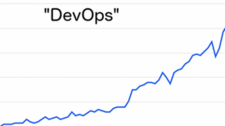
By early 2017, DevOps had already moved well beyond being a niche methodology. Enterprises were adopting it primarily because it breaks down the silos between development and operations teams, enabling faster, more reliable software delivery and greater organisational agility overall.
At the time, CA Technologies identified three trends it expected to dominate DevOps conversations throughout the year. Notably, none of the three were narrowly about code development or infrastructure operations. Instead, they centred on testing, security, and metrics — three disciplines that cut across the entire software delivery lifecycle.
“As organisations race to deliver innovations to market, they will find that ensuring the quality, security and performance of their applications are just as important as speed.”
Richard Derdis, DevOps Vice President, Asia Pacific & Japan, CA Technologies
Trend 1: Continuous Testing
Faster release cycles create pressure on quality assurance. When testing is treated as a single, discrete phase at the end of the development pipeline, it becomes a bottleneck — and shortcuts become tempting. The result is code that reaches production before it has been adequately validated.
Continuous testing addresses this by embedding quality checks throughout the entire DevOps lifecycle rather than confining them to a single gate before release. In practice, this means:
- Unit and integration tests run automatically on every code commit.
- Test results are immediately visible to both developers and operations teams.
- Performance and regression tests are executed in staging environments that mirror production as closely as possible.
- Failed tests block promotion to the next pipeline stage rather than being deferred.
The underlying principle is straightforward: speed without quality is counterproductive. Continuous testing is the mechanism that lets teams move fast without accumulating technical debt or shipping defects to end users.
Trend 2: DevSecOps — Security Joins the Pipeline
Security had historically been treated as an afterthought in software delivery — a final review conducted by a separate team before a release was signed off. As cybercrime grew in both frequency and sophistication, this approach became untenable.
CA Technologies framed security validation as a specialised form of testing. Like functional testing, it needs to happen continuously and early — not just at the end of a release cycle. This approach gave rise to the term DevSecOps: the integration of security practices directly into the DevOps workflow.
What makes security testing distinct from standard functional testing includes:
- Dynamic requirements: Threat landscapes change constantly, so security test cases must be updated continuously.
- Specialist involvement: Security engineers, compliance officers, and sometimes external auditors need to be part of the process — stakeholders not traditionally included in dev or ops workflows.
- Toolchain integration: Static analysis (SAST), dynamic analysis (DAST), and dependency scanning tools must be integrated into the CI/CD pipeline so they run automatically.
The shift-left security model — catching vulnerabilities earlier in the development process — is now a mainstream practice, but it was only beginning to gain serious traction in 2017.
Trend 3: DevOps Metrics and Measurement
It is difficult to improve a process you cannot measure. Yet in 2017, many organisations had implemented DevOps tooling and culture without putting meaningful measurement frameworks in place. They knew deployments were happening faster, but they could not quantify by how much, or identify where the remaining bottlenecks lived.
The growing focus on DevOps metrics reflected a maturation of the discipline. Teams were moving past initial adoption and asking harder questions about optimisation and return on investment. Key metrics that began receiving wider attention include:
- Deployment frequency: How often code is successfully released to production.
- Lead time for changes: The time from a code commit to that code running in production.
- Mean time to recovery (MTTR): How quickly a team can restore service after an incident.
- Change failure rate: The percentage of deployments that result in a degraded service or require a hotfix.
These four metrics — later formalised as the DORA metrics — give teams an evidence-based view of their delivery performance. Identifying bottlenecks (such as a slow manual approval step or an unreliable test suite) becomes much easier when the data is in front of you.
The Common Thread: Balancing Speed with Quality
All three trends point to the same underlying challenge: organisations adopting DevOps primarily to move faster were discovering that velocity alone is not a sufficient goal. Shipping broken or insecure software quickly is worse than shipping good software slowly.
Continuous testing ensures quality keeps pace with speed. DevSecOps ensures security is not sacrificed for delivery timelines. Metrics ensure teams can see where they are succeeding and where they are not, so improvement is grounded in data rather than intuition.
These themes — testing throughout the lifecycle, security as a shared responsibility, and measurement as a foundation for improvement — have only grown in importance in the years since. They remain as relevant today as they were when first highlighted in 2017.