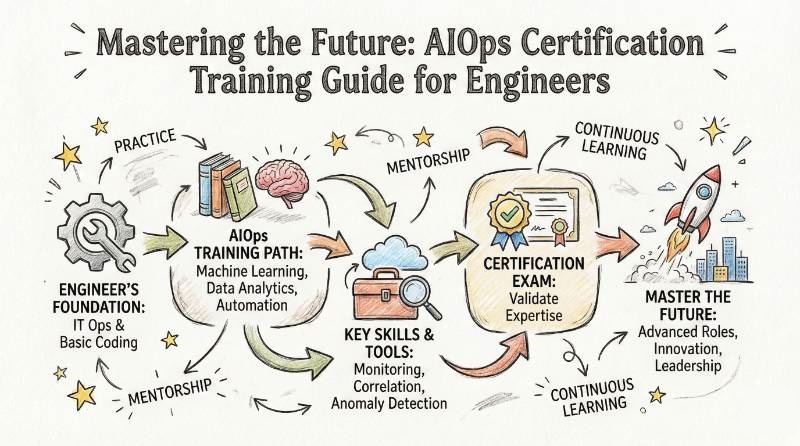
In the current era of hyper-scaled infrastructure, the complexity of our systems has finally surpassed the limits of human cognition. I have spent years observing the evolution of data centers into massive, distributed cloud environments, and the conclusion is clear: traditional, manual operations are no longer sustainable. We are currently operating in a state of “operational debt,” where the volume of telemetry data and the speed of change have made it impossible for even the best SRE teams to keep pace using legacy methods.
AIOps (Artificial Intelligence for IT Operations) represents the fundamental shift from reactive management to predictive orchestration. It is the application of advanced machine learning and big data analytics to the heartbeat of our infrastructure. By automating the correlation of events and the identification of anomalies, AIOps transforms “noise” into actionable intelligence. For the modern Software Engineer or Engineering Manager, transitioning to an AIOps-driven model is a strategic imperative. It is the only way to ensure system resilience, optimize operational costs, and reclaim the time necessary for high-value innovation.
What is AIOps Certification?
AIOps Certification is a professional credential that validates an engineer’s ability to implement AI-driven solutions within IT operations. It moves beyond standard automation by focusing on the intelligence layer of the stack—teaching you how to deploy algorithms that can predict failures, automate root cause analysis, and manage self-healing systems at scale.
Key Certification Overview
| Track | Level | Who it’s for | Prerequisites | Skills Covered | Recommended Order |
| AIOps / Automation | Professional | DevOps, SRE, Managers | Linux, Cloud, & Python | ML for Ops, RCA, Anomaly Detection | DevOps Foundation → AIOCP |
AIOps Certification Training Course | AIOps Certified Professional (AIOCP)
What it is
The AIOps Certified Professional (AIOCP) is an elite program designed for practitioners who wish to master the intersection of Data Science and Infrastructure. It provides a structured framework for using Python and Machine Learning to manage complex, multi-cloud environments with minimal human intervention.
Who should take it
- DevOps Engineers aiming to move toward intelligent, automated delivery pipelines.
- Site Reliability Engineers (SREs) focused on eliminating toil through predictive analytics.
- Engineering Managers tasked with reducing MTTR (Mean Time to Resolution) and operational overhead.
- Data Engineers pivoting toward the operational health of large-scale systems.
Skills you’ll gain
- Intelligent Event Correlation: Reducing alert volume by up to 90% by grouping related incidents.
- Predictive Anomaly Detection: Spotting subtle deviations in system performance before they impact users.
- Automated Root Cause Analysis: Leveraging ML to instantly map dependencies and find failure points.
- Capacity Forecasting: Using historical data to predict future resource requirements with high precision.
- Operational Data Governance: Managing the lifecycle of logs and metrics for AI consumption.
Real-world projects you should be able to do
- Automated Incident Suppression Engine: Build a system that identifies and silences non-actionable “noise” in production.
- Predictive Autoscaling for Kubernetes: Design a controller that scales resources based on predicted traffic spikes rather than current load.
- AI-Powered Log Analyzer: Deploy a tool that uses Natural Language Processing (NLP) to categorize and prioritize log errors.
Preparation plan
- Phase 1: Foundations (Days 1–14): Deep dive into Python for Data Science (Pandas/NumPy) and advanced Linux performance monitoring.
- Phase 2: Core Infrastructure (Days 15–30): Mastery of Prometheus, ELK Stack, and Cloud-native monitoring APIs.
- Phase 3: Applied ML (Days 31–45): Implementing time-series analysis and clustering algorithms on operational datasets.
- Phase 4: Capstone (Days 46–60): Building an end-to-end AIOps pipeline and preparing for the professional exam.
Common mistakes
- Neglecting Data Quality: AI is only as good as the data it receives. Poorly formatted logs will lead to poor automation.
- Over-reliance on “Black Boxes”: Failing to understand the logic behind the ML model makes troubleshooting impossible.
- Ignoring Culture: Implementing AIOps tools without changing the team’s operational mindset often leads to failure.
Best next certification after this
- Technical Specialist: Certified Kubernetes Security Specialist (CKS).
- Executive Track: Master in DevOps Engineering (MDE).
Choose Your Path
- DevOps Path: Focus on the “Shift Left” mentality. Master CI/CD and automated testing with AI-driven insights.
- DevSecOps Path: Focus on Automated Threat Detection. Use AI to scan for vulnerabilities in real-time.
- SRE Path: Focus on Reliability. Implement Error Budgets and SLOs supported by predictive monitoring.
- AIOps/MLOps Path: Focus on the AI Lifecycle. Manage the operational health of the AI models themselves.
- DataOps Path: Focus on Data Pipelines. Ensure the high-fidelity flow of information through the organization.
- FinOps Path: Focus on Cost Management. Use AI to optimize cloud spend and predict budget overruns.
Role → Recommended Certifications Mapping
| Current Role | Recommended Certification Path |
| DevOps Engineer | CKA $\rightarrow$ AIOps Certified Professional |
| SRE | AIOps Certified Professional $\rightarrow$ CKS |
| Platform Engineer | Terraform Associate $\rightarrow$ AIOps Certified Professional |
| Cloud Engineer | AWS Solutions Architect $\rightarrow$ AIOps Certified Professional |
| Security Engineer | CKS $\rightarrow$ AIOps Certified Professional |
| Data Engineer | Kafka/Airflow $\rightarrow$ AIOps Certified Professional |
| FinOps Practitioner | FinOps Certified Practitioner $\rightarrow$ AIOps Certified Professional |
| Engineering Manager | Master in DevOps Engineering $\rightarrow$ AIOps Certified Professional |
Top Training & Certification Institutions for AIOps
The following institutions are recognized for their rigorous approach to AIOps training:
- DevOpsSchool: Known for its deep technical labs and expert mentors. They provide a very structured path for anyone looking to become an AIOps expert with full support.
- Cotocus: This institution focuses on advanced engineering bootcamps. They are a great choice if you want intensive, short-term training that gets you ready for the job market quickly.
- Scmgalaxy: A massive community platform that provides endless resources and documentation. It is the best place for engineers who like to learn through community sharing.
- BestDevOps: They specialize in career coaching and technical training. If you want to not only learn AIOps but also prepare for high-level interviews, this is a great option.
- devsecopsschool: The premier destination for integrating AI into security. They focus on how AIOps can make your systems unhackable.
- sreschool: Dedicated to the world of Site Reliability Engineering. They teach AIOps as a tool for achieving 99.99% uptime.
- aiopsschool: A niche provider that focuses 100% on AI for operations. They offer specialized courses that go deep into the algorithms and data science of AIOps.
- dataopsschool: Best for professionals who want to master the data pipelines that feed into AIOps engines. They focus on data quality and speed.
- finopsschool: This institution teaches you how to use AI specifically for financial management in the cloud. It is a must for anyone managing large cloud budgets.
Master FAQs: AIOps Certification Training Course | AIOCP
1. How difficult is the AIOps Certified Professional (AIOCP) exam? It is an intermediate-to-advanced level certification. It is not difficult because of complex math, but because it requires you to rethink how operations work. You move from “if-then” logic to “probabilistic” logic.
2. How much time do I need to commit to this training? For most working engineers, a 30-day plan (1-2 hours a day) is sufficient. If you are a manager or new to Python, a 60-day window allows you to comfortably master the labs alongside the theory.
3. What are the prerequisites to join the AIOps Certification Training Course? You don’t need to be a Data Scientist. However, you should have a basic understanding of:
- Linux/Unix fundamentals.
- Basic Scripting (Python is preferred).
- Standard Monitoring concepts (Logs, Metrics, and Events).
4. Can I take this course if I am currently in a non-technical role? It is best suited for those with some IT background. If you are in a non-technical role, I recommend taking a “DevOps Foundation” class first to understand how software moves from code to production.
5. What is the best sequence to take these certifications? The most effective path is: DevOps Professional → SRE → AIOps Certified Professional. This builds a foundation of automation and reliability before you add the “intelligence” layer.
6. How does AIOps fit into my current SRE or DevOps role? AIOps is the evolution of these roles. While DevOps automates the delivery, and SRE manages the reliability, AIOps provides the insights that allow both to scale without adding more headcount.
7. Is there a specific “Learning Path” for Managers vs. Engineers? Yes. Engineers focus on the Tooling and Model Integration labs. Managers focus on the Strategy, ROI, and Governance aspects of the AIOCP curriculum. Both take the same exam but apply the knowledge differently.
8. What is the market value of an AIOps certification in today’s economy? Highly valuable. Companies are drowning in data. Someone who can implement a system that “filters the noise” and predicts outages is a top-tier asset. In many regions, this skill set can lead to a 25–40% salary hike.
9. What kind of roles can I apply for after getting certified?
- AIOps Architect
- Lead Reliability Engineer
- Observability Specialist
- Intelligent Automation Manager
10. How does this certification help with “Alert Fatigue”? This is a major career outcome. You will learn to build systems that suppress duplicate alerts and only notify the on-call engineer when a “true” anomaly is detected. This improves team morale and reduces burnout.
11. Does this certification cover MLOps as well? While they are related, AIOCP focuses on using AI for Ops. To learn how to manage the lifecycle of the models themselves, the MLOps Certified Professional is the perfect follow-up.
12. Is the AIOCP credential recognized globally? Yes. Institutions like DevOpsSchool provide a certification that is recognized by major tech hubs in India, the USA, Europe, and the UAE, specifically within large-scale enterprise environments.
FAQs: AIOps Certification Training Course | AIOps
13. Which tools will I get hands-on experience with? You will typically work with the ELK Stack (for log intelligence), Prometheus/Grafana (for smart metrics), and specialized AIOps platforms like Moogsoft or Datadog.
14. Are the labs based on real-world production scenarios? Yes. The labs simulate “messy” environments—thousands of logs with errors, flapping services, and sudden traffic spikes—so you can practice real-time anomaly detection.
15. Does the training include interview preparation? Most top-tier providers (like Scmgalaxy or DevOpsSchool) include an “Interview Kit” with common AIOps architectural questions and scenario-based problem-solving.
16. How long is the certificate valid? The certificate is usually valid for 2 years. Because AI technology moves so fast, we suggest a “refresher” or moving to a specialized track like DataOps or FinOps after that period.
17. What is the passing score for the final exam? The passing score is generally 70%. The exam tests your ability to choose the right AI approach for specific operational problems.
18. Can I get a refund if I find the course too difficult? Policies vary by institution, but most offer a “demo” session or a 24-hour window to explore the curriculum before you fully commit.
19. Is there a community or alumni group I can join? Yes, schools like DevOpsSchool and Scmgalaxy have large Telegram and Discord communities where you can share insights with other certified professionals.
20. Why shouldn’t I just learn this from YouTube for free? AIOps requires a “Sandbox” and expert feedback. While you can learn the theory for free, the AIOps Certification Training Course provides the structured labs, the recognized badge, and the mentor support needed to actually implement these systems in a professional environment.
Conclusion
The transition from manual operations to AIOps is not merely a trend; it is the natural evolution of our field. As the digital world grows more complex, the role of the engineer must shift from managing servers to managing the intelligence that runs them. By pursuing the AIOps Certification Training Course, you are positioning yourself at the forefront of this transformation. You are choosing to be an architect of the future, rather than a maintainer of the past.