This article summarizes the scope and findings of a 2020 DevOps Tools Market Research Report originally cited on PrimeFeed. Specific figures, forecasts, and market-size numbers from the source report have not been independently verified and are not reproduced here. See the review notes below for context.
What the DevOps Tools Market Report Covers
Market research reports on DevOps tooling typically aim to give buyers, investors, and practitioners a structured view of where the industry stands and where it is heading. The 2020 edition of this report focuses on the global DevOps Tools market and covers:
- Market definitions, classifications, and industry chain structure
- Competitive landscape and key-player analysis
- Demand and supply dynamics, revenue, and market-share data
- Emerging trends by segment and region
- Historical market size and forward-looking forecasts
- Analysis of growth drivers, restraints, and risks
Market Segmentation: Maturity Tiers
The report segments the DevOps Tools market by organisational DevOps maturity, a common framework used to distinguish how deeply DevOps practices are embedded in a given enterprise:
- DevOps Ready – organisations beginning to adopt DevOps principles, evaluating toolchains and establishing initial pipelines.
- DevOps Enabled – organisations with core CI/CD pipelines in place and measurable automation across development and operations teams.
- DevOps Capable – mature organisations with continuous delivery, advanced monitoring, and cultural alignment fully in effect.
Production volumes, revenue, pricing trends, and market share are tracked separately for each maturity tier, giving vendors a clearer picture of where spending is concentrated.
Industry Verticals Driving Adoption
DevOps tooling is no longer confined to pure-play software companies. The report tracks consumption growth rates across the following verticals:
| Vertical | Primary DevOps Use Cases |
|---|---|
| IT & Software | CI/CD pipelines, infrastructure-as-code, automated testing |
| BFSI (Banking, Financial Services & Insurance) | Compliance automation, secure release management, audit trails |
| Retail & eCommerce | Rapid feature deployment, A/B testing, seasonal scaling |
| Telecom | Network function virtualisation, service automation |
| Education | Learning management system deployments, cloud migrations |
| Others | Healthcare IT, government, manufacturing |
Key Players in the DevOps Tools Market
The report identifies the following vendors as major participants in the global DevOps Tools market. This is not an exhaustive or ranked list; it reflects the companies whose market share, strategy, and product portfolios were analysed in the 2020 edition:
- Puppet Labs – configuration management and infrastructure automation
- Chef (Progress) – infrastructure and compliance automation
- Docker Inc. – container runtime and image registry tooling
- Red Hat (Ansible) – agentless automation and playbook-driven orchestration
- Atlassian – Jira, Bitbucket, and Bamboo for planning, source control, and CI
- SaltStack – event-driven automation and remote execution
- Broadcom – enterprise DevOps portfolio including Rally and ValueStream
- Rackspace – managed cloud and DevOps-as-a-service offerings
- XebiaLabs (Digital.ai) – release orchestration and DevOps intelligence
- VersionOne (Digital.ai) – agile and DevOps planning
- Cisco – network and application performance tooling
- CollabNet – version control and ALM platforms
- HP (Micro Focus) – enterprise testing and ITSM integration
- IBM – UrbanCode Deploy, cloud-native CI/CD
- Microsoft – Azure DevOps, GitHub Actions
- Spirent Communications – network test and assurance
- VMware – Tanzu portfolio for Kubernetes and developer platforms
- DBmaestro – database DevOps and release automation
Regional Market Breakdown
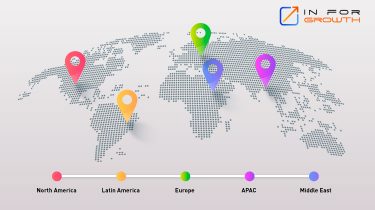
The report covers production, consumption, import/export volumes, revenue, and gross margin data across the following geographic regions:
- North America – the largest single market for DevOps tooling, driven by high cloud adoption and a mature software industry
- Europe – strong growth particularly in the UK, Germany, and the Nordics
- China – rapid domestic adoption supported by large-scale internet and fintech sectors
- Japan – growing interest in DevOps as enterprises modernise legacy systems
- Middle East & Africa – emerging market with increasing cloud-infrastructure investment
- India – significant growth driven by IT services exports and a large developer workforce
- South America – expanding adoption in Brazil and Argentina
- Rest of World – Southeast Asia, Australia, and other markets
What the Analysis Highlights for Practitioners
While market research reports are primarily aimed at investors and business strategists, they contain signals that DevOps engineers and platform teams should be aware of:
- Vendor consolidation is accelerating. Acquisitions (for example, Digital.ai absorbing XebiaLabs and VersionOne) mean that the tool landscape is contracting even as the market grows. Practitioners should factor long-term vendor viability into toolchain decisions.
- BFSI is the fastest-adopting regulated vertical. Compliance automation and audit-ready pipelines are becoming table stakes, not differentiators.
- Maturity segmentation matters for procurement. Tools positioned at “DevOps Capable” organisations (advanced observability, progressive delivery, chaos engineering) command premium pricing and typically require internal platform-engineering capacity to operate effectively.
- Geographic expansion is real but uneven. Cloud-native DevOps tooling adoption in emerging markets is growing but often starts with SaaS-delivered versions of tools, rather than on-premises deployments.
Summary
The 2020 DevOps Tools Market Research Report provides a structured picture of a market that was already large and growing rapidly before the pandemic-driven acceleration of digital transformation. The segmentation by maturity tier, industry vertical, and geography gives practitioners useful context for positioning their own toolchain investments relative to broader industry trends. Specific revenue figures and CAGR projections should be sourced directly from the originating research firm and treated critically, as methodology varies significantly between market-research providers.