This article is based on content originally sourced from the Udacity DevOps Engineer for Microsoft Azure Nanodegree program.
Why Azure DevOps Skills Matter
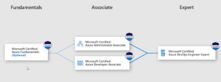
Microsoft Azure is one of the most widely adopted cloud platforms in enterprise environments. For DevOps engineers, knowing how to deploy, test, monitor, and automate workloads on Azure is increasingly a baseline expectation rather than a differentiator. Building these skills also maps directly to Microsoft’s AZ-400: Designing and Implementing Microsoft DevOps Solutions certification exam, which validates expertise across the full DevOps lifecycle on Azure.
The following sections break down the three core competency areas that Azure DevOps engineers need to master.
1. Azure Infrastructure Operations
Modern cloud deployments depend on automated, repeatable infrastructure provisioning. Manual server configuration doesn’t scale and introduces human error — both of which undermine the uptime guarantees customers expect. Azure DevOps engineers must understand how to manage infrastructure programmatically rather than through the portal alone.
Key Skills in This Area
- DevOps lifecycle fundamentals: Understanding the relationship between planning, development, delivery, and operations in a continuous loop.
- Infrastructure as Code (IaC): Using tools such as Azure Resource Manager (ARM) templates, Bicep, or Terraform to define and version infrastructure declaratively.
- Cloud security best practices: Applying the principle of least privilege, managing secrets with Azure Key Vault, and enforcing network security groups and policies.
- Repeatable deployments: Building deployment pipelines that can recreate environments consistently across development, staging, and production.
The goal is infrastructure that behaves like code — reviewable, version-controlled, and testable before it ever touches production.
2. Agile Development with Azure
Delivering high-quality software quickly requires marrying Agile project management with automated CI/CD pipelines. In the Azure ecosystem, this typically means combining Azure Boards for work tracking with Azure Pipelines for build and release automation.
Continuous Integration with Python Tooling
A common CI workflow for Python-based projects on Azure involves the following stages in a pipeline:
- Linting with
pylint— catches syntax errors and enforces style standards before a single test runs. - Unit and integration testing with
pytest— verifies business logic and catches regressions automatically on every commit. - Build artifact creation — packages the application for deployment after all checks pass.
Continuous Delivery with Azure Pipelines
Pairing IaC with Azure Pipelines enables end-to-end Continuous Delivery: infrastructure and application code are deployed together through the same automated workflow. This eliminates environment drift and reduces the time between a code commit and a production release.
# Example: minimal azure-pipelines.yml trigger for a Python app
trigger:
  - main

pool:
  vmImage: 'ubuntu-latest'

steps:
  - script: pip install pylint pytest
    displayName: 'Install dependencies'

  - script: pylint src/
    displayName: 'Lint with pylint'

  - script: pytest tests/
    displayName: 'Run tests with pytest'Code language: PHP (php)
The snippet above is illustrative. Real-world pipelines add caching, environment-specific variable groups, approval gates, and deployment stages.
3. Ensuring Quality Releases (QA and Monitoring)
Shipping to the cloud is not the end of the DevOps loop — it’s the beginning of the operations phase. Released applications must be continuously evaluated for performance, correctness, and reliability.
Testing Inside and Outside the Pipeline
Quality assurance for cloud applications typically spans two phases:
- In-pipeline testing: Tests that run as pipeline stages before or immediately after deployment — blocking a release if they fail.
- Post-deployment testing: Tests that run against the live environment to validate real-world behaviour, including load and end-to-end UI scenarios.
Common tooling includes:
- Selenium — browser-based UI testing, useful for validating web frontends such as eCommerce applications.
- Postman / Newman — API testing and contract validation against REST endpoints, runnable from the command line inside a pipeline.
Monitoring and Alerting with Azure-Native Tools
Once an application is live, observability is non-negotiable. Azure provides two key services for this:
- Azure Monitor: Collects metrics and logs from Azure resources, and triggers alerts based on thresholds you define — such as error rate spikes or latency increases.
- Azure Log Analytics: A query-driven workspace for analysing custom and platform log data using Kusto Query Language (KQL), enabling root-cause analysis and trend detection.
Building alerting rules and dashboards as part of the deployment process — rather than as an afterthought — is a hallmark of mature DevOps practice.
Mapping to the AZ-400 Certification
The three competency areas above align closely with the domains tested in Microsoft’s AZ-400 exam: DevOps transformation planning, source control, CI/CD pipeline implementation, dependency management, application infrastructure, and continuous feedback. Engineers who build practical experience in Azure infrastructure automation, pipeline development, and QA testing are well-positioned to sit the exam.
Review the official AZ-400 exam skills outline on Microsoft Learn for the current objectives before studying.
Summary
Azure DevOps engineering requires depth across three interconnected domains: infrastructure automation and security, Agile-driven CI/CD pipelines, and systematic quality assurance combined with production monitoring. Developing hands-on proficiency in tools like Azure Pipelines, ARM/Bicep/Terraform, Selenium, Postman, Azure Monitor, and Log Analytics builds the practical foundation needed for both day-to-day engineering work and the AZ-400 certification.