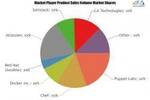
This article summarises publicly available information about the DevOps Platform market, drawing on segment and vendor data originally referenced in a 2020 HTF Market Intelligence research brief. Specific forecasts and statistics cited in that report have not been independently verified by this publication.
What Is the DevOps Platform Market?
The DevOps platform market encompasses the software tools, integrated suites, and managed services that organisations use to plan, build, test, deploy, and operate software at scale. Rather than a single product category, it spans a wide ecosystem — from source control and CI/CD pipelines to configuration management, container orchestration, monitoring, and security tooling.
Market research firms segment this space to help buyers benchmark their own adoption, identify gaps, and understand where vendor investment is heading. Understanding how analysts slice the market can be directly useful when building a tool-selection matrix or writing an internal business case for DevOps investment.
Major Vendors in the DevOps Platform Space
The competitive landscape includes both specialist tooling vendors and large platform players. Vendors commonly cited in market analyses include:
- Puppet Labs — configuration management and infrastructure automation
- Chef (now Progress Chef) — infrastructure-as-code and compliance automation
- Docker Inc. — container runtime and developer tooling
- Red Hat / Ansible — agentless automation, now part of the Red Hat Ansible Automation Platform
- Atlassian — project tracking (Jira), source control (Bitbucket), and documentation (Confluence)
- SaltStack (now part of VMware) — event-driven automation and configuration management
- Broadcom (CA Technologies) — enterprise DevOps planning and testing tools
- Rackspace — managed cloud and DevOps professional services
- Digital.ai (XebiaLabs / VersionOne) — release orchestration and agile planning
- Cisco — network automation and application-aware infrastructure
- CollabNet (now Digital.ai) — ALM and DevOps toolchain integration
- IBM — hybrid cloud DevOps toolchains and AIOps
- Microsoft — Azure DevOps and GitHub Actions ecosystem
- VMware (including SaltStack) — infrastructure automation and Tanzu for Kubernetes
- DBmaestro — database DevOps and release automation
This vendor list reflects a snapshot from around 2020. The landscape has shifted significantly since — through acquisitions, product pivots, and the rise of platforms such as GitHub Actions, GitLab, and ArgoCD — so treat it as a starting point rather than a definitive current ranking.
How the Market Is Segmented
By Industry Vertical (End-User)
DevOps tooling is adopted across virtually every sector, but adoption depth and use-case priorities vary considerably:
- IT / Technology — highest adoption; mature CI/CD and infrastructure-as-code practices
- Banking, Financial Services & Insurance (BFSI) — strong regulatory drivers; focus on compliance automation and audit trails
- Retail & eCommerce — high-frequency release cadences driven by seasonal demand and A/B testing
- Telecom — network function virtualisation and OSS/BSS modernisation
- Education — growing adoption of cloud-native learning platforms
- Other sectors — healthcare, government, manufacturing
By Maturity Classification
Analysts have used a three-tier maturity model to classify organisations and products:
- DevOps Ready — foundational tooling is in place; teams are beginning to integrate development and operations workflows
- DevOps Enabled — CI/CD pipelines are operational, automation is widespread, and cross-functional collaboration is established
- DevOps Capable — full-cycle automation, continuous feedback loops, measurable DORA metrics, and cultural change are embedded
This classification is useful for internal maturity assessments as well as for vendors positioning products at specific buyer personas.
By Geography
Market research typically breaks DevOps adoption down by region, including North America, Europe, Asia-Pacific (with particular focus on China, Japan, South Korea, India, and Southeast Asia), and South America. North America and Western Europe have historically led in enterprise adoption, while Asia-Pacific represents high growth potential driven by digital transformation initiatives.
Strategic Questions for DevOps Decision-Makers
Whether you are evaluating the market as a buyer, a practitioner planning toolchain investments, or a team lead making the case internally, these are the questions worth thinking through:
- Where is your organisation on the maturity curve? Being honest about whether you are DevOps Ready, Enabled, or Capable shapes which problems you actually need to solve next.
- Which vertical-specific compliance requirements constrain your tooling choices? BFSI and healthcare face audit, data-residency, and change-management requirements that generic DevOps pipelines do not handle out of the box.
- What is the total cost of a best-of-breed toolchain versus an integrated platform? Stitching together specialist tools offers flexibility but adds integration overhead; platforms reduce that friction at the cost of vendor lock-in.
- How are acquisitions reshaping the vendor landscape? Several vendors on the 2020 list have since been acquired or merged (e.g., XebiaLabs + VersionOne → Digital.ai; SaltStack → VMware → Broadcom). Evaluate vendor stability alongside product capability.
- What metrics will you use to measure ROI? DORA metrics (deployment frequency, lead time for changes, mean time to restore, change failure rate) provide a widely accepted baseline.
Analytical Frameworks Used in Market Research
Market research reports on the DevOps platform space typically apply several standard frameworks. Understanding what these frameworks actually test helps you extract genuine value from analyst reports:
- SWOT Analysis — assesses a vendor’s or the market’s internal Strengths and Weaknesses alongside external Opportunities and Threats. Useful for a quick competitive snapshot, but results are only as good as the underlying assumptions.
- Porter’s Five Forces — evaluates competitive intensity through supplier power, buyer power, threat of new entrants, threat of substitutes, and existing rivalry. In DevOps, the threat of open-source substitutes and low switching costs are particularly significant forces.
- Value Chain Analysis — maps activities from raw development tooling through integration, deployment, and operations to identify where margin and differentiation actually live.
Impact of External Events on Adoption
The 2020 research period coincided with the early stages of the COVID-19 pandemic, which acted as a significant accelerant for cloud migration and DevOps adoption. Organisations that had previously deferred digital transformation investments were forced to accelerate remote-working infrastructure, online service delivery, and automated operations — all of which increased demand for DevOps tooling.
Since then, macroeconomic pressures (including rising cloud costs and technology budget scrutiny) have shifted the conversation from raw adoption to demonstrable ROI, consolidation of tool sprawl, and platform-led strategies that reduce per-seat licensing costs.
Finding Current Market Data
The research brief summarised here was published in 2020 by HTF Market Intelligence. If you need current forecasts, vendor rankings, or segment-level revenue data, consult recent publications from firms such as Gartner, Forrester, IDC, or RedMonk, and cross-reference with vendor annual reports and open-source ecosystem metrics (e.g., CNCF Survey data, Stack Overflow Developer Survey) for a ground-level view of actual practitioner adoption.