This article draws on perspectives from Red Hat technology evangelist Gordon Haff, Adam Drobot (chairman, OpenTechWorks Inc., and FCC Technology Advisory Committee member), and Dalia Adib (principal consultant and edge computing practice leader, STL Partners). Original source: enterprisersproject.com.
Is Edge Computing Just a New Label for Cloud?
Enterprise cloud computing is now well established — but a newer term keeps appearing alongside discussions of 5G and the Internet of Things (IoT): edge computing. Is it genuinely new, or simply a rebrand of cloud concepts? The honest answer is that the boundary is blurry, and debate continues about exactly what qualifies as edge computing.
As Gordon Haff, technology evangelist at Red Hat, puts it: “Edge computing can apply to anything that involves placing service provisioning, data, and intelligence closer to users and devices.” That breadth of definition is part of what makes the term slippery.
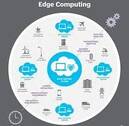
The core idea, however, is straightforward: instead of routing every workload to a hyperscale data center hundreds or thousands of miles away, you place computing resources at the “edge” of the network — closer to the user or the device generating data. The goals are lower latency, faster response, and more efficient use of network bandwidth.
Where Edge Computing Performance Matters
The clearest argument for edge computing comes from latency-sensitive, safety-critical applications. Consider autonomous vehicles:
- Cloud-suitable task: Distributing navigation software updates to a fleet of vehicles overnight. There is no urgency; a distant data center handles this fine.
- Edge-required task: Deciding whether to steer left or right to avoid a pedestrian stepping into the road. Waiting for a response from a remote server is not an option — the decision must be made in milliseconds, either onboard or at a nearby network node.
- Edge-assisted task: Networked traffic management systems running on compute nodes embedded in traffic lights and cell towers. If a vehicle is travelling the wrong way at high speed, alerting nearby cars quickly enough to matter requires processing at or near the roadside — not in a data center 2,000 miles away.
Adam Drobot, chairman of OpenTechWorks Inc. and a member of the FCC Technology Advisory Committee, explains the physics: “From the cell tower, the signal can go over fiber, which is lightning fast, but there’s latency still at the speed of light, and if you have to communicate with a data center 2,000 miles away, that’s going to be a large latency.”
His conclusion: “Things that require real-time performance are going to tend to be done at the edge.”
Edge Computing and 5G Are Interdependent
Telecom operators promoting 5G have a strong incentive to build out edge infrastructure. Dalia Adib, who leads the edge computing practice at STL Partners, is direct on this point: “The latency targets they have for 5G you almost can’t get without edge.” The two technologies reinforce each other — 5G provides the high-bandwidth, low-latency radio link, while edge computing ensures that data does not have to travel far once it leaves the radio access network.
Drobot notes that mobile operators already own physical infrastructure at every cell tower site — equipment enclosures that could be converted into small, distributed data centers providing edge services. That existing footprint gives telecoms a meaningful role in any future edge ecosystem.
A Manufacturing Use Case: Predictive Maintenance
Edge computing is not limited to consumer or automotive scenarios. A common industrial example is predictive maintenance on a factory floor:
- Robots on an assembly line generate continuous sensor data — vibration, temperature, pressure, cycle counts.
- An edge device with more compute power than any individual robot aggregates that sensor data in real time.
- Local algorithms running on the edge device detect patterns that signal an impending component failure — for example, a suction gripper about to wear out.
- Maintenance is scheduled proactively before the robot fails, preventing production line stoppages and product damage.
- The edge device also forwards aggregated, anonymized data to cloud-based machine learning systems, which refine the predictive algorithms and push updates back to the edge device.
This architecture — edge for real-time detection, cloud for model training — illustrates the complementary relationship between the two approaches.
Edge Does Not Replace the Public Cloud
Early predictions that public cloud would eventually absorb all enterprise computing have not come true. Gordon Haff argues that the same pattern will hold for edge computing:
“Edge computing only replaces public clouds in a world where public clouds were going to otherwise capture all workloads. And that world isn’t this one.”
Gordon Haff, Red Hat
Enterprise computing has always been heterogeneous. On-premises systems, colocation, private clouds, public clouds, and now edge nodes each occupy a place in a spectrum of deployment options. Edge computing adds another point on that spectrum — not a replacement for anything that already exists.
Beyond Latency: Other Reasons to Use Edge
Real-time performance is the most frequently cited reason to adopt an edge architecture, but it is not the only one:
- Bandwidth efficiency: Processing data locally and sending only relevant results to the cloud reduces traffic on network backbones, lowering both cost and congestion.
- Security and privacy: Keeping sensitive data closer to its source — rather than transmitting it to a centralized location — can reduce exposure and simplify compliance.
- Data sovereignty: Some jurisdictions require that certain data remain within specific geographic boundaries. Edge nodes within those boundaries can satisfy these requirements without routing data to a distant cloud region.
- Offline resilience: Edge devices can continue operating if the WAN connection to a central cloud is interrupted, which matters in industrial or remote environments.
The Role of Open Standards and Containers
Container technologies — already central to moving workloads between on-premises systems and the cloud — are expected to play a similar role in distributing workloads to edge locations. Containers provide consistent packaging and deployment regardless of the underlying hardware, which matters when edge nodes may span many different device types and locations.
Adib notes that enterprises in manufacturing, oil and gas, and telecommunications are wary of repeating past mistakes with proprietary technologies: “They’re trying not to replicate the mistakes of the past. Also, they don’t yet know who to work with… and they don’t want to be locked into any application or system that they can’t rip out if they want to.”
Open software and open standards reduce vendor lock-in — a lesson that the cloud era reinforced for many organizations.
Challenges Still Ahead
Edge computing carries real maturity risks. A Gartner report titled How to Overcome Four Major Challenges in Edge Computing warned that through 2022, a significant share of edge computing proofs of concept would fail to scale to production use. (The specific figures cited in that report should be verified against the primary source, as market research projections can be revised or misquoted.)
Common challenges include:
- Managing and monitoring a large number of geographically distributed edge nodes
- Establishing governance frameworks for data generated at the edge
- Integrating edge infrastructure with existing cloud and on-premises systems
- Securing devices that may be physically accessible in public or semi-public locations
- Defining best practices for deployment, updates, and lifecycle management
Edge and Cloud Coexist — and Complement Each Other
The practical conclusion from industry observers is that edge and cloud computing serve different parts of the same overall system. An FCC white paper on 5G, edge computing, and IoT (co-authored by Adam Drobot) captures this directly: many industry experts reject the framing of cloud and edge as competitors, and forward-looking organizations are instead determining how to selectively employ both.
A useful mental model:
- Edge: Latency-sensitive processing, real-time control, local data filtering, and applications where network connectivity cannot be assumed to be fast or reliable.
- Cloud: Big data aggregation, model training, long-running analytics, global collaboration, and workloads that benefit from virtually unlimited and elastically scalable compute.
Adib sums up the architecture reality well: “I think it’s going to be very rare that an application will live only in edge computing. It’s going to need to communicate and interact with other workloads that are in the cloud or in an enterprise data center or on another device.”
Key Takeaways for DevOps and Platform Engineers
- Edge computing places compute, storage, and intelligence closer to the data source to reduce latency and network load — it is not a replacement for the cloud.
- The strongest use cases are latency-critical (autonomous vehicles, industrial automation, augmented reality) and bandwidth-constrained (remote or high-volume sensor environments).
- 5G and edge are mutually dependent; neither fully delivers on its promise without the other.
- Container-based deployment patterns that work for cloud workloads transfer naturally to edge deployments.
- Favour open standards to avoid proprietary lock-in across a distributed edge estate.
- Expect a hybrid architecture: edge for real-time processing, cloud for aggregation, training, and global scale.