This article summarizes publicly available information about the DevOps platform market and its major vendors. The original source is attributed to bccourier.com. Specific revenue figures and forecasts from the cited market research report have not been independently verified.
What Is the DevOps Platform Market?
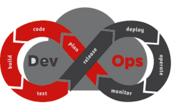
The DevOps platform market encompasses the tools, services, and integrated suites that help organizations plan, build, test, deliver, and monitor software. Rather than stitching together dozens of point solutions, many enterprises are consolidating onto platforms that cover the full software delivery lifecycle — from backlog management and version control through continuous integration, deployment automation, infrastructure-as-code, and observability.
Market research covering the 2020–2026 period examined both established vendors and newer entrants, using competitive analysis techniques including SWOT analysis, revenue share estimation, and product roadmap comparison.
Major Vendors in the DevOps Platform Space
The following companies were identified as key players in the DevOps platform market during this period. Each occupies a distinct position in the ecosystem:
- Puppet Labs – Infrastructure automation and configuration management, widely used for enforcing desired state across large server fleets.
- Chef (Progress) – Policy-as-code approach to infrastructure automation, with strong enterprise compliance tooling.
- Docker Inc. – Container runtime and developer tooling that fundamentally changed how applications are packaged and shipped.
- Red Hat (Ansible) – Agentless automation platform acquired by Red Hat; tightly integrated with OpenShift and RHEL ecosystems.
- Atlassian – Collaboration-first DevOps toolchain including Jira, Confluence, Bitbucket, and Bamboo.
- SaltStack (now part of VMware) – Event-driven automation and remote execution at scale.
- Broadcom – Enterprise portfolio including CA Technologies products for release automation and project management.
- Rackspace – Managed cloud services with DevOps consulting and platform support.
- XebiaLabs (now Digital.ai) – Release orchestration and DevOps intelligence.
- VersionOne (now Digital.ai) – Agile and SAFe planning tools integrated into broader DevOps workflows.
- Cisco – Networking automation and security tooling relevant to DevSecOps pipelines.
- CollabNet (now Digital.ai) – ALM and DevOps value stream management.
- HP (Micro Focus) – Enterprise testing, ALM, and IT operations management tools.
- IBM – DevOps toolchain through IBM Cloud, UrbanCode Deploy, and AI-assisted operations.
- Microsoft – Azure DevOps (formerly VSTS) and GitHub, offering end-to-end pipelines tightly integrated with Azure.
Market Segments by Solution Type
DevOps platforms are categorized by the business function they primarily serve. The main solution categories identified in this market research include:
- Project Management – Sprint planning, backlog tracking, and work item management (e.g., Jira, Azure Boards).
- Business Management – Portfolio-level visibility, OKR tracking, and value stream management.
- Information Technology – Infrastructure automation, configuration management, and IT operations.
- Risk Management – Compliance-as-code, audit trails, change management gates, and security scanning in pipelines.
- Training – Developer enablement, certification programs, and internal DevOps coaching platforms.
- Consulting – Transformation services, toolchain integration, and DevOps maturity assessments.
- Other – Monitoring, observability, and SRE tooling that supports DevOps workflows.
Market Segments by Deployment Target
The research also segments the market by the end-user device or environment category where DevOps tooling is consumed or managed. While the original segmentation (smartphones, laptops, tablets) reflects a broad device-access lens rather than the infrastructure where workloads run, it highlights that modern DevOps platforms are increasingly accessed through web and mobile interfaces, not just desktop IDEs.
| Segment | Relevance to DevOps Platforms |
|---|---|
| Laptops / Desktops | Primary developer workstations; CLI tools, IDEs, and local container runtimes. |
| Smartphones | Mobile access to dashboards, pipeline status alerts, incident management apps. |
| Tablets | Management and monitoring dashboards in on-call or executive review contexts. |
| Other (Servers / Cloud) | The actual runtime environment for CI/CD agents, automation engines, and APIs. |
Regional Market Analysis
DevOps platform adoption and spending is not uniform globally. The research identified five major regional segments:
- North America – The largest market by revenue, driven by high cloud adoption, a mature software industry, and strong presence of both major vendors and DevOps-native startups.
- Europe – Growing adoption, with regulatory considerations (GDPR, data residency) influencing platform selection and deployment model choices.
- Asia Pacific – Fastest-growing region, driven by digital transformation initiatives in financial services, retail, and manufacturing across China, India, Japan, and Southeast Asia.
- Latin America – Emerging adoption, led by fintech and e-commerce sectors in Brazil and Mexico.
- Middle East & Africa – Nascent but growing, with government digitization programs and expanding cloud infrastructure driving demand.
Key Forces Shaping the DevOps Platform Market
Several macro trends were already visible at the start of the forecast period and continued to accelerate through subsequent years:
- Platform consolidation – Enterprises began replacing fragmented toolchains with integrated platforms offering unified observability, security, and compliance. GitLab and GitHub (post-Microsoft acquisition) exemplify this trend.
- Shift-left security (DevSecOps) – Security scanning, secrets management, and compliance checks moved earlier into the pipeline, expanding the total addressable market for DevOps platforms.
- Cloud-native and Kubernetes adoption – Container orchestration became a default deployment target, requiring CI/CD tools to support Helm, Kustomize, and GitOps workflows.
- AI-assisted development and operations – AIOps and ML-based anomaly detection began integrating into monitoring and incident response tools.
- Value stream management (VSM) – Executive demand for end-to-end delivery metrics drove investment in VSM platforms that sit above individual tools.
What This Means for DevOps Teams
Understanding the competitive landscape of the DevOps platform market matters for engineering and platform teams making toolchain decisions. Key takeaways for practitioners:
- Major acquisitions (SaltStack → VMware, XebiaLabs + VersionOne + CollabNet → Digital.ai, Chef → Progress) have consolidated the mid-market, reducing vendor count but increasing platform breadth.
- Microsoft’s acquisition of GitHub and continued investment in Azure DevOps have made it a dominant full-lifecycle player, particularly for .NET and cross-platform enterprises.
- Open-source tools (Ansible, Jenkins, Terraform, ArgoCD) remain foundational even within commercial platform deals, and vendor lock-in risk is a real consideration.
- Procurement teams should evaluate vendors not just on current features but on roadmap alignment with cloud-native, security, and AI trends that were already shaping the 2020–2026 forecast window.
Original market research attributed to bccourier.com (2020). Specific CAGR figures, revenue projections, and report pricing from the original source have not been reproduced here as they could not be independently verified at time of writing.