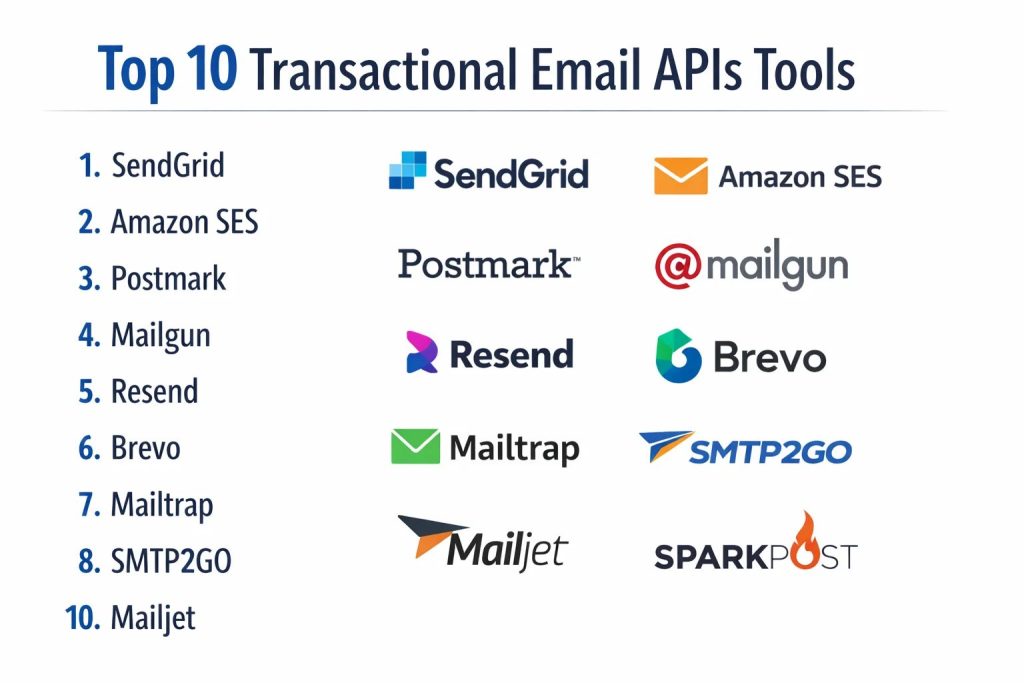
Introduction
Transactional Email APIs are specialized communication interfaces designed to facilitate the automated delivery of one-to-one messages triggered by specific user actions or system events. Unlike marketing emails, which are sent in bulk to a list of subscribers, transactional emails—such as password resets, order confirmations, and multi-factor authentication codes—must be delivered with near-instantaneous speed and high reliability. These APIs allow developers to integrate email functionality directly into their application’s backend, abstracting away the complexities of managing physical mail servers, handling ISP throttling, and ensuring compliance with ever-evolving authentication protocols.
The strategic importance of a robust transactional email infrastructure cannot be overstated in a digital-first economy. For a business, the failure of a single transactional email often translates to a lost customer or a security lapse. Modern organizations utilize these APIs to maintain a high sender reputation, which is essential for ensuring that critical notifications bypass spam filters and land directly in the primary inbox. When selecting a provider, enterprises must evaluate the platform’s API latency, the depth of its real-time analytics, its geographic redundancy, and its ability to handle sudden surges in volume without performance degradation. A well-chosen API acts as a silent but vital component of the user experience, building trust through consistency and speed.
Best for: Software engineers, SaaS founders, e-commerce platforms, and enterprise architects who require a programmatic way to send critical, time-sensitive notifications at scale.
Not ideal for: One-time cold outreach campaigns, manual newsletter distribution, or users looking for a visual-only drag-and-drop marketing suite without any technical integration needs.
Key Trends in Transactional Email APIs
One of the most significant shifts in the industry is the move toward developer experience (DX) as a core product feature. Modern APIs now offer highly opinionated SDKs and “React for Email” frameworks that allow developers to build responsive templates using familiar component-based architectures. There is also a growing emphasis on “Zero-Trust” email delivery, where providers implement stricter automated monitoring to detect compromised accounts and prevent the sending of malicious content, thereby protecting the overall IP reputation of their shared pools.
The integration of artificial intelligence for deliverability optimization is another major trend. Algorithms now analyze delivery patterns in real-time to predict the best time to send or to automatically retry failed deliveries through alternative routes. Furthermore, the rise of multi-channel orchestration layers has allowed businesses to send a single API call that intelligently routes a message to Email, SMS, or Push based on user preference or delivery success. Security remains a top priority, with increased adoption of BIMI (Brand Indicators for Message Identification) and mandated DMARC policies becoming standard requirements for high-volume senders.
How We Selected These Tools
Our selection process focused on technical reliability and the ability of the API to maintain high inbox placement rates under professional-grade workloads. We prioritized platforms that provide comprehensive documentation and multi-language SDK support, as these are critical for reducing integration friction. Another key metric was the separation of transactional and promotional traffic; we looked for providers that offer dedicated IP pools specifically for transactional streams to ensure that marketing campaigns do not impact the delivery of critical system alerts.
We also assessed the robustness of the observability tools provided by each platform. A professional API must offer granular event webhooks that notify the host system of every bounce, open, click, and delivery failure. Financial scalability was also considered, comparing pay-as-you-go models against fixed-tier subscriptions to identify the best value for different growth stages. Finally, we looked for evidence of enterprise-grade security certifications and global data residency options, ensuring that the selected tools meet the compliance standards required by modern legal frameworks.
1. Twilio SendGrid
Twilio SendGrid is a dominant force in the transactional email space, known for its massive global scale and comprehensive feature set. It provides a highly reliable RESTful API and SMTP relay that serves as the backbone for thousands of enterprise applications. The platform is built for high-volume senders who require deep visibility into their delivery pipeline and sophisticated tools for reputation management.
Key Features
The platform features a proprietary delivery optimization engine that manages ISP relations and throttling automatically. It provides a robust template engine that supports dynamic data substitution and versioning. Developers have access to detailed real-time analytics and event webhooks for tracking every interaction. The software includes an automated IP warm-up service for new dedicated IPs to protect sender reputation. Additionally, it offers advanced subuser management for organizations that need to isolate traffic from different departments or clients.
Pros
It offers unparalleled scalability, easily handling billions of emails per month for the world’s largest brands. The documentation is exhaustive and supported by official SDKs in almost every major programming language.
Cons
The pricing can become significantly higher as you move into the Pro tiers. Some users find the interface overly complex due to the sheer volume of features and legacy settings.
Platforms and Deployment
Cloud-based API accessible from any server environment.
Security and Compliance
Supports TLS encryption, two-factor authentication, and is SOC 2 Type II compliant with strong GDPR data protection protocols.
Integrations and Ecosystem
Seamlessly integrates with the broader Twilio ecosystem for multi-channel messaging. It has native plugins for major platforms like WordPress, Heroku, and Azure.
Support and Community
Offers tiered support ranging from ticket-based assistance for free users to dedicated account managers for enterprise clients.
2. Amazon SES (Simple Email Service)
Amazon SES is a highly cost-effective and scalable email service designed for developers who are already integrated into the AWS ecosystem. It provides the raw infrastructure needed to send and receive email at a fraction of the cost of most specialized competitors, making it a favorite for high-volume, budget-conscious projects.
Key Features
The service provides a reputation dashboard that highlights issues with bounce rates and spam complaints. It utilizes a pay-as-you-go pricing model that is almost unbeatable for massive volumes. It integrates deeply with other AWS services, allowing for automated email processing via Lambda functions or S3 storage. Users can choose between shared or dedicated IP addresses depending on their volume and reputation needs. It also includes a Virtual Deliverability Manager that provides automated suggestions for improving inbox placement.
Pros
The most significant advantage is the extremely low cost, specifically for users sending millions of emails. It offers industrial-grade reliability and scalability backed by Amazon’s global infrastructure.
Cons
The setup process is technically demanding and requires a manual request to move out of the “sandbox” environment. The support is tied to AWS support plans, which can be expensive for small teams.
Platforms and Deployment
Cloud-based service with multiple regional endpoints globally.
Security and Compliance
Inherits the robust security posture of AWS, including IAM roles for fine-grained access control and compliance with HIPAA and ISO standards.
Integrations and Ecosystem
Fully integrated into the AWS Management Console and works natively with CloudWatch for monitoring and SNS for notifications.
Support and Community
Primarily supported through AWS documentation and forums, with professional support available through paid AWS support tiers.
3. Postmark
Postmark is a purpose-built transactional email service that prioritizes speed and deliverability above all else. It is famous for its “transactional only” philosophy (though it now supports broadcast), ensuring that time-sensitive emails are never delayed by bulk marketing traffic.
Key Features
The platform boasts industry-leading delivery speeds, often reaching the inbox in under ten seconds. It automatically separates transactional and promotional traffic into distinct “Message Streams” to protect critical IP reputations. The API provides detailed 45-day message history, allowing developers to troubleshoot individual delivery issues with ease. It features a clean, well-structured template system with a focus on high-quality default designs. It also provides a unique inbound email processing API that turns incoming emails into easy-to-parse JSON.
Pros
The focus on speed and reliability is unmatched, making it the top choice for password resets and OTPs. The customer support is highly regarded for being fast, technical, and human.
Cons
It is generally more expensive on a per-email basis compared to high-volume providers like Amazon SES. It does not offer a permanent free tier beyond a small initial credit.
Platforms and Deployment
Global cloud deployment with a focus on low-latency delivery.
Security and Compliance
Features signed webhooks, 2FA, and is fully compliant with GDPR and Privacy Shield standards.
Integrations and Ecosystem
Offers strong integrations with modern developer tools and has a highly active community contributing to various wrapper libraries.
Support and Community
Known for exceptional support quality across all plan levels, including direct access to knowledgeable engineers.
4. Mailgun
Mailgun is a developer-centric email service that excels in its powerful routing and parsing capabilities. It is designed for businesses that need to not only send emails but also receive and process them programmatically at a high scale.
Key Features
The platform features a sophisticated inbound routing engine that can parse complex multi-part emails and forward them to webhooks. It includes a built-in email validation API to clean lists before sending. High-volume senders can utilize “Managed Deliverability” services where experts help monitor and optimize reputation. The API supports advanced batching and scheduling features. It also provides comprehensive logs and searchable history to simplify debugging for engineering teams.
Pros
The API is exceptionally flexible, making it ideal for building complex, event-driven applications. It offers powerful tools for list hygiene and deliverability testing.
Cons
The pricing structure has moved away from its legendary free tier, making it less attractive for very small projects. The interface can be intimidating for non-technical users.
Platforms and Deployment
Available as a cloud service with US and EU-based data centers.
Security and Compliance
Offers robust security features including dedicated IPs, TLS encryption, and SOC 2 compliance.
Integrations and Ecosystem
Deeply integrated with the Sinch ecosystem and supports a wide variety of third-party platforms via its comprehensive REST API.
Support and Community
Provides detailed documentation and multi-level support, including 24/7 assistance for higher-tier plans.
5. Resend
Resend is a modern, API-first email platform that has quickly gained popularity for its exceptional developer experience. It focuses on simplicity, clean design, and native support for modern web frameworks like Next.js and React.
Key Features
It offers a “React Email” integration that allows developers to code email templates using JSX and components. The API design is minimalist and intuitive, allowing for the first email to be sent in minutes. It supports regional sending to ensure compliance with data residency laws. The platform provides real-time webhooks for delivery events with a very clean management UI. It also features a “Contacts” API for basic audience management without the bloat of a full CRM.
Pros
It provides the best modern developer experience in the industry, with a focus on speed and ease of integration. The free tier is generous and perfect for startups.
Cons
As a newer player, it lacks some of the legacy enterprise features and deep marketing automation found in older platforms. The feature set is still evolving.
Platforms and Deployment
Cloud-based, with options for US and EU data residency.
Security and Compliance
Adheres to modern security standards, including GDPR compliance and secure API key management.
Integrations and Ecosystem
Highly optimized for the Vercel and Next.js ecosystem, with excellent documentation for modern JavaScript and TypeScript environments.
Support and Community
Offers a developer-focused community and responsive support team through modern communication channels.
6. Brevo (formerly Sendinblue)
Brevo is an all-in-one communication platform that offers a highly accessible transactional email API alongside its marketing and CRM tools. It is an excellent choice for businesses that want a unified platform for all customer touchpoints without sacrificing transactional reliability.
Key Features
The platform includes a generous daily free sending limit that is ideal for growing businesses. It features a drag-and-drop template editor that is intuitive enough for non-technical team members to use. The API provides detailed logs and real-time statistics on deliverability. It supports multi-channel workflows, including SMS and WhatsApp, from a single interface. It also offers dedicated IP options for high-volume senders to maintain full control over their reputation.
Pros
It is incredibly user-friendly and offers one of the best value-for-money propositions for small to medium businesses. The all-in-one nature simplifies the tech stack.
Cons
The daily sending limit on the free plan can be restrictive for some. The API, while robust, may not offer the extreme technical depth required by high-end engineering teams.
Platforms and Deployment
Global cloud platform with a strong presence and data centers in Europe.
Security and Compliance
High focus on GDPR compliance given its European roots, offering robust data protection and encryption.
Integrations and Ecosystem
Offers a wide range of plugins for e-commerce platforms like Shopify and WooCommerce, as well as a standard REST API.
Support and Community
Provides multi-language support and an extensive knowledge base for users of all technical levels.
7. Mailtrap
Mailtrap is a unique platform that combines an email testing sandbox with a high-performance transactional email API. This makes it a comprehensive solution for developers who want to test their email logic in a safe environment before going live.
Key Features
The software includes a “virtual” inbox for dev and staging environments to capture outgoing emails without actually sending them. Once ready, users can switch to the production API which is built for high deliverability. It provides automated alerts for deliverability issues and weekly reports. The platform features an email validation tool to protect sender reputation. It also offers a “Deliverability Manager” service for enterprise clients who need hands-on reputation guidance.
Pros
The integrated testing and production environment drastically reduces the risk of accidental spam or broken templates. The interface is clean and developer-friendly.
Cons
The testing and sending features are priced separately, which can lead to higher costs if you need high volumes of both. The brand is more famous for testing than for its sending API.
Platforms and Deployment
Cloud-based platform with a focus on developer workflow integration.
Security and Compliance
Ensures data security through encryption and is compliant with standard professional data regulations.
Integrations and Ecosystem
Supports official SDKs for major languages and integrates well into CI/CD pipelines for automated testing.
Support and Community
Offers 24/7 technical support and a wealth of educational content regarding email best practices.
8. SMTP2GO
SMTP2GO is a reliable and straightforward email service that focuses on the core mission of getting emails delivered. It is known for its extreme ease of setup and its “no-nonsense” approach to transactional and outgoing mail.
Key Features
The platform features a global network of servers to ensure low latency and high uptime for every send. It includes a comprehensive real-time dashboard that shows exactly what happened to every email. Automated SPF and DKIM setup tools make the authentication process painless. The software provides a dedicated IP for all high-volume accounts to ensure reputation stability. It also features a “Spam Folder” and “Inbox” testing tool to preview how emails look in different clients.
Pros
It is exceptionally reliable, with an uptime guarantee that is among the highest in the industry. The setup process is arguably the fastest of any SMTP-based provider.
Cons
The API is not as feature-rich as developer-focused platforms like Mailgun or Resend. It lacks some of the modern template-as-code features.
Platforms and Deployment
Global cloud infrastructure with a focus on geographic redundancy.
Security and Compliance
Provides secure TLS/SSL connections and is fully GDPR compliant with data centers in multiple regions.
Integrations and Ecosystem
Works with any application that can send via SMTP or REST API, making it a universal choice for legacy and modern apps.
Support and Community
Renowned for having high-quality, human-led support that is available 24/7 via chat and phone.
9. Mailjet
Mailjet is a collaborative email platform that allows developers and marketing teams to work together on transactional templates. It is particularly strong in environments where the creative and technical aspects of email are handled by different departments.
Key Features
The software features a collaborative real-time editor where multiple users can work on the same template simultaneously. It provides a robust API and SMTP relay for transactional delivery. The platform includes a sophisticated segmentation engine for organizing different types of triggered mail. It offers a dedicated IP address as an add-on to ensure stable deliverability. It also features detailed performance analytics with comparison tools to track different “Message Streams” over time.
Pros
The collaborative features are unique and solve a major pain point for cross-functional teams. It offers very competitive pricing for high-volume senders.
Cons
The interface can sometimes feel cluttered as it tries to balance marketing and developer needs. Some users report that the support response times can vary.
Platforms and Deployment
Cloud-based platform with a strong emphasis on European data compliance.
Security and Compliance
ISO 27001 certified and fully GDPR compliant, offering high levels of data security and privacy.
Integrations and Ecosystem
Extensive list of integrations with CRMs, CMSs, and major automation platforms through its flexible API.
Support and Community
Offers a range of support plans and a comprehensive library of documentation and developer guides.
10. SparkPost (by Bird)
SparkPost, now part of the Bird family, is an enterprise-grade email API known for its powerful predictive analytics and high-throughput capabilities. It is designed for the world’s most demanding senders who require deep data insights and top-tier deliverability.
Key Features
The platform utilizes a “Signals” engine that uses machine learning to predict and prevent deliverability issues before they happen. It features a highly scalable API capable of sending millions of messages per hour. It provides a comprehensive suite of A/B testing and optimization tools for transactional content. The software includes dedicated IP management with automated warm-up and reputation monitoring. It also offers advanced subaccount structures for managing complex organizational needs.
Pros
The data and analytics capabilities are among the most advanced in the industry, providing actionable insights into inbox placement. It handles massive scale with ease.
Cons
The pricing is geared toward the enterprise market and can be prohibitive for small startups. The acquisition by Bird has led to some changes in the product’s focus.
Platforms and Deployment
Cloud-based API with global infrastructure and high-availability architecture.
Security and Compliance
Features enterprise-grade security including SOC 2 compliance, HIPAA readiness, and global data privacy protections.
Integrations and Ecosystem
Part of the broader Bird communication suite, offering deep integrations for omnichannel customer engagement.
Support and Community
Provides professional enterprise support with dedicated deliverability experts and technical account managers.
Comparison Table
| Tool Name | Best For | Platform(s) Supported | Deployment | Standout Feature | Public Rating |
| 1. Twilio SendGrid | Enterprise Scale | Any / Cloud-API | SaaS | Massive Throughput | 4.5/5 |
| 2. Amazon SES | Budget Efficiency | AWS Ecosystem | SaaS | Pay-per-use Cost | 4.2/5 |
| 3. Postmark | Delivery Speed | Any / Cloud-API | SaaS | Time-to-Inbox Speed | 4.8/5 |
| 4. Mailgun | Technical Parsing | Any / Cloud-API | SaaS | Inbound Routing | 4.4/5 |
| 5. Resend | Modern Dev Experience | Next.js / React | SaaS | React Email Integration | 4.9/5 |
| 6. Brevo | SMB All-in-One | Any / Cloud-API | SaaS | Free Daily Tier | 4.3/5 |
| 7. Mailtrap | Testing & Sending | Any / Cloud-API | SaaS | Sandbox + API Hybrid | 4.6/5 |
| 8. SMTP2GO | Reliable Outbound | Any / SMTP | SaaS | 100% Uptime Guarantee | 4.7/5 |
| 9. Mailjet | Team Collaboration | Any / Cloud-API | SaaS | Real-time Editor | 4.1/5 |
| 10. SparkPost | Data Analytics | Any / Cloud-API | SaaS | Predictive Signals | 4.3/5 |
Evaluation & Scoring of Transactional Email APIs
The scoring below is a comparative model intended to help shortlisting. Each criterion is scored from 1–10, then a weighted total from 0–10 is calculated using the weights listed. These are analyst estimates based on typical fit and common workflow requirements, not public ratings.
Weights:
- Core features – 25%
- Ease of use – 15%
- Integrations & ecosystem – 15%
- Security & compliance – 10%
- Performance & reliability – 10%
- Support & community – 10%
- Price / value – 15%
| Tool Name | Core (25%) | Ease (15%) | Integrations (15%) | Security (10%) | Performance (10%) | Support (10%) | Value (15%) | Weighted Total |
| 1. SendGrid | 10 | 7 | 10 | 9 | 10 | 8 | 6 | 8.70 |
| 2. Amazon SES | 8 | 3 | 10 | 10 | 10 | 5 | 10 | 7.90 |
| 3. Postmark | 9 | 9 | 8 | 9 | 10 | 10 | 6 | 8.65 |
| 4. Mailgun | 10 | 6 | 9 | 9 | 9 | 7 | 7 | 8.15 |
| 5. Resend | 8 | 10 | 9 | 8 | 9 | 9 | 9 | 8.80 |
| 6. Brevo | 7 | 9 | 8 | 9 | 7 | 8 | 9 | 7.95 |
| 7. Mailtrap | 9 | 8 | 8 | 8 | 8 | 9 | 8 | 8.35 |
| 8. SMTP2GO | 8 | 10 | 7 | 9 | 9 | 10 | 8 | 8.60 |
| 9. Mailjet | 8 | 8 | 8 | 9 | 7 | 7 | 8 | 7.80 |
| 10. SparkPost | 10 | 5 | 9 | 9 | 10 | 8 | 5 | 8.10 |
How to interpret the scores:
- Use the weighted total to shortlist candidates, then validate with a pilot.
- A lower score can mean specialization, not weakness.
- Security and compliance scores reflect controllability and governance fit, because certifications are often not publicly stated.
- Actual outcomes vary with assembly size, team skills, templates, and process maturity.
Which Transactional Email API Tool Is Right for You?
Solo / Freelancer
For independent developers or those launching side projects, the primary focus should be on ease of integration and a generous free tier. A tool that allows you to start sending immediately without a complex vetting process or upfront costs is ideal for moving fast.
SMB
Small and medium businesses often require a balance between technical control and ease of management. Choosing a platform that offers a user-friendly template editor and a transparent pricing model allows the business to grow its communication strategy without needing a large engineering team.
Mid-Market
Mid-market companies should prioritize reliability and reputation management. At this stage, moving to a provider that offers dedicated IP addresses and robust delivery analytics becomes essential for maintaining professional standards as email volumes increase.
Enterprise
For enterprise organizations, the criteria shift toward global scalability, high-level security certifications, and dedicated support. These teams need a partner that can handle hundreds of millions of emails while providing deep data insights and strictly adhering to global privacy laws.
Budget vs Premium
Budget-conscious teams will find the best value in high-scale infrastructure providers that offer pay-per-use pricing. Premium services, however, justify their higher costs by providing advanced features like AI-driven deliverability optimization and 24/7 technical assistance.
Feature Depth vs Ease of Use
The trade-off between depth and ease is critical. Some APIs offer immense technical flexibility but require more manual setup, while others provide a “set it and forget it” experience with limited customization. Choose based on your team’s technical capacity.
Integrations & Scalability
A transactional email tool must scale with your application. Evaluate how easily the API integrates with your existing tech stack and whether the provider has the infrastructure to support your long-term growth without requiring a complete migration later.
Security & Compliance Needs
In regulated industries like finance or healthcare, security is non-negotiable. Look for platforms that offer HIPAA compliance, SOC 2 certification, and the ability to pin data to specific geographic regions to meet strict legal requirements.
Frequently Asked Questions (FAQs)
1. What exactly is a Transactional Email API?
It is a programming interface that allows your application to send automated emails in response to specific user triggers. It handles the technical delivery process, ensuring that critical messages like password resets are delivered instantly and reliably.
2. How does a transactional API differ from marketing software?
Transactional APIs are built for one-to-one, action-based messages that require immediate delivery. Marketing software is designed for one-to-many campaigns and often prioritizes list management and creative design over millisecond delivery latency.
3. Do I need a dedicated IP for my transactional emails?
A dedicated IP is recommended for high-volume senders who want total control over their reputation. For lower volumes, a high-quality shared IP pool from a reputable provider is often sufficient and more cost-effective.
4. What are SPF, DKIM, and DMARC?
These are email authentication protocols that verify your identity as a sender. Correctly configuring these records in your DNS is essential for ensuring your emails are not marked as spam by receiving mail servers.
5. Can I test my emails without actually sending them to customers?
Yes, many top providers offer “sandbox” environments or dedicated testing tools. These allow you to capture and inspect the email’s content, headers, and formatting in a safe environment before going live.
6. What is a webhook in the context of email APIs?
A webhook is a mechanism where the email provider sends real-time data back to your application whenever an event occurs, such as an email being delivered, opened, or bouncing.
7. How do I improve my email deliverability?
Focus on maintaining a clean list, using proper authentication protocols, and separating your transactional and marketing traffic. Monitoring your bounce and complaint rates through the API’s dashboard is also vital.
8. Is it better to use SMTP or a REST API?
A REST API is generally faster, more secure, and offers more features like advanced error handling. SMTP is a legacy protocol that is easier to integrate into older systems or software that lacks custom API support.
9. Why are my transactional emails going to the spam folder?
This usually happens due to poor sender reputation, lack of authentication, or “spammy” content. Using a professional API provider helps mitigate this by providing the tools needed to manage your reputation correctly.
10. What is a “Message Stream”?
A Message Stream is a way to organize and isolate different types of email traffic within a single account. By using separate streams for transactional and broadcast mail, you ensure that one does not negatively affect the other.
Conclusion
Navigating the complex landscape of transactional email APIs requires a strategic focus on deliverability, speed, and long-term scalability. The “best” choice is not a universal one but rather the tool that aligns most closely with your engineering culture and your business’s specific volume requirements. For developers, the priority is often a clean, well-documented API that reduces time-to-market. For stakeholders, the focus is on reliability and the bottom-line impact of ensuring every customer receives their critical notifications without delay. By choosing a provider that prioritizes the separation of transactional traffic and provides robust observability, you build a resilient communication foundation that can support your organization’s growth through every phase of the digital lifecycle.