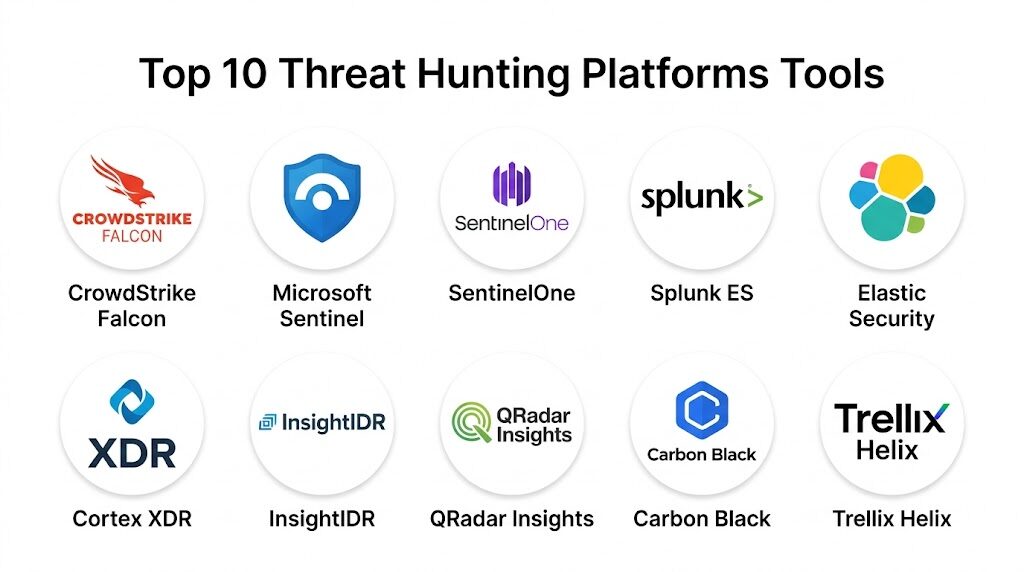
Introduction
Threat hunting represents a fundamental transition in cybersecurity from a reactive “alert-based” posture to a proactive, hypothesis-driven exploration of an organization’s digital environment. While traditional security tools act as automated tripwires that trigger when a known signature is matched, threat hunting platforms provide the telemetry and analytical depth required to find stealthy adversaries who have already bypassed perimeter defenses. These platforms focus on identifying Indicators of Attack (IoAs) and anomalous behaviors that do not yet have a defined signature, effectively reducing the “dwell time” of an attacker within the network. By assuming a state of continuous compromise, security teams use these tools to interrogate data across endpoints, networks, and cloud workloads to uncover the subtle traces of lateral movement, credential abuse, and data exfiltration.
The strategic implementation of a threat hunting platform is no longer optional for enterprises facing sophisticated Advanced Persistent Threats (APTs). These platforms ingest massive volumes of raw telemetry, normalizing and correlating it into a searchable format that allows analysts to pivot between data points with speed and precision. The efficacy of a hunt is often determined by the granularity of the data collected and the flexibility of the platform’s query language. As adversaries increasingly utilize “living off the land” techniques—using legitimate system tools to carry out malicious acts—the ability to distinguish between administrative actions and malicious intent becomes the primary challenge. A robust platform provides the historical context and behavioral baselines necessary to make these critical distinctions, ensuring that security remains a proactive business enabler rather than a reactive cost center.
Best for: Security Operations Centers (SOC), Incident Response (IR) teams, and professional threat hunters who require deep visibility and advanced querying capabilities to find undetected threats in complex environments.
Not ideal for: Organizations with low security maturity or those lacking dedicated security personnel, as these platforms require specialized expertise to interpret data and act on findings effectively.
Key Trends in Threat Hunting Platforms
The current era of threat hunting is dominated by the integration of “Agentic AI” and Large Language Models (LLMs) that act as force multipliers for human analysts. These AI assistants can translate natural language questions into complex technical queries, allowing junior analysts to perform advanced hunts that previously required years of experience. Furthermore, we are seeing a convergence of Endpoint Detection and Response (EDR) with Network Detection and Response (NDR) into unified Extended Detection and Response (XDR) platforms, providing a single “pane of glass” for correlating telemetry across different domains without the need for manual data stitching.
Another significant trend is the rise of community-driven hunting frameworks, such as the PEAK framework and the continued expansion of MITRE ATT&CK mappings within platform dashboards. This shift toward standardization allows global security teams to share hunting playbooks and logic more effectively. Additionally, there is an increasing focus on “Shift Left” hunting, where platforms monitor CI/CD pipelines and cloud-native environments to identify misconfigurations or compromised tokens before they are deployed to production, effectively stopping threats before they ever enter the active runtime environment.
How We Selected These Tools
Our selection process for the top threat hunting platforms involved a rigorous evaluation of technical capabilities, telemetry depth, and operational reliability. We prioritized platforms that offer native integration with the MITRE ATT&CK framework, as this provides a standardized vocabulary for tracking adversary behavior. A key criterion was the “search latency” of the platform; in an active breach, the ability to query petabytes of data in seconds is the difference between containment and catastrophe. We also weighed the quality of “out-of-the-box” behavioral content, which provides hunters with a strong starting point for their investigations.
Beyond pure technical specs, we evaluated the ecosystem around each tool, including the availability of professional communities and the robustness of their API for integration with SOAR platforms. Security and data integrity were paramount; we looked for platforms that provide immutable logging and strong access controls to prevent an attacker from tampering with the hunt data itself. Finally, we considered the balance between automation and manual control, selecting tools that empower the human hunter rather than replacing them with black-box algorithms.
1. CrowdStrike Falcon
CrowdStrike Falcon is a cloud-native platform that pioneered the use of a single, lightweight agent for both protection and proactive hunting. Its “ThreatGraph” technology analyzes trillions of events in real-time, creating a visual map of all activities across the enterprise. It is widely recognized for its “1-10-60” rule, which aims to detect a threat in one minute, investigate in ten, and remediate in sixty.
Key Features
The platform features Falcon OverWatch, a managed threat hunting service that provides 24/7 human-led surveillance alongside the software. It utilizes a proprietary “Falcon Query Language” for deep-dive investigations into endpoint telemetry. The system provides a detailed process tree visualization, allowing hunters to see exactly how a malicious process was spawned. It includes integrated threat intelligence that maps every detection to known adversary groups. Additionally, its “Real Time Response” feature allows hunters to execute commands directly on remote hosts to gather forensic evidence or kill malicious processes.
Pros
The single-agent architecture minimizes system impact while providing comprehensive visibility. The integrated intelligence provides immediate context on who is attacking and why.
Cons
The platform is a premium offering with a high cost of entry for smaller organizations. It requires the installation of the Falcon agent on all assets for maximum visibility.
Platforms and Deployment
SaaS-based delivery with lightweight agents for Windows, macOS, Linux, and mobile.
Security and Compliance
Holds FedRAMP Authorization and complies with SOC2, GDPR, and PCI standards for data security.
Integrations and Ecosystem
Extensive marketplace with integrations for major SIEM, SOAR, and firewall providers.
Support and Community
Offers tiered support levels and an active “CrowdStrike Community” for sharing custom hunting queries.
2. Microsoft Sentinel
Microsoft Sentinel is a cloud-native SIEM and SOAR platform that has become a powerhouse for threat hunting within the Azure and Microsoft 365 ecosystems. It leverages the massive scale of the Microsoft security cloud to aggregate telemetry from across the entire digital estate, including multi-cloud environments like AWS and GCP.
Key Features
The platform utilizes Kusto Query Language (KQL), which is highly optimized for searching massive datasets at high speeds. It includes built-in hunting bookmarks that allow analysts to tag and preserve evidence during a long-term investigation. The “Livestream” feature allows hunters to create persistent queries that alert them in real-time as soon as a specific behavior is detected. It integrates with Jupyter Notebooks for advanced data science-based hunting and visualization. The platform also features “Cybersecurity Copilot,” an AI-driven assistant that helps analysts draft queries and summarize findings.
Pros
Seamless integration with Microsoft 365 and Azure environments makes it highly cost-effective for organizations already in that ecosystem. The KQL language is powerful and relatively easy to learn.
Cons
Ingestion costs can become unpredictable and expensive if data management is not strictly governed. Full visibility into non-Microsoft environments often requires additional connectors.
Platforms and Deployment
Cloud-native service hosted on Azure.
Security and Compliance
Benefits from Azure’s extensive global compliance certifications, including ISO 27001 and HIPAA.
Integrations and Ecosystem
Native integration with the entire Microsoft security stack and a vast library of third-party connectors.
Support and Community
Extensive documentation and a large community of KQL developers contributing to a shared GitHub repository.
3. SentinelOne Singularity
SentinelOne Singularity is known for its “Storyline” technology, which automatically groups related events into a single, understandable narrative. This feature significantly reduces the manual effort required for threat hunters to reconstruct the sequence of an attack, providing a clear path from initial entry to the final objective.
Key Features
The “Storyline” feature assigns a unique ID to every process group, ensuring that even if an attacker renames a file, the lineage remains intact. It offers “Singularity Remote Ops” for direct forensic collection and remediation on endpoints. The platform provides a “Data Lake” architecture that ingests and normalizes data from third-party sources like firewalls and identity providers. It includes “Purple AI,” an integrated analyst that uses natural language to perform complex hunts. Additionally, it features a “one-click rollback” capability that can undo the changes made by ransomware during a successful hunt.
Pros
The automated Storyline visualization makes it one of the easiest platforms for junior analysts to use effectively. The platform’s AI-driven detection is highly effective against fileless attacks.
Cons
Advanced hunting features often require a higher-tier license. The interface can be data-heavy and may require significant screen real estate for deep analysis.
Platforms and Deployment
Available as a SaaS, on-premises, or hybrid deployment.
Security and Compliance
FIPS 140-2 certified and compliant with global privacy regulations like GDPR.
Integrations and Ecosystem
Broad integration support through its “Singularity Marketplace” and a robust REST API.
Support and Community
Provides 24/7 technical support and a dedicated portal for training and certification.
4. Splunk Enterprise Security
Splunk is the “gold standard” for big data analytics in the SOC, and its Enterprise Security (ES) application is a top choice for complex, high-scale threat hunting. It is particularly valued for its ability to ingest almost any type of data, from structured logs to unstructured wire data.
Key Features
The platform uses Search Processing Language (SPL), which is renowned for its flexibility in correlating disparate data sources. It includes the “PEAK” threat hunting framework, providing a structured methodology for preparing and executing hunts. The “Asset Investigator” provides a visual timeline of all activities related to a specific user or device. It features a “Threat Intelligence Management” module that automatically enriches data with external feeds. The platform also supports the “Splunk Machine Learning Toolkit,” enabling hunters to build custom models for anomaly detection.
Pros
Unrivaled flexibility in data correlation and custom dashboard creation. It has the largest ecosystem of third-party apps and integrations in the security industry.
Cons
The platform is notoriously expensive, especially with volume-based pricing models. It has a steep learning curve and requires dedicated Splunk administrators.
Platforms and Deployment
Available as a cloud service (Splunk Cloud) or as self-managed on-premises software.
Security and Compliance
Common Criteria certified and compliant with a wide range of international security standards.
Integrations and Ecosystem
Thousands of apps available via Splunkbase, covering almost every security tool in existence.
Support and Community
A massive global community with extensive user groups, forums, and annual conferences.
5. Elastic Security
Elastic Security (part of the ELK stack) has transformed from a search engine into a robust, open-standard threat hunting platform. It is highly favored by organizations that want the transparency of an open-source core combined with enterprise-grade hunting features.
Key Features
The platform utilizes the “Elastic Common Schema” (ECS), which ensures that data from different sources is normalized for easy correlation. It features a dedicated “Hunting” page that allows analysts to quickly filter telemetry based on host, network, or user attributes. It includes a built-in library of MITRE ATT&CK-mapped detection rules that can be customized. The platform supports “ES|QL,” a new, piped query language designed for faster and more intuitive data exploration. It also provides “Timeline Workspace” for collaborative investigation where multiple analysts can work on the same case.
Pros
The open-source roots allow for extreme customization and transparency in how detections are built. It offers a “free-to-start” model that is accessible for smaller teams.
Cons
Managing the underlying Elasticsearch cluster can be complex for on-premises deployments. Some advanced security features require a paid subscription.
Platforms and Deployment
SaaS via Elastic Cloud, or self-managed on-premises/containers.
Security and Compliance
SOC2 and ISO 27001 certified with robust encrypted communication between cluster nodes.
Integrations and Ecosystem
Excellent integration with open-source tools like Zeek and Suricata, plus many commercial connectors.
Support and Community
A vibrant open-source community and a dedicated enterprise support team for paid subscribers.
6. Palo Alto Networks Cortex XDR
Cortex XDR is designed to break down security silos by natively integrating network, endpoint, cloud, and identity data. It focuses on reducing the noise of modern security operations by automatically stitching together related alerts into a single “Incident.”
Key Features
The platform features “Smart Score,” which uses machine learning to prioritize incidents based on their potential risk. It provides “XQL” (Cortex Query Language) for deep searching across all data types stored in the Cortex Data Lake. The system includes a “Cause Analysis” engine that automatically identifies the root cause of an alert. It offers “Managed Threat Hunting” services (Unit 42) that proactively search for threats on behalf of the client. The platform also features a native sandbox (WildFire) for analyzing suspicious files discovered during a hunt.
Pros
The native integration of network data (from Palo Alto firewalls) provides a level of visibility that endpoint-only tools lack. Automated incident grouping significantly reduces “alert fatigue.”
Cons
The platform’s full value is only realized if you are heavily invested in the Palo Alto Networks ecosystem. The query language (XQL) is unique and requires specific training.
Platforms and Deployment
Cloud-native platform with agents for all major operating systems.
Security and Compliance
Adheres to rigorous security standards and is a major player in government and defense sectors.
Integrations and Ecosystem
Strongest within its own “Cortex” ecosystem, but also supports third-party ingestion via its API.
Support and Community
Backed by the world-renowned “Unit 42” threat intelligence and research team.
7. Rapid7 InsightIDR
InsightIDR is a cloud-native SIEM and XDR platform designed for “efficiency-first” threat hunting. It is particularly well-suited for mid-market organizations that need powerful detection and response capabilities without the administrative overhead of a legacy SIEM.
Key Features
The platform features “Attacker Behavior Analytics” (ABA), which focuses on the TTPs used in real-world breaches rather than just IOCs. It provides a visual “Investigation Timeline” that correlates events across users and assets. It includes a “Cloud SIEM” that automatically scales to handle spikes in log volume. The platform features an integrated “Deception Technology” module, allowing hunters to deploy honeypots and honey-credentials to lure attackers. It also offers “InsightConnect” for SOAR-driven automated response workflows.
Pros
Fast deployment and ease of use make it ideal for smaller security teams. The built-in deception tools provide a unique way to detect lateral movement.
Cons
It lacks some of the deep “big data” customization options found in Splunk or Elastic. The endpoint agent is less feature-rich than specialized EDR players like CrowdStrike.
Platforms and Deployment
Cloud-native SaaS platform.
Security and Compliance
Complies with SOC2 Type II and has a transparent data privacy policy.
Integrations and Ecosystem
Native integrations with popular SaaS tools like Okta, AWS, and Microsoft 365.
Support and Community
Offers a “Rapid7 Academy” for training and an active user community.
8. IBM QRadar Log Insights
IBM QRadar has long been a staple in the enterprise SOC, and its modern “Log Insights” and “Threat Investigator” tools leverage Watson AI to automate the most tedious parts of a threat hunt. It is designed for large-scale, multi-national organizations with complex compliance needs.
Key Features
The platform features “QRadar Threat Investigator,” which uses AI to automatically trace an attack path and provide a visual representation of the incident. It utilizes “Ariel Query Language” (AQL) for high-performance searching of security data. The system includes a robust “User and Entity Behavior Analytics” (UEBA) module to find insider threats. It offers “IBM X-Force Exchange” integration for real-time community threat intelligence. The platform also supports “Federated Search,” allowing analysts to query data where it lives without moving it to a central repository.
Pros
Strong emphasis on compliance and risk management makes it a favorite for regulated industries. The AI-driven investigator helps speed up the root cause analysis.
Cons
The legacy architecture can feel complex and clunky compared to newer cloud-native competitors. It requires a significant investment in both time and hardware/cloud resources.
Platforms and Deployment
Available as a SaaS, on-premises appliance, or virtual machine.
Security and Compliance
Extensive certifications for global markets, including financial services and healthcare.
Integrations and Ecosystem
One of the most mature app ecosystems in the industry via the IBM Security App Exchange.
Support and Community
Professional enterprise support with global reach and a dedicated IBM Security community.
9. VMware Carbon Black
Carbon Black is a pioneer in the endpoint security space, known for its “unfiltered” data collection. Unlike tools that only record “interesting” events, Carbon Black collects everything, providing a complete “DVR” of all endpoint activity for forensic analysis.
Key Features
The platform features “Live Response,” which provides a secure remote shell for analysts to conduct investigations on endpoints. It uses a “continuous recording” model that allows hunters to go back in time to see exactly what happened before an alert was triggered. The platform includes a “Watchlist” feature for tracking specific behaviors or indicators across the entire fleet. It features integrated threat feeds from the “Carbon Black Threat Analysis Unit” (TAU). Additionally, it provides a highly granular policy engine for preventing suspicious activities discovered during a hunt.
Pros
The “unfiltered” telemetry provides the most complete forensic record of any endpoint platform. It is highly effective for post-incident “root cause” investigations.
Cons
The massive amount of data collected can lead to higher storage costs and “data noise” if not managed correctly. The user interface has been criticized for being less intuitive than newer rivals.
Platforms and Deployment
Cloud-native platform with agents for Windows, macOS, and Linux.
Security and Compliance
Broadly compliant with enterprise security standards and widely used in the tech industry.
Integrations and Ecosystem
Integrates well with a variety of SIEM and SOAR tools through its open API.
Support and Community
Provides the “Carbon Black User Exchange” for sharing queries and best practices.
10. Trellix Helix
Trellix (formed from the merger of McAfee Enterprise and FireEye) offers the Helix platform, which specializes in combining high-fidelity endpoint data with incident-response-grade network visibility. It is designed for organizations that want to leverage FireEye’s legendary threat intelligence.
Key Features
The platform features “Mandiant Threat Intelligence” (now part of the Google Cloud ecosystem but still integrated), providing deep insights into APT groups. it provides a “Guided Investigation” workflow that walks analysts through the steps of a complex hunt. The system includes a “Network Forensics” module for deep packet inspection and traffic analysis. It features “Search Analytics” that can correlate data from over 600 different security sources. The platform also provides “Cloud Security” modules for monitoring AWS, Azure, and Google Cloud environments.
Pros
The platform benefits from the combined research and intelligence of two of the biggest names in cybersecurity history. It is exceptionally strong at detecting targeted state-sponsored attacks.
Cons
The transition from McAfee/FireEye to Trellix has caused some roadmap confusion for long-term users. The platform can be complex to manage due to its broad feature set.
Platforms and Deployment
Primarily a cloud-based SaaS platform with hybrid options.
Security and Compliance
Meets the highest security standards, including FedRAMP for government use.
Integrations and Ecosystem
Supports a wide range of third-party integrations through its “Helix” orchestration engine.
Support and Community
Offers expert-led support and access to a wealth of research from Trellix and Mandiant.
Comparison Table
| Tool Name | Best For | Platform(s) Supported | Deployment | Standout Feature | Public Rating |
| 1. CrowdStrike Falcon | Premium Enterprise | Windows, macOS, Linux | SaaS | Falcon OverWatch | 4.8/5 |
| 2. Microsoft Sentinel | Microsoft Ecosystem | Azure, Multi-cloud | Cloud-Native | KQL Search Speed | 4.6/5 |
| 3. SentinelOne | Automated Narrative | Windows, macOS, Linux | Hybrid | Storyline AI | 4.7/5 |
| 4. Splunk ES | Big Data Correlation | All Log Types | Hybrid | PEAK Framework | 4.5/5 |
| 5. Elastic Security | Open-Standard Ops | All Log Types | Hybrid | ES|QL Language | 4.4/5 |
| 6. Cortex XDR | Network + Endpoint | Cross-domain | SaaS | Smart Score Triage | 4.6/5 |
| 7. InsightIDR | Mid-Market SOC | Cloud-Native | SaaS | Deception Tech | 4.3/5 |
| 8. QRadar Insights | Compliance/Regulated | Enterprise Logs | Hybrid | Watson AI Investigator | 4.2/5 |
| 9. Carbon Black | Forensic DVR | Windows, macOS, Linux | SaaS | Unfiltered Telemetry | 4.4/5 |
| 10. Trellix Helix | APT Detection | Hybrid | SaaS | Mandiant Intel | 4.1/5 |
Evaluation & Scoring of Threat Hunting Platforms
The scoring below is a comparative model intended to help shortlisting. Each criterion is scored from 1–10, then a weighted total from 0–10 is calculated using the weights listed. These are analyst estimates based on typical fit and common workflow requirements, not public ratings.
Weights:
- Core features – 25%
- Ease of use – 15%
- Integrations & ecosystem – 15%
- Security & compliance – 10%
- Performance & reliability – 10%
- Support & community – 10%
- Price / value – 15%
| Tool Name | Core (25%) | Ease (15%) | Integrations (15%) | Security (10%) | Performance (10%) | Support (10%) | Value (15%) | Weighted Total |
| 1. CrowdStrike Falcon | 10 | 9 | 9 | 10 | 10 | 9 | 7 | 9.15 |
| 2. Microsoft Sentinel | 9 | 8 | 10 | 9 | 9 | 9 | 9 | 9.00 |
| 3. SentinelOne | 9 | 10 | 8 | 9 | 9 | 9 | 8 | 8.85 |
| 4. Splunk ES | 10 | 6 | 10 | 9 | 10 | 9 | 6 | 8.65 |
| 5. Elastic Security | 9 | 7 | 9 | 9 | 9 | 8 | 10 | 8.65 |
| 6. Cortex XDR | 9 | 8 | 7 | 9 | 9 | 9 | 7 | 8.20 |
| 7. InsightIDR | 8 | 9 | 8 | 8 | 8 | 8 | 8 | 8.15 |
| 8. QRadar Insights | 9 | 6 | 9 | 9 | 8 | 8 | 7 | 8.00 |
| 9. Carbon Black | 9 | 7 | 8 | 9 | 8 | 8 | 7 | 8.05 |
| 10. Trellix Helix | 9 | 6 | 8 | 9 | 8 | 8 | 6 | 7.75 |
How to interpret the scores:
- Use the weighted total to shortlist candidates, then validate with a pilot.
- A lower score can mean specialization, not weakness.
- Security and compliance scores reflect controllability and governance fit, because certifications are often not publicly stated.
- Actual outcomes vary with assembly size, team skills, templates, and process maturity.
Which Threat Hunting Platform Tool Is Right for You?
Solo / Freelancer
For an independent security researcher or a consultant, Elastic Security or the free tier of Microsoft Sentinel offer the best entry point. These tools allow you to build custom hunting labs without an immense financial commitment while gaining experience with industry-standard query languages.
SMB
Smaller businesses with limited security staff should look toward Rapid7 InsightIDR or SentinelOne. These platforms prioritize ease of use and automated narrative construction, allowing a generalist IT person to perform effective security investigations without needing a PhD in threat hunting.
Mid-Market
Organizations in this tier benefit most from Microsoft Sentinel or CrowdStrike Falcon. These tools provide a scalable path as the organization grows, offering a mix of automated detections and the deep-search capabilities needed to defend a maturing infrastructure.
Enterprise
For large, global enterprises with a dedicated SOC, Splunk Enterprise Security or IBM QRadar remain the heavyweights. Their ability to ingest data from thousands of sources and provide complex cross-correlation across different business units is essential for maintaining a unified security posture.
Budget vs Premium
If budget is the primary driver, Elastic Security’s open-core model is unbeatable. For those who can afford the best-in-class performance and managed services, CrowdStrike Falcon provides a level of peace of mind that is worth the premium price tag.
Feature Depth vs Ease of Use
Hunters who want to “tinker” and write complex SPL scripts will prefer Splunk. Those who want the tool to do the heavy lifting of correlation and visualization should choose SentinelOne or Cortex XDR.
Integrations & Scalability
Microsoft Sentinel and Splunk lead the pack here. If your environment is highly diverse with hundreds of different vendor tools, you need a platform that acts as a universal aggregator rather than one that forces you into a specific vendor stack.
Security & Compliance Needs
IBM QRadar and Microsoft Sentinel are the strongest in this category, offering built-in reporting and data residency options that are specifically designed to meet the needs of government, finance, and healthcare regulators.
Frequently Asked Questions (FAQs)
1. What is the difference between threat hunting and threat detection?
Threat detection is a reactive process that relies on established rules and signatures to identify known threats. Threat hunting is a proactive, human-led search for undetected threats based on hypotheses and behavioral anomalies.
2. Do I need a SIEM to perform threat hunting?
While a SIEM is a common place to store and query data, many modern threat hunters use EDR or XDR platforms directly, as they often provide more granular endpoint telemetry than what is typically sent to a SIEM.
3. Is knowledge of coding required for threat hunting?
While not strictly required, a working knowledge of query languages like KQL, SPL, or SQL is highly beneficial. Some platforms now offer AI assistants to help translate natural language into these queries.
4. How often should a team conduct threat hunts?
Continuous hunting is the goal, but many organizations start with “hunt missions” that focus on a specific technique (e.g., lateral movement) every two to four weeks.
5. What is the most important data source for hunting?
Endpoint telemetry (process execution, network connections, registry changes) is generally considered the most valuable, followed closely by identity/authentication logs and network traffic metadata (Zeek logs).
6. Can AI replace human threat hunters?
AI is an incredible tool for data normalization and query generation, but it lacks the creative “adversarial mindset” required to form original hypotheses and interpret the nuance of administrative versus malicious intent.
7. How do I measure the success of a threat hunting program?
Success is measured by “dwell time” reduction, the number of new detection rules created from hunt findings, and the identification of previously unknown security gaps or misconfigurations.
8. Is threat hunting only for large companies?
No. Managed threat hunting services (MDR) allow even small companies to benefit from proactive hunting by outsourcing the expertise to a specialized provider.
9. What is a “Living off the Land” attack?
It is a technique where an attacker uses legitimate system binaries (like PowerShell or WMI) to perform malicious tasks, making them very difficult to detect with traditional antivirus software.
10. How does the MITRE ATT&CK framework help?
It provides a comprehensive matrix of tactics and techniques used by adversaries, giving hunters a standardized checklist of behaviors to search for within their environment.
Conclusion
In an era of relentless cyber warfare, a proactive threat hunting capability has evolved from a luxury for the elite to a fundamental requirement for the resilient enterprise. The platforms reviewed here represent the pinnacle of security engineering, providing the visibility, scale, and analytical rigor needed to outpace modern adversaries. However, the most sophisticated tool remains ineffective without a skilled human operator who possesses the curiosity and adversarial mindset to follow a lead to its conclusion. As you evaluate these platforms, look beyond the marketing metrics of AI and focus on the practical realities of data search speed, query flexibility, and the integration of high-fidelity threat intelligence. A well-implemented hunting program doesn’t just find attackers; it builds a culture of continuous improvement that hardens your defenses and provides the ultimate assurance that your digital assets remain secure against the unseen.