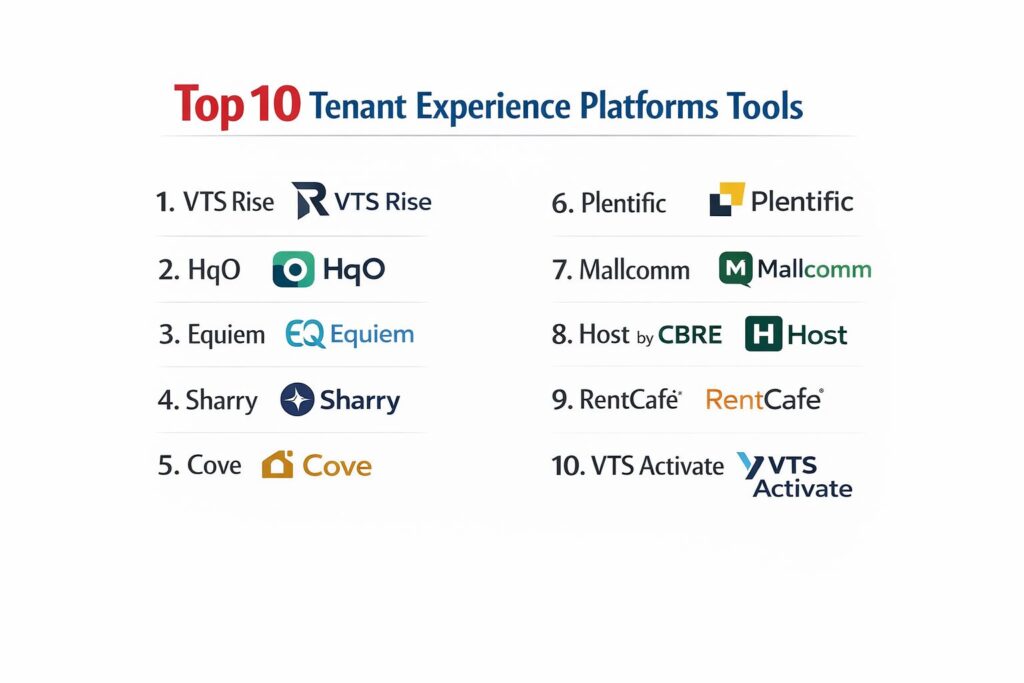
Introduction
Tenant Experience (TeX) platforms have emerged as the “digital remote control” for modern real estate, fundamentally altering how occupants interact with physical environments. These platforms go beyond traditional property management by focusing on the “human layer” of a building—integrating mobile-first technology to streamline daily workflows such as access control, amenity booking, and service requests. In the commercial and residential sectors, these tools serve as a centralized hub that connects tenants, property managers, and onsite services, effectively turning a static physical asset into a responsive, tech-enabled community. For landlords, these platforms provide a rich stream of behavioral data that informs capital expenditure and operational strategies, ensuring that the physical space evolves alongside shifting user expectations.
The implementation of a TeX platform is no longer a luxury but a strategic necessity for portfolio differentiation. As the boundary between work and home continues to blur, these platforms provide the connective tissue required for hybrid environments, offering features like hot-desking, visitor management, and integrated indoor navigation. From a technical perspective, the most advanced platforms utilize an “API-first” architecture to sit atop existing building management systems (BMS) and accounting software, creating a seamless data flow without requiring a complete hardware overhaul. Ultimately, a robust tenant experience strategy fosters higher retention rates and premium valuations by prioritizing the convenience, safety, and well-being of every individual who enters the building.
Best for: Commercial real estate owners, enterprise office managers, and residential developers looking to enhance occupant engagement, automate building operations, and collect actionable data.
Not ideal for: Small-scale landlords with single-unit properties who do not require complex amenity management or integrated building hardware systems.
Key Trends in Tenant Experience Platforms
The most significant trend is the transition toward “Agentic DXPs,” where artificial intelligence acts as a proactive assistant rather than a passive interface. These AI agents can predict peak amenity usage, automatically adjust HVAC settings based on occupancy data, and handle complex tenant inquiries through natural language processing. Sustainability has also taken center stage, with platforms now offering real-time energy consumption dashboards for tenants, encouraging green behavior through gamification and transparent reporting.
Another major shift is the rise of “frictionless entry” systems that leverage ultra-wideband (UWB) and biometrics, allowing tenants to move through a building without ever pulling a phone out of their pocket. We are also seeing a deepening of “Social Commerce” within these apps, where tenants can order from local retailers or book on-site services like dry cleaning or wellness sessions with a single tap. This hyper-local integration turns the building into a service-oriented ecosystem, increasing the overall value proposition for occupants who crave convenience and community.
How We Selected These Tools
The platforms included in this assessment were chosen based on their ability to integrate deeply with both physical building hardware and back-office financial systems. We prioritized “enterprise-grade” solutions that demonstrate high uptime reliability and rigorous security certifications, such as SOC2 and GDPR compliance. Market presence was a key factor; we focused on leaders that are actively deployed across millions of square feet globally, ensuring a proven track record of scalability and tenant adoption.
Technical versatility was also a core criterion. We evaluated how effectively each platform handles “the seams” between different technologies—such as how a mobile app communicates with a legacy elevator system or a modern parking gate. Furthermore, we analyzed the quality of the data analytics dashboards provided to landlords, seeking out tools that offer predictive insights rather than just historical reporting. Finally, ease of use for the end tenant was heavily weighted, as a platform’s value is nullified if the interface is too cumbersome for daily use.
1. VTS Rise
VTS Rise is a premier platform specifically engineered for the high-end commercial office market. It provides a sophisticated suite of tools that unify building operations and tenant engagement into a single, high-performance interface. The platform is known for its ability to handle complex, large-scale deployments that require deep integration with existing building security and HVAC systems.
Key Features
The platform features an advanced mobile credentialing system that replaces physical keycards for secure entry. It includes a robust amenity booking engine that manages everything from conference rooms to fitness centers. Its visitor management system automates the check-in process with digital invitations and QR codes. Real-time building announcements and a community newsfeed keep tenants informed of important updates. Additionally, it offers powerful data analytics that track space utilization and tenant sentiment, providing landlords with a comprehensive view of building performance.
Pros
Offers some of the most advanced hardware integrations in the industry for seamless building control. The professional user interface is designed to meet the expectations of premium corporate tenants.
Cons
The high-level feature set comes with a significant price tag, making it less accessible for mid-market properties. Implementation can be a lengthy process due to the technical complexity of hardware integrations.
Platforms and Deployment
Cloud-based web dashboard for managers and native mobile applications for tenants.
Security and Compliance
Maintains enterprise-grade security with SOC2 Type II compliance and end-to-end encryption for all data transmissions.
Integrations and Ecosystem
Integrates with major building management systems like Honeywell and Schneider Electric, as well as accounting tools like Yardi and MRI.
Support and Community
Provides dedicated account management and 24/7 technical support for both landlords and building staff.
2. HqO
HqO focuses heavily on the “experience” aspect of real estate, using data to drive better decision-making for landlords. It positions itself as a “Tenant Experience Operating System” that helps property owners understand how their physical spaces are being used and how to improve tenant satisfaction.
Key Features
The platform features a proprietary “Experience Index” that scores building performance based on tenant feedback and engagement. It offers a marketplace for local service providers, allowing tenants to order food or book services directly through the app. The digital programming tool helps managers organize building events and track attendance. Its smart building modules include desk and room booking alongside parking management. The platform also provides a unified data dashboard that aggregates information from across an entire portfolio.
Pros
The data analytics are widely considered the best in the market for measuring tenant happiness and engagement. It excels at building a sense of community through partnerships with local retailers.
Cons
The platform’s heavy focus on “experience” can sometimes overshadow basic operational features like maintenance ticketing. The mobile app can feel crowded due to the high volume of third-party service integrations.
Platforms and Deployment
Web-based management platform and mobile applications for iOS and Android.
Security and Compliance
Fully compliant with GDPR and CCPA, ensuring that tenant data is handled with the highest level of privacy.
Integrations and Ecosystem
Boasts one of the largest integration marketplaces in the industry, connecting with hundreds of PropTech partners.
Support and Community
Offers a robust customer success program and a community forum for real estate experience professionals.
3. Equiem
Equiem is a global leader in the tenant experience space, known for its “people-focused” approach. It combines a powerful engagement platform with an e-commerce engine, making it a popular choice for landlords who want to drive additional revenue through building services.
Key Features
The platform includes a built-in e-commerce marketplace that handles payments and logistics for on-site services. It features a sophisticated content management system that allows building managers to publish newsletters, polls, and event invites. The “Space” module handles desk and room bookings with real-time availability updates. It provides a detailed analytics suite that breaks down tenant behavior by company, floor, and demographic. The platform also includes a “Service Desk” feature for streamlined maintenance requests and communication.
Pros
The e-commerce features are exceptionally well-developed, making it easy for tenants to buy and book services. It is an ideal solution for older buildings looking to modernize without expensive sensor installations.
Cons
The interface can be more complex to navigate for building managers who are not tech-savvy. Some users have noted that the mobile app performance can be slower when handling high volumes of high-resolution content.
Platforms and Deployment
Cloud-hosted web platform and custom-branded mobile applications.
Security and Compliance
Adheres to international security standards and provides secure, PCI-compliant payment processing.
Integrations and Ecosystem
Strong integrations with major property management systems and smart building hardware providers.
Support and Community
Offers extensive training resources and 24/7 technical support for its global user base.
4. Sharry
Sharry is an innovative platform that focuses on “hybrid work” and smart parking management. It is designed to bridge the gap between the office and the remote workspace, providing tools that help employees navigate the modern workplace.
Key Features
The platform’s standout feature is its advanced smart parking system, which allows for dynamic space allocation and automated gate entry. It provides mobile-based access control that works across multiple buildings with a single digital badge. The “Hybrid Work” module includes desk booking and occupancy tracking to help companies manage office capacity. It features a visitor management system that integrates directly with the office’s outlook or google calendars. The platform also includes a community wall for building-wide communication.
Pros
The parking management system is widely considered the best in the industry, solving a major pain point for urban office buildings. The app design is clean, modern, and highly intuitive for the end user.
Cons
The platform is very focused on office and parking, making it less suitable for residential or retail-heavy mixed-use developments. It lacks some of the deeper community-building tools found in platforms like HqO.
Platforms and Deployment
Web dashboard for administration and native mobile apps for tenants.
Security and Compliance
Features high-level encryption for mobile credentials and is fully compliant with global data privacy regulations.
Integrations and Ecosystem
Deeply integrated with HID Global for access control and various smart parking hardware providers.
Support and Community
Provides multi-lingual support and a dedicated implementation team for international clients.
5. Cove
Cove offers a highly streamlined and flexible platform that caters to both commercial and residential properties. It is known for its “clean” design and ease of use, making it a popular choice for mid-market owners who want a quick and effective solution.
Key Features
The platform includes a unified “operating system” for the building that covers everything from lease management to amenity booking. It features a simplified maintenance request system with photo and video attachments. The office management tools include hot-desking and team scheduling. Its “Resident” version provides tools for rent payments and package tracking. The platform also offers a “Connect” feature that facilitates community messaging and local event organization.
Pros
The extremely simple design ensures high adoption rates among tenants without requiring extensive tutorials. It is one of the fastest platforms to launch, often taking only a few weeks to go live.
Cons
The platform lacks some of the high-end enterprise features, such as advanced energy monitoring or complex API customizability. It is not as deeply integrated with legacy building hardware as VTS Rise.
Platforms and Deployment
Mobile-first platform with a supporting web dashboard for administrators.
Security and Compliance
Uses industry-standard encryption and secure cloud hosting to protect tenant information.
Integrations and Ecosystem
Connects with popular tools like Slack and G-Suite, as well as core property management software.
Support and Community
Known for highly responsive customer service and a straightforward onboarding process.
6. Plentific
Plentific stands out by focusing on the operational side of the tenant experience, specifically maintenance and repairs. It connects landlords and tenants with a vetted marketplace of contractors, ensuring that building issues are resolved quickly and transparently.
Key Features
The platform features a proprietary marketplace of over 20,000 vetted service providers. It includes an automated work order management system that tracks repairs from the initial request to final payment. The “Compliance” module helps landlords track mandatory building inspections and certifications. It provides tenants with real-time updates on the status of their repair requests. The system also includes a detailed financial dashboard for tracking maintenance spend across a portfolio.
Pros
It is the most powerful tool for managing the maintenance and repair lifecycle, which is often the biggest pain point for tenants. It helps landlords save money by providing competitive pricing from multiple contractors.
Cons
It is not a “full-suite” tenant experience platform; it lacks features like amenity booking or social community tools. Its value is heavily dependent on the quality of contractors available in a specific geographic area.
Platforms and Deployment
Web platform for managers and mobile apps for both tenants and contractors.
Security and Compliance
Maintains rigorous legal compliance tools to help landlords stay up to date with building safety laws and insurance requirements.
Integrations and Ecosystem
Integrates deeply with accounting and property management software to automate invoicing and payments.
Support and Community
Offers dedicated support for both landlords and the service providers within their marketplace.
7. Mallcomm
Mallcomm is a unique platform specifically designed for the retail and shopping mall sector. It focuses on the B2B relationship between mall management and individual shop tenants, as well as the B2C relationship with shoppers.
Key Features
The platform includes a specialized sales reporting tool that allows retailers to submit daily turnover data directly to management. It features a direct line to mall security for all shop staff, improving safety and incident response times. The “Shopper” module provides wayfinding maps, loyalty programs, and promotional updates. It includes a digital handbook for retailers that houses all building rules and operational procedures. The system also supports facilities management tasks like waste removal requests and cleaning schedules.
Pros
It is the only platform truly architected for the unique complexities of a busy shopping mall environment. It significantly improves operational efficiency by centralizing communications with hundreds of different retail tenants.
Cons
The platform’s retail-specific design makes it entirely unsuitable for traditional office or residential properties. The dual-audience approach (shoppers and retailers) can make the administrative backend feel complex.
Platforms and Deployment
Web-based management console and mobile applications for both retailers and customers.
Security and Compliance
Features high-level data security to protect sensitive retail sales information.
Integrations and Ecosystem
Integrates with retail POS systems and various mall-specific hardware like foot-traffic counters.
Support and Community
Provides specialized support for the retail industry and regular updates based on mall management feedback.
8. Host by CBRE
Host is an enterprise-grade platform backed by the massive resources of CBRE. It is designed to provide a “concierge-level” experience in large office complexes, focusing on employee well-being and workplace productivity.
Key Features
The platform features a highly accurate “wayfinding” map that helps users navigate massive and confusing office campuses. It includes a “Concierge” feature that allows tenants to book services like catering or desk cleaning. The “Health and Wellness” module provides access to on-site fitness classes and mental health resources. It features a robust meeting room booking system with integrated AV and catering options. The platform also uses AI to suggest the best times for employees to come into the office based on their team’s schedule.
Pros
The platform benefits from CBRE’s deep understanding of global real estate trends and tenant needs. It is an excellent tool for companies that want to use their physical office as a recruiting and retention tool.
Cons
The platform is primarily available to buildings and companies already within the CBRE ecosystem. It can feel overly corporate for smaller, more creative workspaces.
Platforms and Deployment
Cloud-based enterprise platform with premium mobile app experiences.
Security and Compliance
Adheres to the highest global security standards, as required by CBRE’s multinational client base.
Integrations and Ecosystem
Seamlessly integrates with all major corporate productivity suites like Microsoft 365 and Salesforce.
Support and Community
Provides professional account management and on-site training for building staff.
9. RentCafe (by Yardi)
RentCafe is the tenant-facing arm of the Yardi property management ecosystem. While it is primarily residential, it is one of the most widely used apps in the world for managing the financial and administrative side of the tenant-landlord relationship.
Key Features
The platform features a highly reliable online rent payment system that supports multiple payment methods. It includes a comprehensive package tracking system that alerts residents when a delivery arrives. The “Maintenance” module allows tenants to submit requests with photos and track the technician’s progress. It provides a secure document portal for accessing leases and insurance papers. The platform also features a community bulletin board and a resident referral program.
Pros
Because so many large property owners use Yardi, millions of tenants are already familiar with the RentCafe interface. Its financial and legal features are arguably the most robust in the industry.
Cons
The platform’s design is more functional than “experiential,” lacking some of the slick community-building features found in newer PropTech apps. It is very much tied to the Yardi backend.
Platforms and Deployment
Native mobile apps for iOS and Android, plus a full-featured web portal.
Security and Compliance
Employs bank-level security for all financial transactions and is fully compliant with Fair Housing laws.
Integrations and Ecosystem
Perfectly integrated with the entire Yardi Voyager suite of accounting and management tools.
Support and Community
Offers 24/7 automated support and an extensive knowledge base for residents.
10. VTS Activate (formerly Lane)
VTS Activate is a versatile platform that aims to be the “everything app” for a building. It focuses on creating a unified experience that combines building access, community engagement, and operational efficiency into one streamlined package.
Key Features
The platform features a highly customizable homepage that allows building managers to highlight specific events or amenities. It includes a digital wallet for paying for on-site services or retail items. The access control system integrates with major hardware providers for seamless entry. It features a “Workflow” builder that allows managers to automate common tasks like tenant move-ins. The platform also provides detailed sustainability reporting to help buildings meet their ESG goals.
Pros
The platform is exceptionally flexible and can be customized to fit the branding and specific needs of almost any building type. The “workflow” automation helps significantly reduce the administrative burden on property managers.
Cons
The sheer number of customization options can make the initial setup more complex than simpler “out-of-the-box” solutions. Some users have noted that the analytics could be more predictive in nature.
Platforms and Deployment
Cloud-based web platform and native mobile applications.
Security and Compliance
Maintains high-level security certifications and provides secure data handling across all modules.
Integrations and Ecosystem
Strongest integration is with the wider VTS leasing and asset management platform.
Support and Community
Provides a dedicated customer success manager and a wide range of digital training materials.
Comparison Table
| Tool Name | Best For | Platform(s) Supported | Deployment | Standout Feature | Public Rating |
|---|---|---|---|---|---|
| 1. VTS Rise | High-end Commercial | Web, iOS, Android | Cloud | Hardware Integration | 4.8/5 |
| 2. HqO | Data-Driven CX | Web, iOS, Android | Cloud | Experience Index | 4.7/5 |
| 3. Equiem | Community/E-commerce | Web, iOS, Android | Cloud | Built-in Marketplace | 4.5/5 |
| 4. Sharry | Hybrid Work/Parking | Web, iOS, Android | Cloud | Smart Parking System | 4.6/5 |
| 5. Cove | Mid-market Simplicity | Web, iOS, Android | Cloud | 14-Day Rapid Launch | 4.4/5 |
| 6. Plentific | Maintenance Ops | Web, iOS, Android | Cloud | Contractor Marketplace | 4.6/5 |
| 7. Mallcomm | Retail/Shopping Malls | Web, iOS, Android | Cloud | Sales Data Reporting | 4.3/5 |
| 8. Host by CBRE | Corporate Campus | Web, iOS, Android | Cloud | Indoor Wayfinding | 4.2/5 |
| 9. RentCafe | Residential/Payments | Web, iOS, Android | Cloud | Financial Reliability | 4.7/5 |
| 10. VTS Activate | Flexible Workflows | Web, iOS, Android | Cloud | Workflow Automation | 4.5/5 |
Evaluation & Scoring of Tenant Experience Platforms
The scoring below is a comparative model intended to help shortlisting. Each criterion is scored from 1–10, then a weighted total from 0–10 is calculated using the weights listed. These are analyst estimates based on typical fit and common workflow requirements, not public ratings.
Weights:
- Core features – 25%
- Ease of use – 15%
- Integrations & ecosystem – 15%
- Security & compliance – 10%
- Performance & reliability – 10%
- Support & community – 10%
- Price / value – 15%
| Tool Name | Core (25%) | Ease (15%) | Integrations (15%) | Security (10%) | Performance (10%) | Support (10%) | Value (15%) | Weighted Total |
|---|---|---|---|---|---|---|---|---|
| 1. VTS Rise | 10 | 8 | 10 | 10 | 9 | 9 | 7 | 9.05 |
| 2. HqO | 9 | 9 | 10 | 9 | 9 | 10 | 8 | 9.10 |
| 3. Equiem | 9 | 8 | 9 | 9 | 8 | 9 | 9 | 8.70 |
| 4. Sharry | 8 | 10 | 8 | 9 | 10 | 8 | 8 | 8.65 |
| 5. Cove | 7 | 10 | 7 | 8 | 9 | 9 | 10 | 8.35 |
| 6. Plentific | 9 | 8 | 9 | 9 | 9 | 8 | 8 | 8.60 |
| 7. Mallcomm | 8 | 7 | 8 | 9 | 8 | 8 | 7 | 7.75 |
| 8. Host by CBRE | 9 | 7 | 8 | 10 | 8 | 9 | 6 | 8.05 |
| 9. RentCafe | 8 | 9 | 10 | 10 | 9 | 8 | 9 | 8.80 |
| 10. VTS Activate | 9 | 8 | 9 | 9 | 8 | 9 | 8 | 8.55 |
How to interpret the scores:
- Use the weighted total to shortlist candidates, then validate with a pilot.
- A lower score can mean specialization, not weakness.
- Security and compliance scores reflect controllability and governance fit, because certifications are often not publicly stated.
- Actual outcomes vary with assembly size, team skills, templates, and process maturity.
Which Tenant Experience Platform Tool Is Right for You?
Solo / Freelancer
For the individual landlord managing a small residential portfolio, RentCafe is the most reliable choice. It focuses on the essentials—rent collection, maintenance, and communication—without the overhead of complex community features that a single building might not need.
SMB
Medium-sized commercial owners should look toward Cove. Its rapid deployment and simple user interface provide the modern “tech-enabled” feel that tenants want today without the enterprise price tag or the need for a dedicated technical team.
Mid-Market Residential
Residential developers who want to prioritize community and resident retention should consider VTS Activate or Equiem. These platforms offer the best balance of administrative efficiency and engagement tools like event calendars and local retail perks.
Enterprise / Global Portfolio
For those managing millions of square feet across multiple continents, HqO and VTS Rise are the clear leaders. Their ability to aggregate data at the portfolio level and integrate with a wide variety of global hardware standards makes them the gold standard for institutional real estate.
Budget vs Premium
If budget is the primary concern, a standard property management tool like RentCafe provides high value. However, if the goal is to command “Grade-A” rents and offer a premium “hotel-like” experience, the investment in a high-end platform like Host by CBRE is justified.
Feature Depth vs Ease of Use
VTS Rise offers the most technical depth for landlords who want to monitor every sensor in their building. Conversely, Sharry and Cove prioritize the end-user experience, offering the smoothest and most intuitive apps for daily office workers.
Integrations & Scalability
HqO stands out for its vast integration marketplace, making it the best choice for owners who want to “future-proof” their building by being able to plug in any new PropTech tool that emerges in the coming years.
Security & Compliance Needs
All listed platforms are secure, but Host by CBRE and VTS Rise go above and beyond to meet the specific security mandates of global financial institutions and Fortune 500 tenants, making them the safest bet for high-security environments.
Frequently Asked Questions (FAQs)
1. What exactly is a Tenant Experience Platform?
It is a mobile-first digital tool that allows tenants to interact with their building and community. It typically handles tasks like mobile access, amenity booking, maintenance requests, and building-wide communications from a single smartphone app.
2. How do these platforms help landlords make money?
They drive value in three ways: increasing tenant retention through better service, providing data that helps reduce operational costs, and enabling “ancillary revenue” through the sale of building services and local retail integrations.
3. Do these platforms work in old buildings?
Yes. While some high-end features like biometric entry require new hardware, most community and operational features (like maintenance ticketing and event newsfeeds) work perfectly in any building regardless of its age.
4. How long does it take to set up a platform?
A simple setup for community features can take as little as 2–4 weeks. However, if you are integrating the app with complex building hardware like elevators and security gates, the process can take 3–6 months.
5. Are these platforms only for offices?
No. While they started in the commercial office sector, there are now specialized versions for residential apartment buildings (like RentCafe) and shopping malls (like Mallcomm) that cater to their unique needs.
6. Do tenants actually use these apps?
Adoption rates vary, but the most successful buildings see 70–90% adoption. The key is to integrate “essential” daily functions like building entry and package notifications, which forces the app into the tenant’s daily routine.
7. Can these tools help with ESG reporting?
Yes, many modern platforms like Gelato or VTS Activate now include sustainability modules that track a building’s energy and water usage, helping landlords meet their Environmental, Social, and Governance (ESG) targets.
8. Is my data safe on these platforms?
Enterprise-grade platforms use high-level encryption and are typically SOC2 compliant. This means they undergo regular third-party audits to ensure that tenant and landlord data is protected against breaches.
9. Can I customize the app with my own building’s branding?
Most premium platforms offer “white-label” options, meaning the app that tenants download from the App Store will have your building’s logo, colors, and name rather than the software provider’s branding.
10. What is the difference between property management and tenant experience?
Property management software (like Yardi or MRI) is the “back-office” tool for accounting and leasing. Tenant experience software is the “front-end” tool for the people living or working in the building.
Conclusion
The evolution of Tenant Experience platforms signifies a permanent shift from real estate as a commodity to real estate as a service. As we navigate the complexities of the market, the ability to offer a seamless, tech-enabled environment has become the primary differentiator between thriving assets and underperforming ones. Choosing the right platform requires a deep understanding of your tenant demographic and a clear vision for your operational goals. Whether the focus is on rigorous maintenance management, hyper-local community building, or high-tech hardware integration, the tools listed here provide the necessary infrastructure to meet modern demands. By placing the occupant at the center of the building’s digital strategy, landlords can ensure long-term asset resilience, higher tenant loyalty, and a future-proofed portfolio that remains competitive in an increasingly digital world.